
Why Are Thousands of Birds Flocking to Bataan?

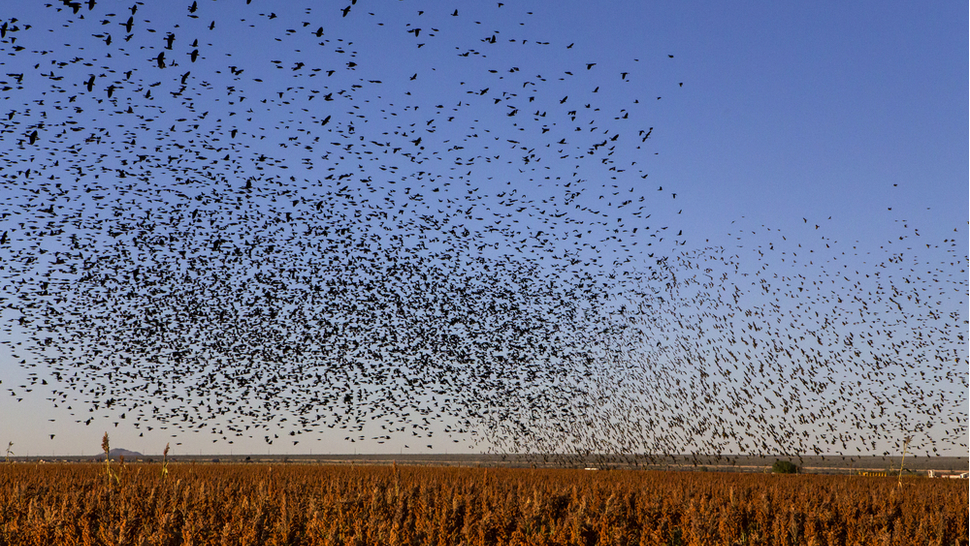
An abundance of birds was seen hanging atop electric wires in Orion, Bataan recently. Poweradio 104.5 FM - Bataan wrote about the local sighting on its Facebook page. This isn't at all a strange occurrence, mind you. As a matter of fact, these birds like to flock to city centers because of the lights, looking for insects to prey on.
Some users point out that these might be barn swallows. A decent guess, considering that barn swallows join some of the more popular migratory birds that we often see in the Philippines. These include the likes of the peregrine falcon, whiskered tern, and the common kingfisher. Chances are, they're migrating from harsher conditions in search of food supplies. All these appearances are no coincidence. It's all because of a certain network called the East Asian–Australasian Flyway.
The photos in question.


ALSO READ:
Why Presidential Helicopters and Aircraft are Called 'Bluebirds'
Celebrating Valentine's Day with Pigs, Birds, and Funny Poetry
Migration Season and the East Asian–Australasian Flyway
The Philippines welcomes these birds due to our standing in the East Asian–Australasian Flyway, one of the world's great bird networks.
See, the East Asian–Australasian Flyway is the most densely populated flyway worldwide. The network has roughly 600 bird species traveling to and from their origin countries around the season. These birds cut across 37 countries, spanning Russia and Alaska to Southeast Asia to Australia and New Zealand. Countries like Cambodia, Thailand, and the Philippines play a key role, with our designated bird sanctuaries. The flyway accommodates about 50 million migratory birds from more than 250 populations.
Bataan, as a peninsula, is a favorite destination for migratory birds. Egrets and terns, in particular, are among some of the more popular ones that arrive in Bataan. They usually come around the early part of September to escape the winter in their countries of origin. The birds leave the area around March.
Leaving frigid climates, migratory birds in the Philippines can best be seen at the Balanga Nature and Wetland Park, a tourist spot in itself. Similarly, a couple of years ago, a Far Eastern curlew was even found in Bataan, landing for the first time in Philippine territory. Quite the rarity, the creature is one of the largest migratory shorebirds in the world. And Bataan wasn't the only place it went to.
These birds can be observed in V and J formations in the sky. The linear flight formations are called echelons.

It was said to have been spotted in Negros and Cebu, as well. In fact, Cebu also welcomes birds from Alaska and Siberia, among other places, with Olango Island acting as one of the best sites to see migratory birds. Estimates suggest that more than 90 species of birds pass through there each migration season.
Unfortunately, not all birds make it to their destination. Degradation and habitat loss, as well as pollution, have affected these migratory birds' tendencies. Large-scale logging, for instance, has rendered some birds vulnerable or endangered.
New forestry policies have been added to protect wetlands and forests, but illegal activities still persist. Land reclamation of coastal areas has led to a decline in population among migratory waders. Hunting has a hand in it, too. Seeing as though the bird-watching community in Southeast Asia has expanded over the years, many of these enthusiasts enter the pet trade. Remember this next time you're thinking about getting one as a pet.
