
Esquire Talks to the Heroes, Victims, and Villains of Amazon Prime's Cross

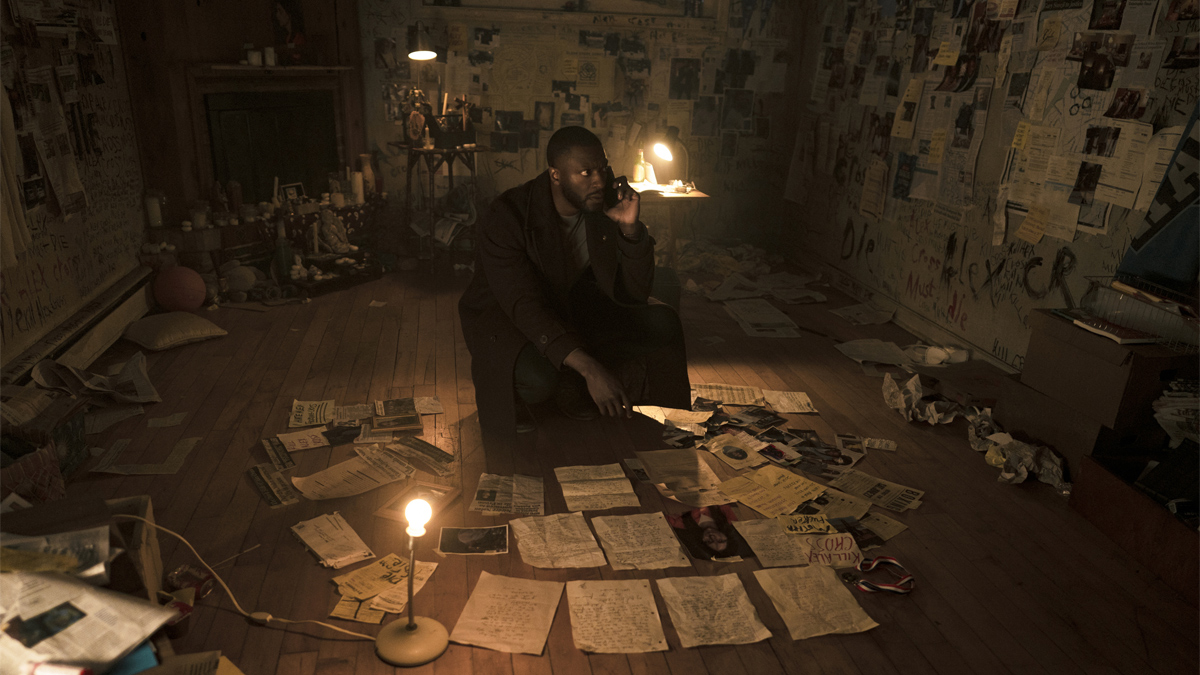
Esquire Philippines was able to sit down with the cast of Cross, the newest crime thriller on Amazon Prime, based on the best-selling novels by James Patterson. The eight-episode limited series dropped on November 14, and features hardened forensic psychologist Alex Cross navigating the balance between a police officer and a black man in America.
In this two-part interview, we talk to the heroes Aldis Hodge, who plays the titular Cross, and Isaiah Mustafa, who plays Cross’ partner John Sampson. Then, we chat with the villains and victims: Ryan Eggold, who plays Ed Ramsey, Cross’ nemesis for the first season; and Eloise Mumford, who plays Ed’s victim Shannon.
ALSO READ:
The Best Thriller Films Ever Made
The Best Serial Killer Movies Of All Time
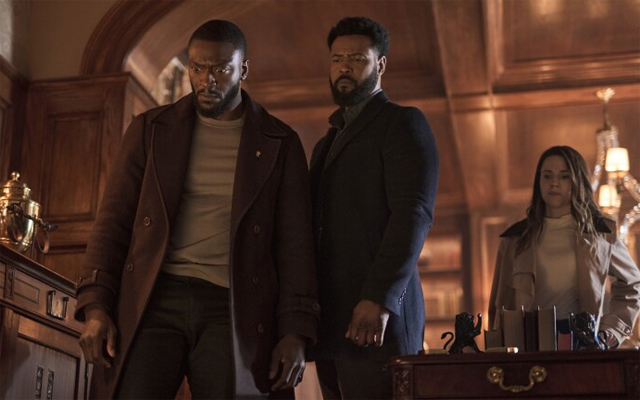
Alex Cross (Aldis Hodge) and John Sampson (Isaiah Mustafa)
Esquire Philippines: How different is this take on Alex Cross from past iterations of the character?
Aldis Hodge: You know, I couldn't tell you because I would say there is for me no reference of what has transpired in the past. The difference here is outside of what I bring to it naturally. You're going to be introduced or rather reintroduced to Alex Cross. We give you access to the full world, the whole universe that is Cross. That's a major difference for the audience because they're invited to understand the world and how it works. They really get to fall in love with the relationship between Cross and Samson.
They get to see Cross's home life with his kids, with Nana Mama. They get to see all the other beautifully painted characters in the books come alive, and we give them time and room to breathe. And as far as Cross himself, well, again, you know, that's a different beast.
But we really went into creating a dynamic full 360º human being who is flawed, who's brilliant, but also vulnerable and takes charge, but doesn't always make the right decision, but will do his best to stand up and try to correct his wrongs. So you're going to get a very different perspective because you have a different invitation to the world of Cross.
Isaiah Mustafa: I would also like to say that the main, I would think, the most intrinsic difference between those movies is that they didn't have a Sampson to fall back on. No, but what you do see is you see, you know, his brother-in-arms, you know, the man who's there to ask the hard questions, to be the, you know, person that he can rely on. You know, you get to see that, and you get to see that friendship fully developed.
Yeah, I mean, straight off, you know, you bring a different physicality as opposed to Morgan Freeman or Tyler Perry. Considering that you've read the books, I have to confess, I'm not a big reader of the books, but I think you've read the books. And considering the character has been created by James Patterson, right? Has he accurately represented the Black American experience in his books? And does this translate to the series?
Aldis: So I hadn't read the books. I hadn't started reading the books until after, right? And James will tell you himself something that Ben did, Ben Watkins, our showrunner and creator, when he came to approaching the adaptation was he wanted to make sure that, yes, this is a full world where the audience is going to understand and get, you know, the foundation that they pull from when reading the books.
However, he said, I wanted this to be full. He's Black, you know, and because Ben himself is Black, he's the first Black person, only Black person to helm a narrative of Alice Cross. There's an insurmountable quality that goes into pulling from an honest nature, from one's own lived experience.
And James Patterson himself has even commended Ben on that, saying that there are all these details that, you know, he, that Ben really introduced, that he's really appreciative of, because, you know, he can go to those true depths, and he can flesh out what this world is from a man's perspective, from a detective's perspective, but also from a Black person's perspective living in the now. So there are a lot of flavors that we get to touch on and introduce, really because of the sagacity of Ben Watkins.
How important or what does Cross bring to the conversation about the relationship between law enforcement and Black America?
Aldis: So with that, you have, again, the man, you have the detective, and then you have the Black man who is a detective. He stands in between. He stands between the community and the department.
He is part of the community, and he serves to uphold justice as is, you know, akin to him from the department. With that, he does run into the complexities of the differences when it comes to injustices and things like that. But he is one who stands for justice as it needs to be. So it doesn't matter who is trying to break the rules, whether they are a suspect in a case or whether it's somebody else who's wearing a badge. Cross stands for what real justice is supposed to be. He also represents the bridge of respect that should exist between law enforcement and the community.
That's what he represents. That's what Sampson represents. So when you see them, you see how they move, you're going to understand how difficult the world can be for them when they are trying to do the right thing, when they're up against the community distrusting them because they understand why the community distrusts them.
They don't even fully disagree with every part of what's going on in the community because they understand. And that's the difference. When you're dealing with adversity from a perspective of understanding, acknowledging, and respecting said opinion, then you can manage to find a solution in a much more progressive and positive way.
And that's what these two detectives represent when they go out into the world and they face these challenges on a regular basis.
Esquire Philippines: Our first question is for Ryan. What makes Ed Ramsey a different antagonist for Alex Cross compared to his previous foes?
Ryan Eggold: Yeah, sure. That’s a great question. I mean, it's hard to speak to the entire canon that Patterson has created because he's created some incredible villains that are psychologically challenging and complex. That is, of course, amazing for Cross, who is adept at navigating those psychological profiles and makes it so much fun to watch.
I think for me what I found unique about Ramsey as a killer was that he wasn't like a blunt hammer. He wasn't necessarily loud or (would) beat (like a hammer). I mean, he was sometimes soft and sort of delicate in a way and obsessed with details and things and fancied himself an artist, you know, curating people in this certain image and was so caught up with his own ideology and his own self, his own art, you know, in his mind.
So I think that sort of more delicate, almost tender side of him was sort of appealing and I think perhaps unusual, unique as a killer.
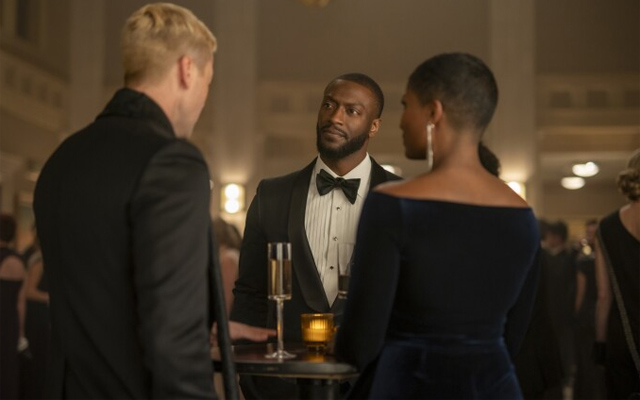
And for Eloise, would you say that Shannon's experience with Ramsey is something that women would relate to? Are, you know, the power dynamics and the deception involved, is that something that women would find familiar, you would say?
Eloise Mumford: I mean, I think certainly the fear of not knowing whether someone is trustworthy or not and the leap of faith that it takes to date in the modern world. I, you know, it is a woman's worst fear to go on a date with a psychopath. So I think that everybody can identify with that fear and then watch someone in real time realize that the worst nightmare is happening and then have to draw on her own strength, ingenuity, and fortitude to figure out how to get out and how to survive. I hope that not just women can relate to it but also just humans. On a human level, that sort of experience takes you to an animalistic place where it feels like you are at the very core of what it is to be human, to want to survive, to crave home. And I think that that's a really universal feeling.
This new adaptation of Cross isn't based on any book. We think this has been crafted for new audiences. So what would you say that the characters of Ed and Shannon bring to the world of Alex Cross?
Ryan: Yeah, well, I think, you know, with a character like Ramsey, who's sort of sociopathic, psychopathic, you know, completely lacks remorse, completely lacks empathy. I think you ask, how does someone get to that place and become that way? And I couldn't tell you all the details, but I can tell you it's a complete absence of love and a complete absence of connection to other human beings. And so I think in that way, my character in this world can sort of help serve as a counterbalance to Cross, but more so a foil to highlight why we need heroes like Cross, who is trying to be a good father, trying to make the world safer for his children, mourning the loss of his wife, trying to navigate his own mind and mental health wrestling and is trying to save people, you know? So that's about family, connection, and love at the end of the day.
Why be a great detective? So you can make the world a little safer for your kids and for your family. So I think we get to play the others. At least I got to play the other side of that. You know, I mean, you (gestures towards Eloise) certainly got to play in that same space of humanity and empathy and heart.
Eloise: Yeah, and reflect … I always, I gravitate towards and believe strongly in stories that allow female characters to be complex, to be both vulnerable and strong, to play in that nuanced world.
And so I'm so grateful that in this new Cross story, there are many female characters who are allowed to live in that space. In particular, Shannon, as the victim, is allowed to be a very real person, a very real woman. And I believe really strongly in that message.
I also think it's really fun just to have a brand new mystery for one of these stories because then audience members who love the Pantheon of Cross get to experience a brand new mystery, and they don't know how it will end.
Speaking of, I love that you mentioned, you contrasted, you know, love and, you know, the complete lack of it. Would you say that Ramsay is the foil to Cross in the way that, say, Moriarty is to Holmes?
Ryan: Yeah, I certainly think so at this moment. I think to a great deal. I think, you know, the show is very big and is about much more than just Cross pursuing any one killer. But yes, I do think Ramsay's place in this world is to help, creatively, I mean, is to help elucidate all of his character, Cross, in the sense of why? You know, why are people worth saving? Why does family matter? Why is love important? You know, and you get to see what the opposite looks like, and it's not necessarily the best portrait of a human being. Thank you very much.
How does it feel to be part of a show that features such an iconic African-American character like Alex Cross?
Ryan: It’s awesome. I mean, I think the best stories nowadays are reflective of the world that we live in, you know, which includes, you know, gender, race, religion, you know, and a multitude of people from so many different walks of life. So I think to set this story in DC with all this playing Cross and to explore, you know, for Ben to explore creating this world as authentically as he has and speaking to real people and incorporating real people's lives, stories, places into the show. You know, Ben's Chili Bowl was a restaurant that they ate at while they were scouting, and they were like, we're putting this in, and they, that family ended up sort of —
Esquire: I’ve actually been to that place.
Ryan: Oh, you have?
Esquire: I love it. It's great. It's great. It's, love that place. Yeah, sorry, move on.
Ryan: I was just going to say that there's so much stuff out there, and there's a lot of movies and a lot of shows, and I think what we respond to these days is authenticity. Yeah. And I think that's what all this is bringing, and that's what (showrunner) Ben (Watkins) is bringing with this show.
Last question. Speaking of authenticity, how does Cross, the show, drive the conversation about American law enforcement and its tenuous relationship with the Black community?
Eloise: Well, I think, as what Ryan was saying, we are incredibly proud as a show that the show is incredibly authentic, and that Ben has created a world that reflects our real world. Law enforcement and social justice that is part of real life, and our show reflects real life. And I am personally always incredibly grateful to be part of a project that invites conversation, that invites people to engage in topics of conversation that are really important to discuss. And so, yeah, I'm incredibly proud to be part of it.
Ryan: Yeah, the challenge and the complexity of that conversation is part of what makes all this, who is both, I mean, Cross, rather, who was both a black man in the world and a cop, you know, it makes that character more rich, more complex, and more fun for us to watch.
