
Sneak Peek: What to Expect From 'Kingdom of the Planet of the Apes'

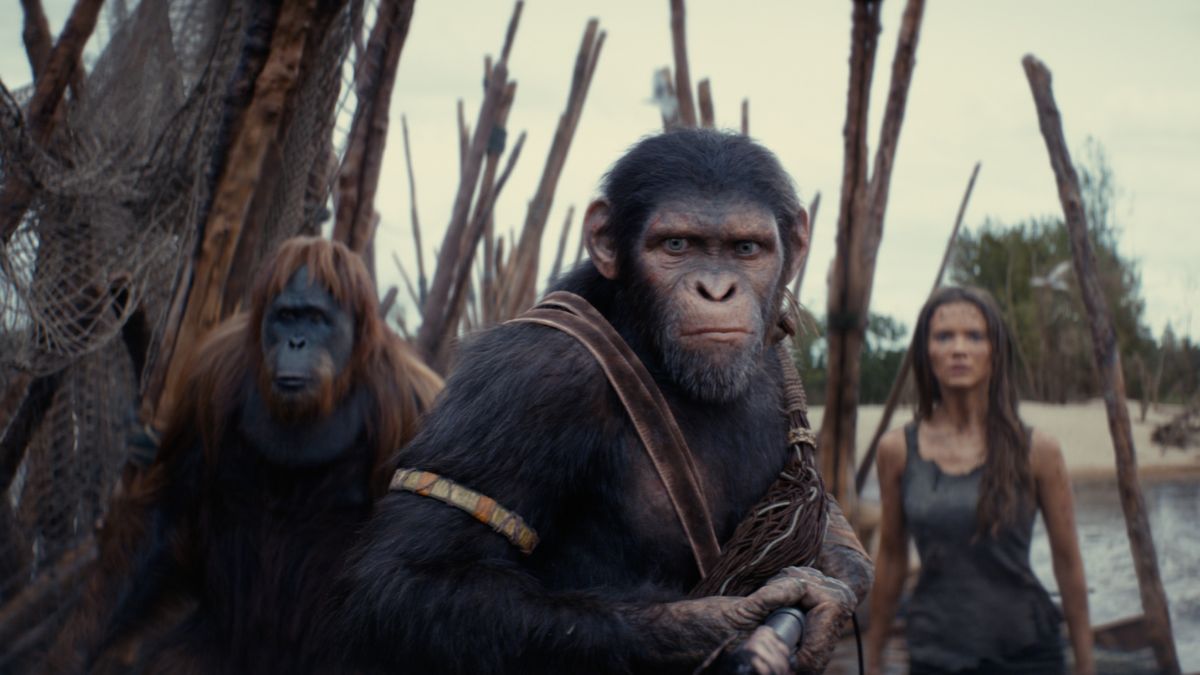
A new installment of the Planet of the Apes movie franchise is dropping this May 2024. Fans of the series are sure to enjoy the riveting story of highly intelligent apes defending their civilization in the face of human opposition. Similarly, those new to the series could enjoy a dose of science fiction to spice up their movie experience. But it’s been a while since the last installment’s release, so a recap of the whole series may be in order.
Those familiar with the franchise know that it originated from a 1963 novel by French author Pierre Boulle. It was adapted into the now-famous 1968 movie starring Charlton Heston, featuring an iconic ending scene that diverged from the novel's, where Heston's character (spoiler alert!) lamented humanity's failures before the destroyed Statue of Liberty. It was followed by four sequels, a live-action TV series in 1974, and an animated series in 1975. In 2001, a remake of the 1968 movie was released, directed by the imaginative Tim Burton.
ALSO READ
Review: Shogun is a Masterclass in Slow Burn Storytelling
Behind the Laughs with Philomena Cunk
This upcoming movie is the fourth in a new continuity started by the 2011 reboot Rise of the Planet of the Apes, the second and third being Dawn of the Planet of the Apes in 2014 and War of the Planet of the Apes in 2017. This continuity leaves out the space- and time-travel elements of the original movies and goes for a very grounded telling of how primates obtain human-like free will and intelligence and come into conflict with humanity.
It starts with human scientists creating a cure for Alzheimer’s disease that is based on a virus. The cure has a side effect wherein it grants primates human-like intelligence. But later in the series, it mutates into a deadly virus that kills off much of humanity in a pandemic called the Simian Flu.

Kingdom picks up some 300 years after the events in War, where ape civilizations have established dominion over Earth. Humans have regressed to a feral, animalistic state, reminiscent of their behavior in the original movie, as a consequence of the Simian Flu. The latest ape ruler, Proximus Caesar, mirrors human depravity by descending into despotism, using human technologies to enslave other ape clans. Unwilling to accept this, the ape Noa embarks on a journey to resolve the situation, accompanied by his orangutan friend Raka and a woman from a tribe of feral humans whom they have named Nova.
The movies introduced relatable characters such as Caesar, one of the first human-like apes who becomes a leader and legendary figure among his kind. Then there is Koba, the once staunch friend of Caesar who turned villain because of his complete lack of trust for humanity, having endured torture and mistreatment at the hands of humans. And there are several human women in the movie series named Nova, each of them a throwback to the original primitive-minded Nova in the 1968 movie played by Linda Harrison.

As with the originals, Kingdom of the Planet of the Apes touches on themes of us versus them, abuse of animals, abuse by people in power, the oppressed later becoming the oppressor, friendship and loyalty, and the possible side effects of apparently noble efforts such as finding a cure for a disease. There is no shortage of commentary on and reflections of real-life human society, which is often the case with science fiction.
Kingdom is notably the first Apes movie since Disney’s acquisition of 20th Century Fox. The movie’s director is Wes Ball and it was filmed mostly in Australia.
The movie is releasing in Philippine cinemas this May 8 and will be available in IMAX®, 4DX, and 2D screens.
