

Quezon Is a Triumphant Blend of Fact, Fiction, and a Whole Lot of Exposition

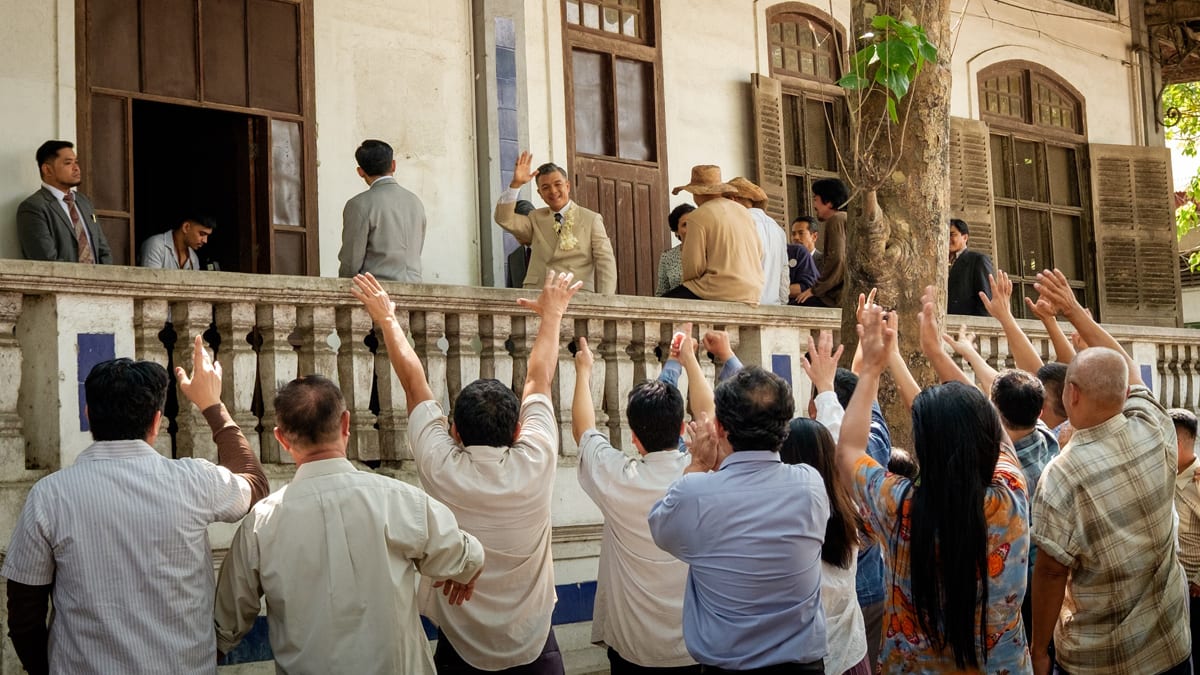
History is written by the victors. This isn't a Churchill original; he was paraphrasing an adage known throughout history by the very victors who write it. A lesser known, but equally true corollary is that the best accounts of history are written by storytellers, and Jerrold Tarog is one hell of storyteller. Quezon is the third of an erstwhile trilogy dubbed the Bayaniverse from TBA Studios, a series of films centered around a figure from Philippine history beginning with 2015's Heneral Luna and followed by Goyo: Ang Batang Heneral in 2018. Quezon differs from the first two in that it features a statesman rather than a military figure, and is set during the American Colonial Period as the Philippines is about to establish its independence as a Republic. It’s a surprising, unflattering portrait of a man widely hailed as a hero and who’d lent his name to an entire province and Metro Manila’s biggest city. But Quezon is prefaced with a disclaimer that the events depicted in the film are a blend of fact and fiction intended highlight certain themes. In other words, it’s about as real as Inglourious Basterds or Abraham Lincoln: Vampire Hunter.
ALSO READ:
Goyo is a Somber Sequel That is a Spectacular Indictment of Idolatry
Sorry, Heneral Luna Romanticized Strongmen
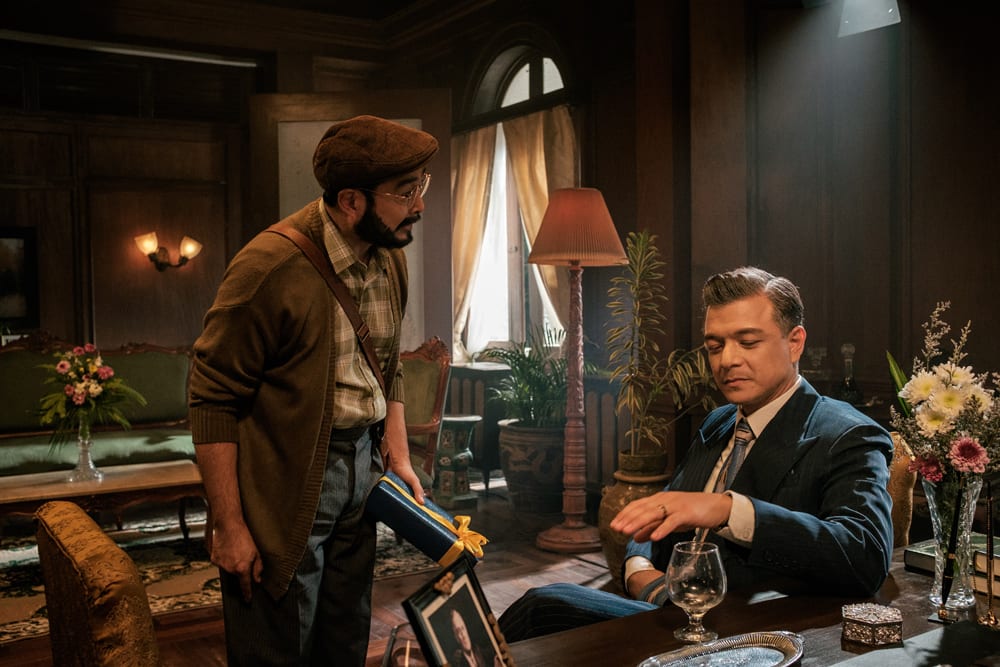
It works to Quezon’s favor that there really isn’t much that Filipinos know about Manuel L. Quezon besides being the second President of the Philippines and the face on the 20-peso bill. This affords Tarog a broader canvas to work with and a license to tweak historical events to service the story. The Bayaniverse’s POV character Joven Hernando (Cris Villanueva and Arron Villaflor), the fictional journalist who interviewed Juan Luna and followed Gregorio Del Pilar in the first two films, returns, now one of Quezon’s (Jericho Rosales and Benjamin Alves) confidantes and father to his goddaughter, Nadia (Therese Malvar), a filmmaker whom he contracts to make hagiographical shorts for his Presidential campaign. Nadia’s silent films serve as thematic chapter markers as well as flashbacks to Quezon’s rise through the political ranks. It’s a clever device that adds fanciful punctuation to an otherwise unexciting story crammed with dialogue and references to legislature like the Jones Law or the Tydings-McDuffie Act. But unexciting isn't necessarily a bad thing, specially in the hands of Jerrold Tarog, who manages to craft an engaging narrative stitched together from Quezon schmoozing, scheming, and generally being an unctuous megalomaniac who uses people to get his way ostensibly to achieve Philippine independence. When his wife, Aurora (Karylle), tells him, “Naniniwala ako na naniniwala ka na tama ang ginagawa mo," it’s a damning reproach of his sincerity but also a surrender to his resolve and ambition.
Quezon doesn’t make Manuel L. Quezon look good. Sometimes, it even feels like character assassination. Quezon played political games with the best of them, outsmarting all of his rivals, even the Americans governing the country, but he does so in an underhanded, dishonest manner that disappoints Hernando, who reminds him of the value of truth and integrity. But Rosales is nothing if not charming, and he brings his considerable charisma to bear in a role destined to be one of his most memorable. Accused of rape in 1904, the famously flirtatious Quezon is said to have defended himself saying, “with a face like this, do I need to rape anyone?” Delivered with Rosales’ boyish good looks and beguiling smile, you’d be forgiven for almost agreeing with him.
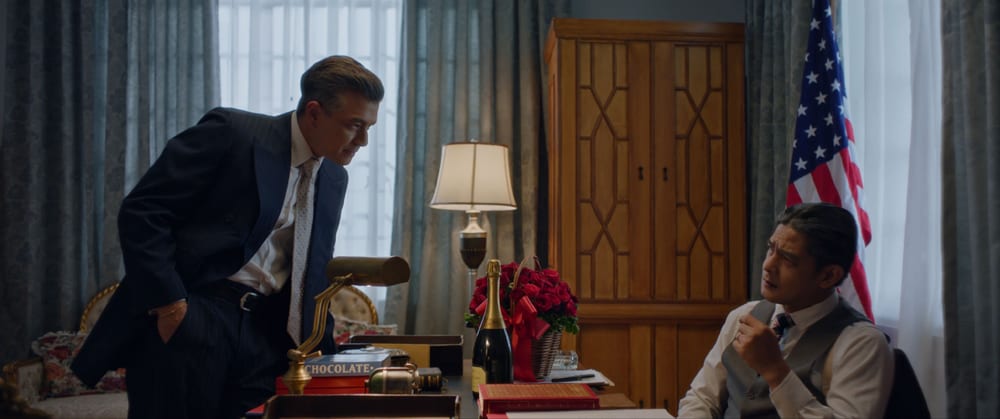
Once upon a time, the Philippines had statesmen. Smarmy, back-stabbing, manipulative statesmen, but statesmen nonetheless. Today Philippine politics is rife with clowns pretending to be public officials who feud openly, are demonstrably corrupt, and act with impunity. Today’s breed of politicians have neither the charm nor eloquence of a Manuel L. Quezon, pretenders who don’t understand what ‘forthwith’ means or threaten murder on live streams. Philippine politics has devolved into such a circus that it blunts the gravity of Quezon’s message about how the second President was largely responsible for laying the foundations of patronage politics. It’s difficult to view Quezon through the film’s negative lens when his maneuverings look positively stellar in comparison to the inelegant galumphing of today’s intellectual gnats, most of whom happen to be in power thanks to the very foundations Quezon himself set. Tarog took care to balance Quezon’s charm against his unscrupulousness, never losing sight of the fact that he’s still one of the country’s heroes despite often displaying the attributes of a villain, a reminder that history and the men who make it can be both great and terrible.
The Department of Education issued an advisory stating, “The film Quezon is designed to strengthen historical awareness, civic education, and appreciation of the arts among Filipino learners by providing creative, curriculum-aligned tools that make history both relevant and accessible.” And it certainly does that. Quezon is a wonderful educational tool, if far less inspiring than either Heneral Luna or Goyo and stirs little to no patriotism. And as much as Tarog has liberally blended fiction with historical fact, Quezon holds some essential truths. This chapter in the Bayaniverse serves a different purpose — it’s an unsightly mirror held up to show us, remind us, that the Philippines is a nation built on compromise and utang na loob. Patronage politics and corruption are the bedrock upon which this nation is built, or at least comprises the mortar that binds the building blocks of this republic. It has never been more clear, what with this seemingly never-ending deluge of revelations, from Confidential Funds to Flood Control Projects and miscellaneous budget insertions, that this country is sick and has been for a very long time. As Quezon showed, in a hurried montage towards the end, maybe it was broken from the very beginning, a government flawed by design. Which begs the question, what’s next? How do we Filipinos break free from a system built to enrich a few at the expense of the many? It’s a question Quezon doesn’t answer.
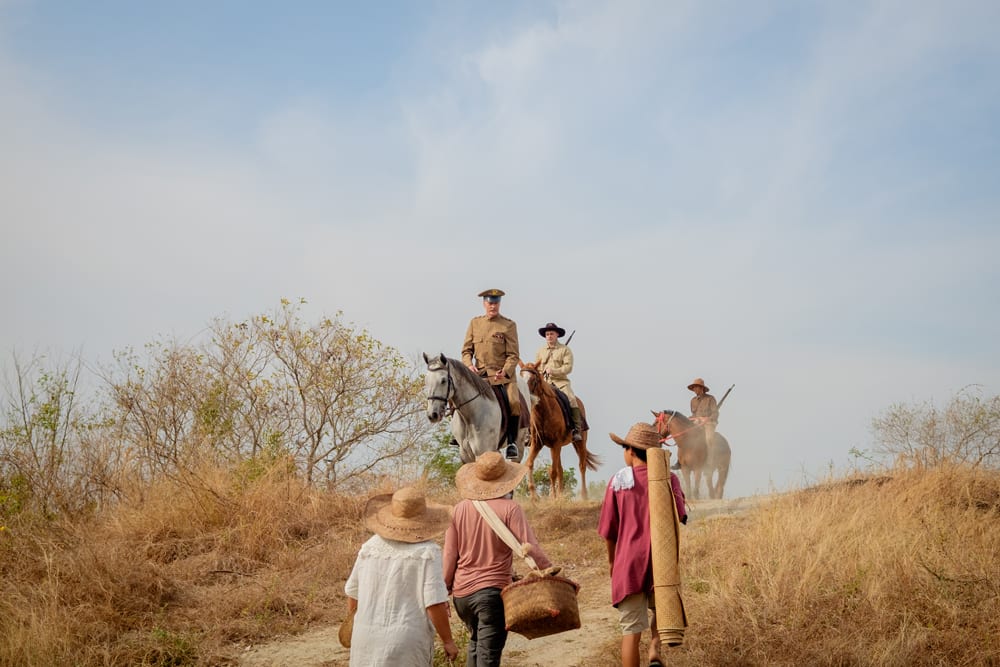
The Bayaniverse explores and exposes this nation’s heroes in sometimes unexpected ways, and Quezon subverts expectations more than the others. If Heneral Luna represented fiery passion and Goyo: Ang Batang Heneral quiet resolve, Quezon is all about unslakable ambition and works best as a continuation of the earlier two films. Goyo suffered from a languid pace and directionless plot, a significant emotional decline from Heneral Luna — still the best of the three — while Quezon is comprised mostly of exposition. After all, it’s just about a man playing political games. But the silent films are an interesting touch and a likely introduction to the Bayaniverse’s new POV character in a future film as the elder Hernando gets on in years. In a mid-credits scene, we see a radio dial tuned to a station that plays an iconic Presidential jingle that indicates that the Bayaniverse will soon return.
