45 Rules You Didn't Know Survivor Contestants Have to Follow

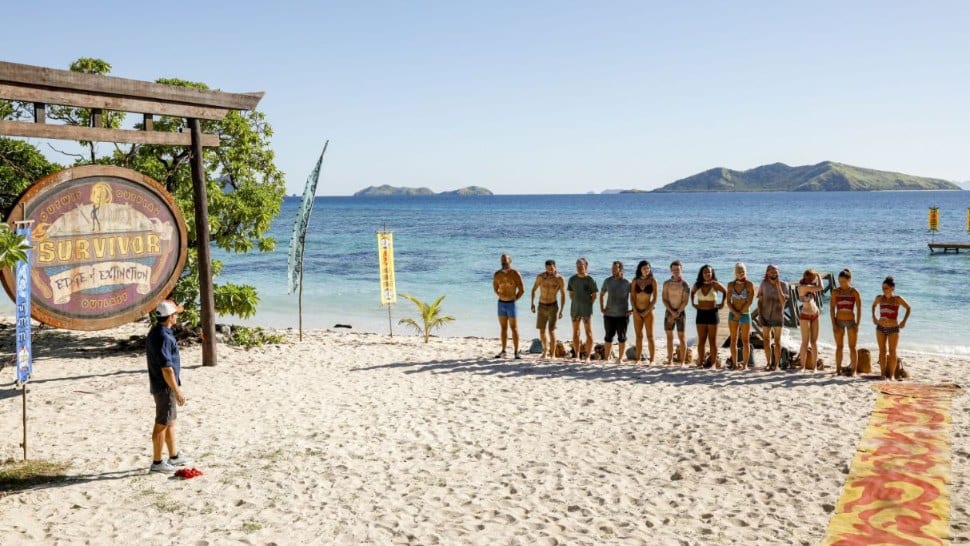
Since 2000, Jeff Probst has been guiding the contestants of Survivor through the perils of living off of the land. Over the course of 43 seasons, viewers have tuned in to watch tribes overcome physical challenges, scandalous betrayals, and emotional obstacles. But if competitors want to bring home the $1 million prize, they have to follow a lot of rules.
Some of these regulations have been revealed by Probst and the show's production team themselves, while others are buried in the detailed contracts that have surfaced online through the years. (Just keep in mind, some of these contracts are old! Rules may have changed or evolved over time.) Find out what the contestants give up in order to compete.
They have to fill out a ton of paperwork before hitting the island.

The show's production team doesn't take any risks—they make sure each contestant has dotted the i's and crossed the t's on their contract before they start filming.
"Survivor School" is in session before filming.

All cast members must attend classes led by a seasoned producer to prepare for the game before shooting starts. They learn things like jungle safety, basic shelter building, and how to make a fire.
They have to disclose their medical history.

To make sure each cast member is physically up for the challenges, the show requests medical information from contestants.
Including all medications.

Vital medications are allowed, but the show's medical team needs to be informed beforehand. In 2022, Jackson Fox was removed from the game after failing to disclose that he was taking lithium until the day before filming started. "The cumulative effect of this show would have a potentially very bad impact on you, and we don’t want that," host Jeff Probst told Fox in the episode.
They must be at least 16 years old to apply.

While the minimum age is 16 years old, there's no maximum age limit. The late Rudy Boesch, who competed in the very first season of the show, was 72 when he was cast.
Personal items are limited.

Each contestant is allowed to arrive at the camp site with two handheld items—and nothing more. These are called "luxury items," and are supposed to be things that bring emotional comfort, such as family photos or meaningful jewelry.
Most toiletries are forbidden.

There's a reason the cast members leave their location looking scruffy: the contestants are stripped of toiletries like razors, hairbrushes, and toothbrushes. The only things they do have access to are important necessities like medication, sunblock, insect repellent, or contact solution.
Clothing has to be pre-approved.

The production team goes through each contestant's luggage before they arrive, mainly to make sure that they're not sneaking in prohibited supplies, but also to make sure that they aren't all wearing the same color t-shirt and that their wardrobe will capture well on camera.
There are rules against wearing logos.

There's a reason you don't see contestants rocking t-shirts for their favorite sports teams or brands, the show has a strict rule against shirts or caps with corporate logos on them.
Everyone has to abide by local AND U.S. laws.

Even though contestants are usually isolated in the wilderness in foreign countries, per their contract they still have to obey all laws set forth by both the local and the United States government.
Contestants are divided into tribes.

Upon arrival, the show splits the contestants into tribes. They then compete against the opposing tribe for elimination immunity and rewards, before it becomes an individual competition. Although usually there are only two tribes, the show's producers can technically split the contestants into as many tribes as they want.
They must stick to their tribe's camp.

Per the rules of the competition, cast members are not allowed to visit the opposing tribe's camp or communicate with them in any way. Doing so is grounds for elimination.
A lot of zones are off limits.

The contestants don't actually have miles to roam, even though it may seem that way. There are a number of "areas designated off-limits" by the producers, including a base camp with living arrangements for the crew.
You can't injure another contestant.

Okay, this one should go without saying, but when you push people to the brink of survival, it's always best to clarify. Any cast member who deliberately injures another cast member will be eliminated and could face criminal charges, if relevant.
Contestants can't steal from one another.

Contestants cannot take anyone else's private property. On the show a contestant's private property includes their personal luxury item, any clothing they may have at their camp, and anything given to them specifically by the producers.
But they can search through their things.

Ah, a loophole. Although stealing is prohibited on the show, one thing contestants can do is search through one another's things. Think your tribe mate might have a hidden immunity idol tucked away? There's nothing in the rules that says you can't take a quick look, as long as you don't take anything.
Contestants have to follow directions.

In terms of safety, it's not surprising that contestants are required to follow any and all instructions from the production crew.
They agree to being filmed 24/7.

Due to safety concerns, the cast members are never alone in the wilderness. The show also specifically mentions in their contract that the "contestants will have no expectations of privacy."
Even if they're nude.

Yes, the show is allowed to legally record the contestants both nude, and partially nude, while they are on the show. Zero privacy, means, well, zero privacy.
Damaging the environment is cause for elimination.

Survivor has been allowed to film in countless breathtaking landscapes, partly because they take care of it. The show has strict rules against disturbing the environment, whether that means removing rocks, shells, or leaving litter behind.
You can only build a shelter with what you can find.

Obviously, cutting down trees would be disturbing the environment and would go against the aforementioned rule. So contestants are only allowed to build their camps by foraging or using items given to them by the producers.
Contestants can forage for food.

While competing in the show, the contestants are only given a supply of small sacks of food, like rice and beans. If that isn't enough, they can supplement their food supply by foraging in the wilderness.
Everything they eat has to be approved.

As contestants forage across the landscape for fruits, plants, and wildlife to consume, the producers are there to double check that everything is safe to consume.
Hunting is only allowed for food.

Contestants can fish and hunt for their food supply, but hunting for sport is not allowed on the show.
Endangered species are off limits.

Again, this one should go without saying, but endangered species are not on the Survivor menu. In the case that any endangered species inhabit the area, producers will let the contests know that they are not to be hunted.
Contestants must remain physically fit.

Competing on Survivor is taxing, to say the least, which is why production has each contestant undergo a medical evaluation before the physical challenges. If a contestant does not appear to be in good enough physical health, they can be eliminated.
As well as mentally fit.

Throughout the competition, there's no doubt that a contestant's mental health is challenged as well, due to prolonged isolation and intense competition. Contestants must also be strong mentally to compete.
Contestants can talk to the camera crew.

Yes, the contestants are allowed to communicate to the production team throughout the competition. There's just one catch: The camera crew can't talk back to them.
They can't talk to other contestants off camera.

Before challenges or eliminations, the contestants are transported to various locations, during which the cameras aren't rolling. As a way to prevent the drama from occurring off-tape, there's a rule that the contestants can't talk to one another until the camera crew is back up and running.
Most toiletries are forbidden.

There's a reason the cast members leave the location looking a little scruffy and unkempt: the contestants are stripped of toiletries like razors, hairbrushes, and toothbrushes. The only thing they do have access to is important necessities, like medication, sunblock, insect repellent, or contact solution.
Contestants only get treated for major injuries.

There's a medical team on location at all times, but they only intervene for serious health concerns and the mandatory health check before challenges.
Contestants have to participate in challenges.

The challenges are compulsory to the show and failing to compete in one may lead to elimination.
They're also required to vote in Tribal Council.

Similarly, each contestant must attend and vote at each week's Tribal Council to reveal who will be eliminated.
Votes must be written AND spoken out loud to count.

During Tribal Council, each contestant casts their vote of who they want to eliminate by writing it on the official paper, while showing the paper to the camera and saying the name aloud.
They can't vote for themselves.

Although a contestant can drop out of the competition willingly, it is against the rules to vote for him or herself to be eliminated. Per their contract, this would result in a re-vote.
Contestants must avoid dangerous wildlife.

Producers make a point to educate the contestants on the dangerous plants and animals within the region they're inhabiting. Afterward, all cast members are expected to avoid interactions with them.
You don't get to return home after elimination.

You'd think elimination would mean hopping on a plane and returning home to your friends and family, but cast members are required to stay with production until the season is done being filmed, win or lose.
Some contestants become jury members.

The production crew gets to select which eliminated competitors will stay on the show as the jury. Not only are jury members sent to live in the Ponderosa house together, but they can each earn up to $40,000 for their continued appearance.
The others go on vacation.

The remaining eliminated cast members are sent to a separate location, where they remain until filming is complete. The good news: It's basically a free vacation. That's one upside to being eliminated!
They can't strategize during emergencies.

Throughout the series's 40 seasons, there have been extenuating circumstances that put the competition on hold, like in season 33 when production was shut down due to a cyclone in Fiji. According to the show's host, Jeff Probst, the cast is expected to uphold their good faith agreement and to refrain from strategizing or forming alliances while sequestered.
Only one person can win.

There are no ties on Survivor. Only one person can take home the $1 million dollar prize at the end.
There's a prize for second place.

Although a lot of emphasis is put on the $1 million dollar grand prize, there's no shame in snagging second best on Survivor. The runner-up can bring home anywhere from $100,000 to a sponsored prize, it varies each season and is up to the discretion of the producers.
Contestants can't scheme to share the prize.

Agreeing to sharing any portion of the $1 million prize after the show ends, as a means to form an alliance, is prohibited.
You have to pay taxes on winnings.

Yes, that $1 million may have been earned through blood, sweat, and tears, but come April 15, a percentage of it will still go to good old Uncle Sam. The winning contestant is responsible for all taxes on the money earned.
From: Men's Health US