Weapons Is A Bewitching Mosaic of Grief, Loneliness, and Unsettling Evil

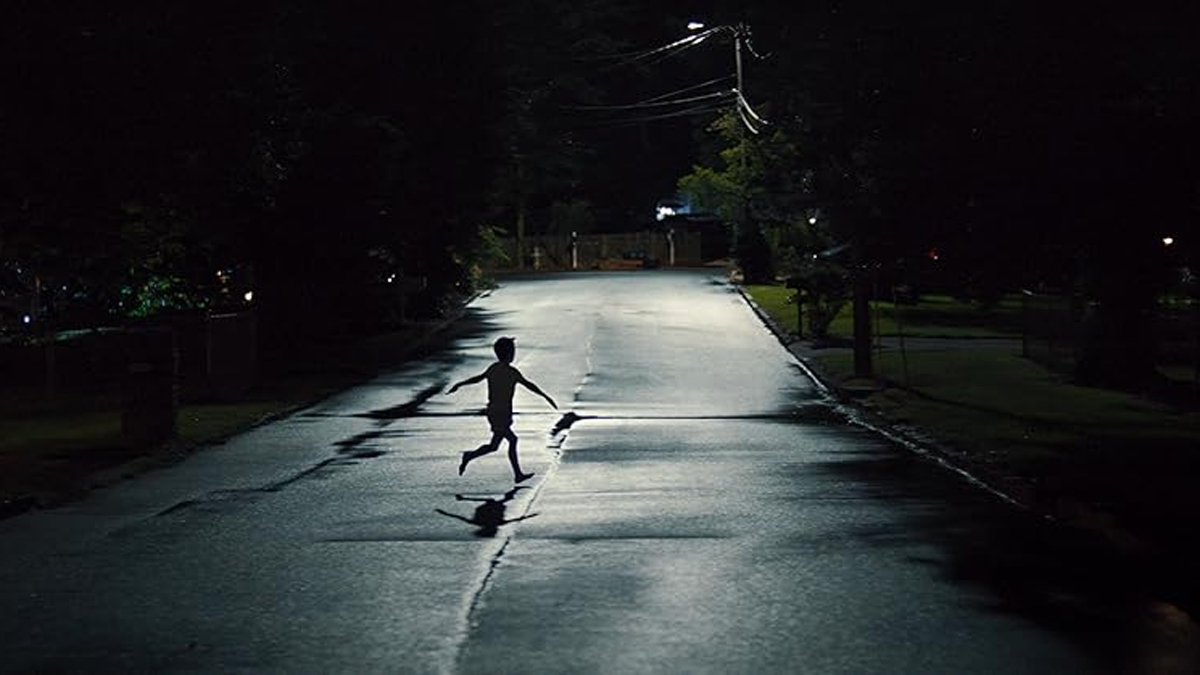
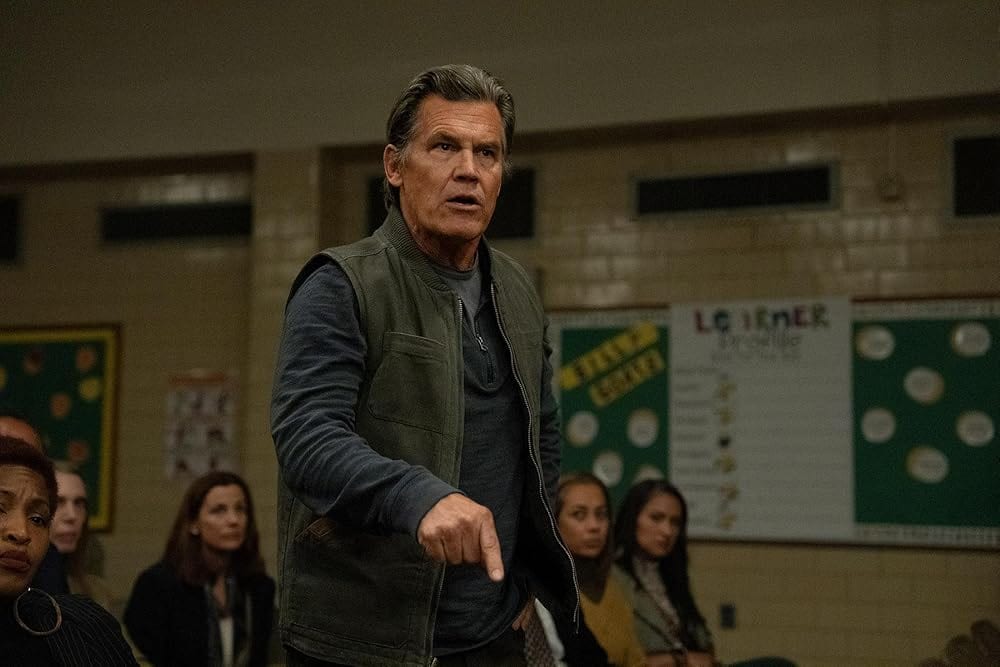
Weapons is not a true story. And for great lengths of the film, neither is it a horror story. It’s not an allegory for school shootings, as far as I can tell, despite the ominous title and a scene where Archer Graff (Josh Brolin), the father of one of the missing children, sees a giant floating semi-automatic weapon in the sky. Weapons isn’t even the movie it was originally supposed to be, one where Pedro Pascal plays Archer instead of Josh Brolin, and different actors play the other major roles. Production delays resulted in the entire cast dropping out and having to be recast, with the Fantastic Four’s Julia Garner as school teacher Justine Gandy, whose entire class mysteriously disappears save for one boy, Alex (Cary Christopher). Weapons isn’t quite like anything you’d expect, even from writer and director Zach Cregger, whose Barbarian in 2022 was fresh and frightening, a genuine horror movie delight. What Weapons is, for certain, is a masterfully crafted multi-perspective tale of a mystery that slowly unravels into a gruesome crescendo and is one of the best films of 2025.
ALSO READ:
13 Terrifying-But-True Horror Stories Reported in the News
This is also certain: Barbarian was no fluke. After Cregger’s debut film grossed an astounding $45 million against it’s pauperish $4 million budget, there was a mad scramble by studios to secure the rights to produce and distribute Weapons, resulting in an intense bidding war in 2023 that saw Warner Bros’ New Line Cinema emerge victorious and A-list horror auteur Jordan Peele, who was bidding with Universal Pictures, firing his reps for losing out. And boy, did they lose out. Weapons is a visceral cinematic experience that grips audiences and never releases its chokehold, peeling back the mystery of a small American town’s tragedy little by little through short, intersecting chapters featuring the film’s different characters.
There are parallels to the German legend of the Pied Piper of Hamelin who, when he was shortchanged by the town’s leaders after eliminating their rat problem, enchanted the children of the town to follow him into the mountains, never to be seen again. In the legend, one crippled boy was too slow to follow the parade and was left behind, similar to how Alex was the only boy who didn’t mysteriously disappear into the night. But if the Pied Piper was some sort of cautionary tale, with moral lessons about keeping promises or being wary about charismatic strangers, Weapons keeps its overarching message and diablerie close to its chest. Audiences never know what’s going on any more than the confused and grieving townsfolk of Maybrook, and we’re learning everything in real time.
Josh Brolin in 'Weapons'
With Barbarian, Cregger demonstrated impeccable skill in layered storytelling, keeping the terror under wraps until it was time to unmask the film’s villain, whereupon everything escalates all the way to the end. Weapons follows a similar cadence, beginning with a child’s narration that states, “This is a true story”. It isn’t. At least, we should all hope not. But it is inspired by the very real disappearances of children — a child is abducted or reported missing every 20 seconds in the United States — and a personal tragedy. Cregger wove his grief into a story that pulls audiences in by involving us in the grieving process. Most of the film is spent following the characters, in some cases, quite literally using wonderful steadicam tracking shots, and examining how the disappearance of 17 children has impacted their lives. It’s punctuated by a few jump scares and unsettling imagery, but for the most part, Weapons spends its time showing audiences a community in pain, from Archer’s misplaced anger towards Justine to Justine’s survivor’s guilt and self-destructive behavior.
Something bad just happened to the town, so most of the time, the audience is bracing for the worst, and what’s going on in our heads is just as frightening as what we actually already know. The more we learn, the more questions we have; it’s such effective storytelling that when Cregger finally draws back the curtain, it’s almost kind of disappointing. I say almost because the flip side is that by the time the film finally reaches its grisly climax, audiences will understand how Weapons is one of the most satisfying horror films in a long, long time.
Weapons isn’t just good horror, it’s a good, solid story with compelling characters who go through very human struggles. The characters aren’t just there for the body count but for us to share in their pain. The people in Maybrook are lost, even those who aren’t parents of missing children. We see their collective grief and their attempt to move on, on top of life’s regular tedium. Grief is a horror in itself, as is loneliness, and Weapons drags audiences through that pain with the unwelcome bonus of unspeakable evil. Cregger pays homage to Paul Thomas Anderson’s Magnolia (incidentally also by New Line Cinema), weaving a tapestry of stories that overlap, albeit more directly than Magnolia’s tangential mosaic. Barbarian’s Justin Long makes a brief cameo, likely another nod to PTA’s frequent collaborations with specific actors. Weapons’ focus on the townsfolk has surprising depth, but Cregger pushes the story in terrifying, unexpected directions.
There are fewer comedic moments in Weapons than in Cregger’s directorial debut, and pathos instead takes the place of humor. It’s not as depraved as Barbarian, but it’s just as sinister. Weapons isn’t anything you’d expect, but the story is so beautifully told that it also feels like there was no other way it could have gone. Does Cregger answer all our questions? Not by a long shot. It won’t even explain the significance of 2:17 am, the time when all the children leave their houses and run into the night with arms outstretched. But it’s such a solid, satisfying story that the questions don’t even matter. You’ll forget to ask why everything is happening because the how is so horrifyingly entertaining. In fact, the biggest question horror fans will be asking — just as all the studios were asking Cregger after Barbarian’s success — is ‘is there more where this came from?’ For all our sakes, the answer had better be ‘yes’.