

Today I Learned: How an Ilonggo Doctor Discovered Erythromycin

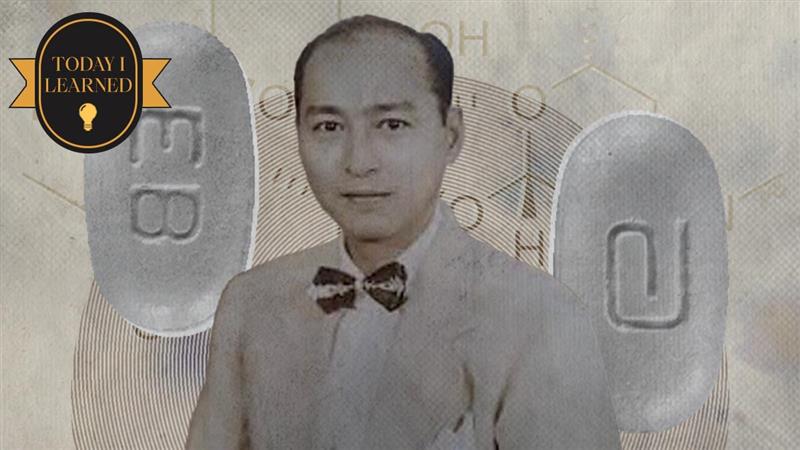
ILLUSTRATION: Design: Igi Talao
Many of us have likely heard of or used erythromycin. It's a widely-used antibiotic for treating various bacterial infections, including respiratory, skin, and some sexually transmitted infections. It's an alternative for those allergic to penicillin and has been in use for over 70 years.
But unknown to many, an Ilonggo physician was instrumental to its discovery—Dr. Abelardo B. Aguilar, who used to work as a medical representative for the U.S. pharmaceutical firm, Eli Lilly and Company.
The Origins of Erythromycin
In 1949, Dr. Aguilar discovered the antibacterial properties of Saccharopolyspora erythraea (formerly known as Streptomyces erythraeus). He sent samples of this species—which some accounts claim he obtained from Molo cemetery, while others suggest it was from his own backyard—to the company's research laboratory is the U.S. for testing. These samples became the source of the antibiotic we came to know as erythromycin.
In a memorandum dated June 28, 1952, John H. Blair, then Far East District Manager, said: “Preliminary tests and clinical trials establish this antibiotic to be as effective as penicillin-like products without allergic manifestation and gastro-intestinal side-effects common to some other antibiotics. Oral administration is effective in one hour and the drug is detectable in the bloodstream for eight hours.”
The antibiotic was introduced to the market in 1952 under the names Ilosone and Ilotycin, acknowledging the antibiotic's origin.
Subsequently, on July 2, 1952, Blair sent Dr. Aguilar a letter, recognizing his contributions. “Your associates from the Philippines and around the world I am sure, are appreciative of the importance of your submitting the soil sample responsible for the development of Ilotycin (Eryhromycin, Lilly),” Blair wrote in a letter, which was published on The News Today. “The importance of this discovery is evidenced by the construction of the huge antibiotic Tippecanoe Laboratory representing expenditure of millions of dollars in anticipation of increased volume of sales. Numerous other as yet invisible improvements and changes are also in process. In the end of these changes will be the people that will be benefited by the curative properties of this new product. Your country will be publicized as being the source of the discovery.”
ALSO READ
Two Filipino Scientists Honored with Prestigious International Science Award for Work on Snail Venom
Meet the Filipino Scientist Who Won the 2022 United Nations Sasakawa Award
Doctor of the Poor
However, to the Filipino doctor's utter dissapointment, he did not receive any financial compensation for his milestone discovery. The company's local counterpart, Eli Lilly Philippines, thru its spokesperson Amador Astodillo, initially declined to comment on the matter, and later told the local media that the Manila office is not authorized to address royalty payment concerns.
Four years later, on September 16, 1956, Dr. Aguilar reached out to Eugene Beesley, the President of Eli Lilly. “I am proud to inform you that for eight years now, I have been faithfully and loyally working with Eli Lilly International Corporation as a Medical Representative assigned in Western Visayas, Republic of the Philippines,” he wrote.
Dr. Aguilar proceeded to detail his role as the medical representative involved in the discovery of erythromycin, mentioning Blair's promise to secure “some form of recognition like a trip to Indianapolis and see for myself the vastness and greatness of the Lilly manufacturing plant.” In the same letter, Dr. Aguilar also requested for a leave of absence. Both requests were denied.
The doctor later decided to leave Eli Lilly and establish his private practice in Iloilo City. He earned the reputation of being the “doctor of the poor,” for his compassion to patients who couldn't afford treatment.
Dr. Aguilar spent many years seeking compensation and recognition from Eli Lilly, but his efforts were futile. On his deathbed, he urged his daughter, Maria Elena Aguilar-Paguntalan, to continue his fight.
In a poignant letter written shortly before his death in September 1993, he requested a $500 million royalty from Eli Lilly, expressing his intent to use these funds to support impoverished and ailing Filipinos by establishing a foundation. This caught the attention of government officials, including then Health Secretary, Juan Flavier.
Eli Lilly eventually responded, calling Dr. Aguilar's plea an “unusual compensation request,” adding that the company does not give its employees royalties or compensation beyond their salary and benefits.
Flavier succinctly put it: “Dr Aguilar has contributed so much in the discovery of erythromycin. It is sad to hear that he got nothing out of it.”
