

Why Are Jellyfish Swarming off the Beaches of Bohol?

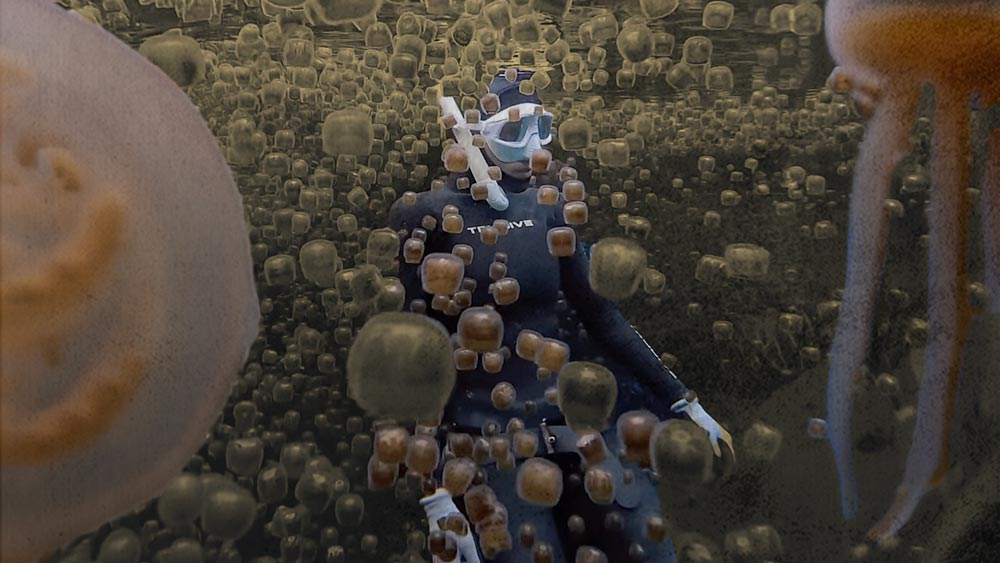
Swarms of jellyfish, locally known as bolbog, have been spotted in two areas in Bohol, particularly at Napaling Point of Barangay Tangnan in Panglao and Mabaw Reef of Barangay Taloto in Tagbilaran City.
A video of a scuba diver Hwajin Lee swimming among these translucent shapes has been circulating on social media, offering a scene that is both eerie and mesmerizing.
What's the reason behind this spectacle, you might ask? What's with the waters of Bohol?
ALSO READ
Why Are Thousands of Birds Flocking to Bataan?
The Philippine Squirrel Was Recently Spotted in Ormoc
According to Johann Tejada, spokesperson of the Bureau of Fisheries and Aquatic Resources (BFAR)-Central Visayas (Region 7), the sighting of swarms of jellyfish on the island is a natural phenomenon dictated by the ocean's dynamics.
“We could associate the presence of jellyfish with areas in a body of water that are rich in nutrients," Tejada said. He added that environmental conditions, particularly the tropical nature of the Philippines, makes it naturally conducive to such occurrences.
The event in Bohol coincided with reports from the Philippine Atmospheric, Geophysical, and Astronomical Services Administration on rising temperatures despite intermittent weather caused by low-pressure areas.
“In hot weather, phytoplankton perform photosynthesis,” Tejada said, pointing out that plankton serve as a primary food source for many jellyfish species.
The swarming of jellyfish also happens in Europe's beaches, and the European Environment Agency offers different insights to these incidents. According to its website, a jellyfish explosion indicates significant changes in the marine ecosystems driven by factors such as climate change, nutrient enrichment, tourism, and fishing.
"As larger fish are removed from the food chain, jellyfish face less competition for their own food," the agency said.
It added that climate change has resulted in warmer seawater and increased salinity, creating favorable conditions for jellyfish growth. Furthermore, the influx of nutrients from industry, households, and agriculture has boosted the plankton population, providing more food for jellyfish.
Jellyfish stings can trigger allergic reactions that result in itchiness, swelling, shortness of breath, coughing, wheezing, and a sensation of fullness in the mouth, throat, or neck, warns Tejada. He thus cautioned beachgoers to avoid entering the seawater when jellyfish are present.
