Today I Learned: Heat Makes People More Depressed and Aggressive

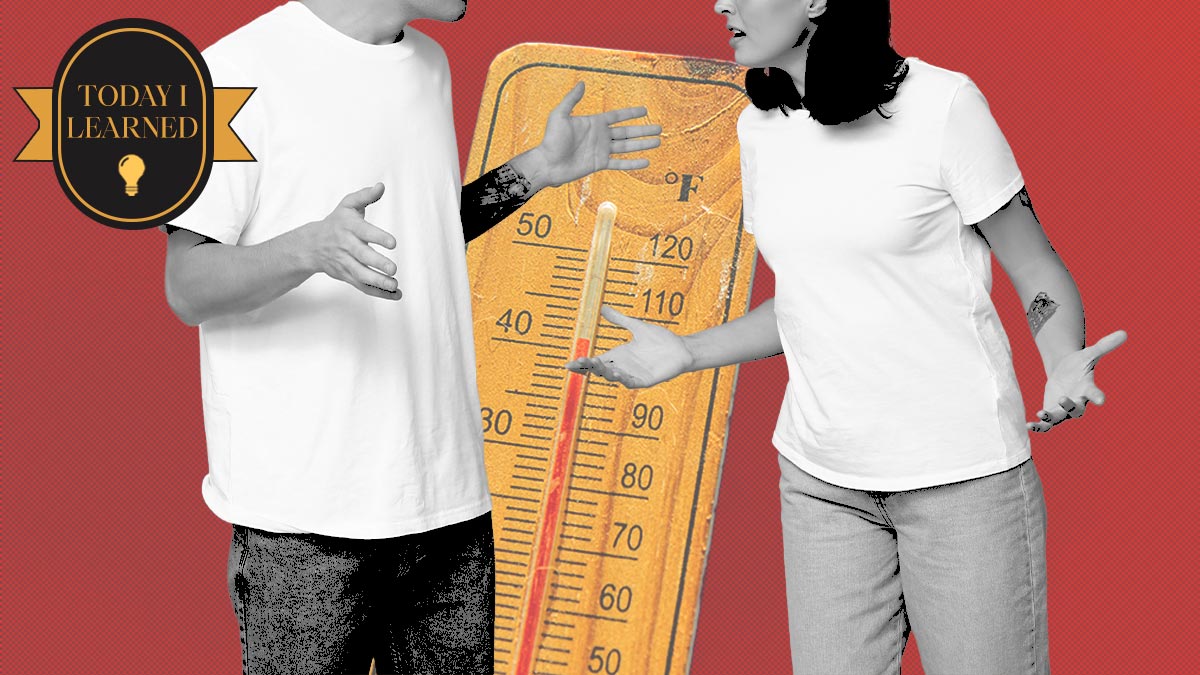
Ever found yourself snapping at someone on an unbearably hot day? Or feeling more sluggish than usual when the sun is beating down on your head? We’ve all been there—melting in traffic, stuck in an overcrowded bus, drenched in sweat before even making it to work. It takes a lot of willpower to not let it all get to you. Not surprisingly, extreme heat can directly impact our mental health, making us irritable, anxious, impulsive, and even depressed.
In the Philippines, where temperatures range from 27 to 45 degrees Celsius, heat remains ever-present. But during summer days when temperatures can even reach up to 40s or more, it’s not just uncomfortable, it can ultimately mess with—not only your physical health—but your mental health as well.
Jane Gilbert, the world’s first Chief Heat officer, said: “Extreme heat can make people more depressed or irritable, it can bring on psychotic outbreaks and people on certain psychiatric medications are more sensitive to heat.”
Studies have found that mental health-related visits to the emergency room spike on the hottest days, violent crime rates climb with the temperature, and cognitive performance declines.
But what is it about the heat that turns us into short-tempered, impulsive, and downright aggressive beings?
Sweating the Small Stuff
It’s no secret that heat waves are becoming more frequent and intense. In March 2025, the Philippine Atmospheric Geophysical and Astronomical Services Administration (PAGASA) warned that Metro Manila and 10 other areas may experience “danger level” heat indices, with temperatures reaching up to 45 degrees Celsius.
And when the temperatures rise, so does the metaphorical heat in the room—and we don't mean the sexy kind; it's that people tend to get grumpier when it’s hot. Studies show that extreme heat increases irritability and aggression. One reason for this? Our brain chemistry.
According to Dr. Kelly Rohan, a clinical psychologist at the University of Vermont, certain neurotransmitters such as norepinephrine, dopamine, and serotonin, play roles in both mood regulation and thermoregulation. Dysfunctions in one or more of these neurotransmitter systems might increase the risk of depression and reduce an individual's ability to tolerate heat and humidity.
Dr. Craig Anderson from Iowa State University also found out that people may also perceive vague or ambiguous gestures as more aggressive in hot temperatures. “When you perceive other people behaving more aggressively, that increases the likelihood that you’ll see yourself as being provoked and responding in a more hostile manner,” he said.
Here’s a familiar scene: you're standing under the scorching sun, desperately hoping for a jeepney, bus, or taxi to arrive. As you wait, you make eye contact with a random stranger. Instead of a simple, friendly encounter, you find yourself fighting the urge to roll your eyes or snap at them for staring. Well, now you know that it could just be the heat affecting you both.
So instead of provoking an argument with your neighbor or snapping at wet market vendors—calm down, drink some water, and walk away.
ALSO READ
Today I Learned: Using Your AC and Fan Together Saves Energy
Today I Learned: Living in Extremely Hot Cities May Be Speeding Up Your Aging Process
Heat, Crime, and Aggression
Unfortunately, it’s not just a matter of short fuses and sniping at strangers. Crime rates have long been known to spike during hot weather. A study analyzing crime data in 28 cities in the United States (U.S.) found that unseasonably warm days led to a 9.4 percent increase in aggravated assaults, a 19.4 percent increase in homicides, and a four percent increase in robberies.
Another study on seven U.S. cities revealed that every time temperatures increased by five degrees Celsius, there were roughly five percent more sexual offenses and assaults the following week. While in Japan, an analysis conducted between 2012 and 2015, showed a linear increase between both ambulance transports due to assault and daily temperatures. A 2021 study revealed that even in highly regulated environments like prisons, heat significantly impacts behavior, resulting in an 18 percent increase in violence among inmates.
In an interview with OneNewsPH, Dr. Joan Mae Perez-Rifareal, President of the Philippine Psychiatric Association, said: “Maaaring sa sobrang init, with the mind-body connection, kapag tayo ay exposed sa extreme heat, naga-activate [ang ating utak] ng cortisol. It’s a stress hormone, naa-activate ang ating fight or flight response, and may pagtaas ng adrenaline levels. May impact ito sa ating mood, causing us to feel irritable, impatient, madaling ma-frustrate. Physically, we feel sluggish, [there’s] physical discomfort, and it can cause sleep disruptions. And when anyone is sleep deprived, our mood and cognitive state are affected. This includes our impulse control, decision-making, memory, concentration, motivation, etc.”
In the Philippines, where overcrowding and economic stress already contribute to everyday stress and social tensions, rising temperatures could worsen crime and domestic violence rates. This highlights the need for urban cooling strategies, more green spaces, and accessible mental health resources.
Last year, the Climate Change Commission (CCC) and the Department of Health (DOH) aimed to collaborate further on addressing climate change’s impact on the health of the Filipino people. CCC Vice Chairperson and Executive Director Robert E.A. Borje said, “The nexus between climate change and health is not just a choice; it’s an imperative. Our experiences have shown us that our well-being is intricately linked to the health of our planet. Recognizing this connection is key to building a resilient and sustainable future for all.”
This Heat Is Making Us Feel Blue
Heat doesn’t just affect our mood and make us more aggressive, it can also severely impact our mental health. “Iba-iba ang mga pinagdadaanan natin [at] sources of stress. But definitely, isang source of stress ang environmental stress, temperature, extreme heat. Because there are things beyond our control—and [the environment] is one of them. Kaya nagkakaroon ng anxiety, because it’s something beyond our control—kung gaano kainit. Ang tawag natin dito ay heat stress. It’s very complex, the interplay [between] temperature and mind-body connection,” Dr. Perez-Rifareal explained.
Researchers have also found that mental health-related emergency room visits and hospitalizations and deaths increase along with the rise in temperature. Those with schizophrenia, dementia, psychosis, and struggle with substance use are particularly vulnerable—for every one degree Celsius increase, there is also an approximate five percent increase in risk of death. Having a preexisting mental illness also puts you at twice or thrice the risk of mortality during extremely hot situations. Ironically, some psychiatric medications also have the potential to impair the body’s ability to regulate heat.
Unfortunately, this is an understudied field as most Seasonal Affective Disorder (SAD) research is geared toward addressing winter cases as summer-related SAD is much less common. Either way, both winter and summer-related SAD have behavioral effects. Those with winter-related SAD report weight gain, an increase in appetite, and prolonged sleeping, while those with summer-related SAD lose weight, appetite, and sleep or have insomnia.
This is especially concerning for countries like the Philippines, where access to mental healthcare is limited and uneven—due to stigma, affordability, and scarce resources. In a statement released by the Philippine Mental Health Association (PMHA), they stressed that there is less than one mental health worker for every 100,000 Filipinos. Without proper intervention or more action from the government, the extreme heat—especially during the summer season—could drive up cases of untreated depression, anxiety, and other mental illnesses.
Keep Your Cool
As climate change continues to push temperatures to new heights, the impact of heat on mental health will only become more urgent. Governments must recognize the psychological dangers of rising heat and implement policies to protect vulnerable populations, create more green spaces, and invest in mental health policy implementation—hopefully way more than the three to five percent expenditure budget for the Mental Health Act.
On an individual level, staying cool isn’t just about comfort—it’s about protecting your mind. As younger generations put it, it’s about “protecting your peace.” Simple measures like staying hydrated, avoiding outdoor activities during peak heat, and seeking shade can make a big difference. When indoors, find the right balance between air conditioning and fans to keep the house cool while also being economical. Our article on using AC and fan together—and how it can reduce energy use by a third—is worth a try. You can also try taking cold showers whenever possible.
So the next time you find yourself feeling more irritable or anxious when it’s particularly hot, remember: it’s not just in your head. The heat really is messing with our minds. Take a deep breath, meditate, drink some water or take a quick shower, and keep your cool.