
Today I Learned: Nighttime Scrolling Delays Sleep More Than a Double Espresso

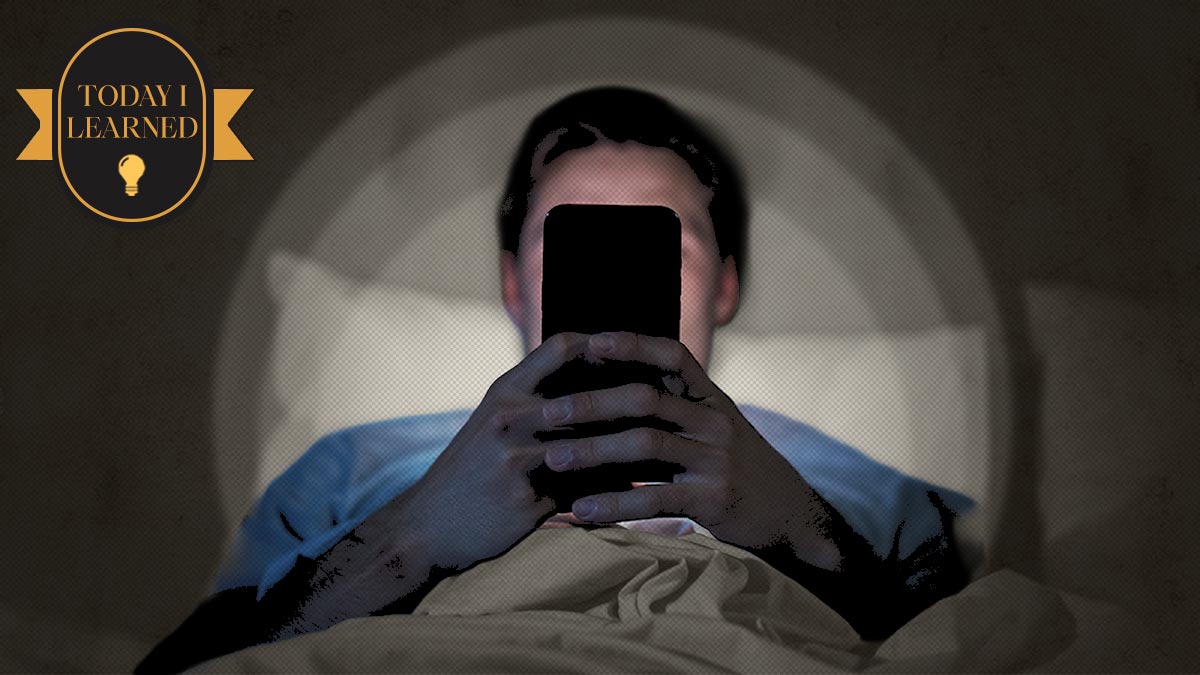
It’s midnight. The lights are low, pillows fluffed, you’re wearing your cozy pajamas, and wrapped yourself into a burrito blanket. All ready to go to sleep, but why not check your Instagram one last time before clocking out for the day? Five minutes—ten minutes tops. Before you know it, you’ve gone down a TikTok rabbit hole, doomscrolled through the news, viewed pretty much all of your friends’ Facebook stories, and all of a sudden, it’s 3 a.m.
And you wonder why you can’t fall asleep.
For those who can’t seem to put their phones away during bedtime, scientists have crunched the numbers. Science says that looking at your phone before bedtime can mess up your sleep badly, it’s even worse than drinking a double espresso—as far as your brain’s internal clock is concerned.
Wake Up, It’s Time to Sleep
First things first: blue light is not inherently evil. In fact, it’s everywhere—sunlight, LED bulbs, screens—and during the day, it’s actually helpful. It boosts alertness, elevates mood, and keeps your circadian rhythm (a.k.a. your internal body clock) in check.
But the moment you introduce blue light at night by pulling up your phone, iPad, or Kindle, you’re basically telling your brain that it’s high noon.
Our phones emit a high concentration of short-wavelength blue light. And according to Harvard researchers, this type of light suppresses melatonin—the hormone that signals your body it’s time to sleep—twice as much as green light and significantly shifts your circadian rhythm by about three hours. Three hours isn’t a small thing; it’s basically a biological jet lag.
Professor Matthew Walker from the University of California-Berkeley stresses that exposure to light from tablets at full brightness can suppress melatonin levels by up to 23 percent. So while you may think you’re relaxing with your bedtime YouTube binge, your brain thinks you just landed in Dubai, bright-eyed and pumped full of energy.
Even relatively dim light can influence melatonin secretion. In one study by researchers at the University of Toronto, they found that hormone levels were the same for the two test groups: those who were exposed to bright indoor light but were wearing blue-light-blocking eyewear and the other group who were exposed to dim lighting but without goggles. This highlights the strong effect of blue light in suppressing melatonin.
Just as Strong as Espresso
Melatonin basically signals your body that it’s time to go to sleep. It increases in the evening to help you wind down, peaks in the middle of the night so you can sleep soundly, and tapers off as morning approaches. But when you’re exposed to light before bed, your body sends all the wrong signals.
In 2015, researchers from the University of Colorado Boulder and Cambridge ran a study that compared the effects of evening caffeine versus bright light exposure. They found that roughly two cups of coffee delayed the body’s internal clock by about 40 minutes. Meanwhile, exposure to bright light—for example, your phone’s screen—delayed the internal clock by twice that.
“We found the equivalent amount of caffeine as that in a double espresso [consumed] three hours before bedtime induced a phase delay of the circadian melatonin rhythm in humans by 40 minutes. This magnitude of delay was nearly half of the magnitude of the phase-delaying response induced by exposure to three hours of evening bright light that began at bedtime,” the research says.
A study published in The Journal of Clinical Endocrinology & Metabolism found that exposure to room light before bedtime suppressed melatonin by over 50 percent in 85 percent of their trials—and that’s just room light. The study done by researchers from the Division of Sleep Medicine, Brigham and Women's Hospital and Harvard Medical School concludes, “Chronically exposing oneself to electrical lighting in the late evening disrupts melatonin signaling and could therefore potentially impact sleep, thermoregulation, blood pressure, and glucose homeostasis.”
Yup, using your phone and exposing yourself to room light before sleeping is even worse than drinking two cups of coffee. While we’ve all heard the advice about avoiding caffeine at night, now there’s a new warning in town: Put away the phone before bedtime and turn off the lights. And it’s not just the phone—we’re also talking about laptops, e-Books/electronic readers, iPads, et cetera.
In a 2014 Harvard study, participants who read on an e-reader for four hours before bed had 55 percent less melatonin secretion than those who read printed books. Their melatonin onset was delayed by over 90 minutes, and it took them longer to fall asleep. Even more troubling? Even though they slept for eight hours, they were still sleepier the next morning than those who read a printed book the night before.
Dr. Anne-Marie Chang, one of the Harvard researchers behind the study, told the Scientific American in 2015 that “participants who read on light-emitting devices took longer to fall asleep, had less REM sleep, and had higher alertness before bedtime [than those who read printed books]. We also found that after an eight-hour sleep episode, those who read on light-emitting devices were sleepier and took longer to wake up.”
The caffeine-light comparison might not capture all the nuances, but the point stands: your phone is giving your brain a chemical jolt that it should be wide awake when you least need it.
Does ‘Night Shift’ Work?
Your bedtime screen time is not just delaying your sleep, it’s ruining your sleep cycle and mental health. And if you think you’re safe because you use “Night Shift or Dark Mode” or you have a blue light filter or dim the brightness to the lowest possible settings, we’ve got bad news.
In 2021, a study published in Sleep Health found that iPhone users who used Night Shift mode before bed didn’t see any significant improvement in sleep quality compared to those who didn’t. Turns out, lowering the blue light alone isn’t a magic fix. Screen brightness, duration of exposure, and mental stimulation all play their part.
When the analysis was done with participants who had above-average sleeping times, those who didn’t use their phones had better sleep quality (in terms of efficiency and less time awake during sleeping hours). But as with the initial study, there was no difference in using “Night Shift.” In other words, drop the phone altogether; it’ll just get you better sleep.
One sleep medicine expert, however, begs to add further context when it comes to the impact of blue light. While exposure to light and devices can impact your sleep, Dr. Michelle Drerup from the Cleveland Clinic argues that “the content you’re looking at probably has more of an impact than the blue light from the screens.”
In other words, the content you consume matters too. There’s definitely a difference between checking out an anxiety-inducing work email or watching a heart-stopping action-thriller film versus listening to spa music or watching Headspace videos on YouTube.
“Studies indicate that more passive use of technology such as listening to music via your phone or watching a non-distressing TV show doesn’t really have an effect on sleep compared to active use…Active use includes things like texting or social media,” Dr. Drerup explains.
Even if you manage to fall asleep after doomscrolling and stalking your crush’s Instagram page, the quality of that sleep may be compromised. Sleep is broken down into different stages, and the REM sleep stage is crucial for cognitive function, brain development, emotional processing, memory consolidation, and more. These are essential processes happening while you sleep, and unfortunately, your gadgets are making it so you’re getting less of it. Less REM sleep equals less brain function and development; it’s as bad as it sounds.
Dr. Carl Rosenberg, an expert on sleep disorders, wrote in a Sleep Health Solutions article that electronics usage decreases REM sleep. Some long-term effects “include daytime grogginess, inability to focus, mood swings, and chronic sleep deprivation.” One of his recommendations? Go screen-free for 30 minutes to an hour before sleeping. You will thank yourself the next morning for the deep, uninterrupted sleep.
Gadget-Addicted, Sleep-Deprived Zombies
According to a 2025 report earlier this year, the Philippine Society of Sleep Medicine Inc. (PSSMI) shared in a press conference that six out of 10 Filipinos are sleep-deprived. We’re the top in Southeast Asia when it comes to sleep deprivation, number four in the entire world.
In an ABS-CBN News article, Dr. Rodolfo Dizon Jr., president of PSSMI, explained that “[The Philippines has] the highest levels of noise pollution and stress, and many people are working late hours, disrupting their circadian rhythms and contributing to widespread sleep disorders.”
Dr. Dizon further stressed that it’s also because of digitalization: “It’s very hard to avoid using tablets, cellphones, even TV, before sleeping.”
Unfortunately, funding for sleep science is lacking as it’s not seen as a priority, Dr. Lizon lamented. While there’s Senate Bill 2063 (introduced in 2023), also known as the Sleep Disorder Awareness and Education Act, there’s still hardly any progress in making people understand that sleep (in terms of quantity and quality) is a health concern that we should be taking as seriously as cardiovascular and neurological issues.
PSSMI Vice President Dr. Jimmy Chang also added: “There are certain biochemical processes that occur during sleep. It’s when our brain washes away toxins accumulated from being awake.”
In the words of sleep scientist Dr. Matthew Walker: “We are a dark-deprived society.” And as we continue to live and operate in an increasingly electrified world, the cost to our health may be far greater than we suspect.
ALSO READ
Why Sleep Gets Worse As We Age
The Secret to Better Sleep Lies in What You Put in Your Bedroom
Art of Unplugging
We don’t exactly have to go back to candlelight and total darkness. Here are some strategies to keep your sleep on track without swearing off tech entirely:
1 | Set a digital curfew. Stop using screens for at least one to two hours before bed. Replace screen time with activities that can help you wind down: reading paper books (put away that Kindle), journaling, stretching, listening to soothing music.
2 | Dim the lights. Lower both ambient lighting and screen brightness. Your brain needs darkness to cue melatonin, so start dimming an hour before you go to sleep. But it’s best if you lose the lights altogether.
3 | Use night modes and blue light filters. They’re not perfect, but they help a bit, especially when combined with other strategies. Some phones even auto-adjust color temperature at sunset.
4 | Move your charger out of the bedroom (or at least away from the bed). If your phone isn’t within arm’s reach, you’re less likely to use it. Get a real alarm clock.
5 | Avoid stimulating content. Maybe save that thriller film or Twitter conspiracy thread for the morning after and stay away from checking work emails. Choose calm, soothing media—or better yet, none at all.
6 | Try blue-light-blocking glasses and blackout curtains. For night or graveyard shift workers whose schedules are upside down, you need to preserve melatonin production as much as you can by using hacks such as using blackout curtains that can plunge your room into darkness even if it’s the middle of high noon.
