
How Hazel Calawod Helped Carlos Yulo Win the Olympics

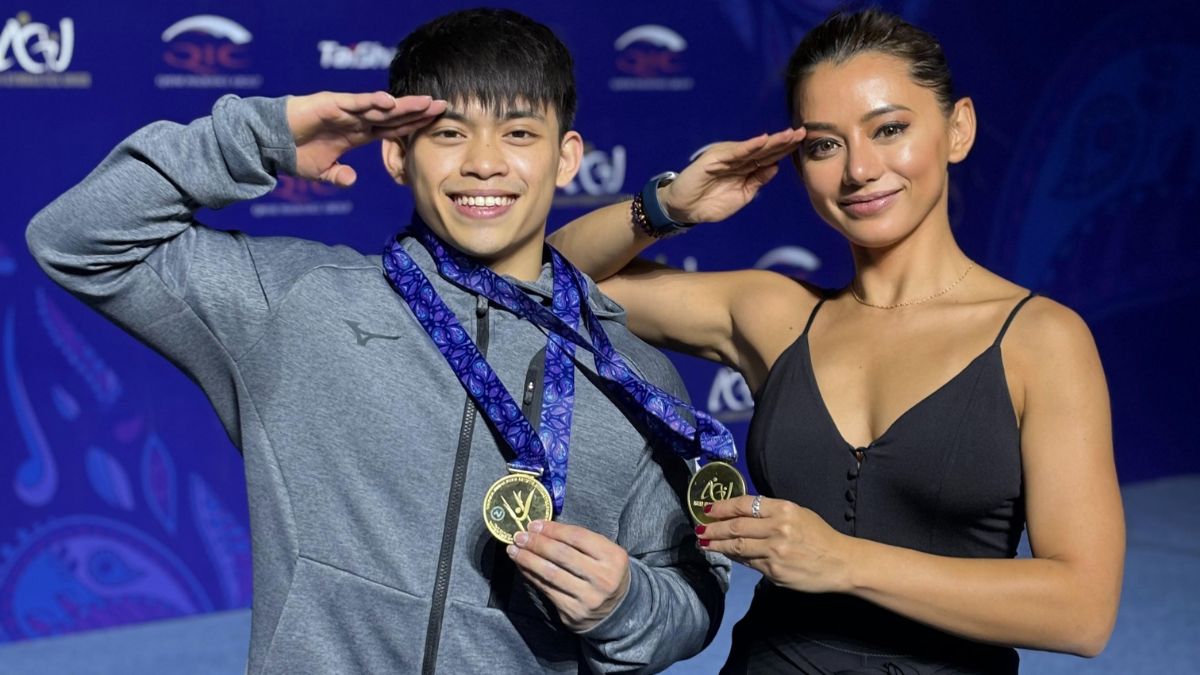
For an athlete to be the best in the world, a strong support system is fundamental. This consists of a team of experts who will guide them and help them achieve their full potentials in the sport. In the case of two-time Olympic gold winner Carlos Yulo, one of the key people who played a big role to keeping his body in tiptop condition is sports occupational therapist Hazel Calawod.
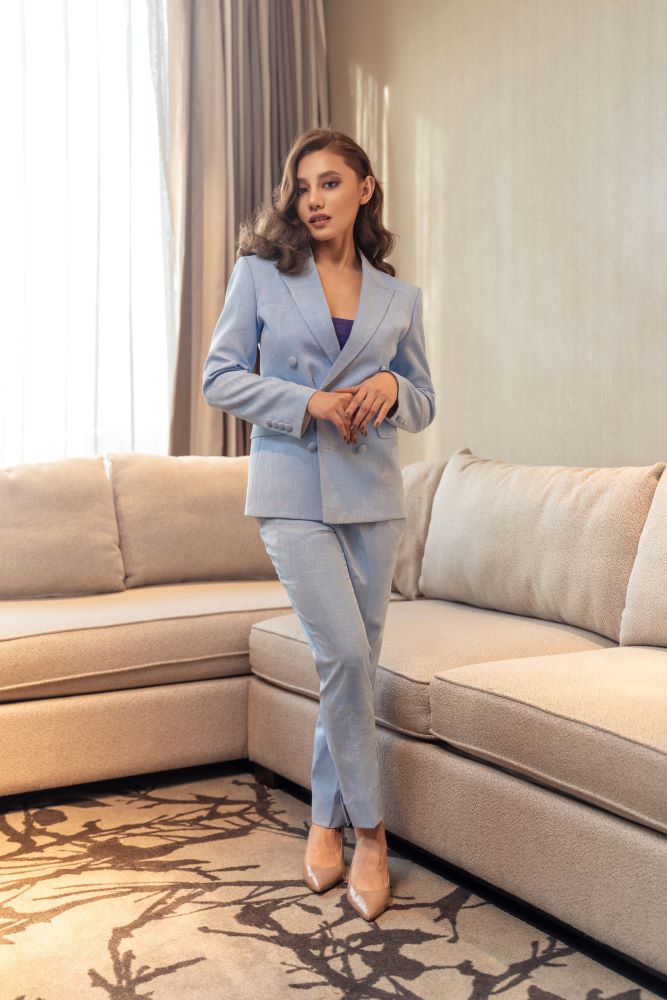
The University of the Philippines (UP) Manila alumna has a degree in Occupational Therapy and also received training in neuroscience, cognitive behavioral therapy (CBT), and dialectical behavioral therapy (DBT) in the United States. She runs a clinic in Quezon City called NeuroBalance, which provides speech therapy and other services for kids with special health care needs.
Calawod, an Ilongga, has been an athlete for most of her life—she was a softball player in high school and a varsity swimmer and hip-hop dancer in college—which is why sports continues to have a soft spot in her heart. This inspired her to set up a specialized department called Precision Sports Therapy that allows her to work with amateur and elite athletes. Among her past clients include the Maharlika Taguig Football Club, mixed martial arts fighters Mark Striegl, Eros Baluyot, and John Adahar. She has also worked with a triathletes, crossfitters, as well as basketball, football, volleyball players.
ALSO READ
Carlos Yulo Admits to Experiencing Depression While Undergoing Training
Why Is Carlos Yulo Carrying a Bottle of Honey and 'Tupperware' at the Olympics?
The Science Behind the Wins
Calawod met Gymnastics Association of the Philippines (GAP) president Cynthia Carrion through International Federation of Gymnastics (FIG) president Morinari Watanabe when the latter tapped Calawod for a research project aimed at using gymnastics to help the aging population stay healthy.
This gave Carrion the idea to hire Calawod to provide physical therapy for Yulo. During the training camp in Korea in early 2024, Yulo began considering the idea of having Calawod assist with his strength and conditioning.
"It's beneficial to do strength and conditioning because it can quickly strengthen your body and reduce the risk of injury," Calawod remembers explaining to Yulo. "If you focus only on gymnastics, the wear and tear on the same muscle groups can quickly lead to injuries."
During the training camp in Korea, Calawod started incorporating biomechanics in their program. "First, we fixed kung paano siya tumakbo sa vault at kung paano siya umapak sa springboard. Kasi based on physics and biomechanics laws, kapag konti lang yung apak mo sa springboard, konti lang din yung ibibigay ng springboard na force sa 'yo," she told Yulo. Then, the gymnast was made to practice jumping until he could get the right timing and force to rotate faster on the vault.
Calawod also got more involved in Yulo's gymnastics skills conditioning during his training camp in the United Kingdom, alongside Filipino-British gymnast Jake Jarman.
However, during the 2024 FIG Artistic Gymnastics Apparatus World Cup from March 7 to 10 in Baku, Azerbaijan, Yulo's performance was lackluster. He placed 41st in pommel horse, 18th in still rings, 21st in vault, 9th in parallel bars, 16th in horizontal bar, and 3rd in floor exercises. "He was very frustrated then," Calawod recalls. "He told me, 'Ma'am, ikaw ang nakikita kong makakatulong sa akin."
At that time, they were trying to get a Japanese coach to help Yulo, but the said coach was injured. "So kami-kami lang. Si Carlos, ako, si Coach Aldrin [Castañeda], kaming tatlo," said Calawod.
She then observed Yulo's training and utilized her skills in occupational therapy and data science in creating a training plan. "Nasa Azerbaijan pa lang, ginagawa na ako ng training plan niya," she recalls.
"If you want to win, you need to be battle ready. We need to have the mindset of a soldier. We're going on a mission together, soldier. Let's finish our objectives," Calawod remembers telling Yulo.
Switching Adrenaline
The challenge was that Yulo needed to train on six different apparatuses. "He starts from 9 a.m. to 12 noon, then have lunch. After that, he trains again from 1 p.m. or 2 p.m., depending on how he feels, until 5 p.m. or 6 p.m. Since he can't go through all six apparatuses immediately, he won't be able to master any of them."
To address this, Calawod built a structure and a tracking system to ensure Yulo's training is optimized. She studied gymnastics and found out from Coach Castañeda about Yulo's routines and skills. She analyzed and applied the judging criteria to his training. Yulo's training then turned into "biomechanics coaching," incorporating detailed anatomy lessons and specific muscle activation techniques to help him understand how his body functions and to improve his performance.
They started the program on March 14, and a couple of weeks later, Yulo competed at the Doha World Cup and secured a gold medal in the parallel bars and a silver in the vault. It just goes to show that their efforts were paying off.
Calawod also incorporated mental conditioning to help Yulo better prepare for the competition. "I noticed that he seemed to get rattled during the Azerbaijan competition. He was training properly and performing well during the warm-up. However, during the actual competition, his performance didn't peak. It's as if his peak comes during the warm-up, and he loses the real performance on the field of play," Calawod remembers.
"So I thought, maybe he doesn't yet know when to switch his adrenaline on and off. So I created a system. This way, he would get used to doing something immediately when told to go, and resting when told to rest. That way, his body would get used to knowing his rhythm," says Calawod.
Another thing Calawod noticed in Yulo after incorporating mental conditioning is that he became more prayerful. "For sure, more opportunities and what was meant for him were unlocked because of that," says the therapist.
Then when he competed in the 2024 Asian Championships in Tashkent, Uzbekistan on May 16 to 19, Yulo won four gold medals. They were stunned. "That just proved na effective ang methodology," she said, "and of course his gymnastics trainings."
Calawod, an Ilongga, has been an athlete for most of her life—she was a softball player in high school and a varsity swimmer and hip-hop dancer in college.
Battle ready
Normally, a therapist would only see an athlete twice a week, but Calawod decided to focus her attention on Yulo for proper monitoring. "I didn't want him to get injured. I was afraid that if I'm not there during his trainings, something might happen to him, and it won't be managed immediately, and the timeline of our preparations would suffer. Baka hindi pa siya manalo pag hindi siya matutukan.'" They also enlisted the help of rehab doctors, to make sure he's in the best shape possible.
One thing that Calawod also focused on is developing Yulo's competitive spirit, which she did through talk therapy. "When I first met him, he seemed very considerate of people. He's very humble to the point where during warm-ups, he would always let others go first before him. I told him, 'Your competitive spirit doesn't fully emerge during the competition because you’re trying to avoid taking the spotlight for yourself.'
"So, we trained to think like, 'If you want to win, you need to be battle ready. We need to have the mindset of a soldier. We're going on a mission together, soldier. Let's finish our objectives."
The result? An extraordinary victory. Achieving two gold medals at the Paris 2024 Olympics surpassed all their expectations. This success was the product of solid preparation and relentless dedication. "Carlos's prayerful nature, combined with the support from his team, was crucial. His determination to win, perfectly blended with these elements, led to this remarkable outcome," says Calawod.
