

Discovering Czechia: The Land of Castles, Literary Legends, and Beautiful Cities

Editor's Note: According to the AP Style Book, both "Czechia" and the "Czech Republic" are acceptable. The shorter name Czechia is preferred by the Czech government, while the country is more widely known in English as the Czech Republic.
The Czech Republic, or Czechia, was one of the countries on my Europe bucket list. The country first caught my attention when I read books by Franz Kafka and Milan Kundera. I fulfilled this fascination with the country when I had the opportunity to visit it.
Czechia is a landlocked country with a long and storied past that ties it to other countries surrounding it, such as Germany, Austria, Slovakia, and Hungary. Bohemia, Moravia, and Czech Silesia are its historical lands. At some point in the country’s history, German rulers, the Habsburgs, and the Soviets dictated its actions and policies. This intertwining of histories and cultures left indelible marks on the country’s architecture, religion, language, and psyche. Centuries of wars and the collapse of empires, such as the Hussite Revolution, the Thirty Years’ War, World War I and II, and the fall of the Berlin Wall, led to the country’s statehood. The country became known as the Czech Republic on January 1, 1993, after the dissolution of its union with Slovakia.
ALSO READ:
Istanbul on Foot: Following Orhan Pamuk's Memories of the City
Into the Gobi Desert: An Expedition through a Land of Contrasts
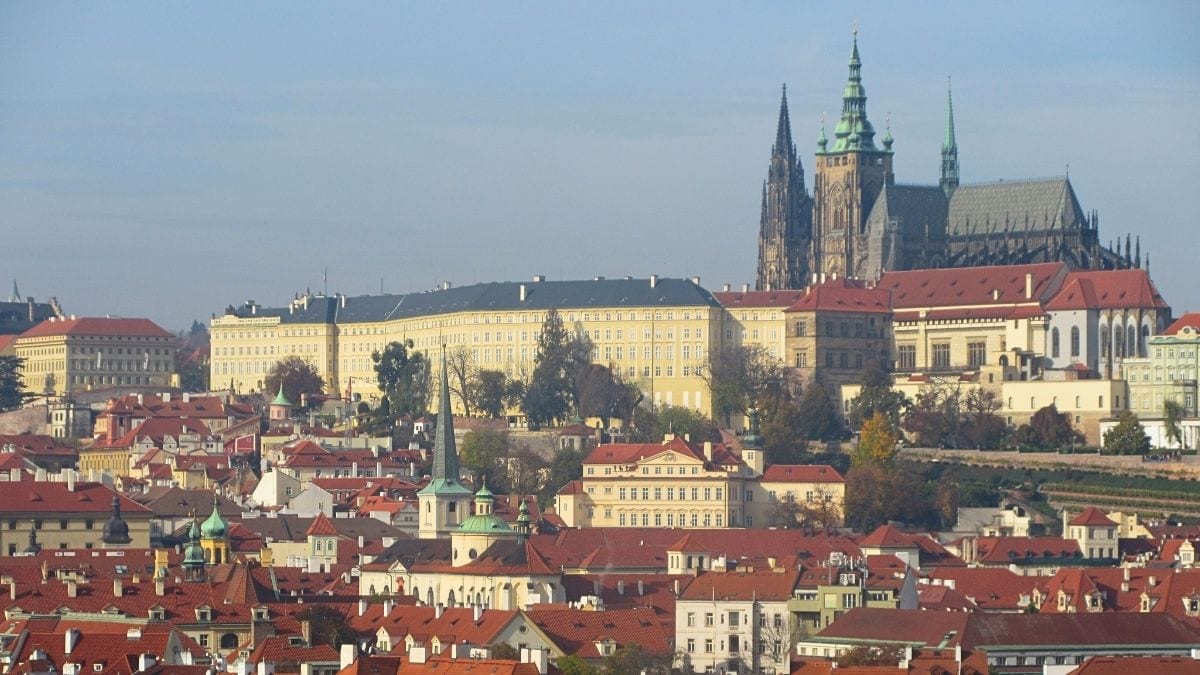
Spires and More Spires in Czechia
"Prague won’t let you go, the little mother has claws." - Franz Kafka
Prague, the capital of Czechia, is the country’s most beautiful city. I’ve been there a handful of times, but I still can’t seem to break free from its spell. It has one of the most preserved historic city centers on the continent, surviving the ravages and destruction of World War II. As you explore the city, architectural influences from Baroque to Gothic to Art Nouveau to Renaissance dot the neighborhoods. Even if you don’t have an eye for architecture, you can’t help but admire all that you’re seeing.
All roads lead to the city’s historic center. The square is home to the Tyn Church (Church of Our Lady before Týn), Old Town Hall, and the Prague Astronomical Clock (a.k.a. Prague Orloj). Tourists often congregate in front of the clock to watch a procession of figures (some of which are the Christian apostles) pass the face of the clock. Mikuláš of Kadan and Jan Sindel built the clock’s oldest part, which is more than six centuries old.
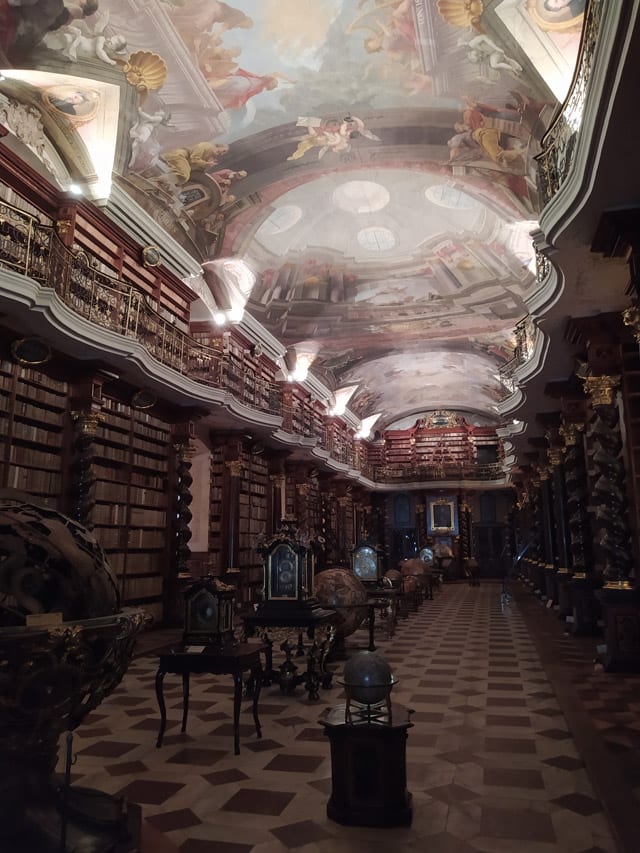
For a country that has a rich literary heritage, you’d want to visit some of its historical libraries. One such place that comes to mind is the Klementinum. This huge building complex houses thousands of printed works, some of which are centuries old. Its most famous and eye-catching section is the Baroque Library. You can also see why Prague is referred to as the “City of a Hundred Spires” from the Klementinum’s Astronomical Tower.
Klementinum
Many visitors and locals alike cross the Charles Bridge after exploring the historic center on their way to Prague Castle. It is popular for its connection to the city’s past (having been built in 1357) and the statues of prominent people on it, one of which is Holy Roman Emperor Charles IV.
Prague Castle is a recognizable feature of the city. It used to be the residence of ancient kings; thus, walking around its grounds will give you a sense of the city’s history. There are many noteworthy buildings in the complex, but the one that stands out the most is St. Vitus Cathedral. Charles IV commissioned work for a Gothic-inspired cathedral in 1344. However, it took several centuries for the church to complete construction.
Days of sightseeing can get tiring, thankfully, Prague is a city you can enjoy at a slow pace. There are plenty of cafes where you can try local delicacies or eat and drink familiar food. The Café Imperial (Circa 1914) boasts modern and ceramic décor and, like many parts of the city, gives you a glimpse into its past. If you have more days to spare, you can spend hours walking around the city and visiting its museums and other attractions.
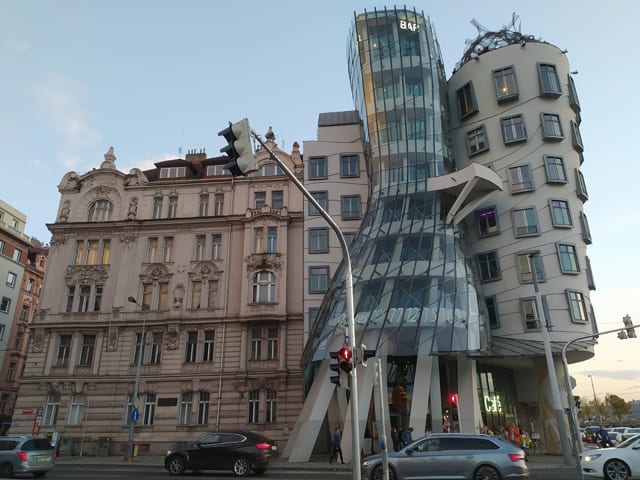
The Nationale-Nederlanden Building is popularly known as the Dancing House. It's also called Ginger and Fred, after the dancers Ginger Rogers and Fred Astaire, since it resembles a pair of dancers.
Of Castles and Royalty
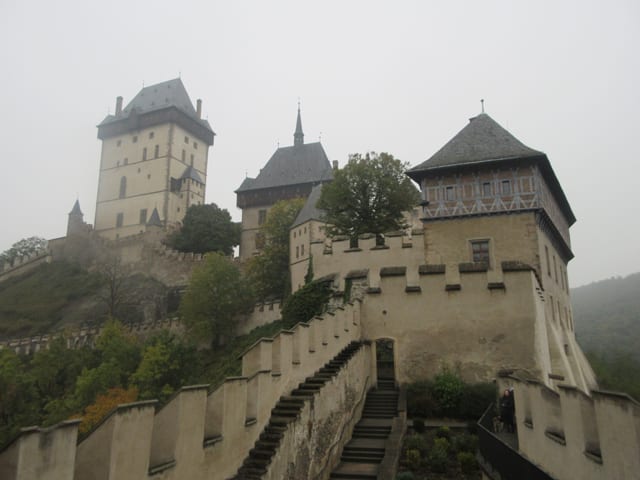
After exploring Prague, you can visit several castles on separate day trips from the capital. I would recommend visiting Karlstejn and Hluboka. I took the morning train from Prague to Karlstejn Station. After arriving at the station, it was a short walk through a small town, with restaurants and shops selling merchandise related to the castle. Charles IV had Karlstejn Castle built in the mid-14th century. It served as his residence and housed holy relics and royal treasures. In 1365, the construction of the castle concluded after the consecration of its chapels.
Karlstejn Castle
The size of Czechia makes it convenient to stay in Prague and still catch a glimpse of the different cities and attractions in the country as day trips. Hluboka Castle is no exception. I took the bus to Ceske Budejovice and then took another bus to Hluboká nad Vltavou, Pod kostelem, the nearest stop to the castle. I bought my ticket online so that I’m guaranteed a timeslot to enter.
The white and lavish exterior of Hluboka Castle often reminds visitors of Windsor Castle in England, and even I would agree with this description after seeing photos of the latter.
The State Chateau of Hluboká
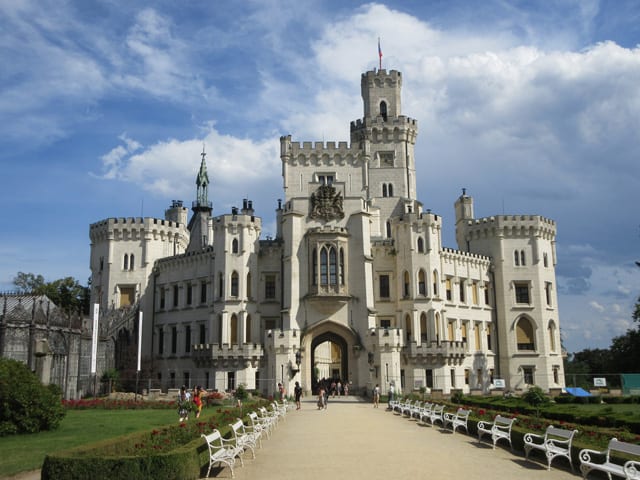
Hluboka Castle traces its history back to the 13th century when Czech kings built it and fortified it as a guard castle. The Schwarzenbergs bought the estate in the 17th century. Their family rebuilt the castle using Neo-Gothic design in the 19th century. You can’t take pictures inside, but you’ll at least get a feel of the extravagant lifestyle of its residents.
Tracing Jose Rizal’s Footsteps in Brno
I included Brno, the second largest city in Czechia, in my itinerary. As much as possible, I try to venture out of the capital and see what else there is to see in a country. One other reason I visited Brno is its connection to Philippine history.
Jose Rizal spent some time in the former Austro-Hungarian empire, stopping in Prague, Litomerice, and Brno.
Then there's Prague-born teacher Ferdinand Blumentritt, who wrote extensively about the Philippines despite never visiting the country and kept close correspondence with Rizal despite only meeting once in Litomerice in May 1887.
Rizal's farewell letter to Blumentritt, written at Fort Santiago on the eve of the hero's execution, is kept and preserved at the Ceske Budgejovice Regional Museum and City Archives. It says, according to an article by historian Ambeth Ocampo:
"My dear brother:
When you receive this letter, I shall be dead. Tomorrow at seven, I shall be shot; but I am innocent of the crime of rebellion. I die with tranquil conscience. Farewell, my best, my dearest friend, never think ill of me!
Fort Santiago. December 29, 1896
Jose Rizal
My best wishes to your family: Frau Rosa, Loleng, Curt, and Friedrich."
On the margin, Rizal added: "I leave you a book as a souvenir."
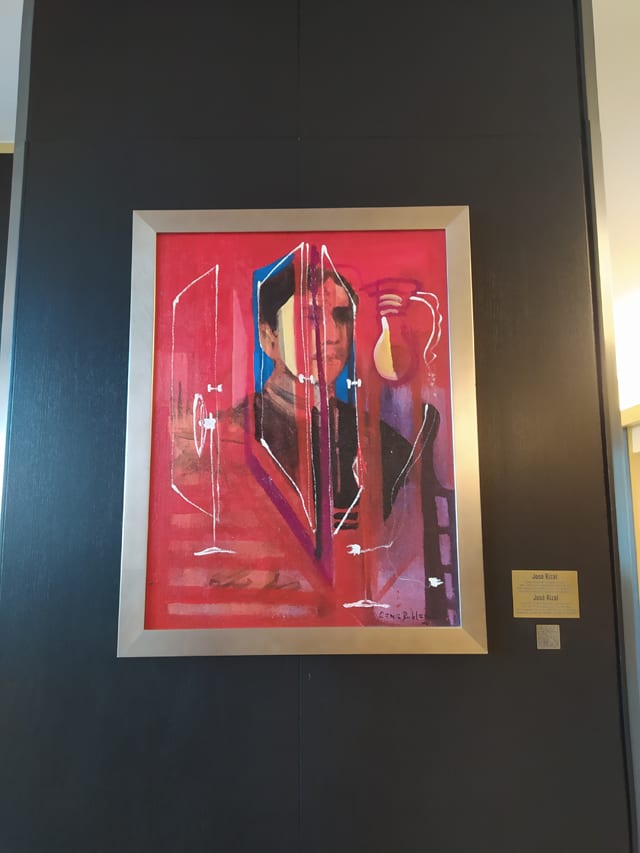
I made a quick stop to see Rizal’s portrait hanging on the wall at the Grandhotel Brno before exploring the city.
In 2017, the Philippine Embassy in the Czech Republic installed this original painting by renowned artist Rene Robles at the Grandhotel Brno on the occasion of Rizal Day. It also marked the 130th anniversary of the hero's visit to Litomerice, Prague, and Brno.
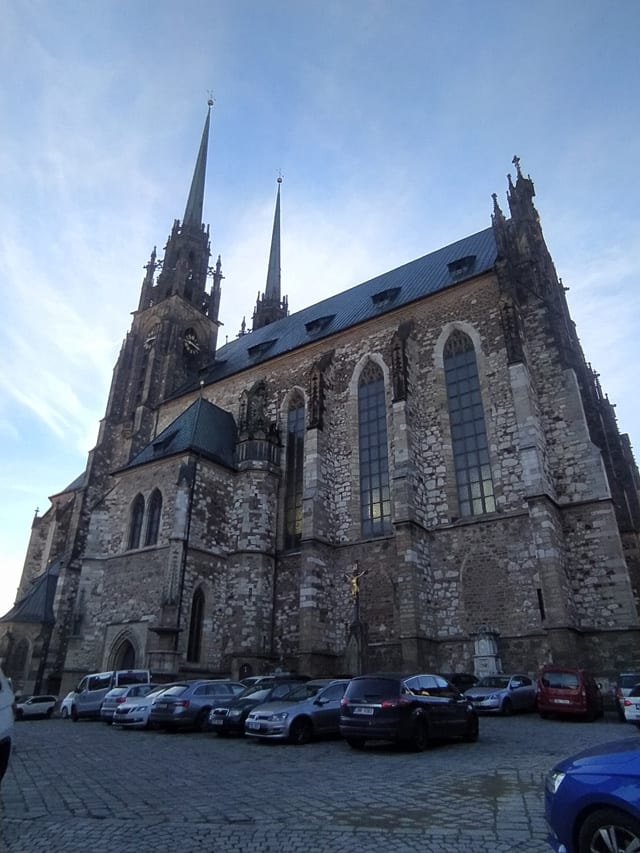
The Basilica of St. Peter and St. Paul is a recognizable cultural monument sitting atop Petrov Hill. Its beautiful exterior will lure you in, while its interior will captivate you with its Baroque design.
Basilica of St. Peter and St. Paul
As mentioned, Czechia has plenty of castles you can visit, and you can add Spilberk Castle to your itinerary. King Premysl Otakar II had this castle constructed in the 13th century. It was a fortress to fend off invaders and later a notorious prison. Today, it’s a popular museum and events venue and serves as a vantage point for beautiful overlooking views of the city.
Czechia is a fascinating country that I wouldn’t mind visiting again and again. Prague is one of the most beautiful European cities I’ve been to (IMO, I’d rank it higher than Paris) where you can visit its many attractions or simply relax in. The cities outside the capital deserve attention with their own distinct history and charm.
