We're inside the Langun-Gobingob Cave, the largest cave complex in the country. This is what we found.
Post a Comment
The Langun-Gobingob Cave is the largest cave complex in the country. Once known as the Calbiga Cave, it spans seven kilometers and features 12 chambers, some so big that small skyscrapers can fit inside.
Robbed of sight, I focus on the pitter-patter of water droplets, the clicking of bats, the chirping of birds. Staccato echoes bounce around the cavern, making it hard to distinguish exactly where the critters are. I inhale deeply. The damp air smells musty, old and very much alive.
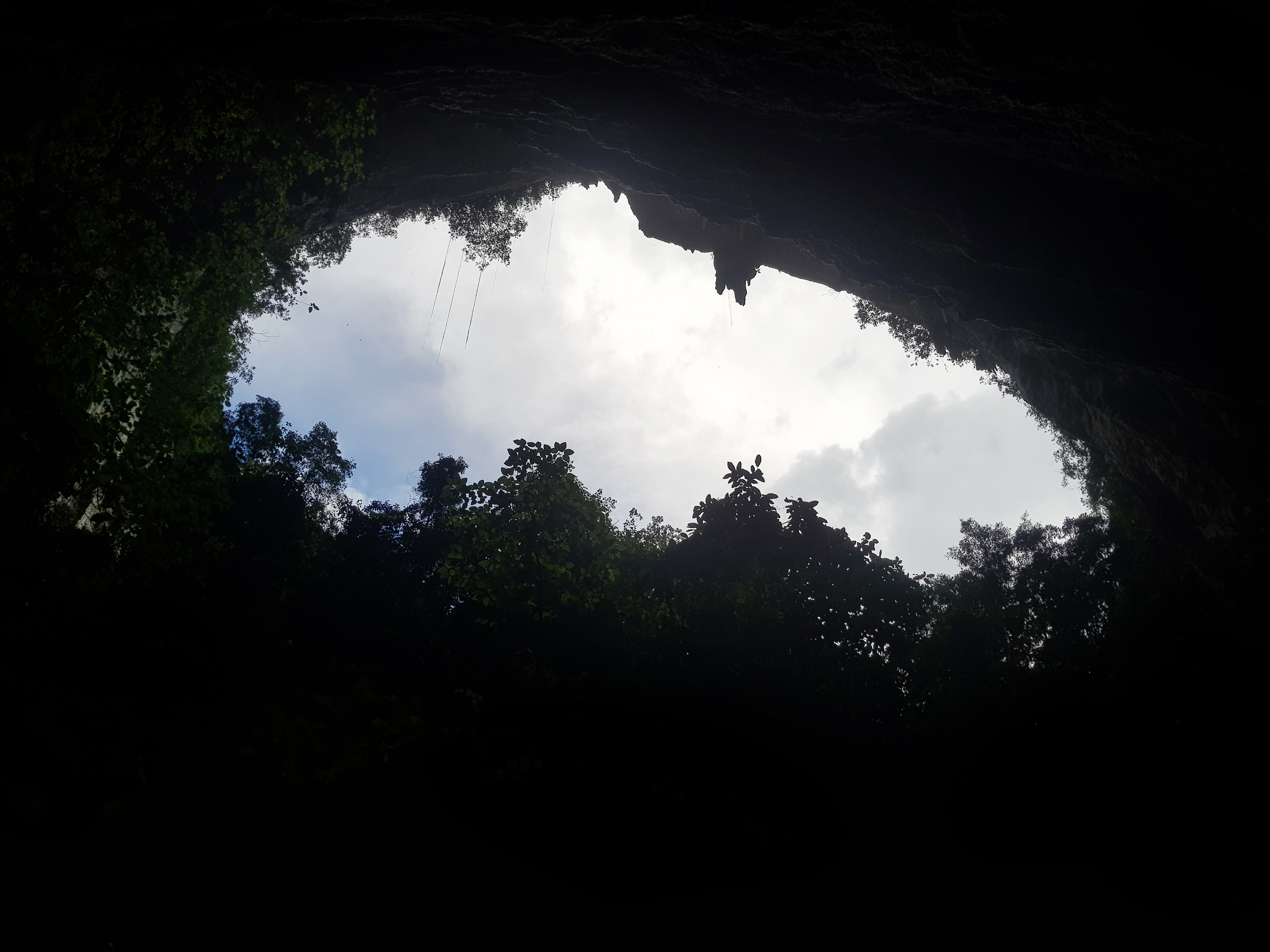
View from below: Many cave systems extend hundreds of meters below the surface of the earth. The entrance of the Langun-Gobingob Cave, the largest of all Philippine caves, is the only portion bathed in sunlight.
ADVERTISEMENT - CONTINUE READING BELOW
“Done recording ambient cave sounds. We can turn on our lights and go,” says LUPAD director Nataniel Luperte. Together with the Department of Environment and Natural Resources (DENR), Department of Tourism (DOT) and the LUPAD film crew, our team from the United Nations Development Fund’s Biodiversity Finance Initiative (UNDP-BIOFIN) is helping document several protected areas in the Philippines.

Light in the darkness. LUPAD production staff Mon Peter de Pedro illuminates the cave’s stone-strewn substrate with his trusty superlight.
PHOTO: Iven Brylle Bersaluna
Post a Comment
Caves are underground chambers, usually situated in mountains, hills, or cliffs. They are special ecosystems that need our protection, particularly from unscrupulous miners who would break apart tons of rock for a handful of precious stones.
Our team slowly activates helmet-mounted headlamps, illuminating an eerie landscape. It’s a mustard-hued mosaic of shapes: spikes, pillars, every shape and figure you can imagine. Down here where darkness rules, your mind does a lot of imagining.
CONTINUE READING BELOW
watch now

Strange land. Professional cave guide Alvin Rafales, UNDP-BIOFIN’s Angie Ogena, and author Gregg Yan in front of a three-meter tall calcite pillar, a structure that has been continuously growing for millions of years.
Our headlamps barely pierce the darkness, so a powerful superlight is unleashed to gauge just how high the cave is. I estimate it to be at least a hundred feet tall. “There’s an even bigger chamber up ahead, large as a football field,” says cave guide Alvin Rafales.
ADVERTISEMENT - CONTINUE READING BELOW
We saddle up and continue wending through a warren of chambers, careful to minimize what we touch to avoid smearing dirt, oil and acids on the ancient structures. Suddenly Alvin points to something coiled around a pillar. A menacing, meter-long rat snake. “It hunts birds, not people. It won’t harm us if we leave it alone.”
Unique But Threatened Biodiversity
Samar Island, overshadowed by more popular places like Palawan and Boracay, isn’t usually considered a top tourist destination, owing to its long history as a hotbed for insurgencies and a punching bag for typhoons.
“Samar is unique because it is a karst landscape made primarily of limestone. Millions of years of weathering has created numerous caves and sinkholes on the island,” explains Anson Tagtag, head of the Caves, Wetlands and Other Ecosystems Division of the DENR. “Caves are special ecosystems which harbor highly-evolved fauna, most of which have adapted to darkness.”
Though the Philippines’ third largest island exudes rugged beauty, its real value as an ecotourism destination lies beneath the earth.
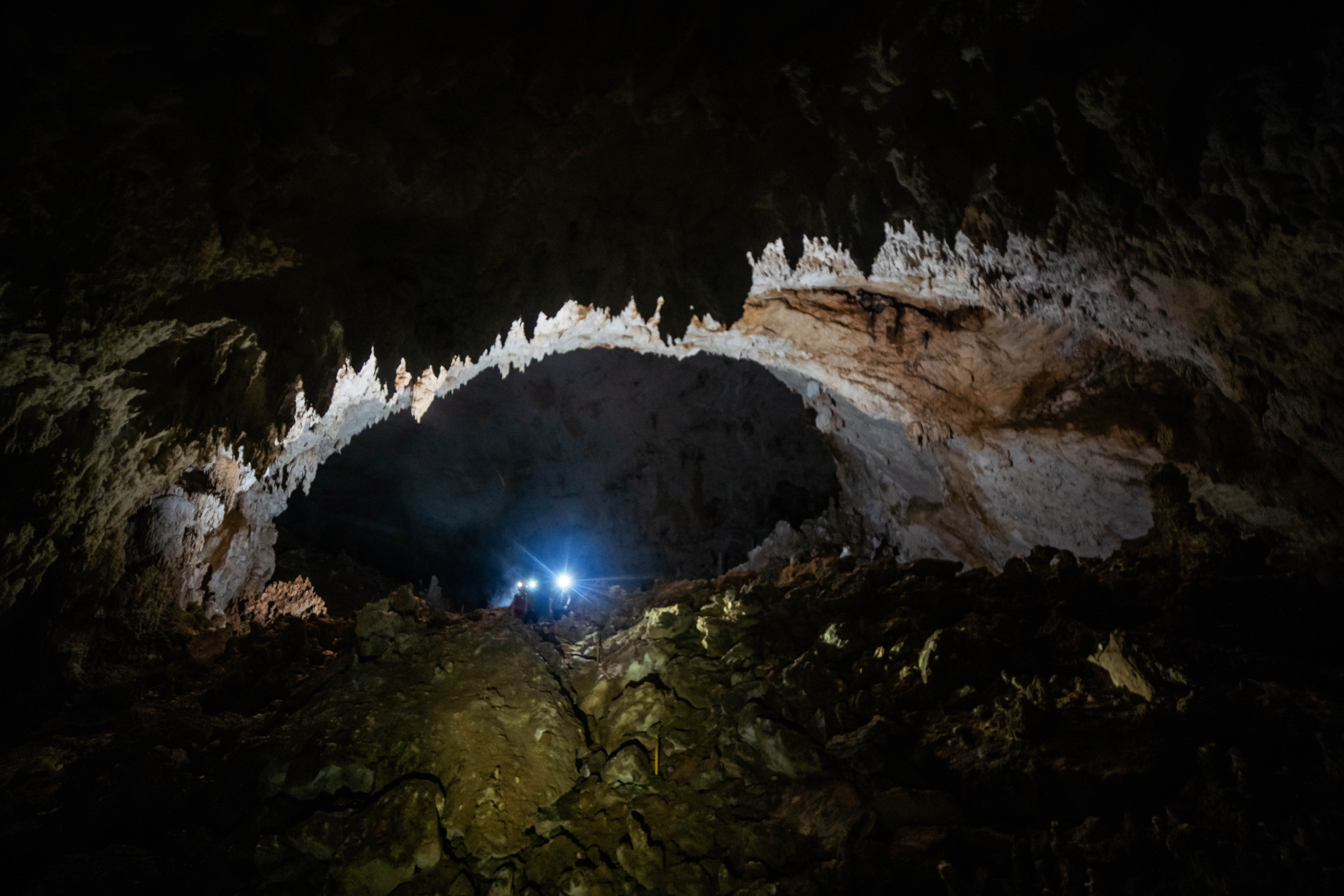
Subterranean spectacle. The Langun-Gobingob Cave features 12 immense chambers over its seven-kilometer span. Some chambers are so huge they can double as hangars for mid-sized airplanes. The stalactites at the top are as large as cars.
ADVERTISEMENT - CONTINUE READING BELOW
Birds, bats, spiders, snakes, crickets and even blind cave fish thrive inside the Langun-Gobingob Cave. The lack of light confines plants to entrances, but mushrooms and other types of fungi cling to life as discreet denizens of the dark.
“The speleothems or rocks in caves are in a very real sense ‘alive’ – they just grow and move at timescales difficult for people to comprehend,” explains Dr. Allan Gil Fernando, a professor at the National Institute of Geological Sciences in UP Diliman. “The constant dripping of water for instance leaves minute traces of minerals like calcite. Over time these traces pile up to form hanging stalactites and their inverted kin, stalagmites. It takes about a century for a stalactite or stalagmite to grow one inch.”
It is because of their surreal beauty that many caves are sundered.
“People used to enter the Langun-Gobingob Cave to break apart and mine stalagmites and white calcite rocks for collectors,” says Samar Island Natural Park (SINP) Assistant Superintendent Eires Mate. Our guide Alvin confirms this. “Locals used to mine the cave for Taiwanese businessmen, who paid a paltry PHP7 for a kilogram of rock. Balinsasayao or swiftlet nests were plucked out too, to be shipped to Chinese markets.”
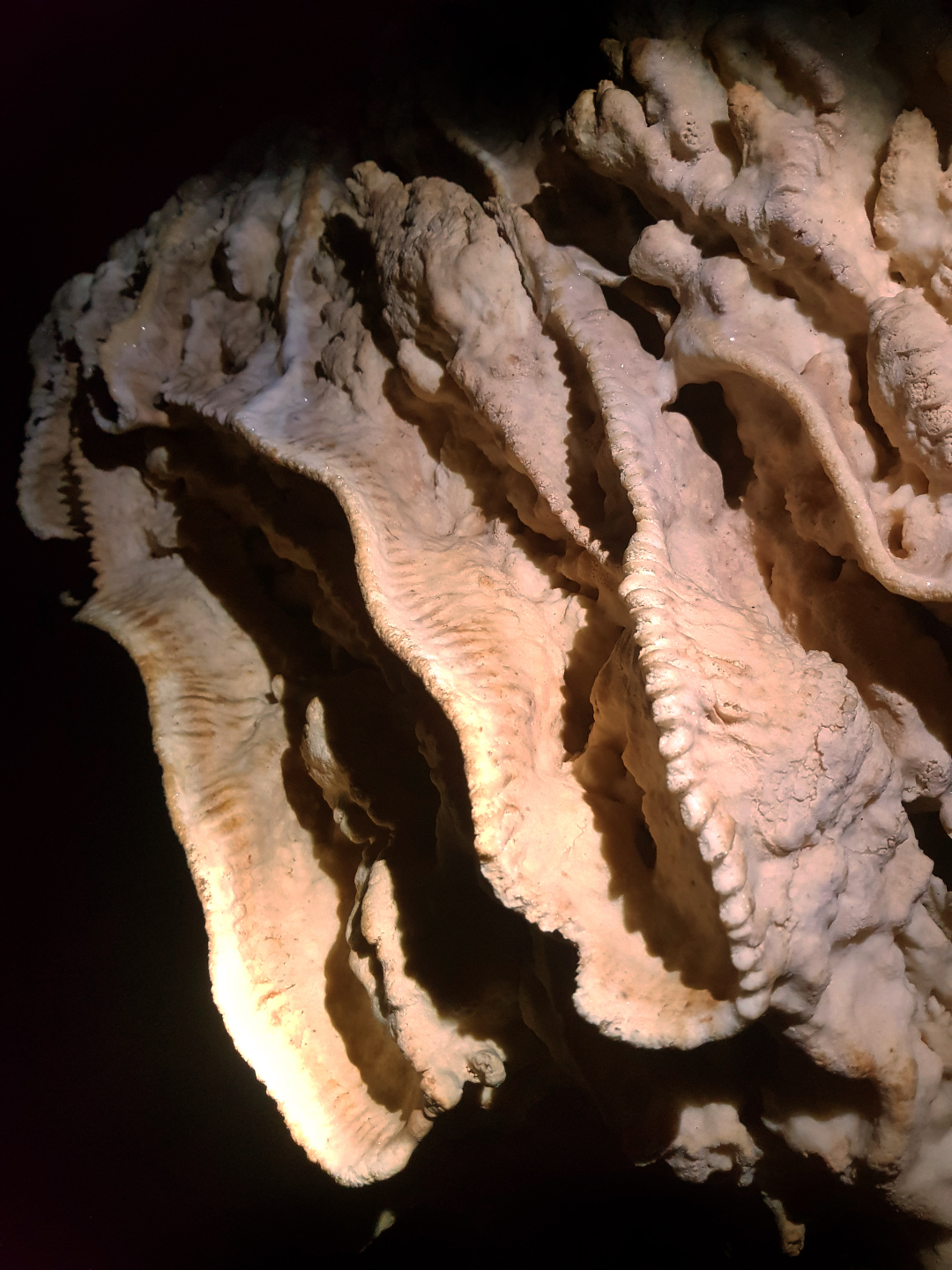
Coralline creation. Many speleothems or formations inside the cave look eerily like corals. This calcite formation looks like the skeleton of an elegance coral (Catalaphyllia jardinei). A cave system’s rocks are in a very real sense, ‘alive’ and constantly growing. Nature is the world’s greatest sculptor.
PHOTO: Gregg Yan
Post a Comment
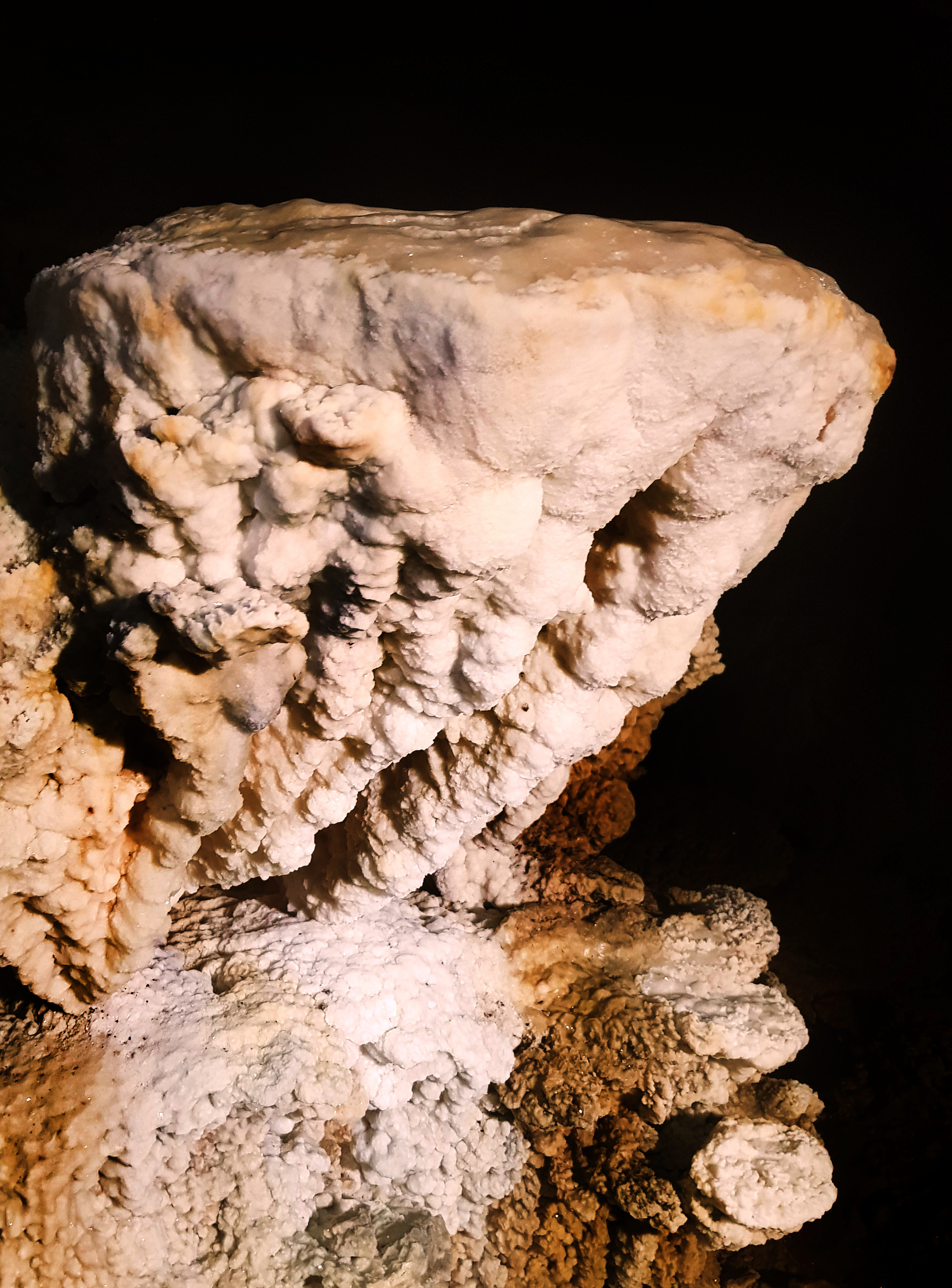
Fragile ecosystems. This formation looks like a massive boulder coral (Porites spp).
PHOTO: Gregg Yan
Post a Comment
”Tourists have to understand that cave ecosystems are fragile. Unlike surface ecosystems, they are irreparable. Leaving crumbs, stepping on microhabitats, disturbing animals with too much noise or light – small things we often don’t think about – can have catastrophic impacts,” explains Tanya Conlu of the GAIA Exploration Club.
The cave was finally declared a protected area in 1997. “Thank God for legal protection. Mining was effectively stopped,” says Eires. The Langun-Gobingob Cave is just one of many natural systems benefiting from the country’s protected area system.
“Declaring key biodiversity sites as protected areas is one of the best ways to ensure that future generations can continue enjoying their beauty,” says UNDP-BIOFIN Manager Anabelle Plantilla. “Visitors should positively support local communities but be mindful of the environmental impacts of their travels. They should for instance, avoid taking wild plants or leaving trash in tourist sites.”
Year of the Protected Areas
Launched in May of 2022, the Year of the Protected Areas or YOPA aims to generate tourism funds to ensure the continued management of protected areas hard-hit by COVID-19 budget cuts.
The Langun-Gobingob Cave is part of the Samar Island Natural Park (SINP), one of YOPA’s six highlighted parks, the others being the Bongsanglay Natural Park in Masbate, Apo Reef Natural Park in Occidental Mindoro, Balinsasayao Twin Lakes Natural Park in Negros Oriental, Mt. Hamiguitan Range Wildlife Sanctuary in Davao Oriental, and Mt. Timpoong Hibok-Hibok Natural Monument in Camiguin.

Millions of years in the making. They’re not real coral reefs, but these formations are made from the same mineral, calcium carbonate. Like real reefs, these intricate structures took millions of years to form.
The country’s caves are now open for tourism, but visitors should know what not to do inside them. “Cave tourism should be well managed and there are cave do’s and don’ts,” says Buddy Acenas from the GAIA Exploration Club, a Manila-based caving and exploration group. “A comprehensive assessment should be conducted before a cave is opened for tourism. Trained guides and set trails should be used to minimize human impacts. Like so many of our fragile wilderness areas, caves must be stewarded by those visiting them.”

Crystal glitter. Embedded calcite crystals made this wall gleam and glitter when hit by our headlamps.
For its part, the Philippine government is doing what it can to promote responsible tourism. "Our caves, mountains, beaches, and other protected areas are now open for tourism. We invite both Filipinos and foreigners to come and visit, but to do so in an environmentally-responsible manner," adds DENR-BMB Director Natividad Bernardino. “By practicing responsible and regenerative tourism in PAs, we’re helping our national parks flourish and recover from the economic blow they suffered from the COVID-19 pandemic.”
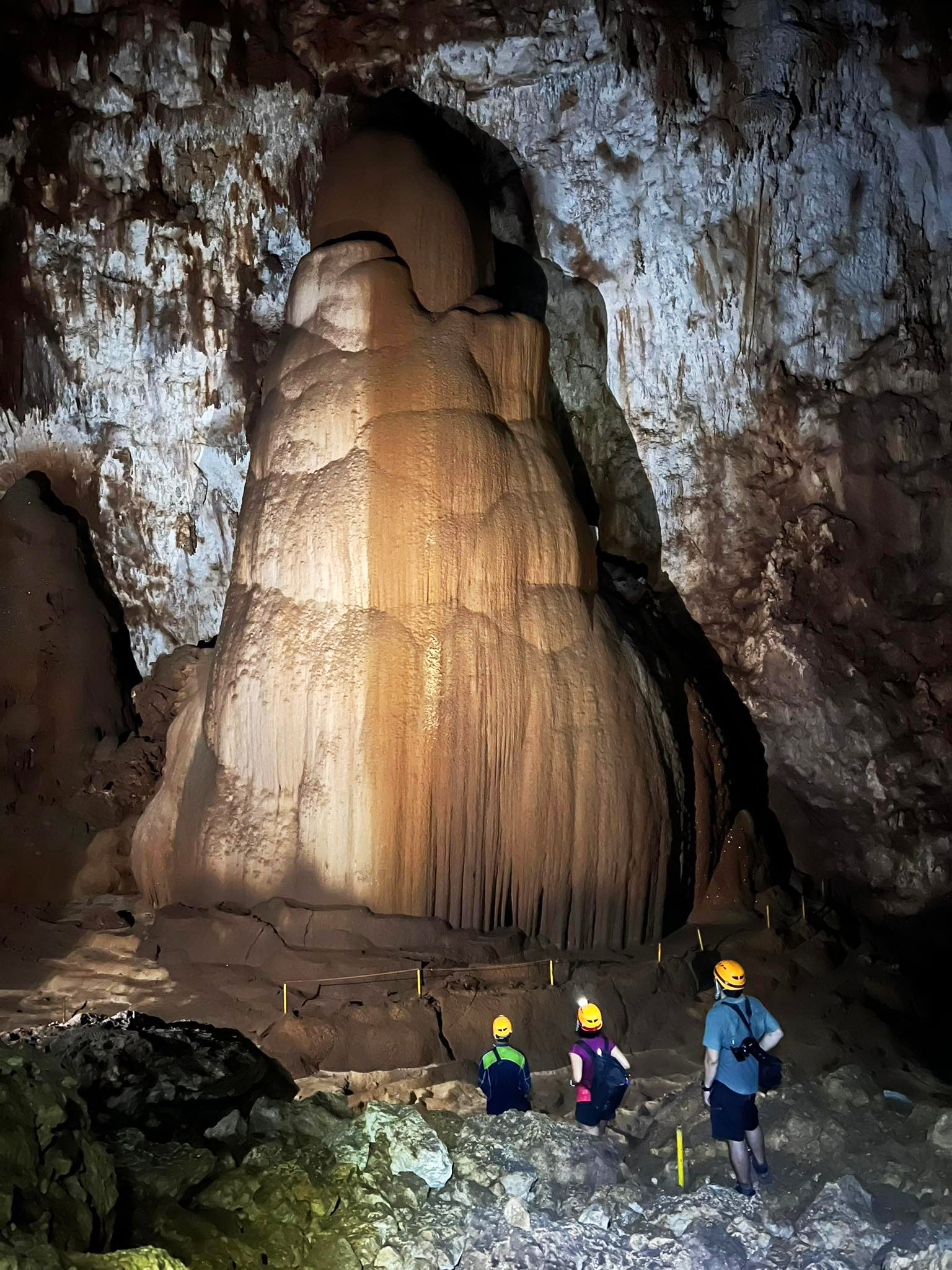
Back at the cave, Mon’s superlight illuminates an enormous flowstone.
It's a massive building-sized tower formed by millions of years of mineral deposits. Its base features embedded crystals. As we approach for a closer look, the crystals dance, and glitter in the light.
My heart stops not just because they look like diamonds, but because the discovery of precious stones might just spell the end of this cave.
“It’s a good thing no one ever found gold or diamonds in our caves. If someone did, they might tear the caves down. Even I might go crazy looking for precious stones,” joked cave guide Larry Rambacod a few days earlier, when we explored another cave system in Sohoton.
Tower of power. This is possibly one of the largest flowstones on the planet, easily as tall as a small skyscraper. It glitters because of calcite crystals inside it.
PHOTO: Mavel Luperte
Post a Comment
Declaring caves as protected areas is among the best ways to protect their treasures from miners, who would break and shatter million-year-old stones to take the shiny treasures within.
The dwarves and dragons from The Hobbit were driven mad by their lust for gold, for things that glitter. The irony of the global jewelry industry is that once beautiful swathes of nature are razed for a few scant ounces of metal or crystal, to be worn by the elite at closed-door parties or other social events.
History brims with sad examples: bush wars fueled by Africa’s blood diamonds, civilizations like the Aztec eradicated for gold, entire mountains hollowed out and raped for cash.
As we ascend back to the cave opening, we see the first rays of light in hours. Muddied but deeply moved by what we experienced, I whisper a quick prayer for the protection of the Langun-Gobingob Cave and the other cave systems of the Philippines. May no one ever find precious jewels in them.
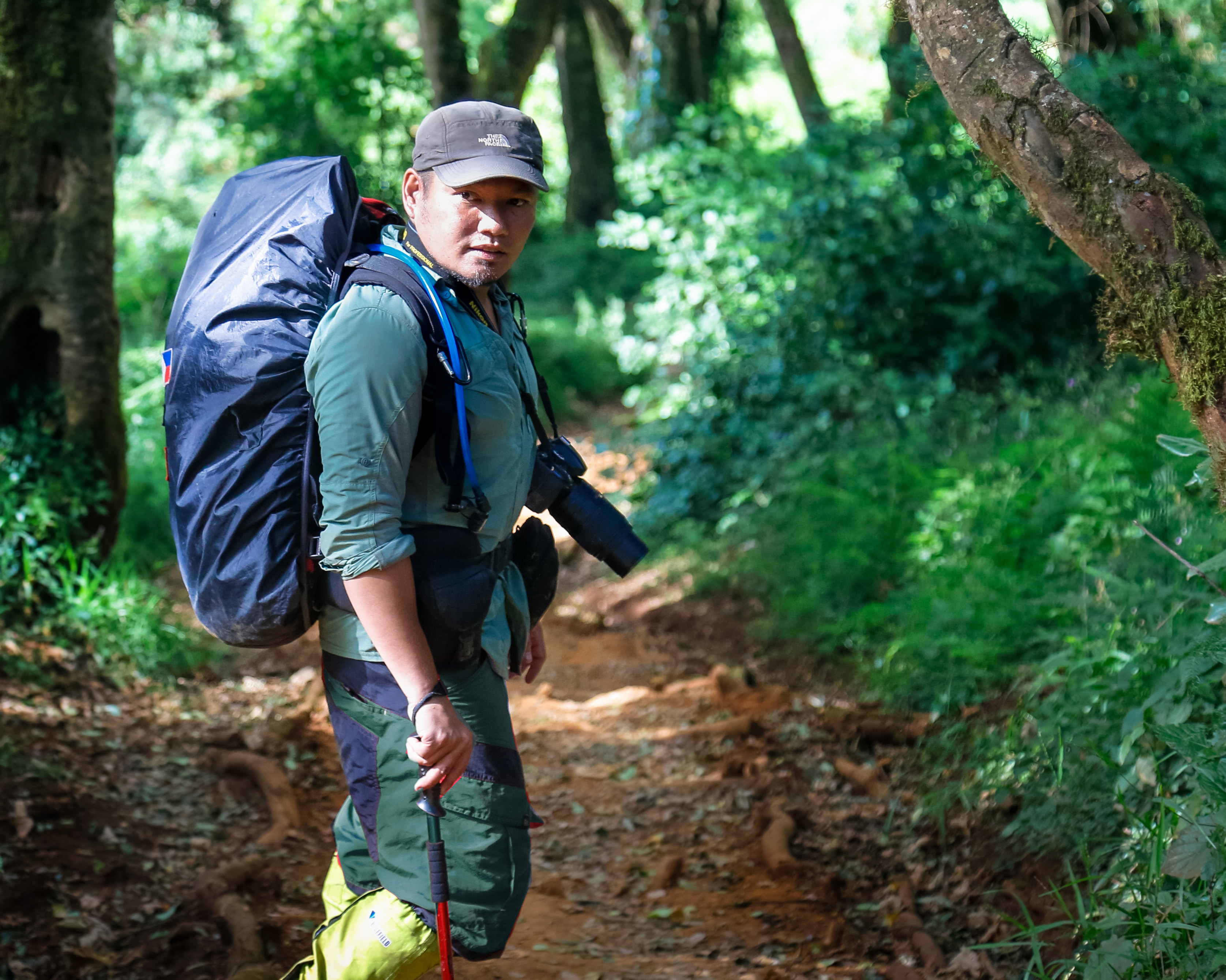
The explorer. Adventurer, explorer, and marine conservatorGregg Yan plunged into the darkness of the Langun-Gobingob Cave Complex in Samar for this latest story for Esquire Philippines.
We use cookies to ensure you get the best experience on Esquiremag.ph. By continued use, you agree to our privacy policy and accept our use of such cookies. Find out more here.