
Akeanon Bukidnon's Indigenous Wisdom Meets Modern Farming in Aklan

The spirits in the ancestral land of Dit-ana have died long ago.
"The land slowly lost its fertility, rice crops grew stunted, their colors paler, and harvests barely reached a ton," Marivic N. Viray recalled. Viray is a member of Akeanon Bukidnon, an Indigenous Peoples’ group in the small village of Dit-ana, Madalag, in the province of Aklan.
It all started in the 1990s during the country's green revolution when free rice seeds and fertilizers were given freely to the farmers. It was the time when they started using chemical inputs in their field. She admitted that the over-application of fertilizers to their rice crop may have abused their farmland. It was an honest mistake, a desperate move to increase their yield and improve their income.
"The use of fertilizers was against our culture. We should only practice organic farming. That's why the spirits died," Viray stated.
Barangay Dit-ana in Madalag, Aklan

She also revealed other practices that contributed to the deterioration of their land: excessive seeding rates, burning of rice straws, and the failure to observe fallow or resting period of land between planting cycles.
"Using fertilizer brought us a streak of bad luck because it’s prohibited for us, as if the spirit of the rice was killed," Viray lamented.
It was not an overnight death, but slowly, they began to feel and realize that their produce and crops were different from what it was before. They also pointed out another reason. They had forgotten the traditional ceremonies they once performed during the different stages of rice growth.
As the health of their land declines, so does their culture and beliefs. With the presence of modern methods for reviving one’s soil, the challenge of preserving their culture remains an uphill battle.
ALSO READ:
Today I Learned: The Indigenous Cultures of Western Visayas
Sagada's Pride: How One Farmer Is Cultivating a Community of Coffee Growers
Akeanon Bukidnon's Rice Planting Rituals
Long before the sun even rises, Viray is already awake and making her way towards their farm. She knows more than anyone that the ritual she is about to perform demands silence and solitude for it to be effective. They called their rituals “lilhanon.” She also shared that Queen Tagawhang, a spirit that guards rice plants, could be easily startled, which is why she dislikes noise and people passing in front of her.
“Only those who are knowledgeable about the ritual could perform it,” Viray said.
She began by planting a healthy banana shoot near their rice field. This is the first part of their planting ritual. They call it "paminhi" or planting. She said that the crop or anything she planted would determine the result of their harvest. For example, if they planted lemongrass, it would result in zero to no yield, since lemongrass bears no fruit. But since she planted a healthy banana plant, it is expected that they will have a bountiful harvest.
She then buried three things alongside the paminhi. First is the ginger, which is believed to drive away bad luck, and then a coin and a hair comb, which both symbolize a bountiful harvest. After burying the three, she jabbed rice seedlings around it since their rice was transplanted. For those using the direct-seeding method, the seeds should be sprinkled. When sprinkling seeds, it is important to count the number of seeds. Sprinkling an odd number of seeds is deemed forbidden.
When everything was set, Viray offered her chants and prayers and solemnly called for Tagawhang, the spirit of the palay, asking to be blessed with a prosperous planting season.
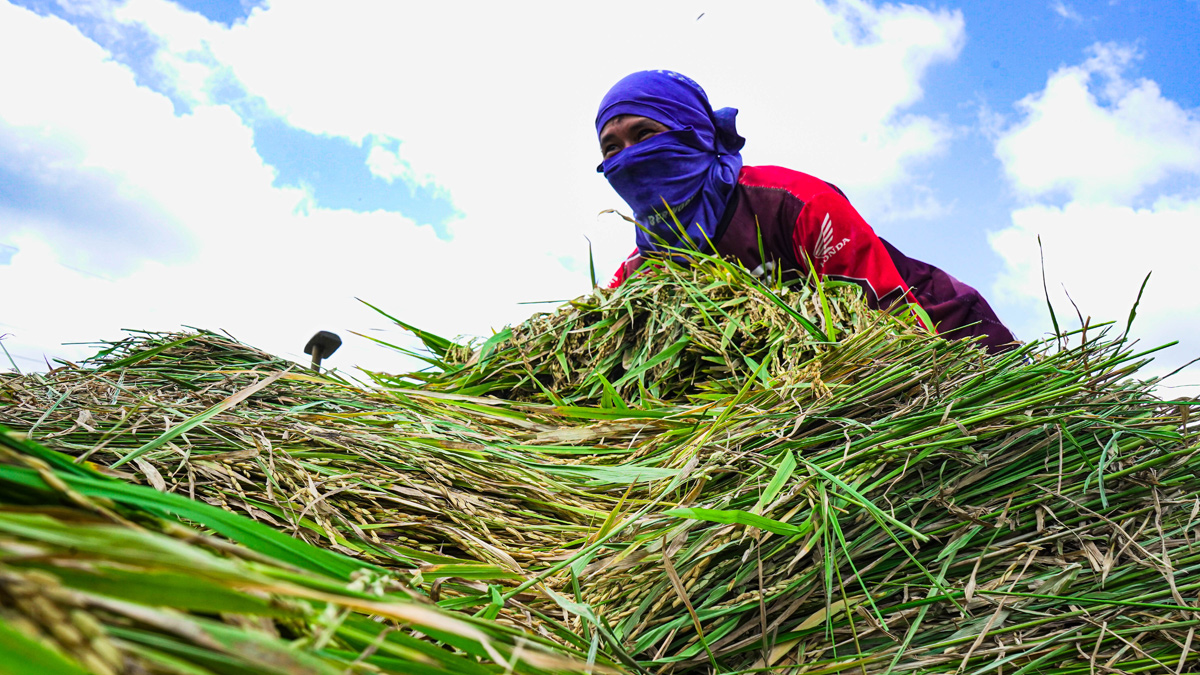
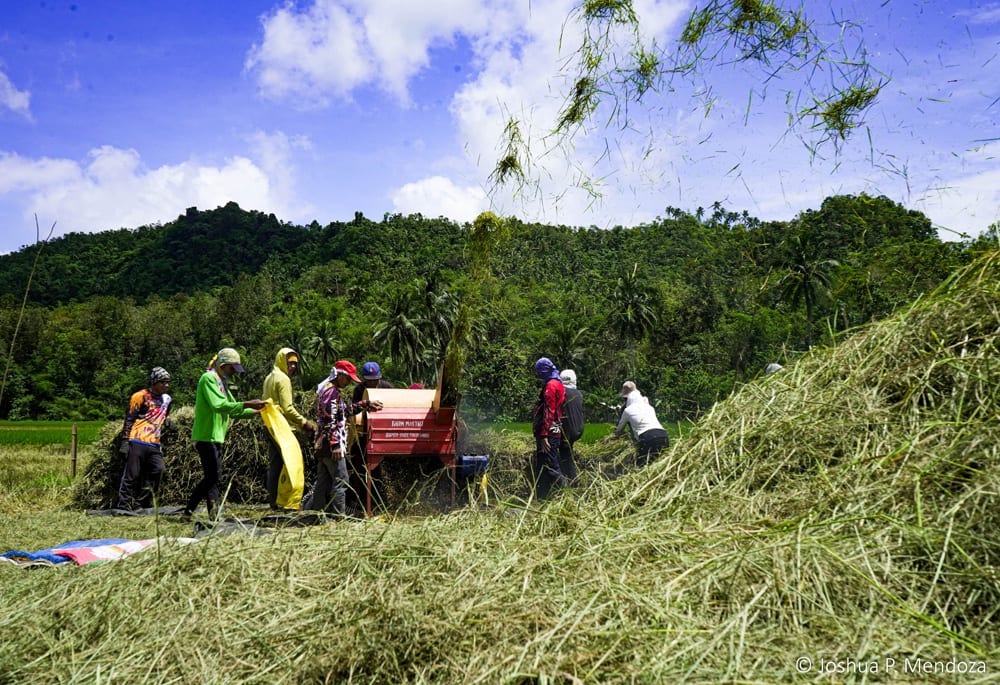
Harvesting season for the rice farmers in Dit-ana
Dos and Don'ts in Rice Planting
When the reproductive stage arrives and flowers have bloomed, cutting the grass needs to stop. Removing weeds should only be done in the early to maximum tillering stage of the palay. Elders believe that it's a sign that you're inviting pests such as rats to attack your rice field.
Walking in one’s field should also be avoided when the rice crops begin to ripen. You may walk beside it, but you are not allowed to circle around it. Four people walking around the ricefield also equates to four years of bad harvest.
At pre-harvest, you shall go around the entire field and disperse sliced turmeric and salt. A ritual will be performed to seek permission from Tagawhang, the spirit of rice, to drive away Burhang, a bad spirit that imbibes and steals harvest.
Marivic N. Viray, a local farmer technician, women advocate, and community volunteer
Harvesting also follows a specific rule: it must only be done in one direction and is forbidden to harvest the opposite way. It is believed that it will greatly reduce the harvest because you contradict one another, which is deemed disrespectful to the spirit of the palay.
Before harvesting, a ritual is also performed. It must be conducted before sunrise, ideally around 5:30 a.m. or 4 a.m. No one should disturb the one who performs the ritual, as this could distract and interfere with the process. In this practice, they communicate with the spirits of their ancestors, which they believe are still present in their land. It's a sacred moment enveloped with silence, giving respect to the ones who first tilled their land.
Lastly, once the harvesting is finished, no member of the family should eat the newly harvested rice until all their family members are complete. It is forbidden even if they ran out of rice. Breaking this rule is believed to decrease your harvest and the death of your family member.
“We truly believe that there is a spirit in the palay, and we speak to them. In return, we enjoy a bountiful harvest, but if you don’t show them respect, you'll be sanctioned with a poor harvest,” Viray explained.
Science and Cultural Beliefs Intertwined
Their journey of reviving their land started in 2005. They rekindle their connection with the spirits by practicing their rituals again after they were certified as an Indigenous Peoples community by the National Commission on Indigenous Peoples. They realized the importance of bringing their traditions back and passing them on to the next generation of Akeanon Bukidnons.
"We used to think that the rituals we performed weren't applicable to the seeds we received before. What we used to plant were native or traditional seed varieties like lubang. But when our elders tried practicing the rituals again, it turned out they were still effective," Viray shared.
Organic farming has also returned. Previously burned and treated as waste, rice straws are now utilized as an organic fertilizer for their crops. According to Fredierick Saludez, a senior science research specialist at the Philippine Rice Research Institute, burning of rice straws not only pollutes the environment but also has adverse effects on the soil’s health. It reduces the soil's potassium content by 20 percent and sulfur by 5-60 percent. However, when decomposing five tons of rice straw, the soil could benefit from the additional 25-40 kg of nitrogen, 3-6 kg of phosphorus, 60-85 kg of potassium, 2-5 kg of sulfur, 200-350 kg of silicon, and other nutrients that fertilize the soil. It also helps condition and maintain its moisture.
Aside from rice straw, they also use kakawate leaves, and manure from chickens, cows, and pigs as organic fertilizers.
While reconnecting with their traditions, they also learned to listen to science. In 2019, Viray attended and completed a training course in Farmer Field School, which enabled her to learn modern farming practices that she then shared with the community. This is when she became a Local Farmer Technician, playing a vital role in reviving their ancestral land.
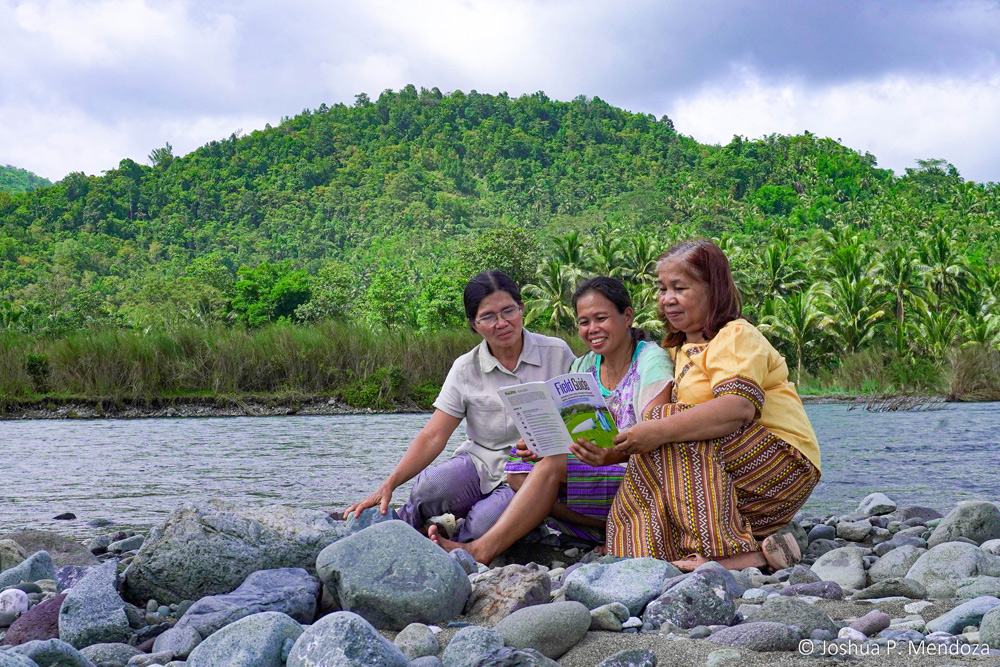
As a local farmer technician, Viray shares her modern rice farming knowledge with the community.
She realized that modern practices don’t always need to wipe out traditions but rather, fill the gaps in between and fortify them to establish stronger ties with their cultural identity.
After she graduated, she enrolled all the farmers in their community for rice production training in the same Farmer Field School, equipping them with knowledge in rice production that even some of them became professionals in the field.
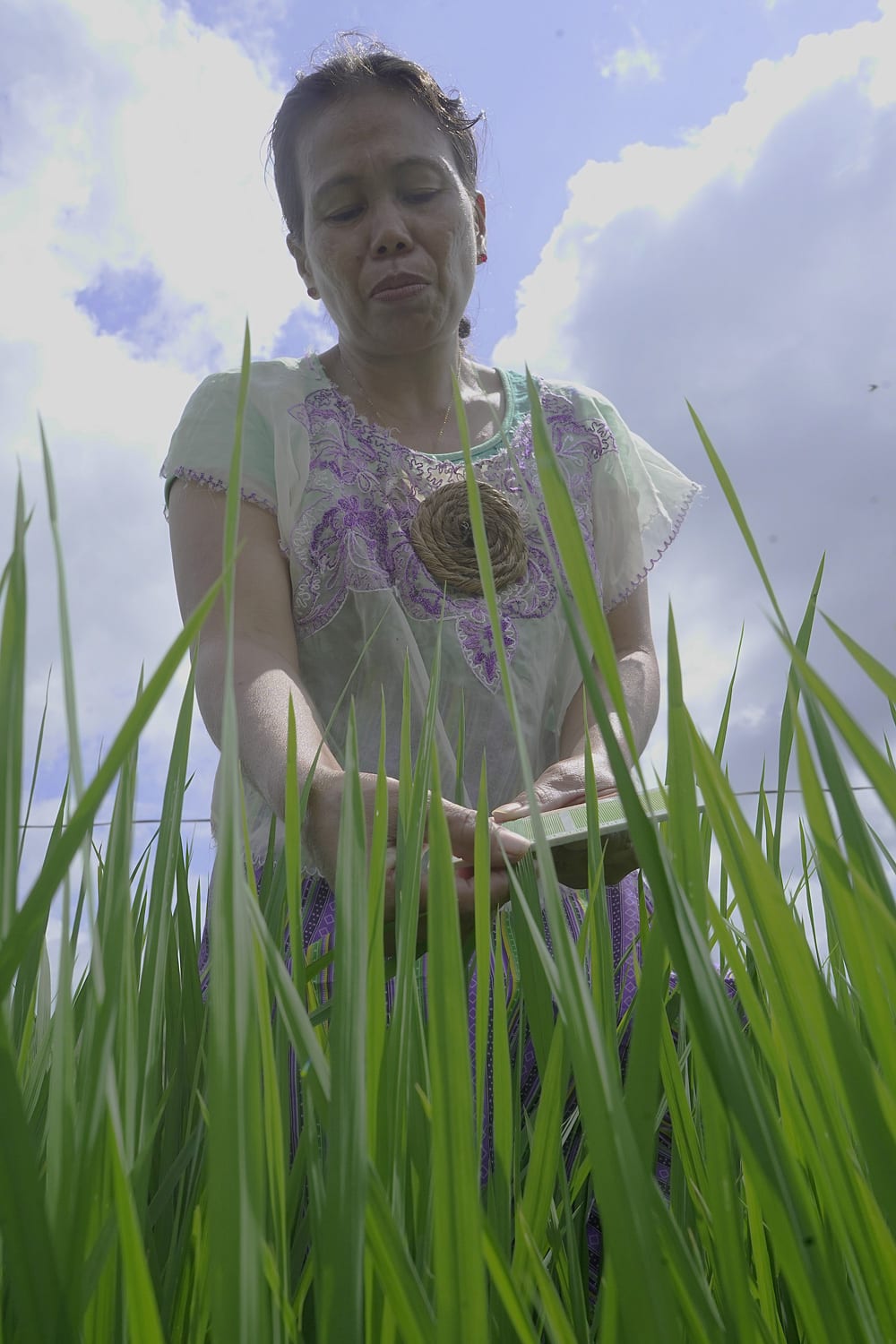
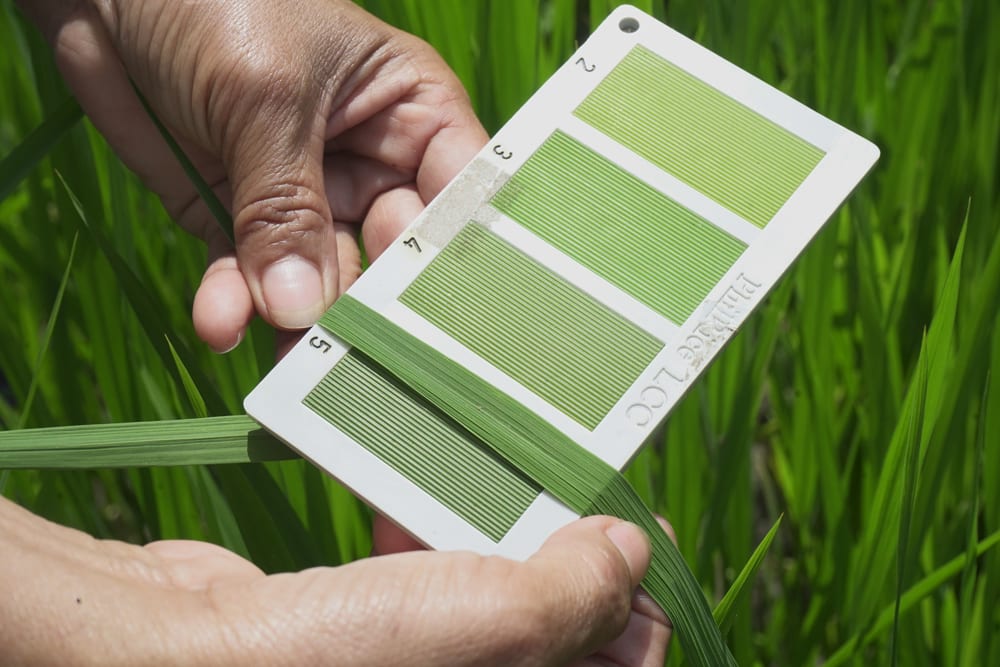
One of the technologies they acquired is the use of a web-based tool that provides nutrient management recommendations called Rice Crop Manager. After using the tool, they realized that they do not need to apply too much fertilizer to achieve a bountiful yield. They just need the right element, amount, and proper timing of fertilizer application. She also boasted about the use of a soil nutrient diagnostic tool called Minus-one Element Technique (MOET). This tool guided them on the identification of nutrient deficiencies on their land and which nutrient is needed to boost the crops' growth. They also use a Leaf Color Chart, a visual tool that helps in the assessment of nitrogen levels in rice leaves.
Because of these modern technologies, they now save 50 percent on buying unnecessary fertilizers. Their yield was also documented to increase by 60 percent.
"The soil here is also no longer as fertile as it used to be. Some practices are no longer applicable nowadays. Everything is evolving, and that technology needs to be embraced to increase our yield,” Viray testified.
Letting the Land Breathe
Viray shared that they also learned to allow their fields to rest after harvest for at least 30 days. She explained that this practice is beneficial as it breaks the life cycles of insect rice pests. "Most insect pests have an average life cycle of 30 days. During the rest period, there are no rice plants to feed on, or they will have no place to stay, disrupting their reproduction and reducing their population," the local farm technician said.
By leaving the field idle, the source of diseases that developed during the previous cropping season will die before the start of the next season. It allows good decomposition of the rice straw and other organic materials that can serve as fertilizer.
Following all these interventions, the health of Dit-ana’s soil gradually improved. Viray revealed that they used to harvest only 3.5 tons per hectare, but now, they can produce seven tons per hectare.
“Before, after harvest, we[our community] would have to buy rice from outside, which we couldn’t afford. But now, we no longer need to buy rice from others. We now even supply rice to other barangays,” Viray happily announced.
Leaf Color Chart, a visual tool that helps assess nitrogen levels in rice leaves
Science may explain the hows, but traditions will always hold mysteries only the souls can understand, just like the ritual Viray performed, which stirred hope and faith that could never be measured by science.
“I once saw Tagawhang while performing our lilhanon for a few seconds. She was the same size as a dragonfly, but her wings glistened and had golden hair. When I saw her that time, I felt the air that surrounded me freeze. I shared these with my friends, but they called me crazy,” Viray attested.
As the people of Dit-ana uproot the pieces of their heritage, it is not just the spirits of their ancestral land that are slowly coming back to life, but also their culture that will be echoed and continuously tilled by the future Akeanon Bukidnons.
