

There's a Lost Continent Hiding Underneath Southeast Asia

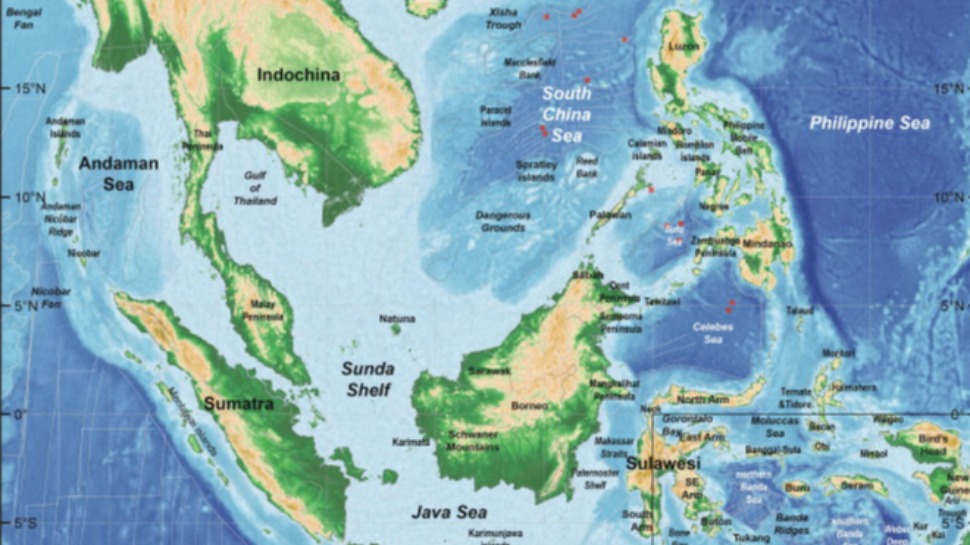
There’s a lost continent that may be hiding right underneath our feet.
Researchers from Utrecht University found that fragments of a landmass called Argoland that split from the supercontinent Gondwana may be hiding underneath the region where Southeast Asia is located today.

Gondwana, which was comprised of South America, Africa, India, Antarctica, and Australia, started to disintegrate during the early Jurassic period around 180 million years ago. Argoland was also part of Gondwana that split from Australia around 150 million years ago, but simply vanished since.
ALSO READ
Massive Caldera Found in Philippine Seas—And It Could Be Earth's Biggest
1749 Taal Volcano Eruption Detailed in Horrific Spanish Report
But a team composed of researchers from UU’s Department of Earth Sciences and Department of Physical Geography found that fragmented remains of the continent have been located in Southeast Asia. The team used geological data gathered from the deep ocean basin known as Argo Abyssal Plain, located off the western coast of Australia.

“The structure of the seafloor shows that this continent must have drifted off to the northwest and must have ended up where the islands of Southeast Asia are located today,” a release about the report said.
"The situation in Southeast Asia is very different from places like Africa and South America, where a continent broke neatly into two pieces. Argoland splintered into many different shards. That obstructed our view of the continent's journey," said Eldert Advokaat, one of the authors.
The authors focused their search for the elusive Argoland “in a region from the eastern Himalaya in the west to the Panthalassa Ocean-derived geological records of the Philippines, Halmahera, and New Guinea in the east.”
According to the report, Argoland still exists in fragments, and evidence of this can be found beneath the jungles that cover areas in indonesia and Myanmar.

“Intriguingly, in SE Asia there are no intact relics of a major continent such as India, but instead the region displays an intensely deformed, long-lived accretionary orogen that formed during more than 100 million years of oceanic and continental subduction,” the study’s abstract said. “Within this orogen, there are continental fragments that may represent parts of Argoland.”
An orogen is a belt of the earth’s crust that is involved in the formation of mountains.
“We identified the Gondwana-derived blocks and mega-units of SW Borneo, Greater Paternoster, East Java, South Sulawesi, West Burma, and Mount Victoria Land as fragments that collectively may represent fragments of Argoland,” the abstract added.
The study was first published in Gondwana Research.
