A Second Chance: Darwin Chong's Path from Despair to Leading the Fight Against HIV Stigma

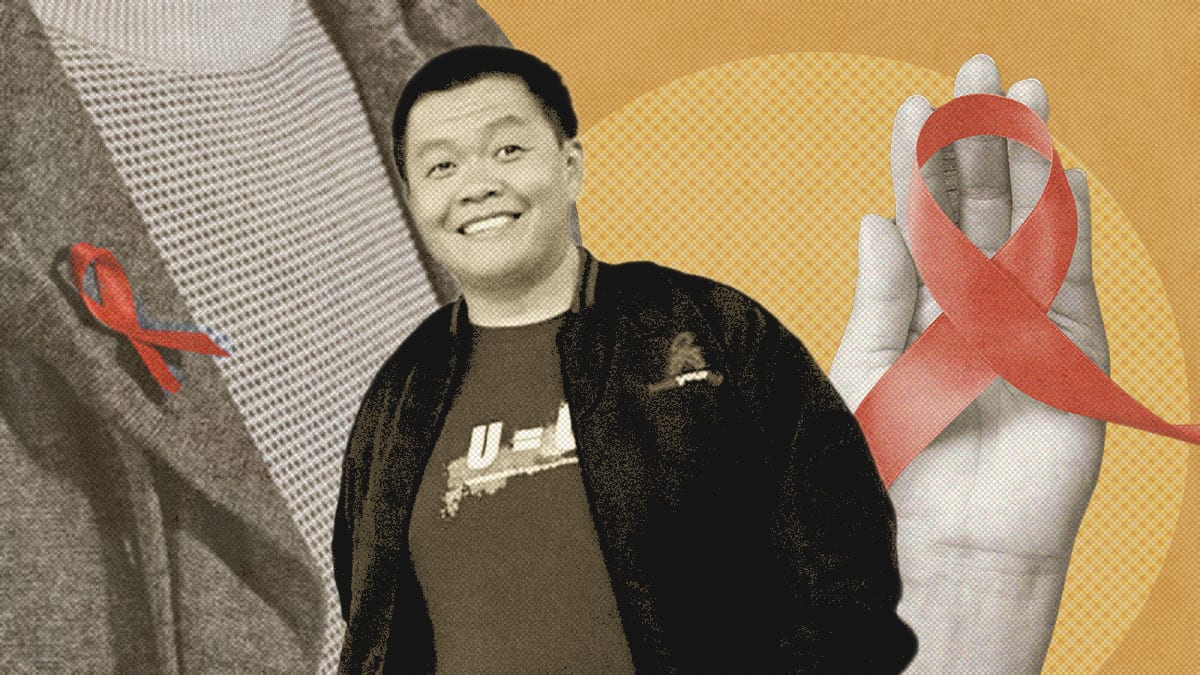
ILLUSTRATION: Igi Talao
Many lives play out like TV dramas. But Darwin Chong’s life was actually the inspiration for an episode of the primetime show Magpakailanman—dramatized for audiences, of course.
Chong is a person living with HIV (human immunodeficiency virus), managing his condition since he was diagnosed in 2017.
According to the Department of Health, there are 148,831 people living with HIV (PLHIV) in the Philippines.
Growing Up in a Conservative Family
Chong grew up in a strict, conservative Chinese family in Binondo. Being the eldest and only son, he felt pressure to live up to familial expectations, especially from his very strict father. This motivated him to excel in his studies and then in professional life. He eventually landed a high-paying job in the USA working in the IT industry.
After a few years, he came back to the Philippines and started living the high life. He was in his early 20s, single, with a lot of disposable income, living alone in a high-rise condominium unit in Makati. At first, he just splurged on nights out. Eventually, he got hooked on drinking expensive alcohol and then illegal drugs. For seven years, he was fully dependent, taking drugs daily.
"I was looking for something to fill a void. I was unhappy and I sought happiness from the party life, from alcohol and drugs," he confessed.
The dependence drained his resources. So, severely in debt and unemployed, he went back to his family home. He had to confess to his parents that he is an addict. They took him in, but his father did so grudgingly.
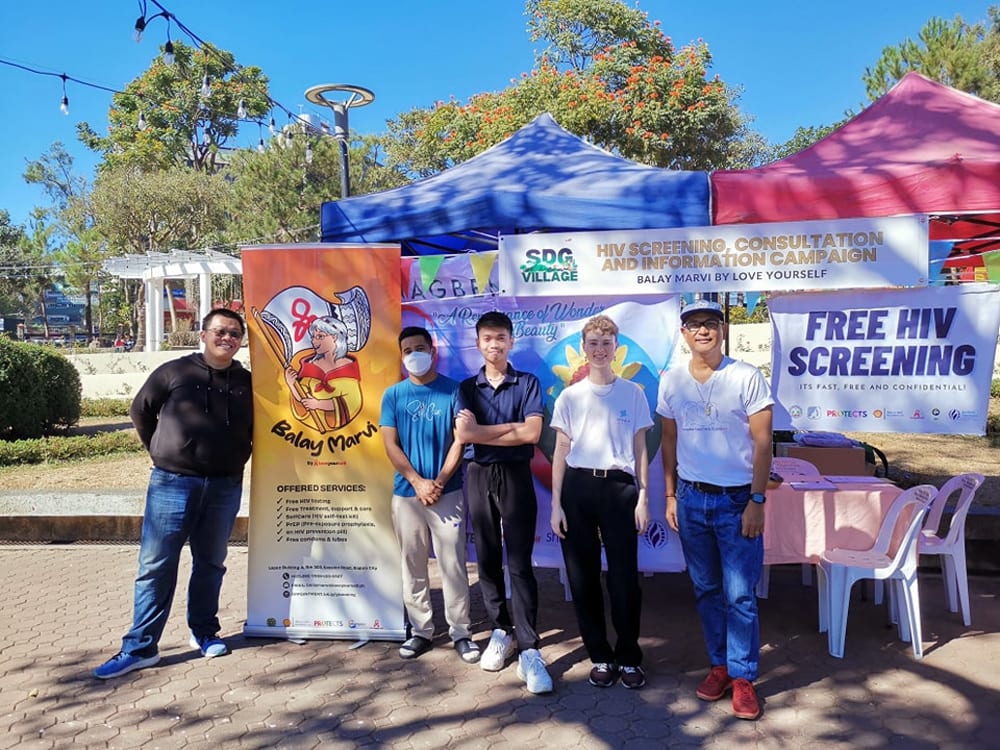
Darwin Chong eventually found his purpose and a community in Baguio-based Balay Marvi by Love Yourself
Turning Point
Soon after, their home burned down, and his father took it as a sign for him to make, as he put it, a "graceful exit" from their family. For a month, unhoused Chong roamed the streets of Cubao, where taxi drivers, taking pity on him, gave him enough to eat at least once a day.
One day, a Christian church member gave him P100, and he used the money to commute to the site of his former family home. Within the burned shell, he squatted for eight months. Secretly, his mother would come around to give him some financial help, but he was never welcomed back home.
Chong, desperate for money, started selling drugs.
Living in such conditions, he asked God: "There are so many people who are worse than I. I am just doing drugs, other people kill, steal…but they are doing well. Why are you punishing me?"
At the end of 2017, he went to a government hospital for a medical consultation. Over the past year or so, he suspected something was wrong because rashes started appearing on his skin, and his feet were so severely swollen that it was difficult for him to walk. He was required to be tested for HIV. Before the screening, he underwent the requisite counselling. In less than an hour, his fears were confirmed: he tested positive.
He was immediately admitted to the hospital, initially, to be treated for tuberculosis. His immune system was so badly affected, he had to undergo antiretroviral therapy (ARV).
While at the hospital, he welcomed church volunteers who evangelized to him. "I believe that there are no accidents," he said. "I had absolutely nothing, what did I have to lose?" He accepted Jesus as his Lord and Savior.
Though he had kept in touch with his mother and sister, his father remained out of reach. While Chong used to blame his father for all the bad things that happened, he learned to accept that each of our choices has consequences. He also saw the hand of God in his life.
"If my father had not driven me out, I would probably be dead or still be an addict," Chong said frankly. "I had to go through hardships for God to teach me a lesson."
He confessed that a tiny part of him thought that his condition would be a way for them to be reunited. But instead, his father disowned him. The revelation drove a wider wedge between them.
Completely alone, without family to rely on, Chong had to navigate the complicated system–or lack thereof–of care available for his illness.
"There was no one to help me, so even if I was sick, I had to find out and find my own way to access help by myself… to survive," Chong candidly said. "These experiences helped me to be strong, sustained by God."
And though his relationship with his father was non-existent, he said that after he forgave himself, he also forgave his father.
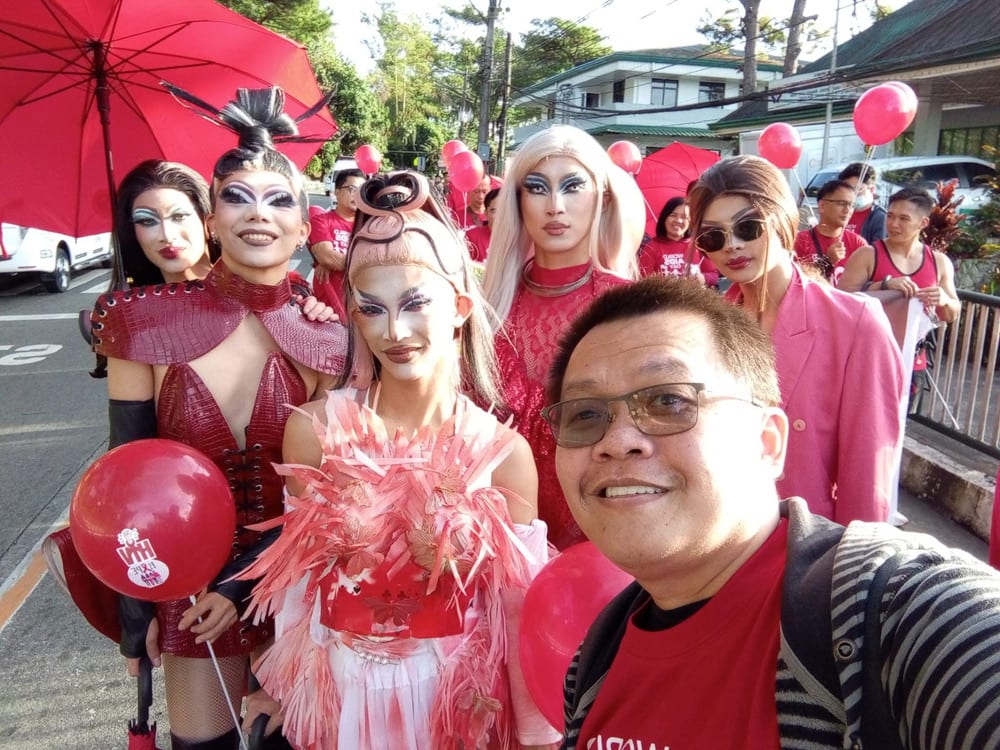
Darwin Chong at the World AIDS Day Parade in Baguio
Going Up the Mountain
In 2021, Chong moved to Baguio.
He was grieving the passing of his mother, his only support system. His fellow church group members suggested he go to Baguio to cope and recuperate, reassuring him that church members there were ready to support him. It turned out that Balay Marvi by Love Yourself was in the planning stages of opening in Baguio.
Love Yourself is a community-based organization advocating for HIV/AIDS health care. So when they finally launched it in 2022, Chong joined the operations management team, highly motivated to raise awareness and extend care. He draws from compassion and empathy, and his own experience to fuel his advocacy for fellow PLHIV.
He admits that in 2016, when he first went to a hospital to be tested for HIV, the private facility (that he prefers not to name) did not even provide pre-screening counseling.
"Other people should not go through that," he said.
He strongly advocates for testing. After all, HIV testing is accessible and available for free. He likens it to a common global experience, the COVID-19 pandemic, when many who experienced symptoms considered themselves infected, then immediately had to undergo testing to confirm their status. "Finding out one’s status is important, because after a positive diagnosis, proper guidance through counselling and management can immediately follow," Chong said.
He acknowledges that the stigma surrounding the illness puts people at a disadvantage because fear gets the better of them.
"I have this unique opportunity to reassure people: it may be difficult, but you are not alone, and you don’t have to face this alone. You have someone you can speak to. I want to support them and, in time, have them pay it forward: to do the same for someone else."
According to Chong, in Baguio, there is a strong movement to build support systems for PLHIV.
Financial support is also available through government agencies, including the Department of Social Welfare and Development, said Chong. PhilHealth has an enhanced Outpatient HIV Treatment package, which includes ART.
In addition, various NGOs provide support, from testing to counseling to access to treatment and counselling for PLHIV.
Today, Chong lives with one eye blind and has to take his medication religiously. He also lives a healthy lifestyle, making sure he pays attention to his physical fitness. Whereas he initially had to undergo monthly check-ups, he now only has to visit his doctor annually.
More Work to Be Done
Following the news from the DOH that the Philippines has the most number of new HIV cases in the Western Pacific, with an alarming 500 percent increase in cases among those aged 15 to 25, and estimates that there are 113,000 undiagnosed PLHIV in the country, Chong reiterated the need for widespread testing and treatment.
"And of course, prevention is better than cure. Avoid behavior that will put you at risk of infection, like unprotected sex and sharing needles," Chong advised.
Now, Chong´s story has taken a surprising and quite unexpected turn: he is heading back to Manila to try to work things out with his father–a plot twist 10 years in the making.
"I don’t know yet what will happen," Chong said in mid-June, but he is optimistic. "God is putting my life back together again!"