

The Genius of Eduardo Masferré: Father of Philippine Photography

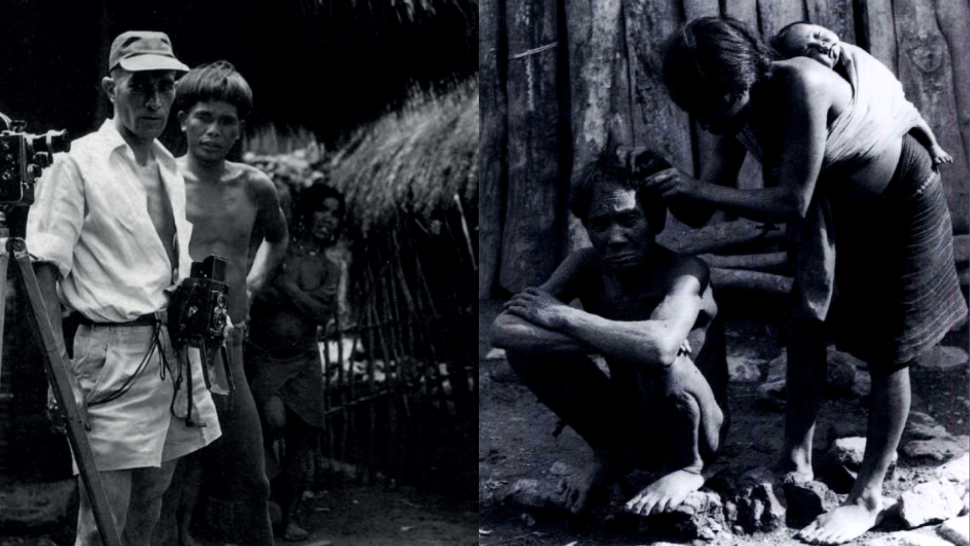
It took a while for the rest of the world to see the brilliance of the Cordilleras the way Eduardo Masferré always did. A pioneering anthropological photographer, Masferré would come to document the vibrance of the region in the middle of the 20th century. He'd capture the daily innings of the village, the complexity of its landscapes, its traditions and routines, as well as its topography. But of all things, he chronicled the values of ethnic Filipino heritage, illustrating a vivid, almost-spiritual accounting of a civilization the modern age left behind.
The Filipino-Catalan photographer traces his love for the practice to his early years living in Sagada. As the son of a Spanish soldier who immigrated from Spain and a Sagada-born mother, Masferré was one of six children who saw the Mountain Province up close. While his family took some time away from the region for the kids to study in Catalonia back in 1914, he would return to the Philippines seven years later. He'd spend the rest of his life in the Mountain Province.
“Eduardo Masferré is an artist who did the right thing at the right time for the right reasons. A photographer with remarkable foresight, Masferré understood that change is inevitable. So with his camera, his eye and his heart, he kept the Cordillera’s proud, ancient soul visible and timeless amidst the changes."
- Felice Sta. Maria

As he worked on the farm with his dad, who had since become a priest of Episcopalian evangelism, in Sagada, Masferré dedicated himself to taking photographs of the Igorot people in the province. He focused on people operating in otherwise ordinary settings, highlighting the importance of their way of life.
Amidst the changes in the Philippines during this period, he'd continue telling the stories of indigenous Cordilleras, from the Bontoc and the Ifugao to the Kalinga. When World War II came to a close, he'd set up his own photography studio in Bontoc. He'd come to expand his subjects to include the people's ceremonies, rituals, agricultural practices, and the like, taking snapshots of their ethnographic characteristics, not necessarily from a voyeuristic point of view, but rather one of illustrative, emic accounting. Masferré did so for more than two decades.


ALSO READ:
Who Was Félix Laureano, the First Filipino Photographer?
A Look Back at the Philippines' First Photojournalist Marcial S. Valenzuela's Photographs
He'd find himself living a quaint life as a farmer not too long after all those years of creative productivity. His talent, of course, wouldn't go unnoticed.
In the '80s was when he started exhibiting his photographs. From Manila to Copenhagen and Tokyo, his exhibitions were met with a warm reception worldwide. He would publish his works in E. Masferre: People of the Philippine Cordillera, as well, among his many books. It also helped that Mobil Philippines funded his publishing, providing 1,500 copies to schools, museums, and libraries in the country. Masferré also had a traveling exhibit that would have his pictures displayed in Baguio, Cebu, Cagayan de Oro, Davao, and Bacolod.
By the end of the decade, he'd become a world-renowned photographer, having exhibited at the prestigious Les Recontres International de La Photographie, in Arles in the south of France. Masferré remains the only Filipino to have this distinction. The Smithsonian Institution even purchased 120 of Masferre's original prints in 1990. They were displayed at the American National Museum of Natural History, in Washington DC. Most of his original prints have been archived in museums and academic institutions around the world.


Back in 1988, Masferré’s book People of the Philippine Cordillera: Photographs 1934 – 1956, was published. It was a culmination of years of work, one that would come to define the influence of his genius.
“Eduardo Masferré is an artist who did the right thing at the right time for the right reasons. A photographer with remarkable foresight, Masferré understood that change is inevitable. So with his camera, his eye and his heart, he kept the Cordillera’s proud, ancient soul visible and timeless amidst the changes," explained Felice Sta. Maria, once the President and Trustee of the Metropolitan Museum of Manila, in a message.


Masferré would pass away on June 24, 1995 at the age of 86. It was a colorful life. The photographs he produced underline the significance of the photographic anthropological work in understanding ethnic cultures. He consciously used the medium as an art form, too, elevating it as he went. His contributions to the craft, as well as his keen, honest fascination with ethnic life, cannot be overstated. For these alone, the "Father of Philippine Photography" stands the test of time.
Of course, there's an argument to be made that his Western perspective did perpetuate Orientalist notions. But that nevertheless shouldn't take away from the entirety of his body of work. Masferré, after all, grew up in an era when Igorot identity was threatened by inevitable societal upheaval and outsider intervention. His photography, as an act of solidarity somehow, would help preserve these cultures and their traditions. His viewpoint was that of a man who sought out to truthfully portray what life was like in Cordillera at the time, its diversity, wealth, heritage, and evolution. Not a bad way to be remembered.
Sources:
- IGOROTISM AND ORIENTALISM: The Photographs of Eduardo Masferré, dela Cruz, AARichela
- A Tribute to the Philippine Cordillera, Masferré, Eduardo
- Un ganxó, pare de la fotografia filipina, Revista de Girona, Barbara, Joan
