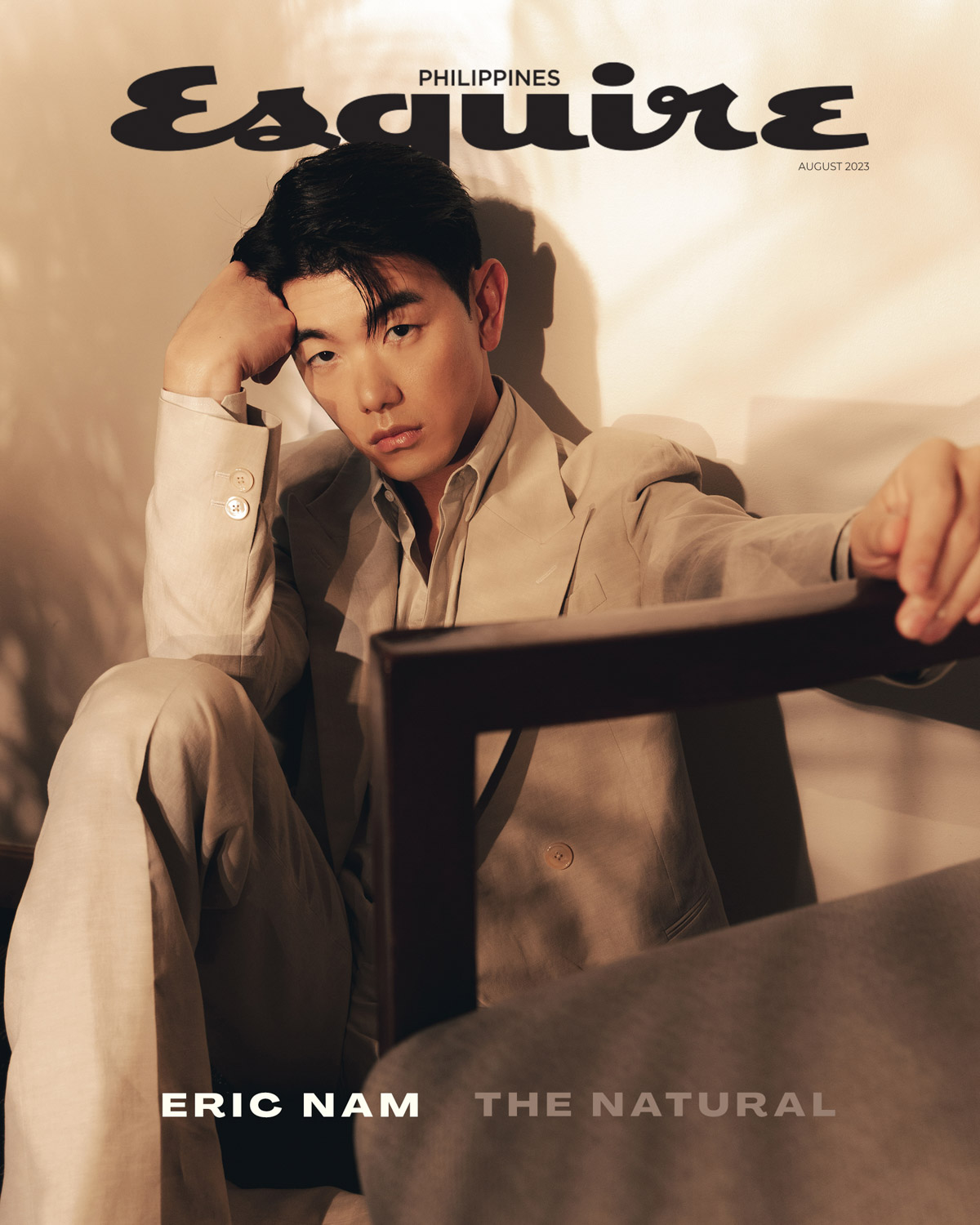
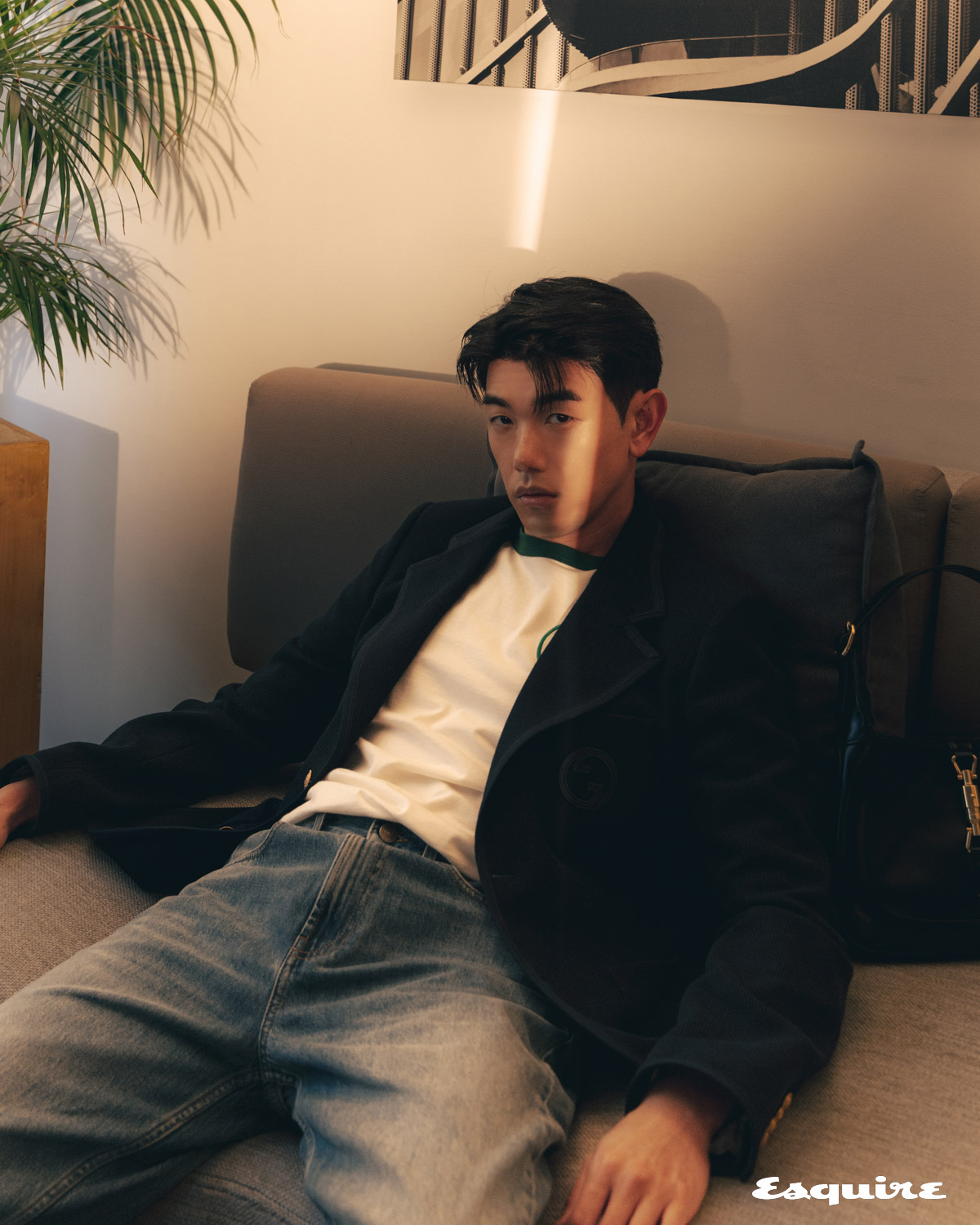
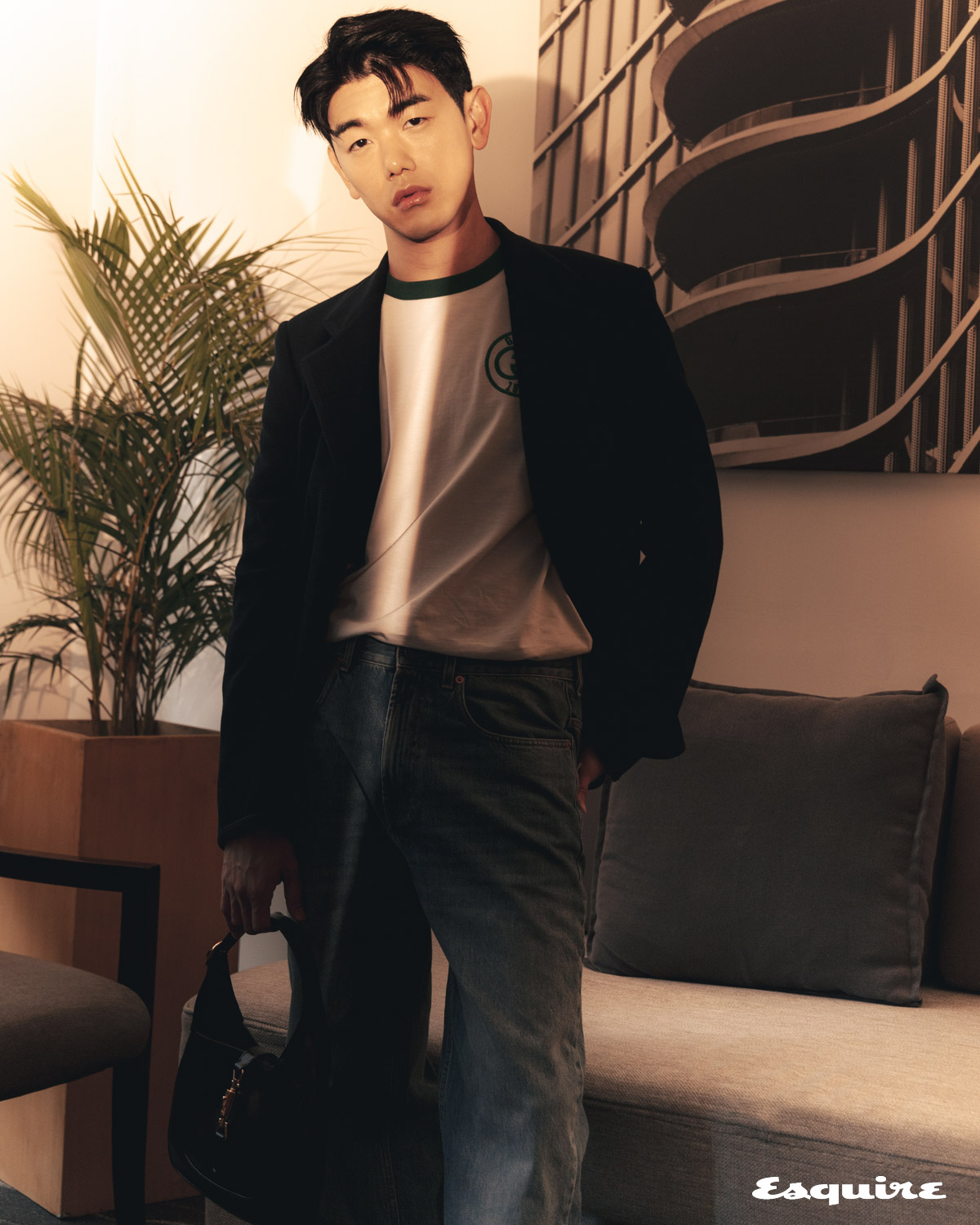
He enters the room and says hi to everyone. Introductions are made, he offers a firm handshake and a smile that has won over possibly millions of fans. Suddenly, it's time to take pictures. He sits on a couch for the first set-up, wearing a navy blazer over a shirt tucked into denims, and black leather slides. He looks straight into the camera, crosses his legs, uncrosses them, leans in closer, and flashes his pearly whites when the photographer tells him to.
ADVERTISEMENT - CONTINUE READING BELOW
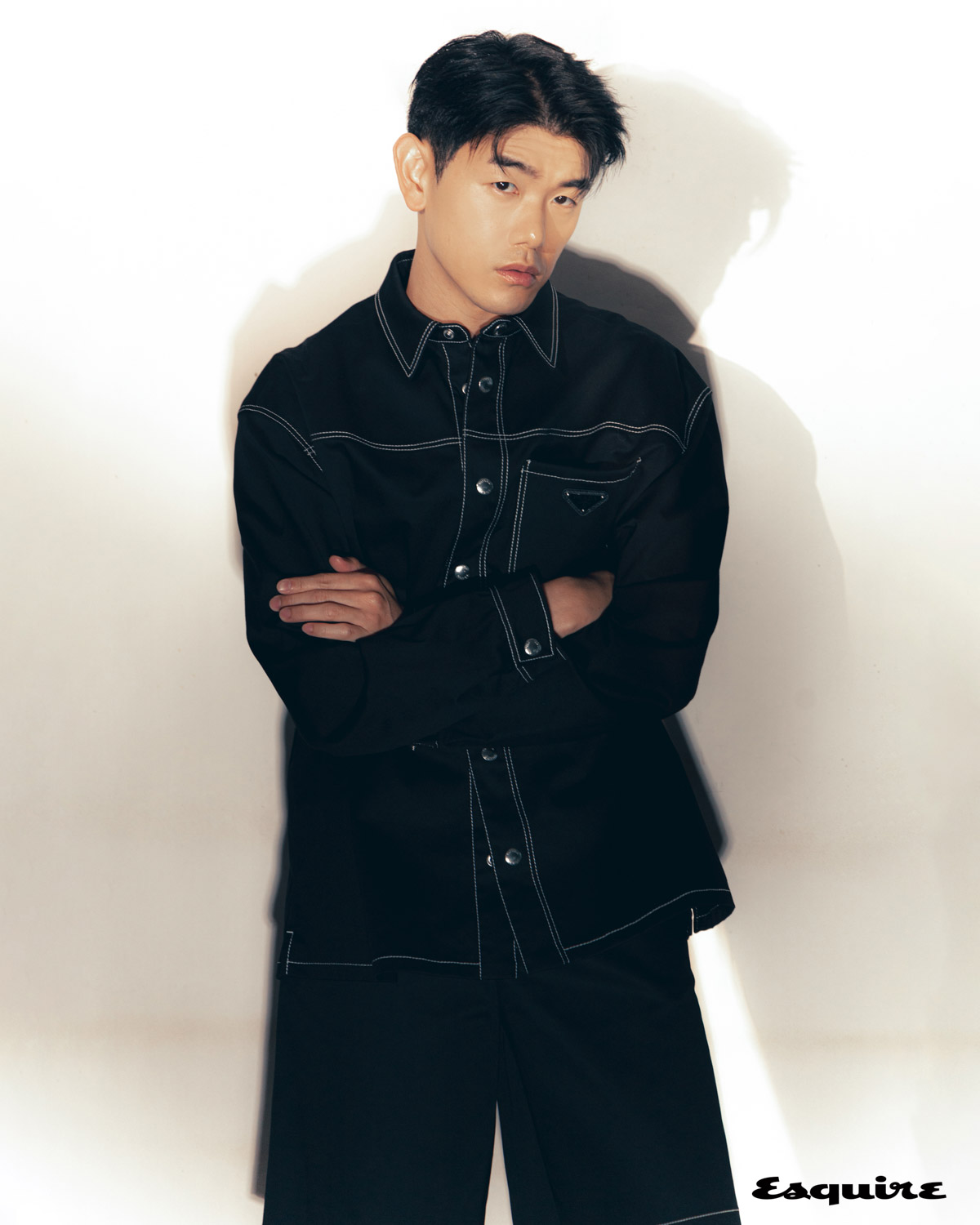
Wardrobe changes and make-up touch-ups are done in a jiffy. He moves like a professional and poses so effortlessly. His movements flow with and complement every outfit, whether he's in a tailored suit and slumped on the floor or donning a black jacket and cut-offs while doing random poses in front of a backdrop flooded with bright-to-the point-of-blinding lighting. There's loose, cheerful banter in between takes; at one point he's asked to sit on the left arm of a chair, and out of the blue, he says with just a hint of mischief, "These chairs are definitely making a comeback!"
Everyone laughs, obviously taken by his natural wit and easygoing charm. There's a lot of star quality in there—yet no hint of star complex—which would have been easy to acquire given that he's a Korean superstar.
Gucci jacket, T-shirt, jeans, and bag. PHOTO: BORGY ANGELES
Post a Comment
In this exclusive shoot and sit-down interview, we discovered that Eric Nam is a natural not just in front of the camera, but with people, too. He spoke freely and openly, and as he answered this writer's questions, it almost felt like flipping through the pages of a storybook.
CONTINUE READING BELOW
watch now
He'd been in the country for at least a few days at the time of the interview. "A little discombobulated, just a little hectic," he says about his current situation.
"I feel like we've been on a massive tour. But overall very good, very grateful. In the Philippines it's always…it's just very nice. And a little hot but very nice." It's his fifth visit here, apparently.
The Korean-American pop sensation is on tour to promote his single "House on a Hill," which—believe it or not—stemmed from Nam's desire to buy a new house and finding a nice one on a hill. He didn't buy the house, but it inspired him to write a fantastic song with a deeper meaning. The single is the first from a soon-to-be released album.
Fendi suit and shirt. PHOTO: BORGY ANGELES
Post a Comment
Life before superstardom
Nam was born and raised in the U.S. He graduated with a major in International Studies and a minor in Asian Studies, almost worked for one of the Big Four accounting firms, and eventually participated in microfinance projects. His parents probably never imagined he'd be a singer-songwriter and K-Pop idol.
ADVERTISEMENT - CONTINUE READING BELOW
In fact, they were initially disapproving of his aspirations, likely under the impression that as an Asian kid in the States, there was no way he'd become a star. Nam couldn't blame his parents for doubting him, though.
"I think you have to be able to see what you want to become to dream that dream in many ways," he says. "If you don't see yourself represented, how do you think like, 'oh, I can do that!"
Delving more into representation, he goes as far as comparing it to Obama's presidency. "Barack Obama becoming the first black president was such a big (thing) because, yeah, we have so many people who can dream like oh, 'it's not just a white male who becomes president—It can be anybody. It's that type of representation."
Music in his DNA
Even if his parents, himself and his Asian-American peers didn't believe at first that becoming a successful singer and recording artist was a viable career option, Nam's natural inclination for music could neither be ignored nor neglected.
"I don't know if there was a sign," he says. I think there was always…music was always a passion. I loved music. I loved singing."
His parents told him that he started talking when he was a year old and by the time he was two, he could sing—and had memorized—Korean nursery rhymes in cassette tapes from beginning to end. Nam recalls being asked to sing when his parents' friends would visit or when they went to karaoke bars. He even remembers performing at a cousin's wedding when he was 10 and joining the Grammy Award-winning Atlanta Boys Choir, which prompted him to listen to and learn to sing Christian Music.
Burberry jacket. PHOTO: BORGY ANGELES
Post a Comment
Instruments and music were always around him growing up, but Nam's parents didn't believe they could lead to "real career paths." He learned to play the piano when he was four, and the cello when he was 10. Eventually his parents agreed to let him take voice lessons, but it had to be singing for the opera, which he wasn't particularly fond of. He was, however, influenced by a wide range of musicians and genres.
ADVERTISEMENT - CONTINUE READING BELOW
He loved watching the Disney Channel when he was young, where he would see artists like NSYNC, the Backstreet Boys, 98 Degrees and Christina Aguilera perform. "There was like the big summer concert. And I would just watch that over and over and over!"
At some point he tried to get his two brothers involved, thinking they could be the next Hanson or Jonas Brothers. "Pop was like a big part of my life growing up, as well as a lot of RnB singers," Eric muses. Among his other musical influences were Usher, Ne-yo, Mario, Boyz II Men, and the "Father of Soul Music," Ray Charles.
"Singing was always part of my life," Nam says. In fact, he did it a lot at home—full-blown performances—even in the shower, which drove his parents crazy. He got into posting videos of himself singing either from the bathroom or their basement. Eventually he caught the attention of a Korean TV station and was invited to compete in a singing talent competition, where he was honored as one of the Top 5.
Eric landed his first recording deal in 2012 and his first EP, Cloud 9, was released the year after. He has since released three other EPs and two studio albums, as well as collaborated with a handful of artists—recording, performing, and songwriting-wise.
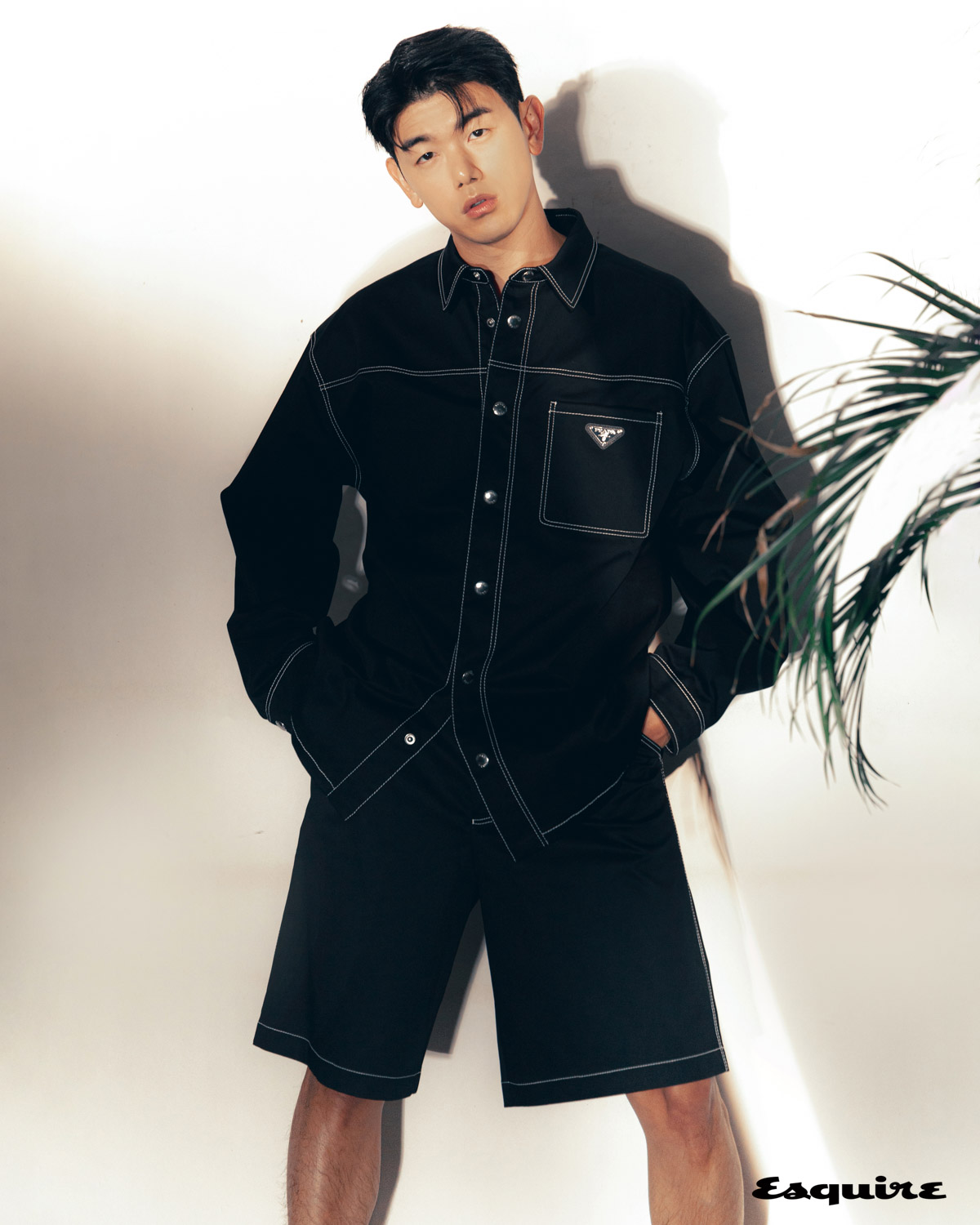
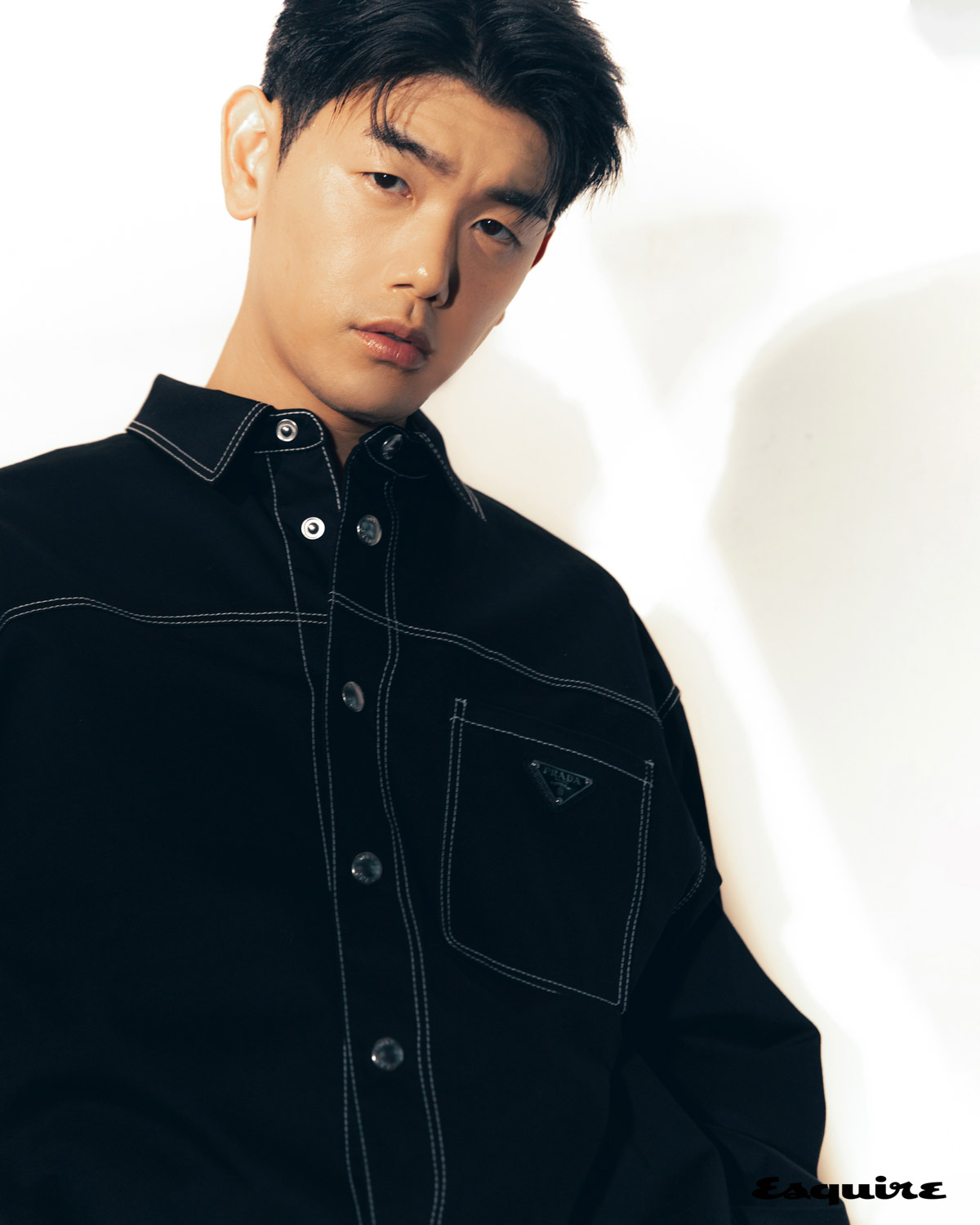
Prada overshirt and shorts. PHOTO: BORGY ANGELES
Post a Comment
Favorite collab project
One of his favorite collaborations is the one with Epik High's Tablo and American singer-songwriter Gallant for the hip-hop/RnB single "Cave Me In" in 2016.
"It was so cool to take part in a collaboration because Tablo is a legend himself and somebody that I respect as musician," he says. "Gallant…that year was like a massive year for him. I think he was a Grammy nominated for Best New Artist that year and hit an album and his song, 'Weight in Gold' in particular, was just so incredible. And so to be able to work with them on that song, and at that time, I was still very new.
"This is scary," he whispers, recalling what he thought and how he felt working with the aforementioned musicians, who told him to let go of his self-doubt and that he was doing great, boosting his confidence.
From choir boy to YouTube personality, to talent show contestant, to recording artist, to songwriter; Nam's transition was a long and rewarding journey, but not an easy one. Learning to write songs, for one, took a lot of time, effort, patience, and perseverance.
Songwriting vs. performing
"It's scary to song-write because anything and everything you do, at least for me, sounded so lame and cheesy and cringey and it's like, 'How do I write more poetically? How do I create melodies that are so expected and like, typical? I think that's the thing about being creative—if you want to make something that's new, that people hear and like, 'Oh, it's different, or that's an interesting lyric or that's a crazy melody.' But that takes a lot of time.
"The first few years of writing were like, really painful. And there's a lot of self-doubt and questioning that goes into it."
Nam's songwriting process flows differently on separate occasions and has evolved over the years. When he first started, he would often work with a producer on creating rhythm and beats, and then hum melodies and eventually, sing lyrics over the music.
"Moving beyond that now, I'm always looking out for interesting thoughts or phrases, or something interesting that people are saying in culture or in everyday life. And that to me becomes like a tagline. Like, this is a theme, or this is the main lyric that we want to build upon. And then sometimes, when I'm in songwriting mode, I'm always humming or thinking of melodies constantly.
"The songs that I feel like really resonate and the ones that ended up making the album usually really come from my personal experiences," he adds.
While he's fully immersed in creating his own music, Nam says nothing compares to the satisfaction of performing on stage.
"There's nothing as exhilarating and adrenaline-rushing as singing on a stage for thousands of people who are singing your songs back, who are screaming, crying, jumping, and just reacting with you in real time," he says quite enthusiastically. "Like I almost feel like I black out on stage, because I'm just I'm having so much fun!"
PHOTO: BORGY ANGELES
Post a Comment
Finding his musical style
It took a while for the artist to find and focus on his personal music style. Initially, his label wanted him to become a balladeer and while he appreciated the beauty of the compositions he was asked to sing, Nam knew it just wasn't the route he wanted to take. That's when the idea of writing the songs himself surfaced, so he could at least perform songs that felt "real" to him, even if songwriting required tons of effort.
Eventually he brought up the idea of adding more pop songs into his repertoire, which ignited a lot of discussions and some resistance, but eventually, his producers relented.
"There are people in Korea that can sing ballads better than I can. But there are not a lot of people that can do pop music the way that I do."
After convincing his label to allow him to shift to pop and channel more Bruno Mars, Justin Bieber and Maroon 5—his influences at the time—in his music, he spent the following years learning how to write and create more pop music and working with producers and other artists to hone his craft.
Pushing boundaries
"I think I've just become a lot more experimental and fluid and comfortable," Nam says when asked about his evolution as a style icon.
"Just trying everything, like even if it looks kind of crazy on the rack, try it out and try to make it my own and alter it. And not being afraid to alter things. And knowing that there actually are no rules to fashion. Do you care what other people think or not? If you don't really care that much, then you can wear whatever you want."
While he does care somewhat about what people think of how he dresses, he's not one to conform to other people's standards. "You're just like pushing their boundaries of comfort. And you're pushing what their perception of 'cooler normal' is, and I think that's what I enjoy doing."
On top of being invited to perform in international music festivals and venues outside Korea and working on recording projects with artists and producers in the US, a milestone that made Nam realize his career was on the upstream was when endorsement deals started falling on his lap.
"I think it's like that in Korea," he says. "It's the biggest honor per se for a lot of artists because it means that the brand is trusting you with their image, and they trust what you stand for and your work ethic and your values and your music or you're creative enough [for them] to say we want to align with you to help promote a product.
"Maybe I'm not the biggest star in the world, but I feel good about working so hard for years to get to a point where I'm like, 'Okay, I guess this is like people accepting and—I don't say respect—but accepting me and my music and what I stand for."
Riding the Korean wave and Asian representation
Nam is both proud of and grateful for the immense popularity of K-Pop and the success of Asian actors in Hollywood in the past several years, but also feels that although Asian representation has come a long way, the world is still missing out on so much more Asian talent from other parts of the world.
"You're missing out on so many other people, Asian people who want to do classical or jazz or rock or RnB or the like," he says. "We are missing that because a lot of like, 'oh well we have an Asian face. We don't need these people.' And I find that very unfair and unfortunate.
"So that's why for me I'm always like it's great if you have a K-pop representation, but you don't have—at least for me, as an Asian American—you don't have an Asian American representation of kids who grew up not in the K-pop system. We don't have the benefit of training for years and years and years. And that's always been something that I felt very passionate about. It can be uncomfortable to talk about because people are like, 'What, are you gonna call people out?'
PHOTO: BORGY ANGELES
Post a Comment
"I'm not calling people out. I'm just bringing to light that there's a difference, and that we should recognize that there should be more opportunities for people in general. And I think that's a very fair thing to consider."
While Nam appreciates the success of Asian actors in Western cinema and television, he thinks there should be more room for more Asian stories for mainstream viewing.
"We have so many interesting histories and backgrounds and cultures," he says. "We're not monolithic. We have so many languages, so many cultures, so many countries. And those are all stories that need to be told. And so I get very excited thinking about the future of what's to come and the stories that can be told and but we have to advocate for them and fight for them."
Life lessons
Nam has learned so many things throughout his career, and he takes time to share the lessons that are of most value to him.
"You have to just persevere," he says. "And I think it's important to have a sense of self and what you stand for and what you believe in, why you're doing what you're doing because creative work is very difficult."
"You can work on a project for years. And put it out, and it's possible that nobody responds to it and nobody cares about it and people say it's horrible. And as a creative, that can be very painful to do that because you could have worked on a project for so long. It's your entire life.
"But if you have a sense of why you're doing it, why it matters and why it's important to you and what you're trying to say, then all that doesn't matter as much. It's more about how you grow as an artist and the self-fulfillment and that you find through that process of discovery rather than just the applause or lack thereof."
The Korean-American music superstar sends love and gratitude to his Filipino fans.
"Thank you always for the love and the support," he says. "Even if I'm not in the Philippines all the time, I can feel the love on the Internet through the messages. It gives me a lot of strength to keep creating.
"More than anything, I hope people are happy, they're healthy, and know that they're very much loved."
Story: Jill Tan Radovan Photos: Borgy Angeles Styling: Paolo Chua Grooming: Jinah Lee Editor-in-Chief: Paul John Caña Production: Paolo Chua Creative Direction: Igi Talao Design Direction: Igi Talao Location: Seda BGC
*A previous version of this story stated that Nam worked for one of the Big Four accounting firms. He received a job offer but never actually worked there. The paragraph has been edited to reflect this correction.
We use cookies to ensure you get the best experience on Esquiremag.ph. By continued use, you agree to our privacy policy and accept our use of such cookies. Find out more here.