The More You Know: A Comprehensive Guide to Political -Isms

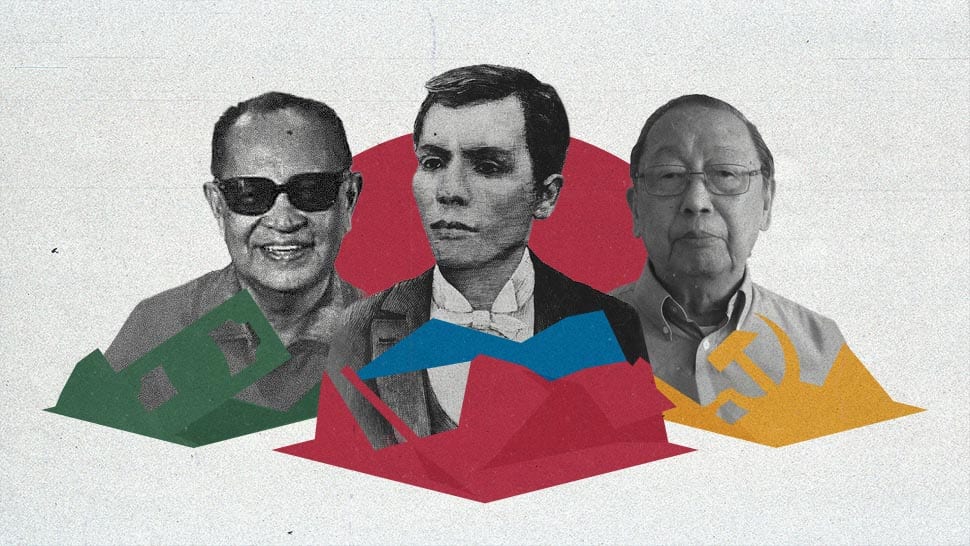
In a country divided by principles, now more than ever, we must explore the importance of supporting certain ideologies. Doing so helps us form independent conclusions about the kind of world we wish to live in. Keep in mind that ideas in general are not inherently good or bad (although debatable in the case of fascism), but it’s human actions that dilute their original intentions and weaponize them for one reason or another.
Although predisposed to getting muddied where the socio-economic, socio-political, and socio-cultural overlap, it pays to understand that these “-isms” differ in nature too. Some are abstract ideas like nationalism and patriotism. Others are a form of government like fascism. And the rest are economic systems such as socialism, communism, and capitalism. That being said, let’s break them down.
Nationalism
Many people chalk it up to the sense of loyalty and devotion one feels for their country—which in the most superficial sense is true—but nationalism as an ideology projects much deeper values than that. It is the belief that the promotion of the nation’s interests surpasses the interests of any other group or state. From a political standpoint, therefore, a nationalist would advocate for the protection of the country’s sovereignty and economic freedom from external threats.
But actions carried out under the ideals of nationalism can exist on a spectrum. On one end, we have Rizal, Aguinaldo, and Bonifacio who fought against the three-century-long Spanish rule. On the other, there are the likes of Hitler and Trump whose regimes thrived on racist propaganda in the name of nationalism.
A late 19th-century photograph of Katipuneros fighting against Spanish colonialism.

Patriotism
While patriotism is often used interchangeably with nationalism, there exists an important distinction between the two. More than the loyalty exalted from a sense of belongingness with one’s ethnic, racial, or geographical group, patriotism champions our moral duties to the national community. It’s about upholding the common good through justice and liberty, as well as by condemning actions that undermine the welfare of the nation and its people. A patriot, for example, would advocate against corruption, because it stifles the overall growth of the state whereas a nationalist might support a corrupt politician on the merit of his status as leader of the state alone.
Socialism
Socialism is an ideology that represents a broad range of socioeconomic structures that all share a common agenda: the public, instead of private individuals, should have ownership and control of the means of production, along with the management of industries and natural resources. Hence in the socialist view, the objective is better distribution of wealth that leads to a more egalitarian society. Essentially, the money earned from selling products should belong to the people who made the products.
Most critics argue that this system could demotivate people who have less incentive to work, which would eventually hamper economic growth. But the ideals of socialism are already unofficially in practice in some areas of the world. For instance, Scandinavian countries like Norway, Sweden, Denmark, and Finland have managed to integrate socialist policies that emphasize social benefits and low income disparities despite engaging in a free market economy. The Nordic Model result? Free education, free healthcare, guaranteed pension payments, and high labor union membership. It sounds too good to be true, but maybe we should keep an open mind.
Unfortunately, the flip side of the socialism coin presents a much darker picture. Countries like China and North Korea, who have promised a land of sweeping people-centric reforms, have fallen victim to the pitfalls of monopolized power. The not-so-ideal outcome? Famine, wars, and dynastic, totalitarian regimes that order a reign of terror over those who dare have dissimilar beliefs.
ALSO READ:
On F. Sionil Jose’s Antiquated Racial Nationalism
Was Juan Luna the First Filipino Socialist?

Communism
Now, this is a controversial one. By technical definition, communism is a form of socialism, thereby sharing its goals to replace private ownership with communal control of the economy. It’s everybody’s business, literally! However, the term is now more commonly associated with Karl Marx’s theory of revolutionary socialism, which advocates the overthrow of capitalist structures by the working class whose labor forms the backbone of said capitalist structures. The ultimate goal: Establish an equitable distribution of wealth and demolish the concept of social classes.
In the Philippines, the movement is primarily led by the Communist Party of the Philippines (CPP) and its armed wing, the New People’s Army (NPA). Established in 1968 and 1969 respectively, the CPP-NPA insurgencies were a direct reaction to unfulfilled agrarian reforms, exploitative labor practices, and social inequalities that persistently crippled the working class. Fast-forward to today, the CPP-NPA continues to be seen as one of the biggest threats to the Philippine government. Cynics might even say that it has become a crucial ingredient in the Philippine political arena—an easy scapegoat president after president after president has used to deflect criticism and dissent.
The CPP-NPA is further split between the ”reaffirmists” and ”rejectionists.” The former is firm on the principle of sustaining guerilla insurgencies, while the latter insists that the armed struggle way is obsolete and reforms must now be achieved through non-violent means.
All of these are not to be confused with the National Democratic Front of the Philippines (NDF or NDFP) or National Democratic Mass Organizations (NDMOs) either. The NDF is a unified coalition of various leftist groups and mass revolutionary organizations that, while formed under the initiative of the CPP, fights for its cause through diplomatic and unarmed methods. Meanwhile, NDMO is a collective term for mass organizations that advocate for the rights and welfare of particular marginalized sectors in the country—workers, indigenous, groups, women, etc. So, contrary to popular belief, NDMOs are actually legal and not at all officially affiliated with the CPP.
One can only imagine how confusing these labels must be for all the notorious red-taggers out there, but this discussion is long-overdue. Oh well.
International Labor Union Industrial Workers of the World (IWW) poster titled “Pyramid of Capitalist System in 1911.; Adolf Hitler being welcomed by a crowd in Sudetenland, where the pro-Nazi Sudeten German Party gained 88% of ethnic-German votes in May 1938.
.png)
Capitalism
Behold, the antithesis of socialism and communism. In a capitalist system (like the one we live in today), the means of production and distribution of resources are largely owned by private businesses and individuals. This means that the government bears no control over company operations apart from the mandatory taxation and implementation of regulatory laws. Theoretically, this economic structure should be a win-win situation that advances everyone’s quality of life; the more a business profits, the more resources it can distribute to its employees. Problem is, in many instances, the big bosses are not very keen on sharing their wealth.
Fascism
Fascism is bred by the preservation of extremist nationalist ideas and principles. While fascist movements vary from region or country, they all share the same virtue: the belief in the supremacy of one nation or group over another. In the Philippines, the term is commonly associated with leaders who are autocratic in their governance—those who rely heavily on populist sentiments, strong-arm tactics, extreme socioeconomic control, and most importantly, forcible suppression of opposing ideals. You connect the dots on this one.