

How Did the Janitor Fish End Up Surviving—and Thriving—in the Pasig River?

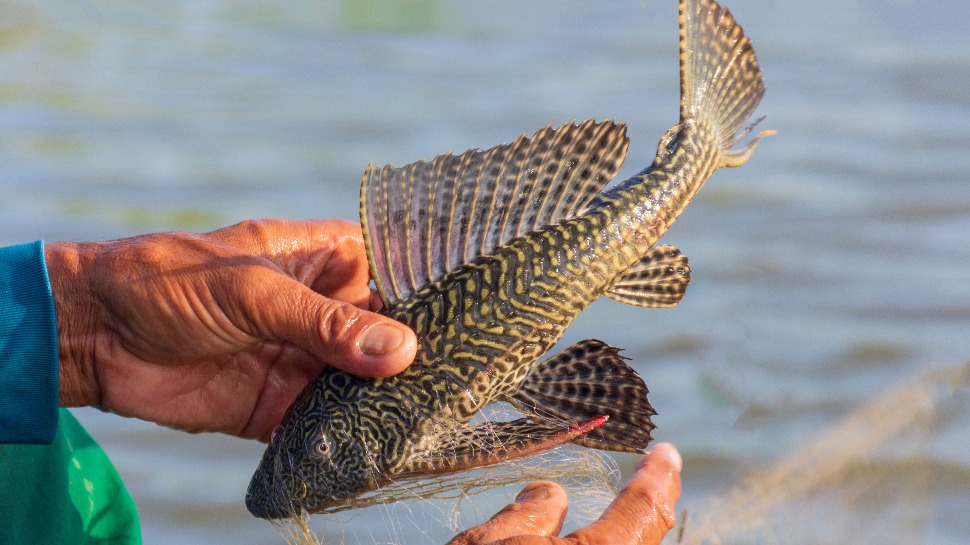
Manila is an international city, and that doesn’t only apply to its human inhabitants. The Pasig River is home to a population of South American catfish, or the so-called “janitor fish.” How can this fish thrive in a rather polluted river, and how did it get there in first place?
The origin of the janitor fish’s populations in the Philippines is unclear. The fish is native to South America, specifically to the Madeira River basin of the Amazonas River system. It likely reached the freshwater systems of the Philippine archipelago when aquarium enthusiasts freed their pets.
ALSO READ
Ultra-Rare Fish Photographed in the Philippines for the Very First Time
This Giant Deep Sea Fish Washed Up Ashore After an Earthquake
In aquaria, these fish belonging to the suckermouth armored catfish family are popular because they scrape the unsightly algae off the fish tank’s glass, acting as housekeepers—hence their common name “janitor fish.” They are somewhat unusual-looking, sturdy fish, which is why they are popular with aquarium hobbyists. We can only speculate that an aquarium keeper had to give up his or her tank, and, thinking to do the humane thing, dumped the fish into a nearby river, where they thrived and reproduced from then on.
The first reports of janitor fish, in Laguna de Bay, stem only from 2002. At least two independent releases must have given rise to the Philippines janitor fish populations since they consist of at least two closely related South American catfish species. The Amazonas River is teeming with catfish, and quite a few of these animals make it into the pet fish trade.
How can janitor fish survive in polluted waters?
The trick which allows the janitor fish to do well in murky, dirty rivers is that it can swallow air and absorb oxygen from it through its intestinal linings. In contrast to most other fishes, it doesn’t depend on extracting oxygen from the water via its gills. This ability initially evolved so that the fish could survive in shrinking, increasingly oxygen-deprived puddles during the dry season of its Amazon home, but it comes in handy when the fish is faced with polluted water where oxygen is consumed by overly abundant bacteria.
A map from the citizen-science platform iNaturalist, where every red dot corresponds to one or more observations of the several species of janitor catfish – all outside of their native range in South America. Most of South and Southeast Asia has been invaded, as has Hawaii

The janitor fish has not only invaded the Laguna de Bay, the Pasig River, and connected river systems, but several other freshwater bodies in the Philippines as well. Among other places, it has been found in the Agusan Marsh in Mindanao, and we can only speculate that it ended up there from another independent release of pet fish. That the fish does well all over the archipelago is not surprising. Generally invasive species from large continents succeed well in smaller island ecosystems; the janitor fish is literally a big fish in a small pond. Multiple other examples of islands being harmed by invasive species exist, such as the near-total annihilation of the bird fauna of Guam by the introduced brown tree snake.
Besides the janitor fish’s air-breathing ability, which gives it an advantage in polluted rivers, there are no predators of this fish in Philippine waters. And the janitor fish is not the only freshwater fish which is invasive in the Philippines. A 2014 study by Dr. Rafael Guerrero in the Philippine Journal of Science lists 14 fish species as invasive or potentially invasive: Laguna De Bay is now home to large knife fish, an ornamental fish native to mainland Asia, and many of the mountain creeks of the Visayas are teeming with African tilapia, initially introduced as aquaculture fish.
Effects of invasive species
The story of the janitor fish in itself is a curious one—of a large, odd-looking catfish from the other side of the planet making its home in a river that isn’t exactly inviting for a dip. The story also serves as a door opener to discuss the archipelago’s rivers, creeks, and lakes. From a biologist’s point of view, the freshwater ecosystems of the Philippines are among the country’s greatest riches. Just as relatively isolated islands are especially prone to invasive species, they are also the home of unique species of animals and plants found nowhere else, called endemic species. This tendency of evolution to go into overdrive on islands made the Philippines one of the world’s biodiversity hotspots, which includes endemic freshwater fishes.
The invasive janitor fish is just one of the threats to the native Philippine fish fauna. In this context, it’s worth noting that rivers in far worse states than the Pasig have been cleaned up successfully, such as the Cuyahoga River in Ohio, U.S.A, which had started burning on several occasions in the 1960s due to the unreal amount of industrial waste-products floating on it.
While foreign tourists, scholars, and businessmen (and businesswomen!) are usually enriching for the country they visit, invasive animal species from afar are generally not considered a healthy thing for the ecosystem of the host country. For one thing, the invasive fish might compete with local species for resources or outright devour them. In Laguna de Bay the janitor fish has been blamed for destroying fishing nets and cages. The burrowing activity of these large fishes—they can grow up to 70 centimeters long—alters the composition of the riverbed it inhabits. This will have significant effects on the aquatic plants, other fishes and invertebrates, such as crayfish, which live in these rivers.
A South American suckermouth armored catfish guarding its eggs, in the author’s fish tank in Japan, where the author previously lived. This is a species smaller than, but related to, the invasive janitor fish (Pterygoplichthys disjunctivus and Pterygoplichthys pardalis). No, Ihe did not release it into a river when he moved away from Japan

It’s generally an uphill battle to get rid of invasive species once they have established a foothold. Even in relatively pristine rivers it would be tricky to eliminate a burrowing, bottom-dwelling, air-breathing, hardy fish. In a polluted river, where the air-breathing janitor fish has a big advantage over other fish trying to extract the little oxygen which is left in the water with their gills, the challenge is even steeper. Avoiding new introductions is the better course of action when it comes to invasive species. The janitor fish will likely be with us for some time. Manileños might consider adopting the fish as a poster-animal, like the equally invasive cane toad was adopted in Australia’s tropical north. Images of these (also originally South American) ubiquitous toads now decorate t-shirts and postcards, and pubs even run toad races across tables on weekends. A comparable emotional tie to the janitor fish might eventually lead to a more sympathetic attitude towards the country’s rivers and lakes.
Klaus Stiefel is a biologist, popular science writer and underwater photographer and videographer. He is originally from Austria and currently based in the Philippines. His latest book, called Your Brain on Diving (Hübner, Hamburg, 2023), is about the effects of scuba diving and free diving on brain dynamics.
