
Karina Bolasco: Championing Philippine Literature on the World Stage

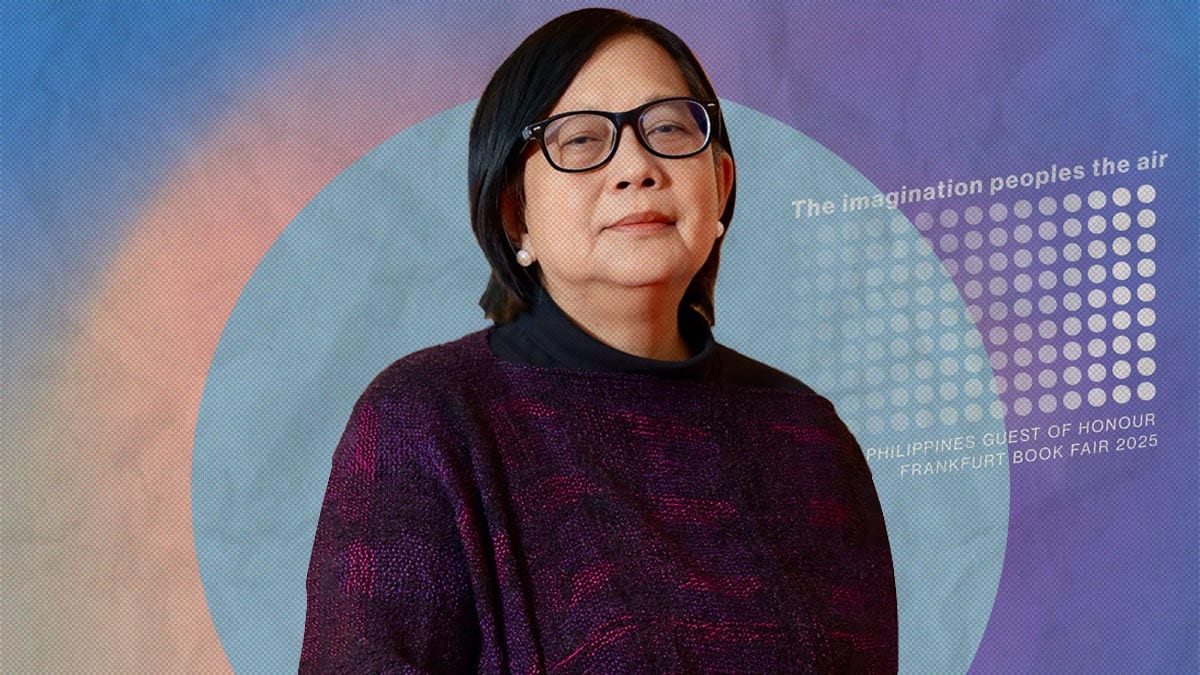
ILLUSTRATION: Art by Igi Talao
In less than seven months, Philippine literature will take center stage as this year's Guest of Honor at the Frankfurt Book Fair, the world's largest publishing trade fair. It will be a spotlight like no other. Last year, 4,300 exhibitors from 92 countries participated in the event attended by 115,000 trade visitors and an additional 230,000 walk-in guests, according to its official site.
No less than renowned publishing icon Karina Bolasco is spearheading the preparations as the country’s literary program head and curator for books. Some 500 titles will be brought to the Germany showcase for curation. Bolasco is widely known for her remarkable achievements in the publishing industry, most notably with her past roles as general manager of Anvil Publishing and director of the Ateneo de Manila University Press. Her more than four decades of indelible imprint on the industry was recognized with a Lifetime Achievement Award by the National Book Development Award in 2023.
In October last year, when the Philippines was confirmed as Guest of Honor for the 2025 trade fair, Bolasco described the country’s literature as “interesting and unpredictable, rousing and spirited.” She named a few of our heroes—from the late Carmen Guerrero Nakpil to National Artists for Literature Bienvenido Lumbera and Nick Joaquin. Our pages are “packed and as rich as (our) history of conquest and resistance” and “vibrant with epics, myths, and stories that have survived almost four centuries of colonization, passed from generation to generation, by word of mouth and by printer’s ink, and have continued to influence and shape, to some degree or another, contemporary writing in all its new and varied forms,” she told them.
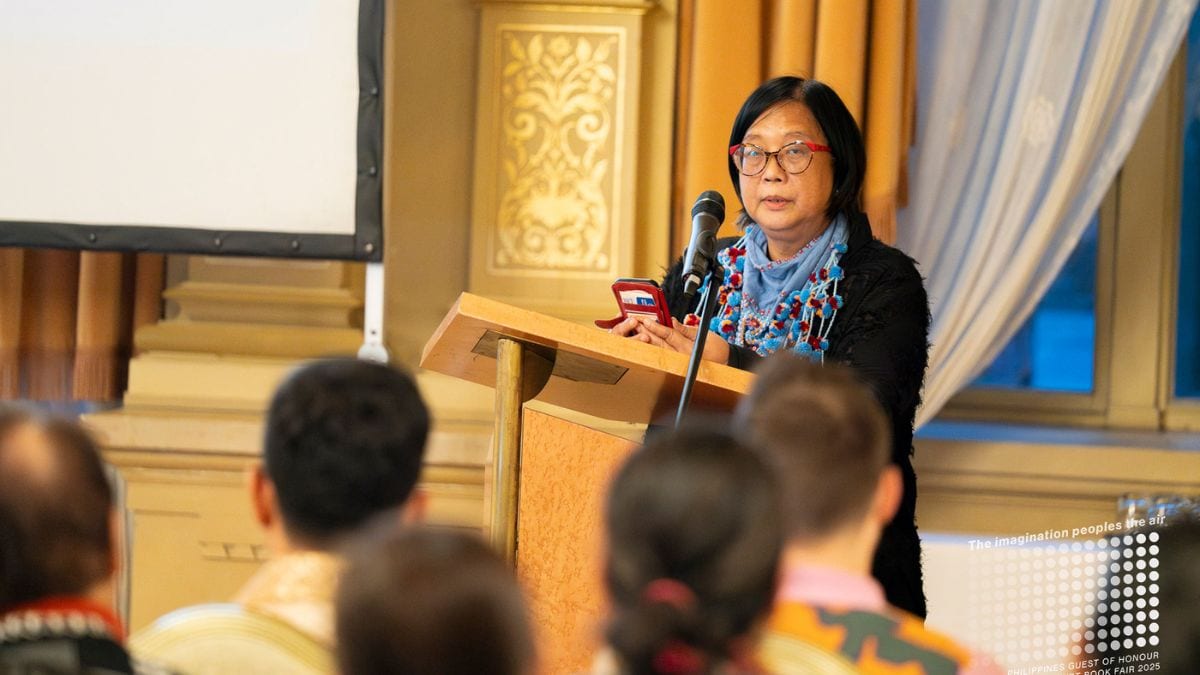
Bolasco at the press conference for the Frankfurt Book Fair 2025
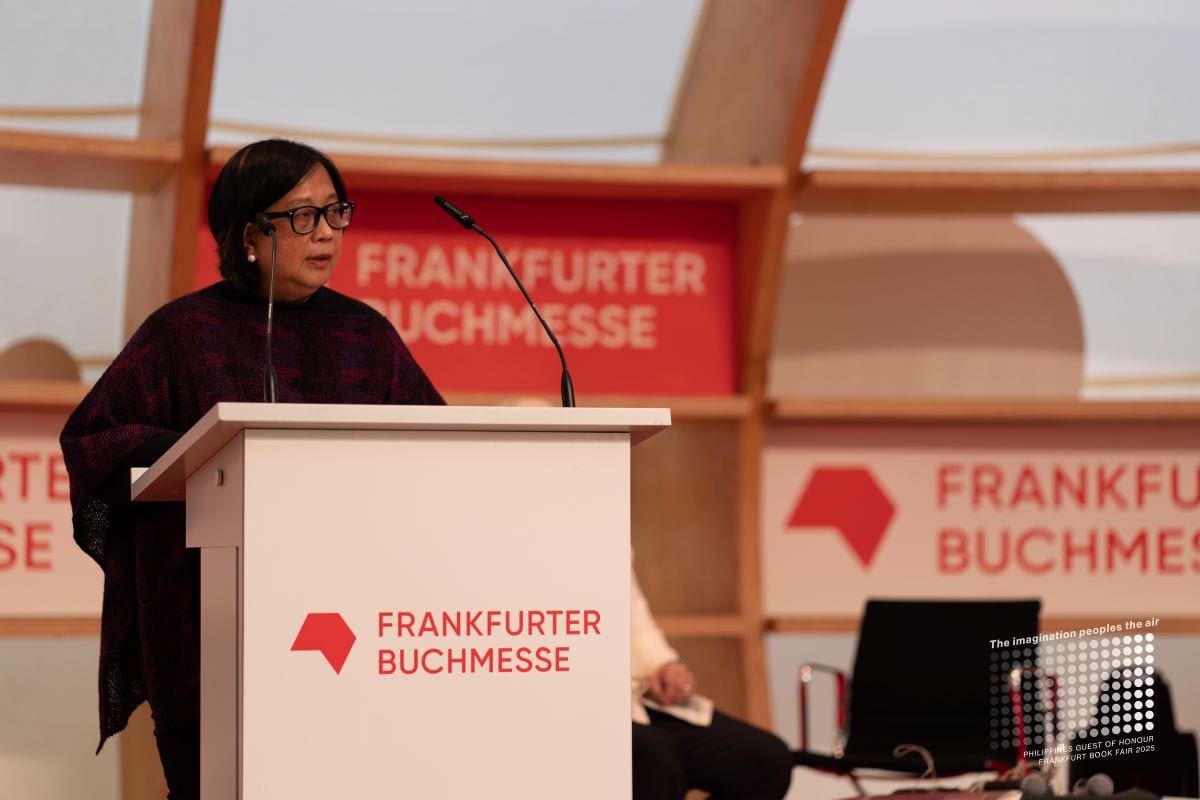
For Bolasco, the Frankfurt Book Fair 2025 is the only time Filipino books will be given a chance. “I don’t think it will be repeated,” she told Esquire Philippines. “Our goal is to really be visible and to showcase the best of our arts and culture and books. It’s not just (about) a commodity. That’s why I like the term ‘book trade.’ When you trade, it’s not just monetary, creative content. It's a cultural exchange every time you get a book.”
As Guest of Honor, the Philippines will be given a free hand to “set-design” a 2,000-square-meter pavilion, select experts for panel discussions, and pave the way for Filipino creatives to network and show the world what they have to offer. If an author sells translation rights, for example, the earnings are estimated to be between €500 to €1,200. Since 2016, around 400 Filipino titles have sold translation rights, according to Bolasco.
Last year, the country sent 70 delegates to Frankfurt, including 50 grantees and 18 independent publishers. Bolasco, a Publisher of the Year awardee many times over, considered it a “dress rehearsal” for 2025. “It’s like our kickoff year,” she reflected. “I was kind of actually impressed because almost all the grantees (that participated in panels) delivered well. They were very articulate and very passionate about what they do.
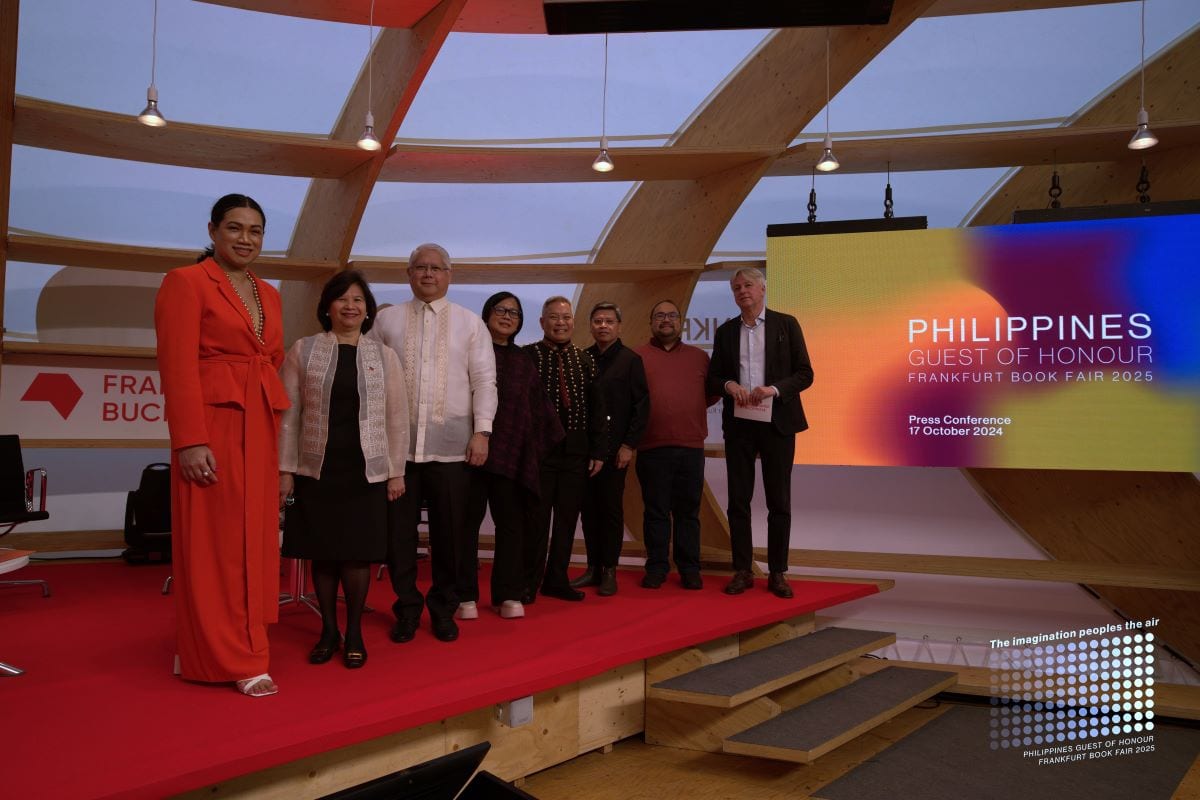
From left: Jaya Jacobo; Amb. Irene Susan Natividad (Philippine Ambassador to Germany); Chairman Dante Francis “Klink” Ang II, previous Chair of NBDB; Karina Bolasco, Curator of Books and Head of Literary Program PHL GOH; Executive Director Eric B. Zerrudo, NCCA; Patrick Flores, Curator, Philippines Guest of Honour Frankfurt Book Fair 2025; Budjette Tan; Juergen Boos (Frankfurter Buchmesse President and CEO)
“They enjoyed their first experience of Frankfurt. That's what happened to me. I mean, the first time I was there, I realized there are so many people in the world who believe in books. You see all of them there. You’re inspired and you’re motivated to stay in your career or whatever it is you want to do.”
According to her, the delegation gained valuable insights in many aspects. “Even if they didn't get to talk to publishers, they talked to readers,” she recalled. “So, they now have an idea of what global readers are looking for. Even before (going there), we had online teaching sessions. For the grantees, we arranged matching sessions at our national stand. For example, five or six of the grantees or children's book publishers or writers will meet with corresponding children's book publishers so they can talk and interact.”
ALSO READ
Our Favorite Filipino Books of 2024
Our 26 Favorite Filipino Books of 2023
The group was also exposed to different forms of production that have made books artifacts or art objects. “This is important now (because we have) online editions,” Bolasco said. “You have to make the books really beautiful so that (readers) would still buy the printed ones.”
Another game changer for the publisher is the funding being accorded for Frankfurt. “I’ve never seen this kind of support for publishing,” she said. “The whole time that I’ve been in the sector, it’s always just private-sector initiative. I asked Senator Loren (Legarda) if she could fund our participation—just the participation. And she did. In 2016 or 2017, she went to see what it was that she was supporting. When she found out that Indonesia was Guest of Honor in 2016, she (realized) that the Philippines (should have been first to do it) because we have a lot of books in English.
The Frankfurt Book Fair 2025 is milestone for Bolasco and local publishing advocates who've attended the events since the '90s.
“She really put her mind to it. She really worked on it. She activated the consulate in Frankfurt that had been shut down for many years,” Bolasco said. “She just believed in us and so we had to rise. We had to respond. The industry just has to get its act together.” Along with Legarda, the team is also being supported by the National Book Development Board (NBDB), the National Commission for Culture and the Arts (NCCA), and the Department of Foreign Affairs (DFA).
The Frankfurt Book Fair 2025 is a culmination of sorts for all the efforts of Bolasco and advocates of local publishing who have been traveling to Germany since the ‘90s to attend it. At one point, she and colleagues at the Book Development Association of the Philippines had enough funds for a booth but not for its design. They relied on their creativity and made fiesta-like banners from scratch.
During the pandemic, she worked on the “big document” to share the country’s vision and capabilities to make it worthy of being Guest of Honor. The Philippines got the Book Fair’s nod in 2023, a shorter notice period according to Bolasco, compared to past Guest of Honors that had four to five years to prepare.
The literary magnate is also eager to bring attention to key challenges in Philippine literature.
Beyond Frankfurt
Aside from the possibilities Frankfurt will offer, the literary magnate is also keen to surface significant realities that impact Philippine literature.
“With the situation of our country, very few people can afford books,” she said. “It’s really a luxury. Even the time to read (is hard given that) you work every hour to survive. How will you find time to read? But if you do have time to read, you cannot buy books. My frustration at this point is that we still do not have a functional public library. In other countries, when you’re bedridden, they even deliver the books to you.”
She also does not understand why the Department of Education (DepEd) cannot purchase similar textbooks used in private schools for public school students. “(The access) will close the gap between private and public education,” she explained. “Some public schools are even better than private schools. (It’s a waste) that there is no synergy between the DepEd and the textbook publishers.
“One thing I really have to say on record is that when Isagani Cruz became DepEd secretary, he was the first to say that every child in the public school system should be able to read at least one storybook. When (former Senator Raul) Roco was the education secretary, they started to look at supplementary materials aside from textbooks. You have to expose (students). That’s the best way to teach reading. You have to let them read good books. Also, textbooks are (often the) first experience (in reading) if you come from a household where your parents cannot buy books. So, if you don’t enjoy that, your relationship with books and reading is ruined.”
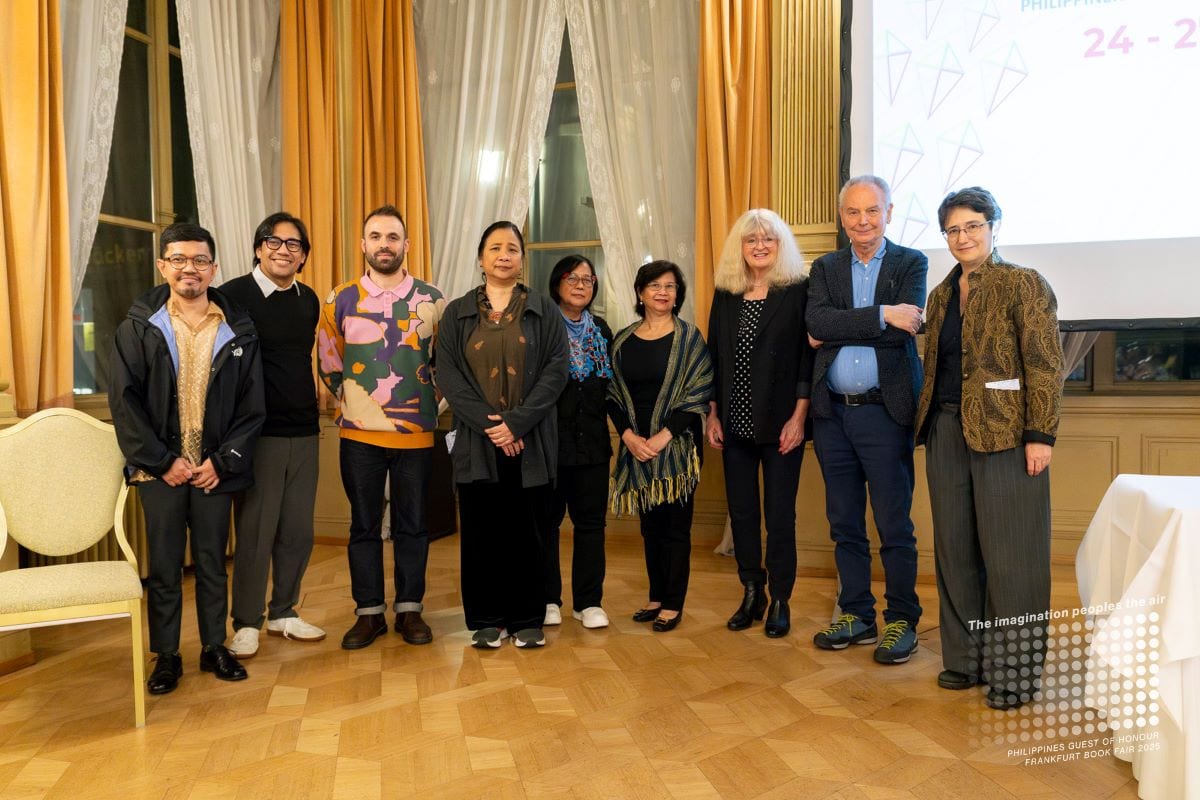
From left: Edgar Calabia Samar, Sarge Lacuesta, Philipp Herold, Luna Sicat Cleto, Amb. Irene, Susan Natividad (Philippines Ambassador to Germany), Marion Tauschwitz, Manfred Metzner, Annette Hug
Bolasco also voiced out the key role Philippine embassies and consulates worldwide play in terms of access to literature. “The trade attachés push for products of the Philippines but never (our) books. Throughout my years in publishing, I have always suggested that in any world trade fair we participated in, we can have books to go with whatever we are showcasing,” she added. Even small libraries in these offices can bring Filipiniana collections closer to Filipino communities abroad.
There are many pages to be read from the country. A total of 10,297 Filipino publications received an International Standard Book Number (ISBN) in 2023 alone, according to the National Library of the Philippines. Data from the NBDB reported that the combined sales of book publishing, printing, and selling in the same year surpassed 11 billion. Many things are going for readers, Bolasco told her Frankfurt audience last year. Filipinos can now buy books online, thanks to e-commerce. The younger generations are enthralled with online writing community Wattpad. Indie publishing houses are giving authors from provinces opportunities. Prestigious literary contests like the Palanca and writers’ organization like PEN Philippines have been around for more than 50 years. “We book people know books so intimately and we celebrate them every chance we get,” she added.
Bolasco closed her speech at last year’s Frankfurt Book Fair with a quote from poet Gemino Abad, National Artist for Literature. “The future is shaped by words,” she read to the room.
And those like Karina Bolasco make sure we find our way to them.
