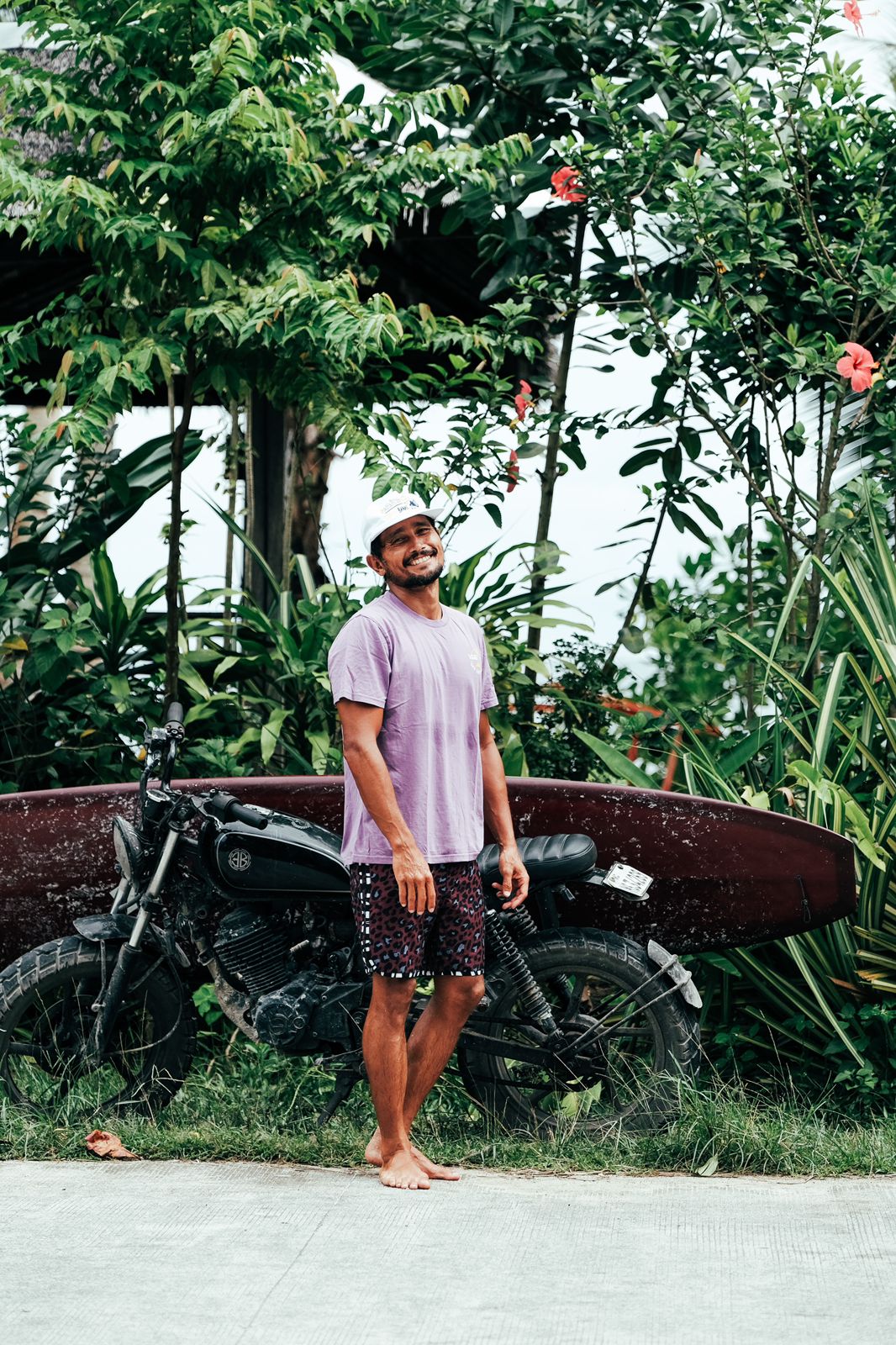
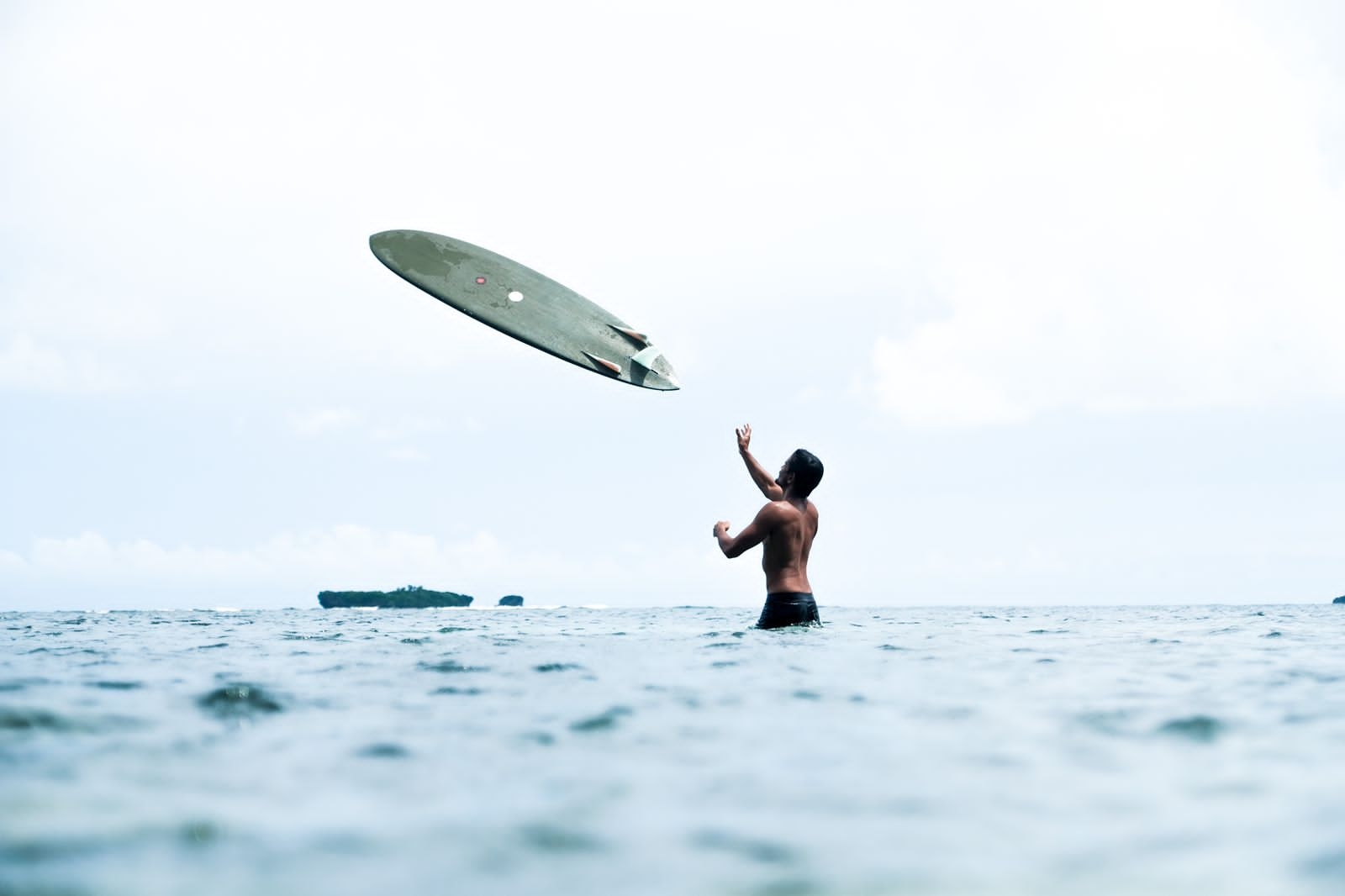
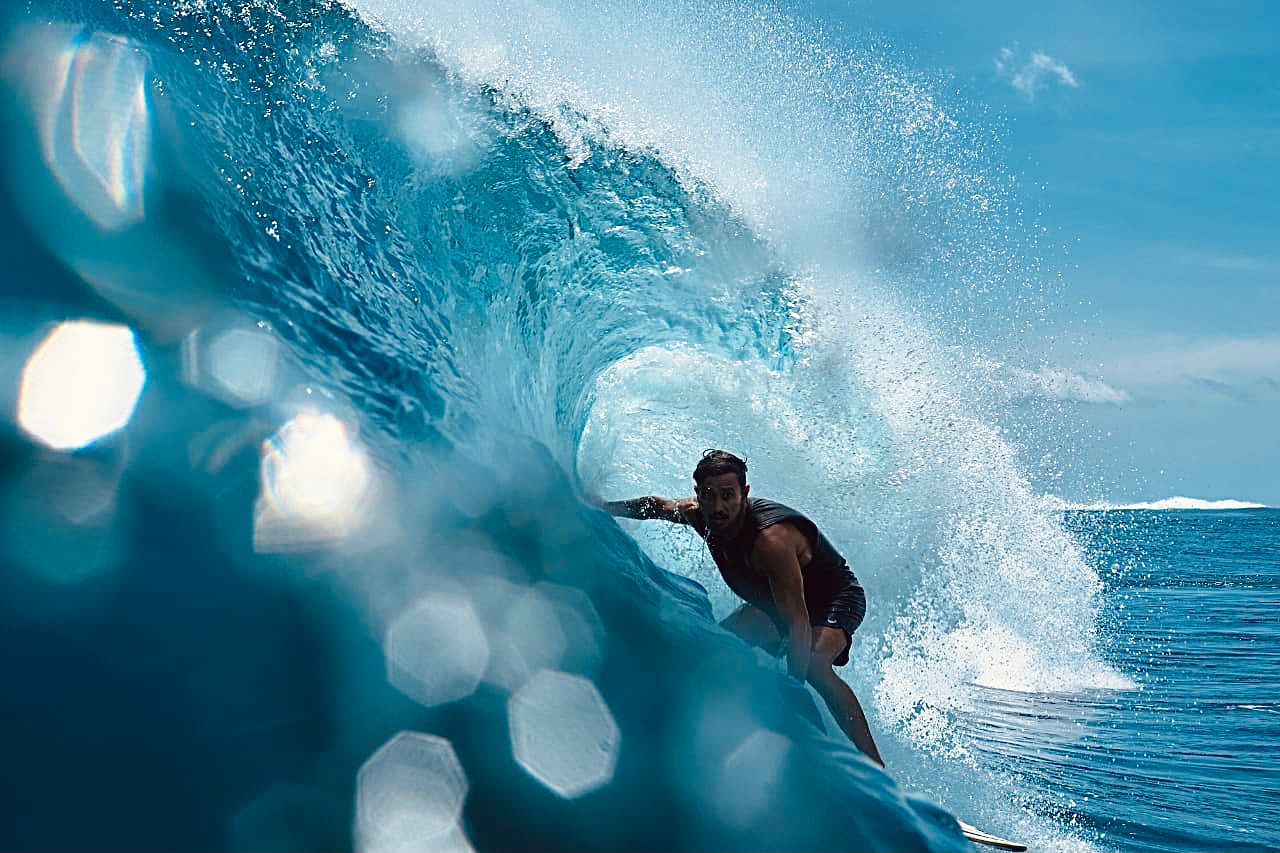
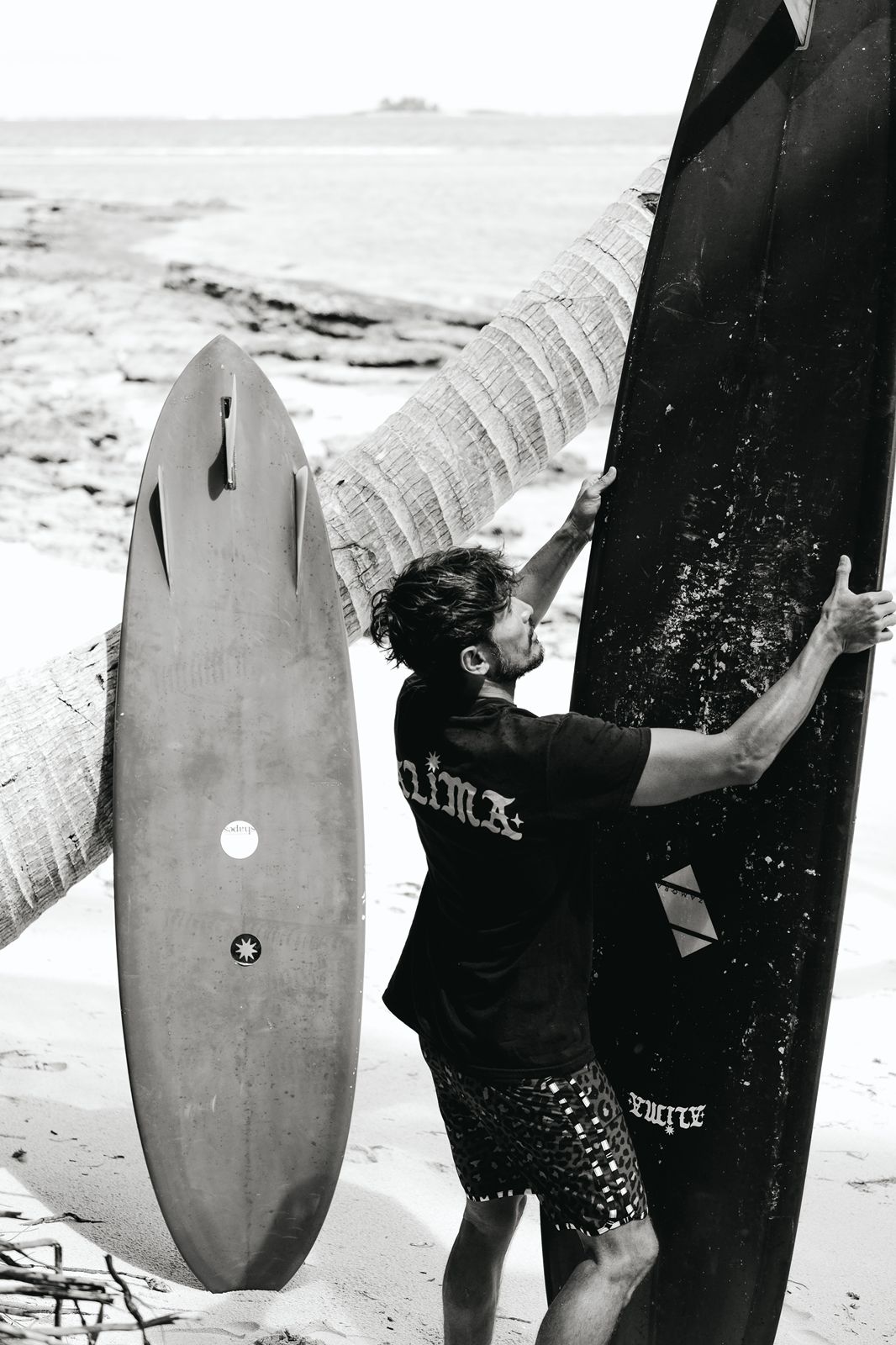
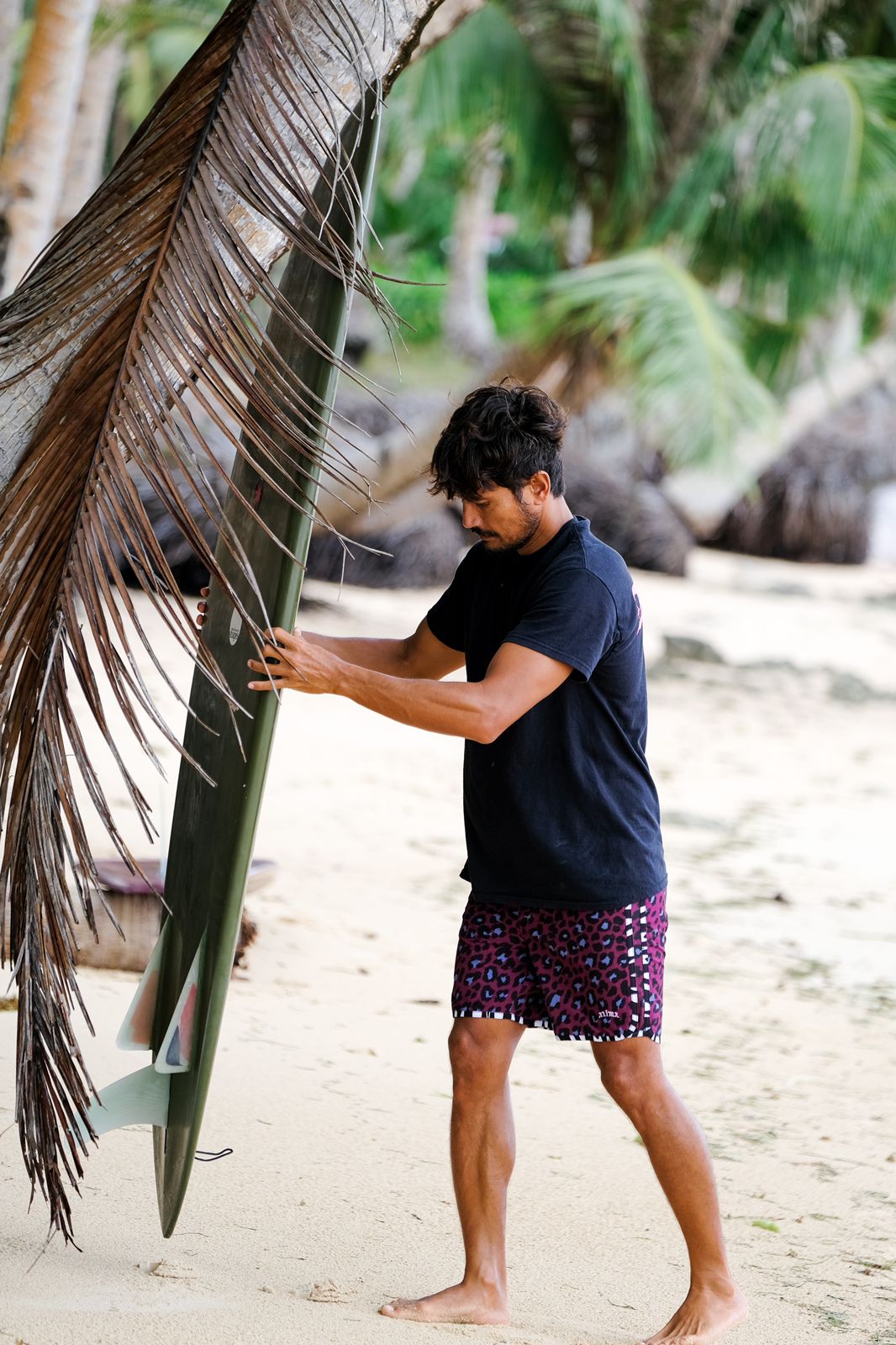
Luke Landrigan taught me how to surf. It was 2008 and my friends and I made the trip to San Juan, La Union, which, by then had already earned a reputation as the surfing capital of the north. It was my first time ever on a surfboard, but Luke and another instructor patiently taught us the basics before sending us off into the water. For a beginner I wasn’t too bad; I managed to at least stand up and hold steady for a few seconds before crashing back down and letting the waves wash over me.
I tell Landrigan this story nearly 14 years later, a few days before 2022. We’re hanging out having watermelon juice at Seabuds, the vegan restaurant and juice bar located within San Juan Surf Resort, which his family owns and is so popular in the area that it never saw the need to change its generic-sounding name.
ADVERTISEMENT - CONTINUE READING BELOW
“Funny you (mention that story) because two days ago, there was this girl who was like 18 years old who came up to me and she said, ‘You taught me how to surf 10 years ago!’” he says with a grin. “And I was like ‘Really?Pinakita pa niya yungphoto (when she was a little girl).”
CONTINUE READING BELOW
watch now
I tell him that there are probably more of these types of stories, from countless people that he and his instructors at his surf school have helped put on surfboards and taught how to ride the waves over the years. Surfing has been seeing a steady increase in popularity in the country, culminating in a stellar showing for the Philippines in the sport at the last SEA Games held in Manila in 2019. But Landrigan is perhaps the closest the country has to a surfing superstar. He’s competed and won awards from multiple surfing competitions here and abroad, including the prestigious Lanuza International Longboard Invitational in 2006 and the La Union Long Board Open. He’s been tapped as an endorser and represented multinational sporting brands eager to associate themselves with an authentic sporting icon. And he’s a fixture in the country’s surfing community; a leader admired and respected by veterans and newbies alike. Luke Landrigan is a name that is part of any conversation involving Philippine surfing.
ADVERTISEMENT - CONTINUE READING BELOW
PHOTO: Cecile Lambert / Luke Landrigan
Post a Comment
Luke Landrigan’s life
And that’s no stretch, considering he’s been doing this pretty much his whole life. Born Down Under to a Filipino mother and Australian father, Landrigan moved back to La Union when he was a baby and essentially never left. His dad influenced his love for the water and he started surfing when he was around eight years old. It was in his early teens though when he started really getting into it.
“Waking up every day and not expecting anything; you didn’t know if the waves were going to be nice or not,” he says when I ask what he liked about surfing those early years. “I was just excited to wake up”—his eyes light up—“and see what the waves were going to be like that day. And then the next day,ganun na naman. You’re just excited to wake up to see what’s out there.”
Landrigan remembers days when there were hardly any other people along that stretch of beach in Urbiztondo.
“I remember there were just five of us at most surfing,” he says. “Walang katao-tao. I remember one whole week,wala kang makikitang kahit isang tao diyan sabeach. The sand was so even and fine. There weren’t even footprints.”
ADVERTISEMENT - CONTINUE READING BELOW
For a time, Landrigan entertained thoughts of becoming an architect and even attended two years of college to pursue that goal at nearby Saint Louis University. But it quickly became evident that a life behind a desk inside an airconditioned office wasn’t for him.
“After two years, I realized we had 16 math subjects (for the course). Yung Math 1 ko,naka-take threenako,” he laughs.
It was also around that time when he started competing in different events across the country and overseas. He was traveling a lot, meeting people, and living the life of a professional surfer.
“Eventually I realized that I didn’t want to be in an office,” he says. “I can’t work in an office.”
It was a good thing there was something for him to do back in his home base waiting for him.
The rise of surfing in the Philippines
In 1992, the elder Landrigan set-up what would become the San Juan Surf Resort. Luke says it was probably only the second resort in the area. It would take a few more years before the rest of the country, and yes, even the world caught on about the surf-ready waves in this part of La Union.
He can’t pinpoint exactly when the crowds started coming, but Landrigan says it was a slow build helped along by a couple of major touchpoints. First was when celebrities like Jericho Rosales took up the sport and started showing up in the area to put in some surf time. The two are still friends to this day.
“You would see people come to the beach because they knew him and would take photos of him,” Landrigan says.
And then there was that one time when then-President Gloria Macapagal Arroyo was photographed riding the waves on a surfboard right there in San Juan. The picture was plastered all over the news and was, perhaps, the biggest advertisement for the area, and indeed, for surfing, that they had ever gotten up to that point.
PHOTO: Bren Stormin / Luke Landrigan
Post a Comment
“And I think that same year,lumabas yungmovienaBlue Crush,” Landrigan says. “Three pretty and tanned girls surfing; it was cool. Then,unti-unti dumadami na yung nagse-surf. Especiallymgagirls. Kungnasan yunggirlssiyempre andun yungboys. I think for me, that was the yearna mas na feel namin yung medyo dumami na yung tao.”
Eventually the surfing hype attracted the attention of big business and corporate sponsors. Brands started holding events in the area, which drew in even more people.
“There was Surfing Break, which was held during Holy Week,” Landrigan says. “Then there was thatSanukevent with (singer-songwriter and surfer) Donavon Frankenreiter.” I tell him I was there, when the artist put on a lovely acoustic show by the beach, and we spend a few minutes reminiscing about the event.
La Union even had its own version of the much-hyped Laboracay, which was called LaborUnion. “Butdi siya tumagal,” he says. “There was alsoyungSoul Surf.Grabe yunglineup ng bands. At one point, may Franco, Pupil, hardcore bands. And then after that,ayun na, nag-boomna.”
Luke the businessman
Around 15 years ago, Landrigan started cutting back on all the traveling to spend more time at home to take on a more active role in managing the resort business. It’s a fantasy life for many—the idea of running a resort on a tropical beach and living the easy life. But the surfing businessman dispels any notion about it being “easy."
“It’s not as fun as it looks,” he says. “Yungholidayng ibang tao, nakasalalay sa ‘yo. Especially me, I live here in the resort. Every complaint, you’ll hear it. As soon as I walk down here, the first thing you see and hear isn’t what’s good; it’s what’s wrong.
“Once you’re in a business, you’re trying to fix stuff,” he adds. “You hope there’s no problem. So before it hits, you try to fix it already. Those things that might trigger the problem, (you try to address them already).”
Landrigan, who has been spending a lot of time in that other surfing mecca—Siargao—talks about friends who tell him about their own dreams of opening and running a beach resort. “They were saying, ‘Our dream is to retire, maybe open a resort with 10 rooms,maliitlang. Maybe a small restaurant, a swimming pool,magre-retirenakami. But it’s just not that simple.”
Still, spending all day at the beach is probably better than, say, spending it in back-to-back meetings, arguing with your boss about missed deadlines, or working at your desk till 10 p.m.
“You still have to be thankful because you’re by the beach, you’re getting some sun,” he says.
Mostly it’s the chance to connect with real people who let their guard and inhibitions down when they’re spending a few days at the beach that Landrigan says he appreciates about being a business owner. He says he likes meeting people from all walks of life who come through the resort just looking to unwind and relax.
“When you’re here,paranglevellang kayo lahat,” he says. “You talk to a lawyer, or you talk to a doctor or politician. No one’s acting like they’re important. Here we’re all the same. We’re here to chill, ride some waves. People are more approachable.”
Landrigan has been there through all of it: during the years of a deserted Urbiztondo beach all the way to the influx of crowds of surfers, wannabe surfers, beach bums, and vacation-goers. He’s seen both sides of Elyu: an untainted beach and surfing paradise that he and his friends had all to themselves, and one thata lotmore people know about. I had to ask which of the two he prefers.
“As a businessman, of course, the more the merrier,” he says. “People come and they invest here and that’s good. There are more options for people who come here. Properties go up. Even for me, there are more restaurants for me to eat at.
“On the other hand, with my local surfer side, it’s hurtful to see when people invest and they don’t care about the environment.Di mo maiiwasan, yung mga nagi-investdito, all they think is ROI, ROI. How they make money. But they don’t really follow the rules.” He talks about certain businesses in the area circumventing environmental laws, particularly with their sewage system. It’s a horror story that no one wants to happen. But it’s a reality the community sadly has to contend with in the face of rapid commercialization of San Juan.
“We would want to share (this) with everyone,” he says gesturing at the beach and the ocean. Butmarami na yung nagi-investna wala namang pakialam sasurfing and the environment. They’re just here for the opportunity (and to exploit). They wouldn’t be here if it wasn’t famous. But you always have to look back and ask: why are people coming here? Because of the waves. Period.KayaSurftownyung tawag.Kayait’s the surfing capital of the north.
“Yun lang yungbad trip.”
Keeping busy
In many ways, Landrigan is still the same guy I met nearly 15 years ago, but in other ways, he’s changed. Since then, he’s dabbled in modeling and acting, two things that he never actively sought out but just naturally happened. In the case of modeling, it was a photographer-friend who convinced him to do an impromptu photo shoot by the beach that opened that door. The photo ended up in an exhibit, where the right people saw it and liked his look.
“My friend said, ‘Luke, this company wants to get you.’ I was like, ‘Really? And they’re gonna pay me?’ And she said yeah, just remove your shirt and smile, and I said, ‘What?!’ But I said,sigeI’ll go. And eventually I got into it.”
And then of course there was that 2017 film calledSiargao, directed by Paul Soriano and starring his friend Rosales. He had struck up a friendship with Soriano after they worked on a project together. It turned out they were casting for a film about the surfing community in that part of Surigao Del Norte and needed experienced surfers who were familiar with the place.
“Wala na ngangacting lessons nun e,” he says. “(Paul said) kunganokayo,yun na yun.”
Landrigan says there have been feelers and offers from others in the film industry for him to do more as an actor. But it seems like Siargao is a one-and-done and he doesn’t feel like the movie business is something he’d want to get into.
“I don’t think that’s for me,” he says. “The film business is such a totally different animal.”
But Landrigan has other stuff keeping him occupied. Besides the resort, the surf school, and a retail surf shop, the businessman invested in a restaurant called Kermit, which originally had a branch in Siargao. They recently hosted a fundraising event at the restaurant for victims of Typhoon Odette. He says they’re exploring opportunities to open new branches of the restaurant in other areas soon.
He also started an apparel brand with some friends and partners called Alima. Merging surfing with art, the brand was supposed to launch in December in Siargao, but circumstances forced them to pivot and they might launch it soon in La Union instead.
PHOTO: Cecile Lambert / Luke Landrigan
Post a Comment
Landrigan is also involved with the Philippine Surfing Team, where he trains and coaches the next generation of surfing stars. He was president of the Philippine Surfing Tour, which attracts surfers from all over to travel to different surfing spots around the country. It’s all part of helping professionalize the sport of surfing and turn it into something that resembles the Philippine Basketball Association.
He also recently bought a plot of land inland in San Juan that he’s been planting with fruit-bearing trees. For now, it’s just that—a hobby. But the plan is to eventually build a house and live there.
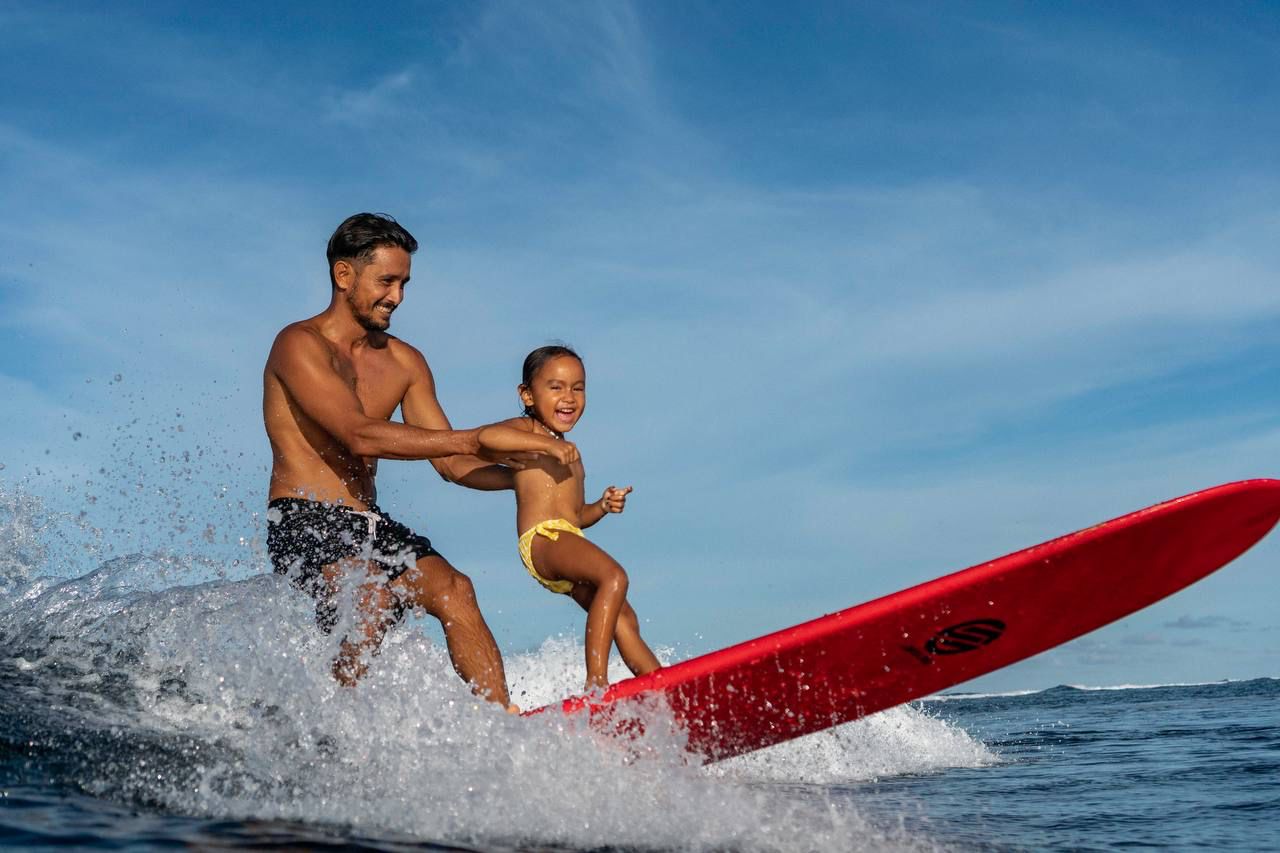
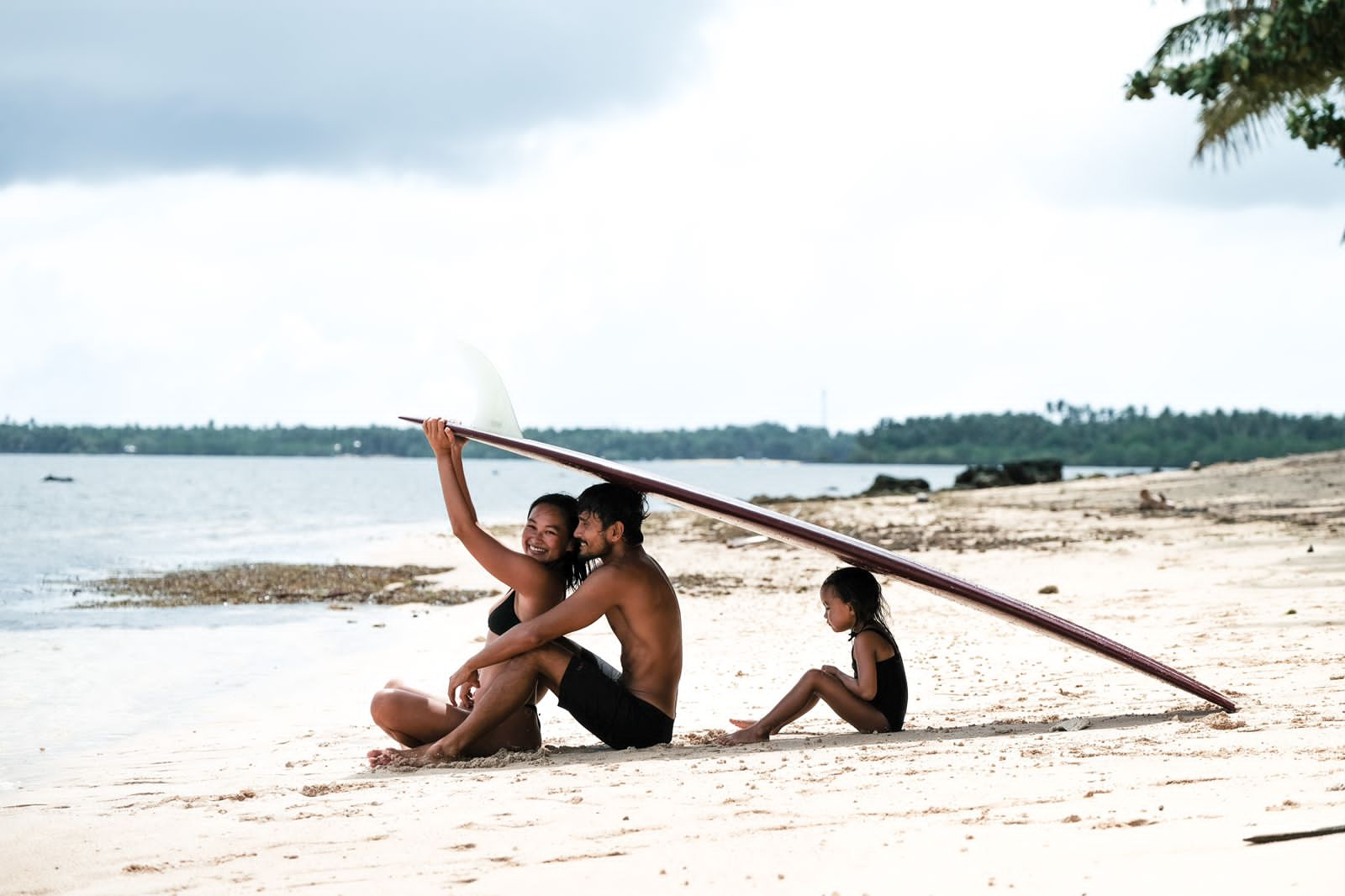
And then of course, there’s the one thing that occupies his time the most—family. Landrigan has a four-year-old daughter named Luna with his partner—model and entrepreneur Danika Nemis—as well as a 13-year-old son, Kai, from a previous relationship. Both of the kids are homeschooled, which focuses on their interest rather than a set curriculum. Landrigan believes this is a better alternative than the traditional educational system.
“If the kids are more interested in music, then we’ll develop that aspect of their education,” he says. “If the kid is more interested in accounting, with math, then that’s what we’ll focus on. If they’re more interested in sports, we develop that more. It’s new to us, so we’re feeling it out also. I just don’t believe in sitting in class for eight hours a day, having nine subjects (the traditional method).”
It’s a packed, fulfilling, full life for 39-year-old Luke Landrigan, which led me to wonder if he ever still has time to do the one thing that he loves the most; the thing that he’s been doing since he was eight years old, and the thing he’s taught countless others to do, including me—does he still have time to surf? The answer didn’t surprise me one bit:
We use cookies to ensure you get the best experience on Esquiremag.ph. By continued use, you agree to our privacy policy and accept our use of such cookies. Find out more here.