
Today I Learned: These Repurposed Fences With Holes Are Remnants of World War II


ILLUSTRATION: Igi Talao
You've probably seen this distinct steel fence in different parts of the Philippines, especially in post-war houses or in towns that have been around for a while. It's these steel planks with holes in rows and with teeth-like slots on the long edge. As it turns out, these are called Marston mats, which are standardized, perforated steel matting materials developed by the United States. They were used as temporary runways and landing strips during World War II.
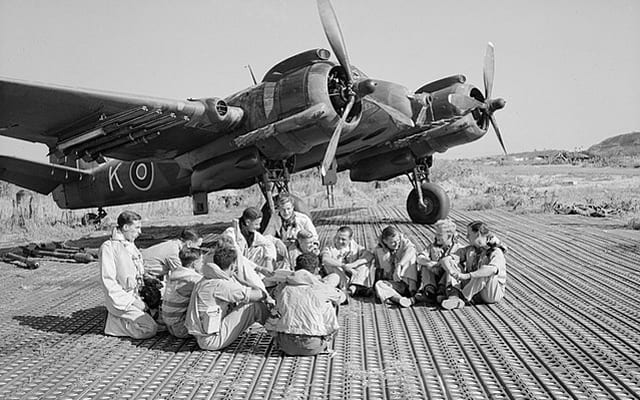
RAF aircrew sitting in front of a Bristol Beaufighter at Biferno, Italy, August 1944
ALSO READ:
The Untold Story of Lola Loring, the Unsung Filipina Hero of World War II
History of Marston Mats
The story of Marston mats begins in the United States, where the need for a versatile and durable surface became apparent as the nation prepared for war. Developed by the Carnegie Illinois Steel Company, these mats were designed to create temporary runways on unsuitable ground. The mats were first put to practical use during the Army's Carolina Maneuvers in November 1941, just before the attack on Pearl Harbor. They were named after the nearby town, Marston, North Carolina, where the mats were first used.
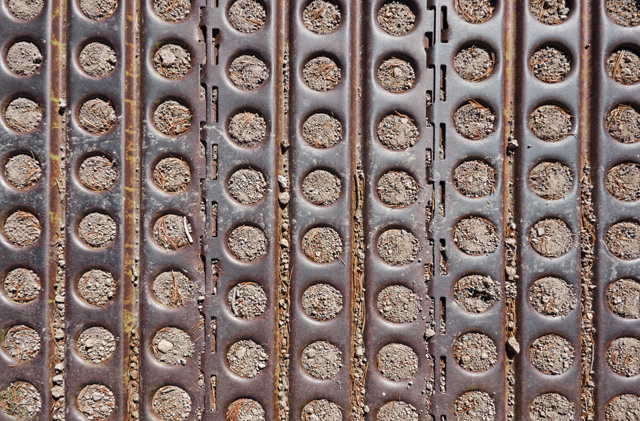
Each mat measures 10 feet long and 15 inches wide, and weighs 66.2 pounds. Their design featured flared, pierced holes that provided drainage, reduced weight, and increased rigidity. These features allowed vegetation to grow through the holes, reducing dust and aiding camouflage, while also making the mats easy to install and remove. The mats could be locked together to form a durable surface capable of supporting aircraft weighing up to 60,000 pounds. The mats' corrosion-resistant properties, thanks to their high manganese content, ensured their longevity even in harsh environments.
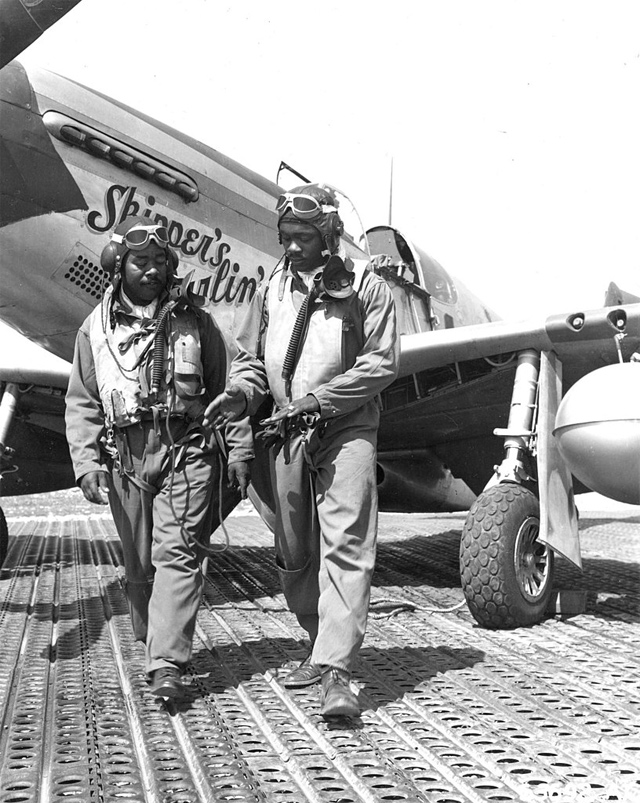
Walking over Marston mats in Tuskegee, Alabama
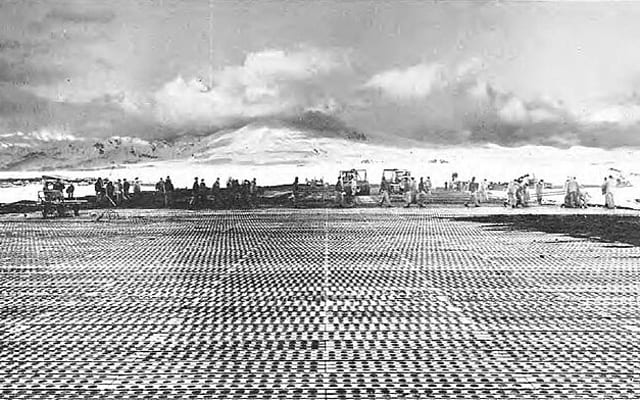
The utility of Marston mats was not confined to the United States. As the war progressed, millions of these mats were shipped overseas, and they were extensively used by Army engineers and Seabees (construction battalions or CBs) to make all kinds of terrain as usable as possible. Seabee engineers and crews could clear, grade, and complete a 3,000-foot runway in less than 72 hours, allowing the rapid deployment of aircraft and supplies.
Marston mat laid on the Navy's auxiliary field on Tanaga Island in the Aleutians
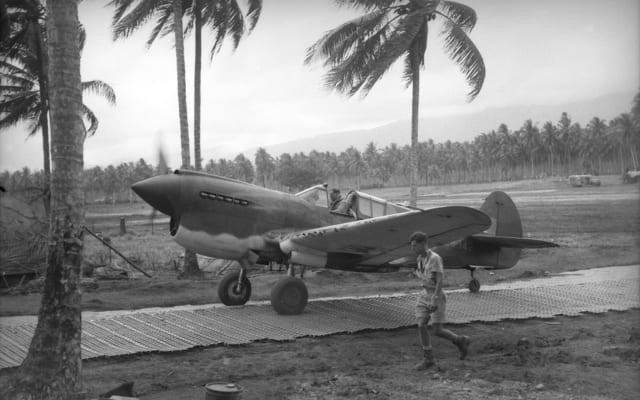
A Curtiss P-40 Warhawk taxis up the metal runway among coconut trees in Milne Bay, Papua New Guinea in September 1942
"Marston mat created a universal footprint of Allied airpower in World War II. Everywhere the mat was laid, Allied airpower was projected forward—with speed. The Germans and Japanese had nothing remotely similar to it. Neither did the Russians until they received Marston Mat via American Lendlease," wrote Richard K. Smith in a magazine article titled Marston Mat published in AIR FORCE Magazine in April 1989.
Marston Mats as Surplus of the War
Up to 2 million tons of Marston mats were produced in the 1940s, and a lot of them were left unused when the war ended. The surplus mats found new life in civilian applications, such as road and bridge construction, roadway barriers, and even fencing.
They can be found on the roads of rural Algeria, Italy, Sicily, southern France, South Pacific islands, and the Philippines, Smith said in his article. "It is not laid flat, but sometimes stands vertically with one end buried a few feet in the earth, the other pointing skyward—coincidental monuments symbolizing an original function."
Most of the repurposed mats were used in government housing projects initiated after the war, such as in the "Projects" in Quezon City, where Manila residents were relocated. Once again, the corrosion-resistant matting proved to be useful in a tropical environment where metal would easily rust and corrode because of the humidity.
