

Today I Learned: Why More Millennials Are Choosing Pets Over Kids

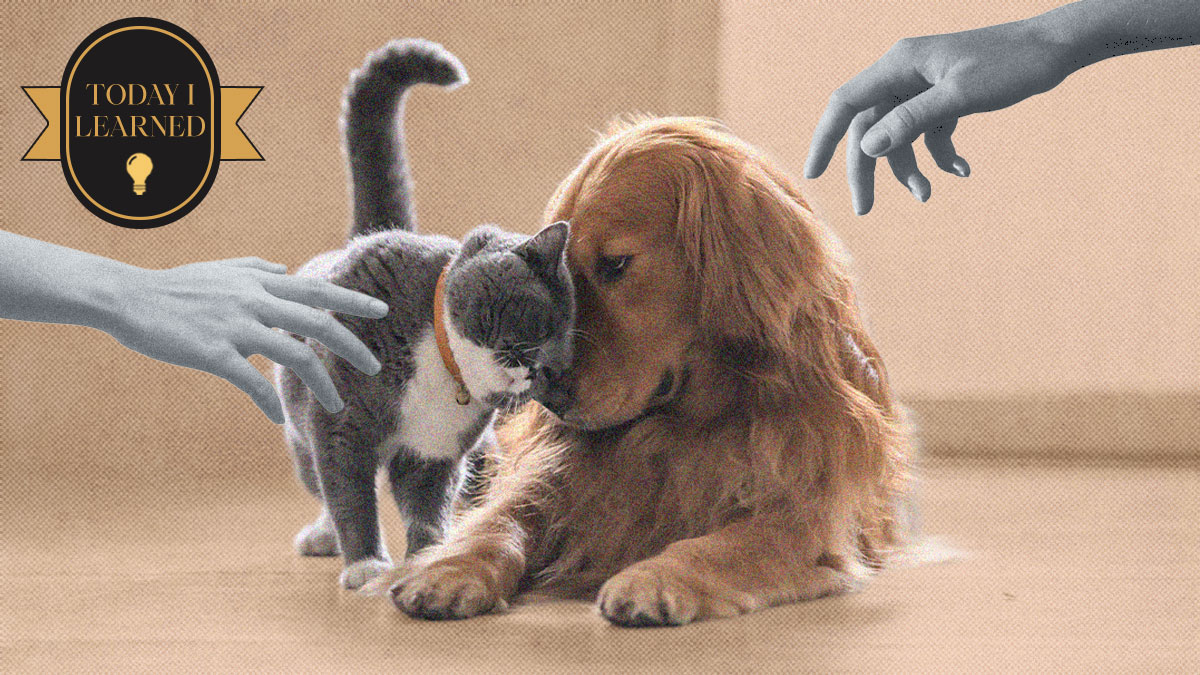
For many older generations, adulthood tended to follow a set pattern: land a stable job to keep for life, get married, have kids, buy a house, and maybe park an SUV in the driveway. For millennials—those born between 1981 and 1996—these milestones are no longer standard, and the roadmap varies widely. Many are still renting apartments instead of buying homes. They’re skipping kids and putting their money into craft dog food and birthday parties for their prized Shih Tzus. For this generation, pets seem to be the new children—and they’re not apologizing for it.
According to a ConsumerAffairs survey, 58 percent of millennials would rather have pets than children, and 81 percent admit they love their pets more than at least one family member. A shocking 50 percent even said they’d choose their dog over their own mother. This is more than a quirky generational trait; it’s a socio-economic and cultural shift.
It’s a movement so visible, it’s reshaping everything from the pet industry to the housing market. Millennials are designing entire lifestyles around their pets, from choosing pet-friendly rentals to building social media followings for their fur companions and celebrating their milestones.
Pets are now part of weddings, vacation plans, weekend hangouts, and even insurance plans. There are also specialized funeral services that cater exclusively to them. A quick scroll through Instagram shows fur babies with tens of thousands of followers, complete with curated feeds, product endorsements, and brand partnerships. For millennials around the world, pets are more than companions, they’re family.
Are Pets Cheaper?
For many millennials, the decision is also largely financial and economical, not only personal. According to MoneyMax, the cost of raising a child in the Philippines requires spending at least P25,000 per month per child. On the other hand, the cost of raising a dog could be as low as P25,000 for the entire year. And in the Philippines, where inflation, rising rent, and stagnant wages are daily realities for most people, the gap may not be as stark, but it’s just as real. While you can choose to spend more on your pets, with some spending up to P200,000 a year on theirs, it’s still quite a gap between a child’s basic needs and a pet’s.
Given the trajectory of spending in the pet industry compared to the market of baby care products, however, it might not be long before we see fur parents normalizing spending on their pets just as much as they would with a child. According to MarketWatch, pet spending has increased by 67 percent from 2013 to 2021. Globally, the pet economy is booming thanks to this cultural shift. Spending reached $259 billion in the global pet care market alone in 2024, and is expected to grow to $427 billion by 2032. In comparison, the global baby care products market in 2024 was valued at $239 billion, and is projected to be $419 billion by 2032.
For now, it seems the math makes it clear that pets are more affordable than children, but with premium pet products driving up the market, it won’t take long before caring for a pet will be just as expensive as raising a child. Will buying them premium treats and automatic feeders make them love you more? Can a dog appreciate a luxury hotel stay in comparison to their good ol’ bed at home? Will your cat finally recognize that expensive cat tower is your actual gift instead of the box it comes with? These are all up for debate, so while there’s absolutely no harm in spoiling your pets and throwing them lavish parties, remember that they’re just happy for you to spend time with them and give them plenty of attention and treats.
Unconditional Love
For a generation that has lived through 9/11, the Great Recession, the COVID-19 pandemic, the climate crisis, and even the 2012 Mayan doomsday scare, it’s no surprise that stability and comfort rank high on millennials’ list of needs. Pets provide unconditional love, a sense of responsibility, and emotional grounding, minus the existential dread of passing on to them a world that feels perpetually on the brink of collapse.
In the Philippines, where many young professionals move out of their provinces and away from their families to work in urban centers like Metro Manila, pets serve as both emotional anchors and makeshift support systems. Numerous studies have also linked pet ownership to lower anxiety levels, reduced loneliness, and improved cardiovascular health.
According to a report from Animal Medicines Australia, pet owners have a 24 percent lower risk of all-cause mortality. “Just by gazing at each other, humans and dogs experience a surge of the love hormone, oxytocin,” says Dr. Min Yeo, a veterinarian with a trained therapy dog named Mimi. “It’s the same feeling parents get when they look at their baby.”
For some couples, pets serve as a trial period before they commit to having kids—or they’re practically considered kids already. Lily Velez, Head of Digital PR at Veterinarians.org, says 70 percent of millennials view their pets as children, while Stagwell research puts that figure at 82 percent. That number isn’t just telling—it’s a significant marker of where this generation of young adults is in their lives. Millennials aren’t just putting off having kids; many are opting out entirely.
“Many women are deciding for themselves what a truly fulfilled life looks like,” says Velez, who also authored “As Birth Rates in US Plummet, Are Pets Standing in for Children?.” She added, “Sometimes, it simply doesn’t fit into the 'traditional' mold.”
In the study, almost half have zero desire to raise children, and 42 percent have cited the COVID-19 pandemic as a huge impact on their decision not to have kids. Velez says, “Over the years, it’s been clear that millennials have bucked against many of the traditional milestones that have long stood as ‘rites of passage’ into adulthood, such as purchasing a home or getting married…In light of declining birth rates, parenthood was clearly becoming yet another milestone millennials are either delaying or foregoing altogether.”
But experts caution against equating fur babies with human ones. “We are not their parents; they are wholly different species from humans,” says Mark Van Wye, CEO of Zoom Room, to Business Insider. Over-pampering pets can lead to behavioral issues, anxiety, and even obesity. A 2022 survey found that 59 percent of dogs in the United States were considered overweight or obese.
Wye said that failing to establish boundaries with your pets can lead to entitled behavior. “This can lead to aggressive behavior, especially if they feel their ‘rights’ are being threatened…It’s like giving a kid all the candy they want and then wondering why they’re bouncing off the walls.”
Treating pets as fragile and constantly doting on them can also lead to anxiety, especially when they’re left alone. “They’ve grown so accustomed to being the center of attention that they don’t know how to cope when the attention isn’t there,” Wye adds, as it’s something that can lead to destructive and disruptive behavior.
ALSO READ
Does Your Pet Have What It Takes to be a Jetsetter?
The Insane Net Worth of the Richest Pets in the World
Global Shift
This isn’t just a Western phenomenon. In the Philippines, pet parenting has gone mainstream. Spotting a dog in a stroller at SM malls isn’t weird anymore; it’s almost expected at this point. A Kantar Philippines study found that 94 percent of Filipino households now own pets, the highest rate in Southeast Asia.
According to the Commission on Population and Development (CPD), the country’s fertility rate has dipped to 1.9 — below the population replacement level of 2.1. Fur parenting is now a demographic reality, not a cute trend that is going away anytime soon.
According to CPD spokesperson Mylin Quiray in a press briefing, “Mayroon tayong qualitative data. Nakita natin na iyong ibang mga Pilipino, mas gusto nila nag-aalaga ng pets over children kasi [being economical] na raw ang gusto ng mga couples natin ayon sa aming study. Bago magkaanak, iyong economic situation muna nila ay dapat maayos.” With the rising cost of living, economic instability, and shifting priorities, pets are becoming a more responsible choice compared to raising kids.
Globally, this trend is also reflected in countries like Japan and South Korea, nations with ultra-low birthrates and booming pet economies. In China, pet populations in cities are projected to surpass the number of toddlers by 2030. Meanwhile, a study by The Lancet revealed that by 2100, experts predict that more than 95 percent of countries in the world will have fertility rates below the necessary levels to sustain populations.
And it’s not just a millennial trend anymore, even Gen Zs are choosing pets over kids, with 22 percent of Gen Zs admitting they would be willing to move if their home no longer works for their pet. A Zillow survey reveals that 3 in 5 Gen Z adults, or 60 percent would consider pet-friendly features in a home they’re interested in.
“Young adults may be delaying parenthood, but they’re not putting off pet parenthood,” Amanda Pendleton, Zillow’s Home Trends expert, says. “One recent study finds most Gen Z adults would rather have a pet than a child.” A view that’s clearly spreading beyond the millennial adults as Gen Zs are also entering the workforce, looking for their own home, and gaining more responsibility (whether that means adding a fur child into their lives).
Redefining Parenthood
In a world rocked by pandemics, inflation, and the looming threat of World War III, millennials are redefining what it means to build a life and family. For some, that means pets instead of children. And for many, it’s a choice rooted in logic, not loss. It’s not that millennials don’t want love, legacy, or responsibility; they just want a version that doesn’t come with college tuition and climate anxiety.
Psychologists agree that fur parenting can foster skills like empathy, patience, and routine-building. And for LGBTQIA+ couples, single adults, or those unable to conceive, fur babies offer a path to family life that feels just as genuine and fulfilling.
Critics may view this shift as selfish or shortsighted. But millennials are choosing to build their own version of a family, one that isn’t measured by DNA and birth certificates. So go ahead, post your pet’s birthday party on Instagram. The world may be burning, but your fur baby just turned five. And that, in itself, is worth celebrating.
