
Luis Liwanag Hasn’t Hung Up His Camera Yet

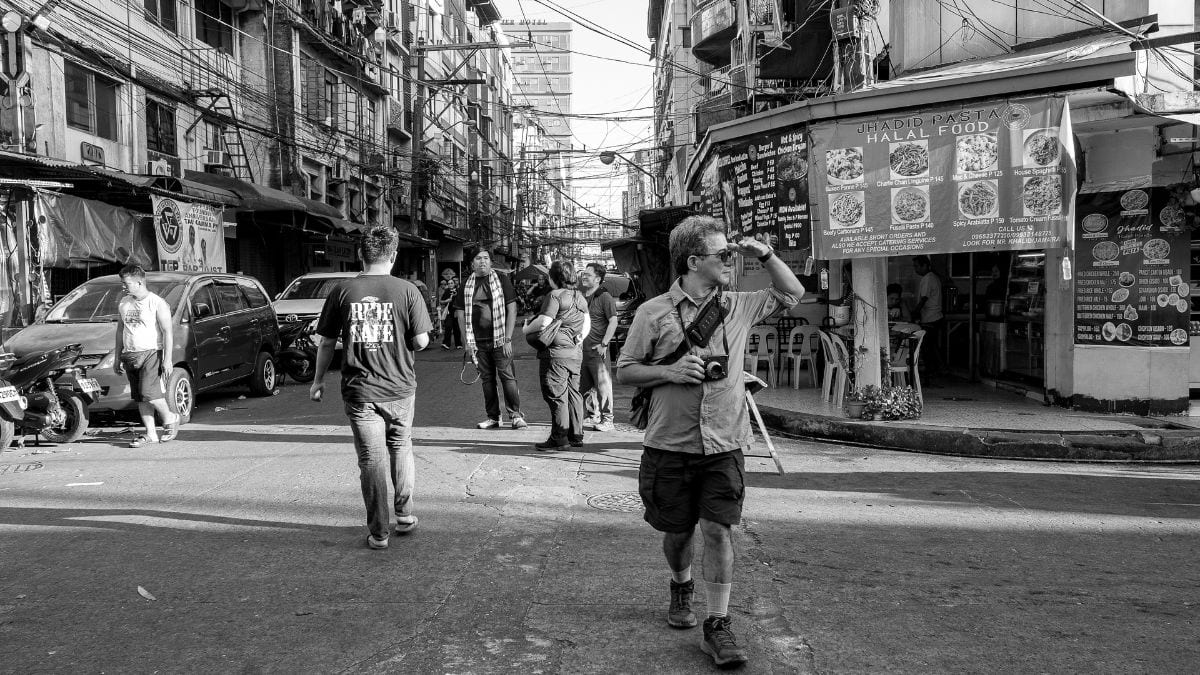
Veteran photojournalist Luis Liwanag may be officially retired, but he hasn’t really slowed down. He may have stepped back from the fast grind of news coverage, but he’s never really walked away from the craft. These days, he’s simply taken on a new role: that of a mentor.
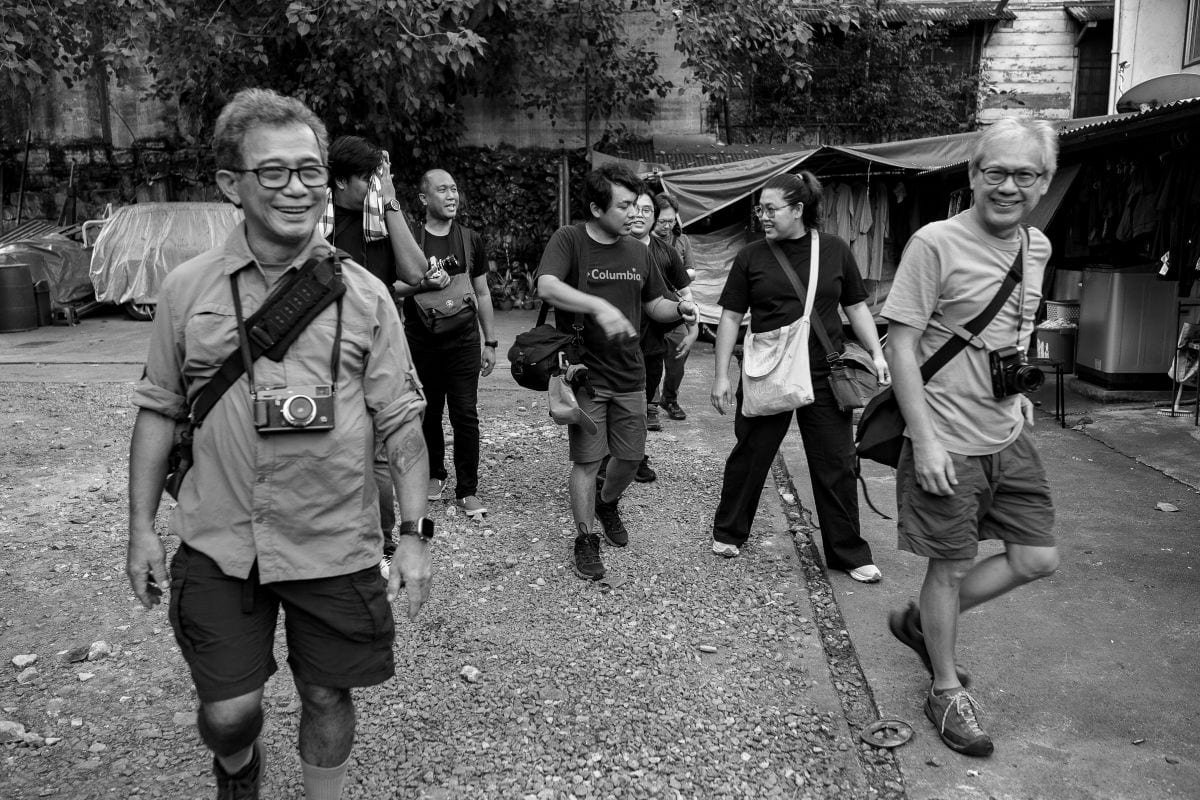
You’ll often find him in the streets of Quiapo or somewhere downtown, trailed by a small group of young photographers and hobbyists who want to sharpen their eye for visual storytelling.
For Liwanag, mentorship isn’t just about teaching camera skills. It’s a way to sustain the culture of socially conscious photography—passing on habits of awareness, empathy, and fellowship that have long defined the country’s visual chroniclers.
“To be a good documentary or street photographer, kailangan Marites ka rin,” he jokes. Curiosity, he says, is a photographer’s lifeblood. Instinct and reflex—the ability to sense when a story is about to unfold—shape every decisive moment.
“A good photo can stand on its own,” Liwanag often tells his mentees. “If it’s framed right, it can reveal a story, a commentary, or a truth about its time.”
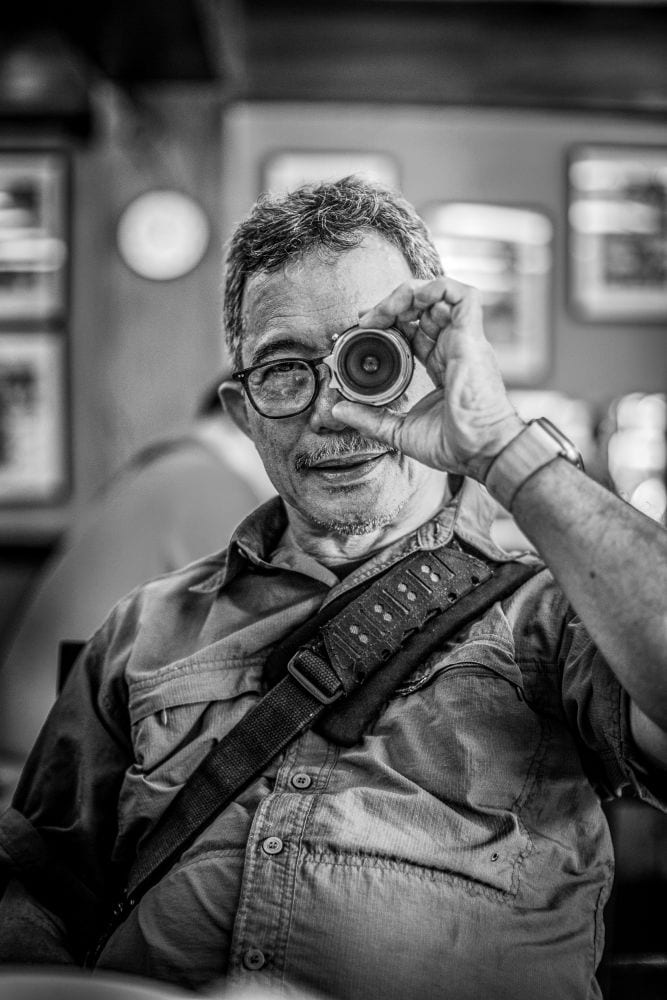
Beginnings of the Workshop
While there’s no single right way to tell a story through images, Liwanag has found that the best lessons are often learned on the street itself.
Wide Open Streets Workshop began in 2010, co-founded by Liwanag and LeAnn Azul, his former colleague at Newsbreak and later photo editor at Rappler. At the time, Liwanag had just completed his ACFJ (Asian Center for Journalism) training and had a set of materials on The Language of the Image that he began to adapt and refine. Like many creative ventures, it started as both a calling and a practical hustle—photojournalism, after all, is rarely a stable profession.
The first workshop was held on Labor Day, 2010. Over time, it evolved into a hybrid of lectures, fieldwork, and long walks, built on lessons learned from the grind of photojournalism. More than 70 batches later, it has quietly become a fixture for those who want to learn by doing, pausing only during the pandemic.
When it resumed post-lockdown, the timing felt serendipitous. Liwanag’s contract with the Washington-based Benar News Agency had just ended, and a few health scares had prompted him to slow down. With fewer newsroom deadlines, he found the freedom to focus on this new chapter—coaching a new generation of photographers who, like him decades ago, are drawn to the streets for meaning and material.
The sessions focus on the essentials of street and documentary photography—composition, light, timing, and the ethics of working with subjects—but they also cultivate the softer instincts: visual literacy, observation, patience, and the art of people-watching. The exercises are designed to train not just the hand, but the eye—to see beyond the obvious, and to recognize when an image alone can tell a story.
“A good photo can stand on its own,” he often tells his mentees. “If it’s framed right, it can reveal a story, a commentary, or a truth about its time.”
These days, Liwanag has simply taken on a new role: that of a mentor.
The Mentor and His Eye
Liwanag’s mentees speak of him not as a teacher who lectures, but as a companion who guides through stories.
Artist-photographer Wing Luna, who once trained under him, recalls Liwanag’s patience in waiting for the decisive moment—a trait he encourages his students to practice. “He never stops teaching even after the workshops are over,” Luna says. “He’s always generous with what he knows.”
Painter Marcel Antonio first met Liwanag through one of these sessions. “He’s always ready with a vivid anecdote, often laced with humor and wisdom, that keeps any student of street photography engaged,” he says. Under Liwanag’s guidance, Antonio learned to find empathy in the everyday lives of people on the street, and a sharper awareness of urban rhythms. “He taught me to be fully present, to be attuned to the rhythm of time and space.”
ALSO READ
"I’m driven when I’m angry." —Rick Rocamora
Passing It On
Liwanag has covered some of the country’s most defining moments, including the 1987 Mendiola Massacre, where his haunting images captured both the tragedy and the tension of a fragile democracy. His work has since appeared in international publications such as The New York Times, Time, Newsweek, Financial Times, Der Spiegel, and The Guardian.
His path, however, wasn’t linear. The son of an illustrator and a magazine worker, Liwanag’s introduction to journalism was born from necessity. In 1976, his father suffered a stroke, forcing the young Liwanag, then a freshman at UP Baguio, to drop out and work to support his family. He later studied Fine Arts at University of the East (UE), joined the school paper The Dawn as a photographer, and took on odd jobs to make ends meet.
His break came unexpectedly in 1981, when he photographed the police shootout that killed gangster Ben Tumbling. Pretending to be a professional photographer, he managed to sell one of his shots to Daily Express—a moment that launched his career in the press.
Over the next decades, he covered everything from crime to calamity, politics to people stories, eventually working for major wire agencies including AFP, Getty, and Xinhua. He later earned a diploma in photojournalism from the Konrad Adenauer Asian Center for Journalism at Ateneo de Manila University and currently serves as Director of Photography at Thumbnails Entertainment, an animation and pre-production company.
Now 64, Liwanag moves at a slower pace, but with the same intent gaze. He finds joy not just in shooting, but in seeing others discover the rhythm of the streets for themselves.
