
How a Barangay Initiative in Iloilo Is Reducing and Recycling Waste

How much is your plastic bottle worth?
For the residents of Barangay San Rafael, Mandurriao District, in Iloilo City, plastic waste can be bartered for food, including the well-loved pancit molo.
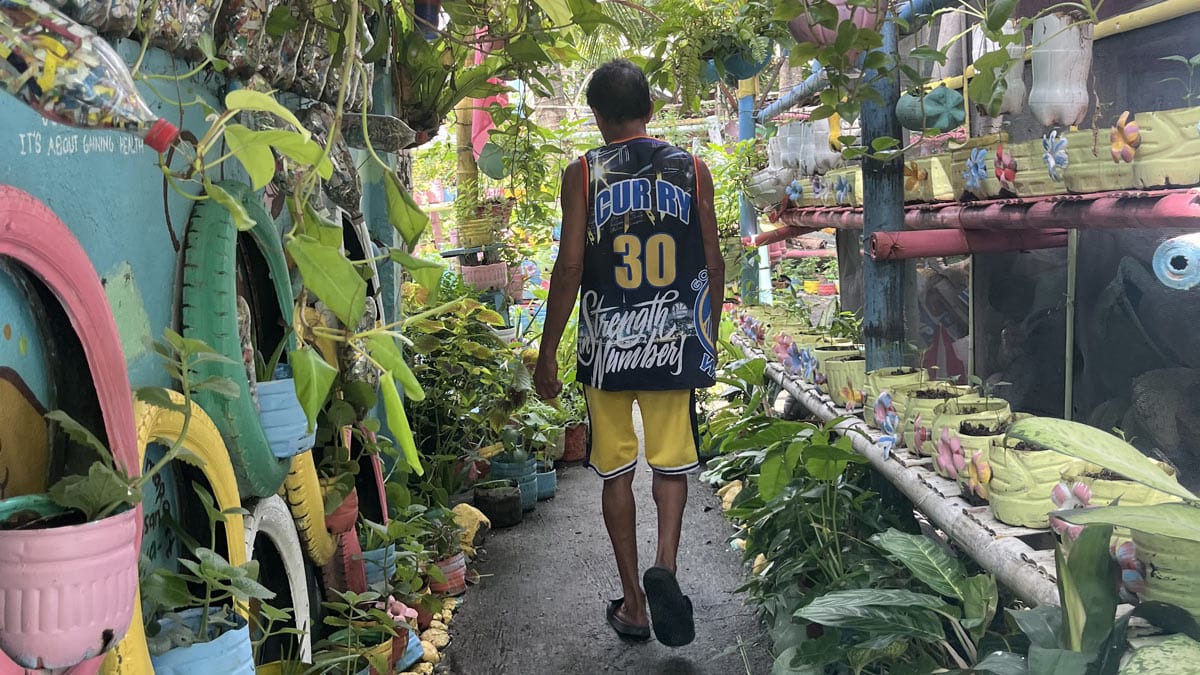
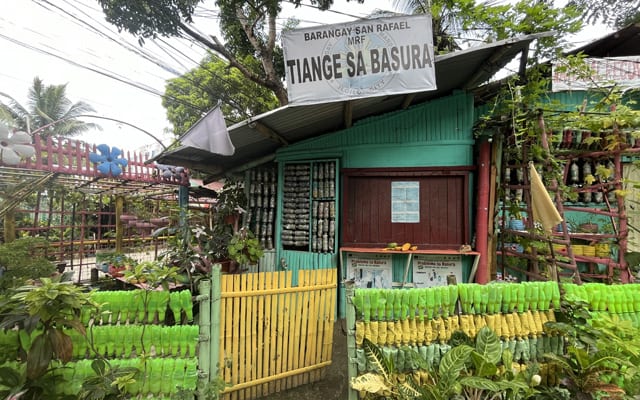
Enter Tiangge sa Basura, a local initiative that aims to reduce plastic waste by exchanging the residents' garbage for rice, charcoal, canned goods, soap, shampoo, and other necessities. Its headquarters in Barangay San Rafael is enclosed with bamboo fences and upcycled plastic bottles, a stark contrast to the bustling commercial complexes and towering condominiums within the area. Well integrated into the daily hustle and bustle of the community, it currently serves 293 households and an average population of 1600 (as of 2024).
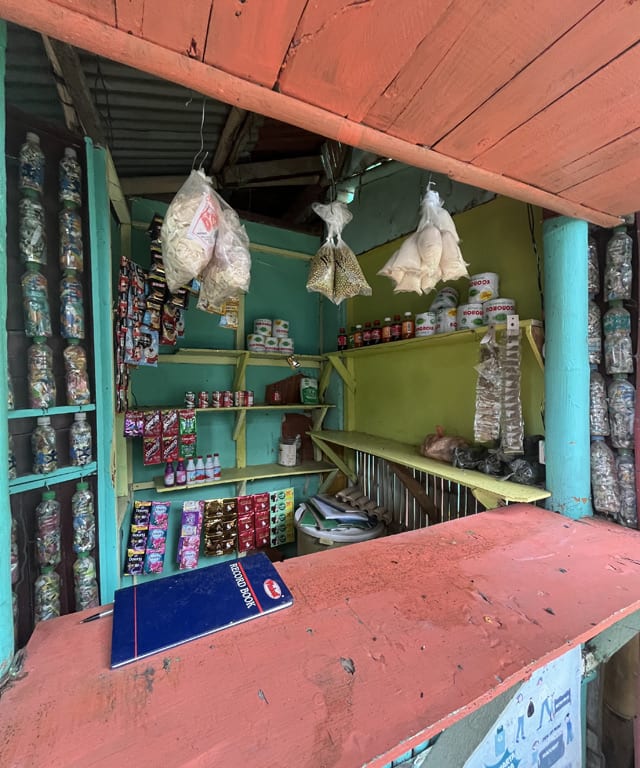
While eco-aides regularly collect waste from households, residents have the option of visiting the Tiangge sa Basura themselves. The barter system is facilitated through a Tiangge sa Basura Passbook, where the waste collected, equivalent amount, and money saved are documented.
ALSO READ
How Plush Toys Weave Opportunities for the Women of Negros Oriental
How Social Entrepreneurship Beats Charity Work
Humble Beginnings
There are little to no existing physical records on the origins of Tiangge sa Basura except through oral history. Residents of San Rafael agree that it was established in 2007 through the efforts of Azucena "Kap Susing" Tabuyoc, then barangay captain.
"Back then, trash was being stored in sacks and scavenged by stray dogs," Tabuyoc recalled in Hiligaynon. "So I asked myself, 'What can I do?'"
The timing was fortuitous. The local government of Iloilo City at that time conducted a contest for the Cleanest and Greenest Barangay with the prize of half a million pesos. This led Tabuyoc to gather the mothers and young women in the community. Her proposal was to create a barangay-wide pageant with a twist, Ms. Ecosaver.
"Instead of showcasing their beauty through expensive gowns, I challenged them to create outfits with garbage collected," Tabuyoc said. She also enlisted the help of the community to gather trash and sell it to local scrap and junk shops. The former barangay captain said that at the end of three collections, they amassed a total of P9,000.
Leonardo O. Talanas Jr. served under Tabuyoc as Barangay Kagawad for Health and Sanitation. He also reminisced how Tabuyoc’s initiative extended to leaders of the community. "Even we had to wear attire made of garbage!" he said in Hiligaynon.
Then, Barangay San Rafael won. According to Tabuyoc and Talanas, they used the cash prize alongside monetary donations from local government officials who were inspired by their cause to pave their muddy road. The remaining monetary winnings were used to establish the Tiangge sa Basura–from the building of the stall to the procurement of goods to be bartered in exchange for waste products.
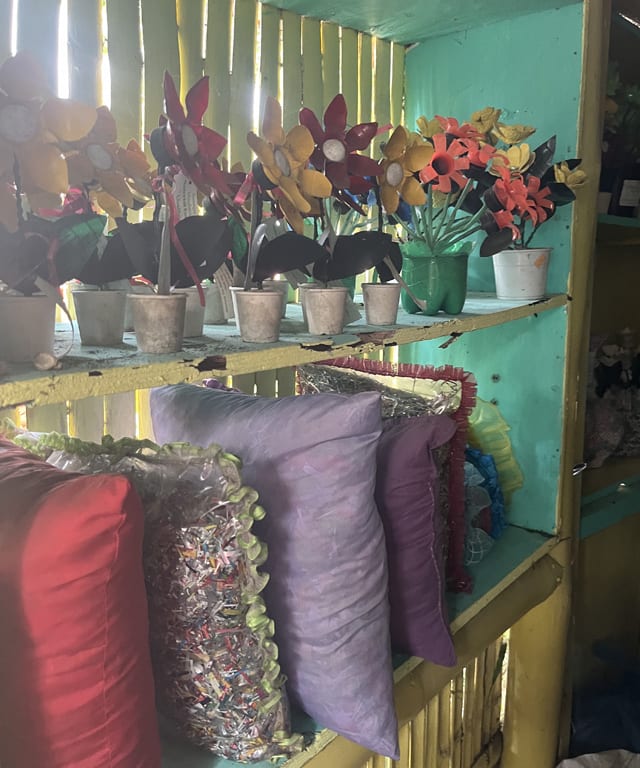
"I would roam around the area with our tanod and carry sacks to collect plastic wrappings from junk food as there were no street sweepers at that time," Tabuyoc said. She asked the help of housewives and senior citizens in the community to wash the plastic wrappings, cut them into small pieces, and use them as fillings for pillows. In addition, they would create flowers out of plastic bottles and egg trays.
Ingredients for Sustainable Success
While the Tiangge sa Basura has been an integral part of the community landscape for almost 20 years now, this wasn’t always the case.
Tabuyoc expressed how it was a challenge to convince the people in her community to support her environmental initiatives in the long term. This changed when residents started to see the benefits of the project.
A housewife once asked to procure rice and sardines from the Tiangge sa Basura, with only a promise to exchange plastic waste later on. School children were also able to barter crayons, pens, biscuits, and juice at the stall.
Meanwhile, Talanas emphasized the necessity of persistence in reminding the residents to cooperate in segregating their waste. "It’s the pride of our barangay that our surroundings are clean," he said.
Some residents have been entrusted with the responsibility of taking care of the Tiangge sa Basura, the Material Recovery Facility (MRF), and the nearby community garden.
Amalia Talanas, a utility personnel and housewife, and Lorna Berbosidad made it their daily routine to help care for the community garden. They would water the plants, compost biodegradable waste, and make pots from plastic gallons.
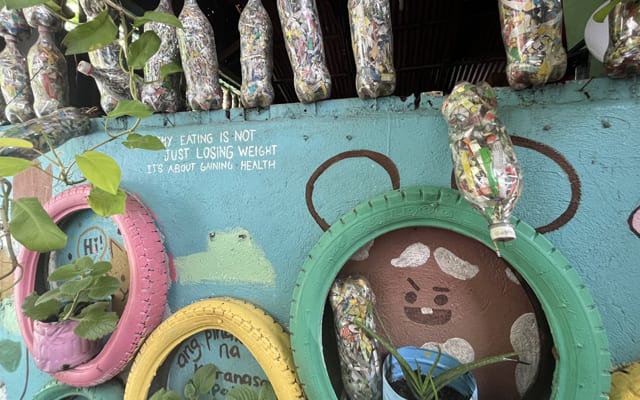
Other residents also helped design, paint, and decorate the MRF and the community garden. The various produce of the community garden were harvested, cooked, and distributed among the residents in a regular feeding program.
Opportunities for Growth
But what happens to the waste once collected? It depends on the type and purpose.
Waste is temporarily stored in the MRT before the majority is segregated and sold to partner junk shops biweekly. However, once the waste is transported to the junk shops, there is no guarantee that the glass bottles and plastic waste will return to companies and manufacturers to be reused. So, some plastic bottles are kept for decorative or utilitarian purposes. Kitchen scraps, paper, and other biodegradable waste, on the other hand, are converted into fertilizer for the community garden.
Medical waste, on the other hand, is collected by the garbage trucks of the Iloilo City Government General Services Office (GSO).
How much is your plastic bottle worth?
For the residents of Barangay San Rafael, the plastic bottles gave them a chance to become a transformed community.
