

A Short History of Makati Shangri-La

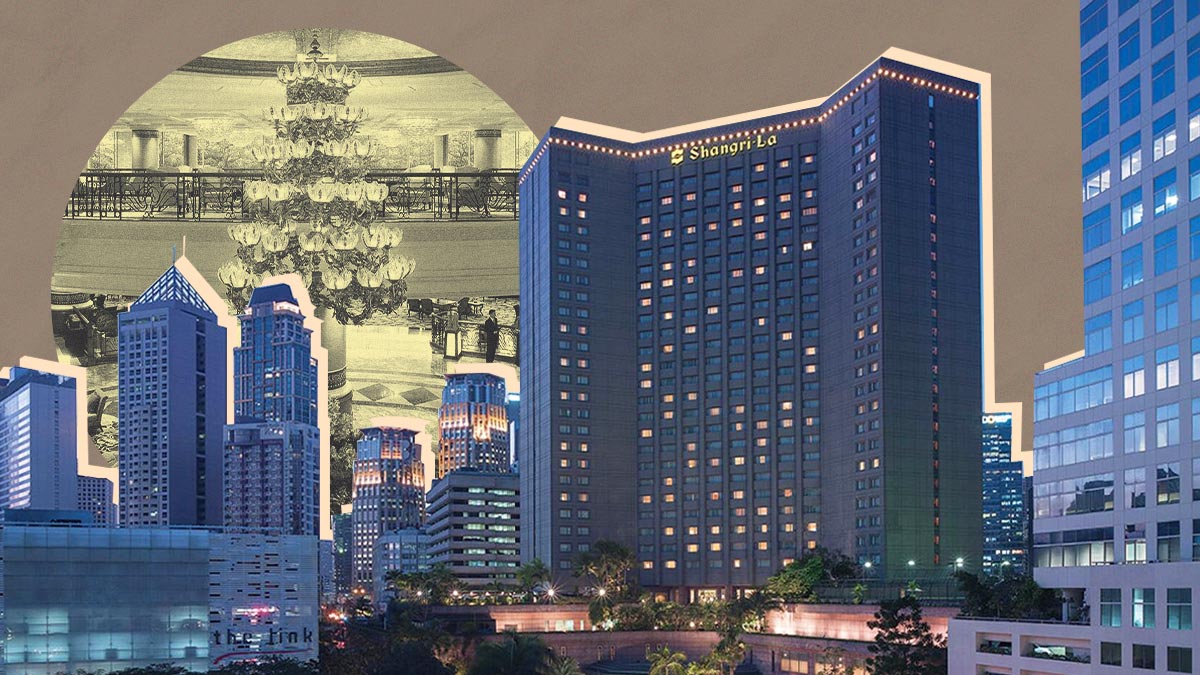
Makati Shangri-La is set to officially reopen this year, over two years after it was forced to close down on February 1, 2021 due to the effects of the pandemic.
Before its closure though, the hotel was a landmark in the country’s main financial hub. It was the venue for countless celebrations and high-profile events, not to mention one of the top names in luxury hospitality. While it was sad to see its lights temporarily snuffed out, fans are already looking forward to what the hotel has to offer when it finally reopens.
Here's a look back at the hotel throughout its twentysomething history.
ALSO READ
Makati Shangri-La Is Temporarily Closing Its Doors
Hotel Jen Manila by Shangri-La Is Closing Down This Month
History of Shangri-La Makati
Shangri-La Hotels and Resorts is a multinational hospitality company based in Hong Kong and majority owned by the Kuok Group, a conglomerate founded by Malaysian businessman Robert Kuok with diversified business interests, including shipping, property development, and food production. The company operates and manages a portfolio of luxury hotels, resorts, and residences across Asia, Europe, the Middle East, and North America. As of 2023, the Kuok Group owns and operates over 100 hotels in 76 countries worldwide.
(In the Philippines, besides its portfolio of hotels and resorts, the Kuok Group also runs Shang Properties, its property development arm with core businesses in office and retail leasing, and residential development. The company has a 100 percent stake in the Shangri-La Plaza Corporation, which owns and operates the upscale Shangri-La Plaza mall in Ortigas Center, and a 52.9 percent share in KSA Realty Corporation, which in turn, owns The Enterprise Center in Makati City. According to its website, Shang Properties earns over P1.5 billion in lease income annually through both Shangri-La Plaza mall and the Enterprise Center).
The Shangri-La Hotels and Resorts Group’s first hotel property was in Singapore, which opened in 1971. After rapid expansion in the 1980s, which saw the group opening hotels in Hong Kong, Malaysia and Thailand, it set its sights in the Philippines, seeing potential in the country after democracy was restored in 1986.
The first Shangri-La Hotel in the Philippines was the Edsa Shangri-La in Mandaluyong City, which opened on August 28, 1992. The hotel group wanted to open another luxury hotel in the country’s main business district of Makati and had been developing the idea since the late 1980s. It finally inked a long-term lease agreement with the Ayala family, which owned the land, and Makati Shangri-La officially opened on April 27, 1993. The grand launch, however, was held a few months later in August.
The Shangri-La Mactan Resort and Spa also opened the same year, in 1993.
But Makati Shangri-La was special as it was located right in the very center of the country’s premier business district along Ayala Avenue corner Makati Avenue. Built at a cost of around $118 million, the hotel had 703 rooms spread over 28 stories, although only 300 rooms were operational at the time of opening. There was also a swimming pool at the fourth floor and two tennis courts.
F&B outlets that were ready to serve customers at opening included Island Café coffee shop, Ibarra’s Filipino specialty coffee shop, the venerable Shang Palace that served Chinese cuisine, Conway’s Bar, and the Lobby Lounge.
Located in a grand lobby with a high ceiling and views of a landscaped tropical garden, the Lobby Lounge, in particular, became something of an iconic venue for casual meetings and get-togethers.
Two other restaurants that would open in later months were Cheval Blanc, which served continental cuisine, and Thai outlet Salathip. Cheval Blanc would later be reimagined as Red, which then eventually became Sage.
F&B favorites
Makati Shangri-La has also been home to some of the city’s—and country’s—best dining and drinking venues through the years, including modern Japanese Inagiku, Circles buffet restaurant, and even its Horizon Sky Lounge at the 24th floor, where guests could enjoy cocktails and light meals with sweeping views of the Makati skyline and further beyond.
One of the hotel’s biggest selling points was the massive Rizal Ballroom, which could accommodate up to 1,200 guests for a sit-down dinner and up to 1,600 for a cocktail reception. Rizal Ballroom has, for years, become the go-to venue for some of the country’s biggest and glitziest events featuring personalities from business, politics, entertainment, and high society.
Shangri-La Makati was also home to Zu, a popular nightclub located in its basement that was eventually turned into a mini ballroom.
Shangri-La Makati’s first general manager was Nigel Grocock, who has since been followed by capable leaders over the years, including Reto Klauser and, most recently, Greg Findlay, whose names are familiar to those who frequented the hotel.
Shangri-La Makati has undergone a few renovations and refurbishments through the years in order to keep up with the mushrooming of other luxury hotels in Metro Manila. The Shangri-La Group also operated what was once known as Traders Hotel (opened in 1995) along Roxas Boulevard in Manila that was eventually rebranded into Hotel Jen. It closed down in 2022.
The hotel group first announced its most recent property, Shangri-La The Fort, in 2008, but it wouldn’t open until 2016. After Shangri-La Makati and Hotel Jen ceased operations, the Shangri-La Hotels and Resorts Group was left with four properties in the Philippines: Shangri-La at the Fort in Bonifacio Global City, Edsa Shangri-La in Mandaluyong City, Shangri-La Boracay, and Shangri-La Mactan in Cebu.
But that count is going back up one notch after the announcement that Shangri-La Makati is reopening its doors to guests in August this year.
