

Today I Learned: The Iris Dataset Shows How Art Meets Science

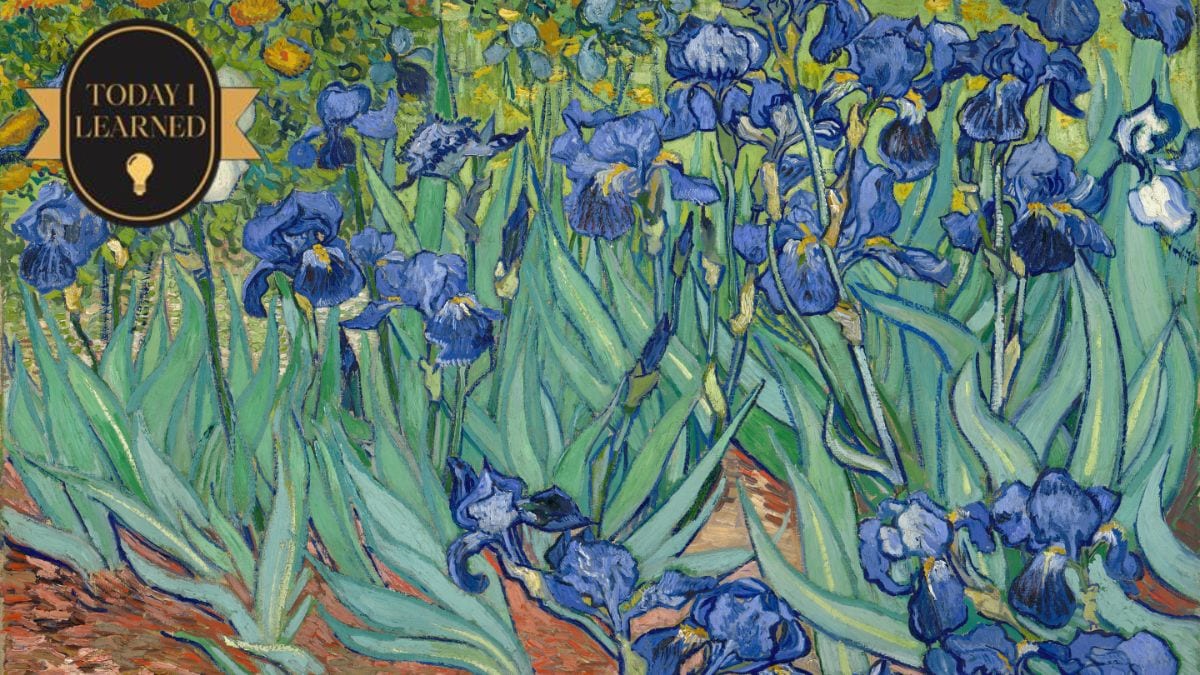
The invention of the camera in the 1820s freed artists from the obligation of reproducing reality faithfully; their skill was measured by how closely their work mirrored the visible world. Once machines could capture reality more precisely than any human hand, artists were liberated to pursue imagination, abstraction, and experimentation. This turning point marked the birth of modern art: a shift from replication to reinvention.
Irises by Vincent van Gogh

The iris flower became a recurring muse in this new era. Monet, Van Gogh, and Renoir painted it for its vibrant color, natural elegance, and expressive form. The iris was more than just a flower—it was a subject through which artists could explore movement, light, and perception, the essence of Impressionism.
A century later, Marcel Duchamp would take this liberation to a radical extreme. His Fountain (1917), a urinal redefined as sculpture, was not a pursuit of beauty but of concept. “What if art isn’t about what you see, but what you think?” Duchamp’s provocation dismantled the old frame, making idea itself the art. This became the foundation of postmodernism—a shift from representation to pure abstraction, privileging ideas over appearances.
Marcel Duchamp's Fountain
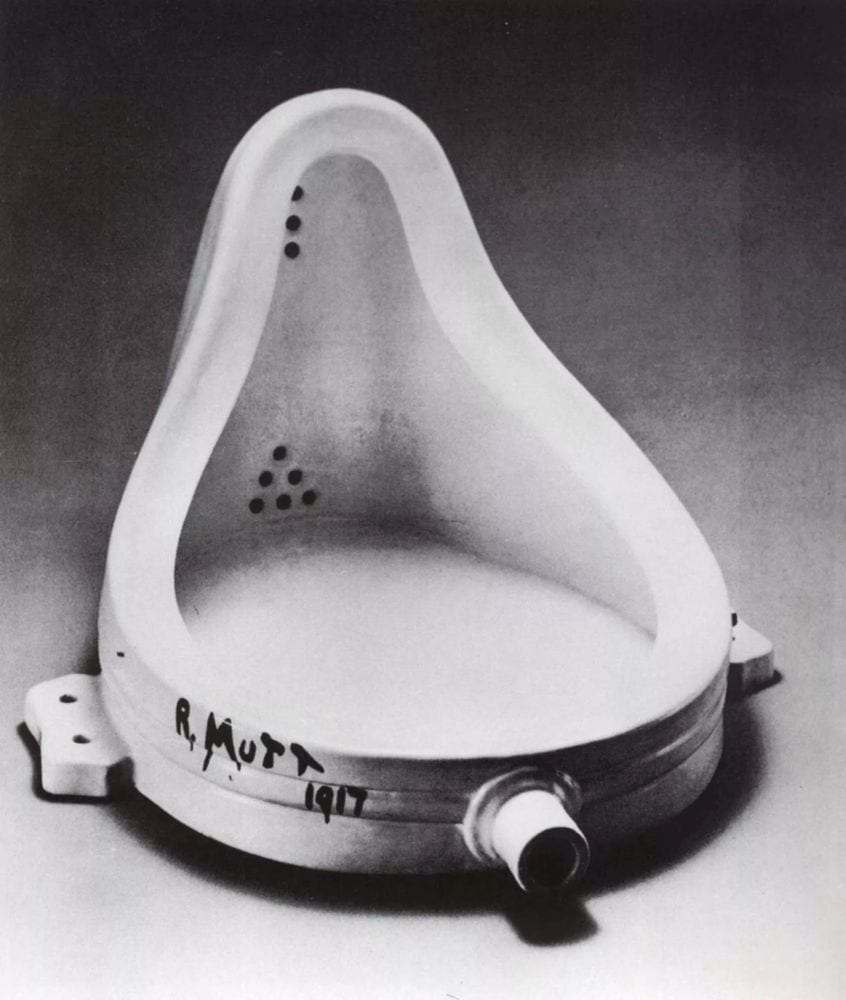
Duchamp’s Fountain was more than just a urinal placed in a gallery; it was a deliberate challenge to the very definition of art. By choosing an ordinary, mass-produced object and recontextualizing it as sculpture, Duchamp questioned authorship, originality, and the role of the artist. Was art about craftsmanship and beauty, or could it be about the framing of an idea? In this sense, Fountain was a manifesto disguised as an object, insisting that meaning comes not from the medium but from the concept it provokes. This radical gesture forced both audiences and institutions to confront their assumptions, expanding the boundaries of creative practice and setting the stage for art as a space of ideas rather than mere representation.
That same spirit resonates today in fields far beyond the meadows or galleries. In mathematics and machine learning, the focus is not on replicating appearances but on uncovering patterns, structures, and relationships. Abstraction and logic form the palette while algorithms are the brushstrokes. Where Impressionists transformed flowers into explorations of perception, machine learning transforms data into explorations of form, category, and relationship.
The Iris Dataset

This parallel came to life when I solved and coded the Iris Dataset (1936), often called the “hello world” of machine learning. Much like Monet’s or Van Gogh’s iris paintings, the dataset is both simple and profound. At first glance, it is just rows of numbers describing petal lengths and sepal widths. But with the right model, these numbers reveal deeper truths: hidden clusters, separations, and relationships that are not visible to the eye. This act of turning data into insight was not just calculation but also creative exploration.
ALSO READ
The Making of an Artist: The Whys and Hows in Silke Lapina's Bakit Pa
Vien Valencia's Perimeter Stays Within Bounds
Studying data science has taught me to think in abstractions; discovering math without numbers beyond arithmetic, functions instead of figures, spaces instead of surfaces. It feels, in many ways, like practicing conceptual art: stripping away appearances to reveal abstract structure. Early computing was preoccupied with automating repetitive tasks—replicating what humans already did. Today, the pursuit is not replication but revelation: uncovering patterns and structures.

Whether through painting or programming, both processes demand curiosity, imagination, and the willingness to see beyond the obvious. It trains the mind to perceive patterns, to distill complexity into form, and to think beyond what our eyes can conceive. It is an act of imagination as much as logic.
Ultimately, the scientific process and the creative process are very similar. Both begin with a question and unfold through exploration. Both thrive on pattern recognition and leaps of imagination. In this sense, the artist of the future may not be defined by medium—paintbrush or code—but by mindset. They will be pattern-seekers and idea-makers, able to transform numbers into meaning just as Impressionists transformed flowers and expand the space of what’s possible. Like the iris in art and in code, it is both a beginning and an opening—an invitation to explore.
About the Author: Claudine Ng usually spends her free time enjoying music, going to events, or traveling. She aims to explore the intersection of creativity, technology, and culture, drawing from her Bachelor’s degree in Marketing Management and her current pursuit of a Master’s degree in Data Science.
