

A Quiapo Fortune Teller and the Great Misfortunes of Womanhood

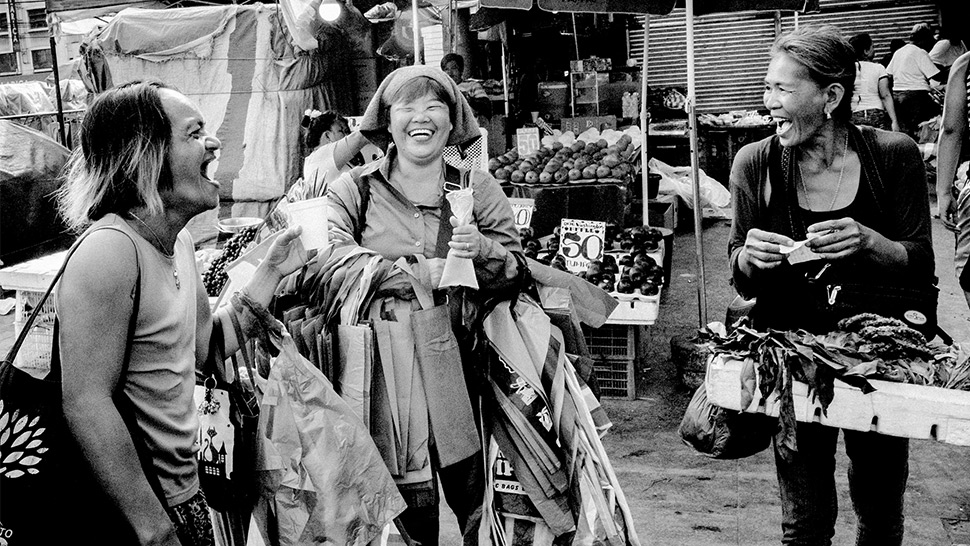
Recently, I went to explore Quiapo with a friend as part of a photo essay requirement for my bachelor’s degree. While weaving our way through the congested sidewalks along Quinta Market, we decided to go on a tangent mission to find a fortune teller. We’ve both heard of the tales, but neither of us has ever had the chance to find out if any of them were true. Now, for a reading.
The predictions I got were nothing too profound. It was mostly cryptic advice I could have gotten from a self-help book (or from one of those motivational Instagram pages); something along the lines of “You can achieve whatever you put your mind to” and “You can’t trust everyone you make a connection with.” They were inferences from the tiny scraps of personal information I was willing to share with the fortune teller. And while I am your quintessential the-universe-always-provides and blame-mercury-retrograde kinda girl, I know a sham when I see one.
She did, however, say one oddly specific thing that lingered on my mind for the days that followed. Apparently, the tarot cards warned of some married man who’d come into my life and try to seduce me in the near future. Ridiculous. It’s an inside joke now between me and my friends. I’m entering my “mistress of a politician” era, we would say.
Although, when I humor myself and really dwell on the possibility, quietly and in secret, I can’t help but think about how it is not that far-fetched at all. It was a sobering thought, realizing that men’s actions towards me have often had the tendency to straddle the blurry line between what is legal and what is moral. It reminded me of this substack essay by Rayne Fisher-Quann, where she described the torment of feeling wronged by a relationship that wasn’t categorically abusive, but functioned more as a “benign psychohorror.” Truer words have never been said. Fisher-Quann writes:
“The letter of the law exists not to enforce what is moral or good—rather, it exists to provide men with a line to toe. It functions not to ensure that men don’t do heinous things, but to make sure they can get away with heinous things by learning the cheat codes: fuck her on the day of her eighteenth birthday, make sure she can sit up straight before you take her home, guilt her until you get the "yes" or only date girls too nervous and unsure to think of saying no in the first place.”
Naturally, I had a vague understanding of romance and lust back in my days as an innocent kid. But even then, I recall, men—from peers my age to full-blown adults with jobs and families—would be showing interest ranging from uncomfortable to downright creepy. I may not have recognized it at the time, but it has significantly clouded the way I view my childhood now. I reckon it’s part of the painstaking journey to womanhood.
At varying degrees, our entire lives are spent trying to sidestep unwanted advances and nonconsensual touches. Institutions and enablers indoctrinate us about the dangers of wearing short skirts, walking alone at night, or drinking at parties. The unwritten rule is: don’t do anything that might get you in trouble. So we cover ourselves up, try to get home before dark, steer clear of alcohol, and tailor our entire existence to accommodate men’s behavior, basically. Somehow, the burden of responsibility always falls on the shoulders of women. It’s a universal truth that every girl comes to find out sooner rather than later. Never on the offenders. Never on men. It’s a “boys will be boys” world, after all.
Some late nights, when I feel stable enough to unpack some emotional baggage, I look back on my experiences with men: The uncle who makes suggestive comments about my body at family reunions; the schoolmate, three years my senior, who flirted with me because I was “mature for my age” (mind you, I was only 15!); the “friend” whose gaze wanders a bit too low, for a bit too long; the dating app matches whose idea of small talk is asking whether I live alone; the stranger whose unwelcome DMs I had to block.
ALSO READ:
A Heterosexual Rights Act? What For?
What Stan Culture Has Taught Me About Gender Contamination
Technically, the innocence of these men is indisputable—none of them did anything as concretely damaging as verbally, physically, or sexually assault me. In the eyes of the law, they are model citizens. Hell, even in the court of public opinion, I would have to provide ironclad proof to earn empathy, at the very least. This is the great crucible of being a woman. Much like all the versions of god, we beg to be believed.
I wonder about how these men are doing. And I get filled with rage knowing with absolute certainty that they never even second-guessed these interactions, when they have permanently altered my psyche. I sometimes feel unhinged for feeling like I’m being objectified to a constant degree. I tell myself it’s my feminist sensibilities that make me see sexism and misogyny at every turn. But reality proves that it IS everywhere.
We’re stereotyped for awful driving or being emotional wrecks during our periods. We are called “b*tchy” and “intimidating” when behaving assertively. We are subjected to patronizing speech when talking about our interests. We get compared to inanimate things when speaking about the violation of our bodies and boundaries. We get reduced to love interests in cheap movies. We are pressured to look skinny but have big boobs, be innocent but sexually experienced, and be intelligent but not enough to be aware of our marginalization.
All of these microaggressions are so common that we often don’t even take notice of it, or force ourselves to turn the other cheek if we do. At some point, resisting the myth of our inferiority becomes as natural as breathing. Of course, this is not to say that all of our bad experiences are exclusively gendered, nor am I writing this to frame ourselves as helpless victims. I’m just pointing out that the power imbalance between sexes irrevocably puts women at a disadvantage, in relationships and many other aspects of life. Plus, in a time of “not all men” counter-arguments, it is vital to acknowledge that men’s actions—and inaction—are what ultimately shape the fabric of gender inequality.
The belief that society has progressed past the need for feminism is about as superficial as the Quiapo fortune teller’s half-baked predictions. While trends like the #MeToo movement have given way to a relatively safer platform to share our collective misfortunes, hashtags and online movements hardly do anything to rattle the systemic foundations of sexism. Performance activism is nothing but a thinly-veiled attempt to pacify us with a sense of empowerment. All while the world waits for another Taylor Swift or Amber Heard to make a mistake—anything to justify the prejudice they can hardly contain.
