• Man at His Best 2025
  • Long Reads
  • Style
  • Money
  • Wheels
  • Culture
  • Opinion
  • CORNER OFFICE
Search
Menu
Close
Close
  • Man at His Best 2025
  • Long Reads
  • Style
  • Money
  • Wheels
  • Culture
  • Opinion
  • Style
    • Fashion
    • Grooming
    • Watches
  • The Good Life
    • Pursuits
    • What She Wants
    • Mavericks
    • The Directory
    • The Noble Man
  • Culture
    • Food & Drink
    • Arts & Entertainment
    • Lifestyle
    • Tech
    • Movies & TV
    • Music
    • Books & Art
    • Design
  • Wheels
    • Cars
    • Motorcycles
    • Drive
  • Money
    • Industry
    • Wealth
    • Capital
    • Movers
  • Long Reads
    • Notes & Essays
    • ESQ&A
    • What I've Learned
    • Fiction
    • Features
  • Life
    • Sports
    • Health & Fitness
    • Women
    • Sex & Relationships
    • Travel
  • Politics
    • Opinion
    • News
  • COUPONS
  • About Us
  • Terms of Use
  • Privacy Policy

NPC Seal of Registration

Esquire has been granted the NPC Seal of Registration in recognition of the successful registration of its DPO and DPS

© 2026 EsquireMag.ph, All Rights Reserved
Long Reads

"We need to see more of the voice of the filmmaker. Don't be afraid to listen to yourself and show us that." —Paul Soriano

By Marco Sumayao
Sep 3, 2019
Post a Comment

In 1984, a movie called Hotshots debuted in Philippine cinemas. The film was a contemporary of the career-defining Bagets, and its leads were some of the biggest young stars of the decade: Herbert Bautista, Aga Muhlach, Eula Valdez, and a debuting Gary Valenciano. It was also a bit of a curiosity: a coming-of-age story interspersed with choreographed musical pieces, where heavy doses of special effects evoked the music videos of its decade. It was a movie for the MTV generation, years before MTV came to local shores.

ADVERTISEMENT - CONTINUE READING BELOW

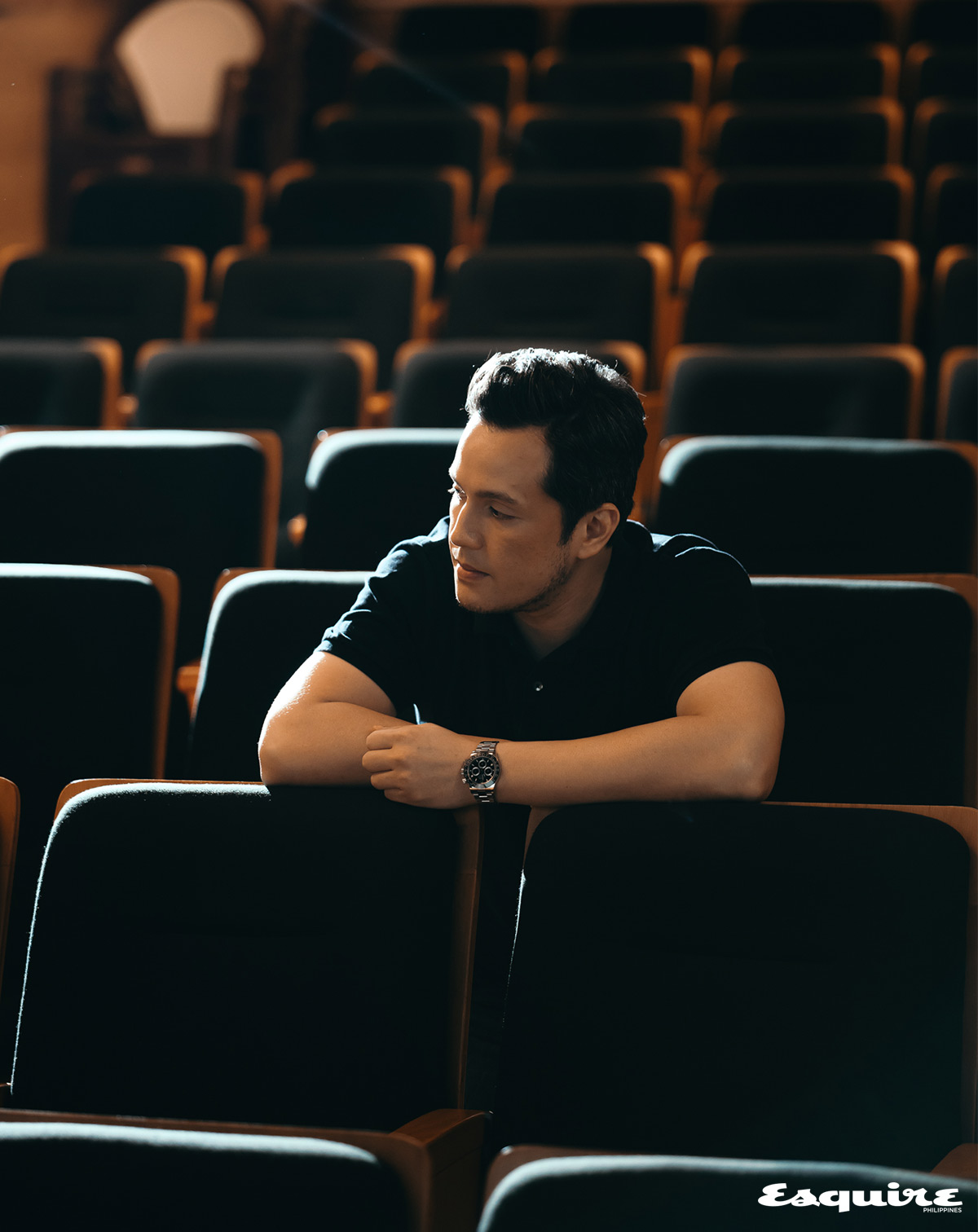
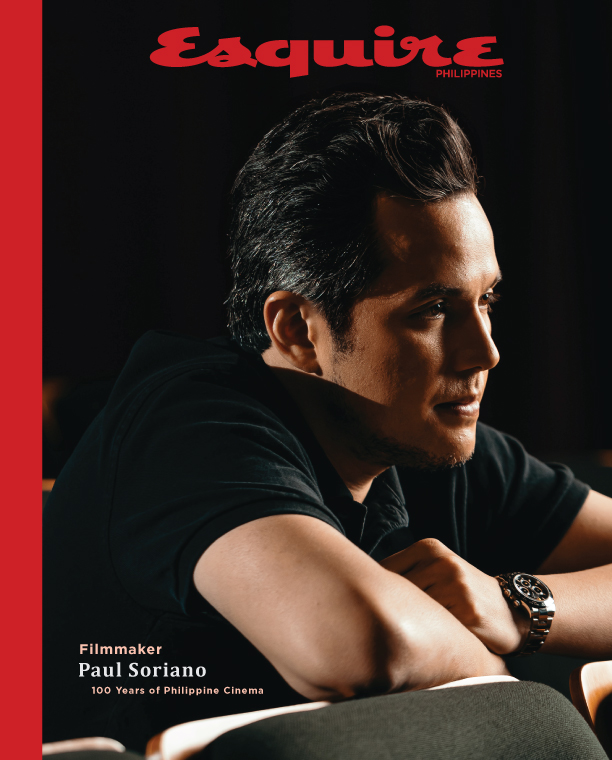
Hotshots was the first Filipino movie director Paul Soriano had ever seen. He was seven years old when he first watched it, and it kick-started a lifelong curiosity in filmmaking.

“I didn't realize it was ahead of its time when I was seven,” he shares. “It was a visual stimulation of all the senses. You had music, colors, the camera movement, the acting—it all helped me stay glued to the TV and watch it. I've learned how today in telling stories, you've got to find a way to stimulate your audience. To create awareness for your story, and to make sure that the story you're telling is told well.”

Hotshots, however, was much more than a creative influence on Paul himself. It was also the film that helped catapult his father’s career as a commercial director.
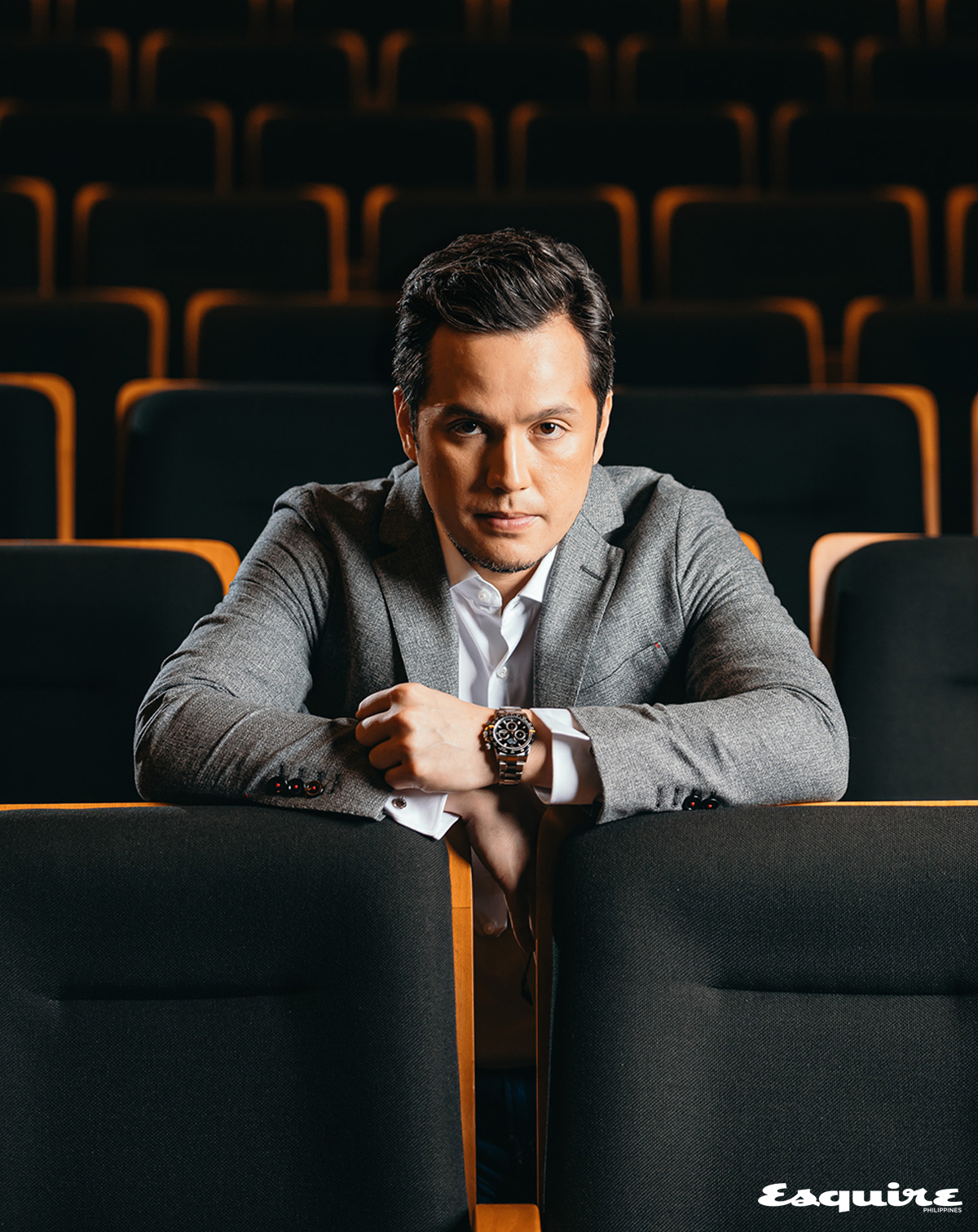
article big image
PHOTO: JILSON TIU
Post a Comment

Paul is a third-generation talent in the entertainment industry. His father, Jeric Soriano, was the creative force behind some of the defining ads of the '80s and early '90s, including the iconic “I Can Feel It” for Palmolive, and “Angat sa Iba” for Sarsi. Paul’s grandfather, the legendary Nestor de Villa, was known as both “The Fred Astaire of the Philippines” and as the onscreen partner of Nida Blanca.

CONTINUE READING BELOW
watch now

But before he fully grasped the significance of his heritage, Paul spent hours of his youth playing around on his dad’s sets.

“After school, instead of going home, if my dad had a shoot, I'd want to go to his set and then just hang out,” he says. “Play with the props, mess it up. It was kind of my playground. The film set was my playground growing up.” 

“It still is,” he adds.


ADVERTISEMENT - CONTINUE READING BELOW

Blazer and shirt by Carolina Herrera

After Hotshots, Jeric went on to become one of the country’s most prolific commercial directors, which meant Paul had plenty of time to explore the hundreds of sets his father worked on. Running around the set, getting to know the prop masters and the rest of the crew, and watching Dad do his thing behind the camera was part of everyday life. And, as with all kids his age, he developed a keen interest in the world in which he was immersed. It was an interest that Jeric happily nurtured.

“I remember my dad giving me a Video 8 camera, and so I would be the kid recording the birthday parties and other family events. Of course, it was from the point of view of a kid, so I was shooting up a lot. It was kind of unflattering, the angles,” he says, laughing.

Eventually, Paul would segue into visual storytelling. The very first film he remembers shooting was of his brother: “I told a simple story of my brother going to school. It was just one of those days—I shot him getting up and then taking the bus to school. I think that was my little experiment with the camera.”

“But what fascinated me about that was the idea of continuity, wherein you match shots,” he continues. “You're shooting him getting up from bed, and then he moves to the bathroom, and it all looks the same. It really fascinated me how, even though I'm moving the camera and I'm not shooting in real-time, the final product looks like it's in real-time. You can tell a story with a camera at different angles, and you can stitch it together, edit it together, and it looks like one piece.”

article big image
PHOTO: JILSON TIU
Post a Comment

In sharp contrast with those of his father, Paul’s exposure to his grandfather’s work wasn’t quite as intimate. A fire razed the LVN studios, destroying many of de Villa’s earlier films. A great portion of what Paul’s seen of de Villa’s work came directly from old copies in the actor’s personal archive. 

ADVERTISEMENT - CONTINUE READING BELOW

As a boy, his eyes would light up at the suave man onscreen, dancing up a storm in movies and making hearts melt as one-half of an early love-team on the Nida-Nestor Show. “He had that thing when the camera was on; he was one with the camera in terms of movement. Up to this day, a lot of people tell me that there really hasn't been another Nestor de Villa in terms of the acting and dancing ability.”

But behind the smiles and the light feet, Paul also saw a quality in his grandfather that would come to define his film-making career: commitment.

“He was active for 40, 50 years,” he says of de Villa. “That longevity meant that he was always learning. He was disciplined. His work ethic was obsessive. I think that's what I kind of learned from him. He just said, ‘You always learn. You never will ever know everything.’ And to hear that from someone who'd done so many films was very humbling.”

article big image
PHOTO: JILSON TIU
Post a Comment

Blazer and sweater by Carolina Herrera

Paul elaborates: “Every project that I do, there's always that one tipping point, that boiling point where you go, 'What the hell am I doing?' These are the kinds of challenges that I embrace. I'm the kind of filmmaker who wants to say ‘Yes’ to things that I know can't do yet. As I progress, I find solutions for it.” 

“You always want to be uncomfortable. I don't want to be so comfortable on the set. When you get to that tipping point, that's where you have to draw from passion. That's what makes it all the more fulfilling, when you're able to solve a problem and show your film.”

And even after wrapping, the emotional toll of letting a film go requires dedication to the craft. “It's kind of bittersweet,” Paul says. “I usually work on a film and it takes one to two years, and you're literally married to that project. When you show it to the audience, you kind of have to let it go. You have to break up with it and find another love. Find another story.”

article big image
PHOTO: JILSON TIU
Post a Comment

Suit and shirt by Carolina Herrera

Sadly, Nestor de Villa never got to see the first story his grandson would share on the big screen. The actor succumbed to cancer in 2004, choosing to forego chemotherapy. Paul’s first film, A Journey Home, was released in 2009.

He likes to think his grandfather might have had an inkling about his passion for filmmaking. De Villa was an accomplished photographer, and often taught Paul lessons about framing and composition in between heart-to-hearts over golf. 

“Unconsciously, through the game of golf, he was teaching me to be a filmmaker,” Paul believes. “I realized that, I guess, later on. When you play the game of golf, you need to visualize the shot before you hit it. You want to put that memory in your mind so that when you hit the golf shot, it goes exactly where you want it to go. In film, it's the same thing. Before you film and execute, you want to make sure that story's in your mind. When I read a script, I ‘watch’ it, also.”

The lessons Paul learned from both his father and grandfather contributed, in many ways, to the founding of TEN17P, his own director-driven studio. Unlike a majority of film studios around the world, TEN17P operates on the philosophy that the director must always get final say—the theatrical is, effectively, the director’s cut. It’s a testament to the value with which his family regards creative integrity, and to the respect that they give to an individual’s voice.

“I think the worst thing you can do to a creative is box them in,” Paul opines. “The best thing you can do for a creative person is give them the freedom to create and express their art, to express their voice in whatever way they want.”

“We need to see more of the voice of the filmmaker. Don't be afraid to listen to yourself and show us that. A lot gets in the way because they're [directors are] trying to be something original. They're trying to be innovative. But sometimes, you just have to be yourself and that's where innovation happens. Trying hard to do it may get you there, but if you can just listen to yourself and let it flow, just let it come from your heart, that's where the truth of originality can happen.”

article big image
PHOTO: JILSON TIU
Post a Comment

The truth of Paul’s originality stems from family. His 2011 film Thelma, he shares, embodied his definition of family: a place where success is best felt when you can share it. 

Thirty years ago, Jeric Soriano shared one of his greatest successes with his son: a fun little movie by the name of Hotshots. It started a lifetime of curiosity and learning for the young Paul, and Jeric was all too happy to pass on what he knew to the future director.

Throughout the two decades that followed, Nestor de Villa—an icon of Philippine cinema—shared his own views on what it takes to succeed in showbiz. Paul took those lessons from his grandfather to heart. Today, a sense of commitment drives his career as both a director and producer for TEN17P.

And, just a couple of weeks before this interview, Paul shared Hotshots with his own son for the very first time. He smiled as he watched the captivated three-year-old dance along to Jeric’s musical numbers—perhaps the next Nestor de Villa in the making, or perhaps a future addition to Philippine cinema’s talented roster of storytellers.

Perhaps he won’t be in showbiz at all.

One thing is for certain, however: wherever the boy goes, he’ll be taking the lessons of his father and grandfather with him, as Paul did with his.

In this story: Produced and styled by Paolo Chua • Photographs by Jilson Tiu • Interview by Marco Sumayao • Grooming by Joan Teotico using NARS Cosmetics • Hairstyling by G Mande • Production assistant Roland Mae Tanglao • Shot on location at the Cinematheque Centre Manila

MORE FROM ESQUIREMAG.PH

Read Next
This Filipino Fought for Farmers’ Rights in America
Read more stories about
  • profiles
Most Shared
by author
Esquire Money
Most Popular
Latest Feed
The New Dean of New York University's Faculty of Arts and Science Is a Filipino
Armscor CEO Martin O. Tuason Passes Away at 51
A Fond Farewell to Chocolate Lover Inc.
The 8-Ball of Greatness in Philippine Pool
Tom Cruise Wore an Extremely Rare £70,000 'President' Rolex Watch to Accept His First Oscar
What Can Poetry Teach Us about Natural Disasters?
#InTheLoop
  • Politics
  • Culture
  • MONEY
  • Style
  • Long Reads
© EsquireMag.ph, All Rights Reserved.
  • About Us
  • Contact Us
  • Terms of Use
  • Privacy Policy
  • Sitemap
Close

We use cookies to ensure you get the best experience on Esquiremag.ph. By continued use, you agree to our privacy policy and accept our use of such cookies. Find out more here.

Present
Read Cover Story
Read Cover Story
Catfish Image