
Financial Adviser: 5 Dividend-Paying Preferred Stocks Every Saver Can Buy to Earn Up to 10.3% p.a.

Interest rates and inflation are rising again and these have increased dividend yields of preferred stocks on the Philippine Stock Exchange, as share prices declined due to negative market sentiment.
The median dividend yields of listed preferred shares have risen to 6.83 percent to date, up from 6.73 percent in December last year. Preferred stocks, functioning as both debt and equity, pay fixed dividends annually, akin to a bond's interest income.
As the market price of a preferred stock decreases, the cost of investment becomes more affordable, resulting in a higher effective dividend yield. Currently, the median dividend yield of preferred stocks at 6.73 percent is almost at par with the 10-year Philippine bond yield at 6.797 percent and a little higher than the seven-year bond yield at 6.674 percent.
Current correction in short-term interest rates may drive share prices higher, potentially making investments in preferred shares appealing as dividend yields rise.
It's worth noting that preferred stocks enjoy a tax advantage over fixed income. While interest income from bonds is typically subject to a final tax of 20 percent, dividends from preferred stocks are taxed at only 10 percent.
Moreover, the trading flexibility of preferred stocks allows investments as low as P10,000, with buy-and-sell decisions easily made in real-time. In contrast, bonds require a minimum investment amount and involve brokers, potentially leading to execution times exceeding 24 hours.
Before investing in preferred stocks, it's crucial to consider that during financial distress, company issuers may delay dividend payments, posing a risk of indefinite waiting for promised dividends if the financial situation worsens.
Therefore, it's imperative to ensure that the company is financially capable of timely dividend payments by reviewing its profitability and financial performance.
Investors should assess the probability of the company consistently fulfilling its promise to pay dividends and its ability to generate sufficient cash flow to cover projected dividends, in addition to existing interest expenses.
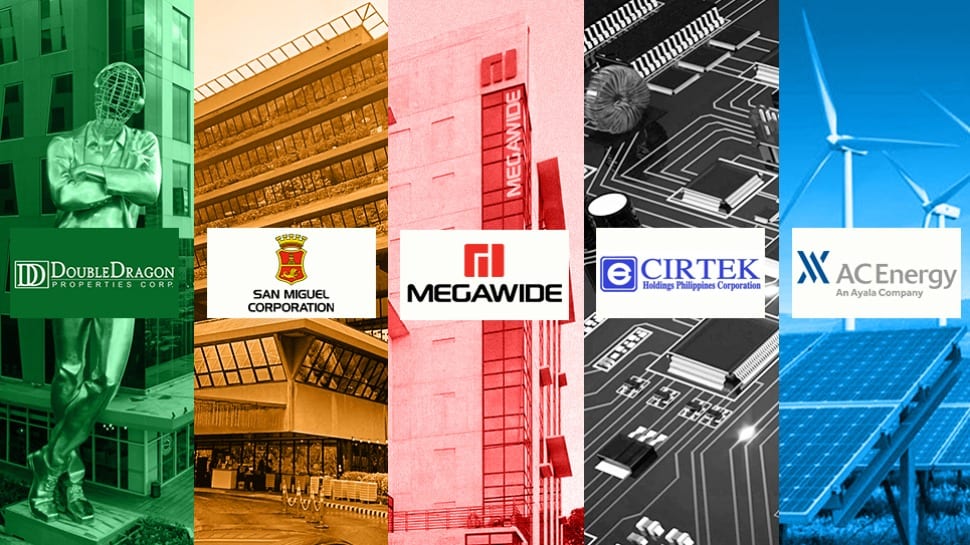
There are only 33 active preferred stocks in the Philippine Stock Exchange. Let’s review and update the top five preferred stocks in the market that pay the highest yield today:
ALSO READ
1| DoubleDragon Corporation (DDPR)
Price: P94
Yield: 10.3 percent
DoubleDragon Corporation (PSE: DD) is one of the country's foremost property leasing companies, boasting a vast leasable portfolio exceeding 1.2 million square meters across retail, office, hospitality, and industrial sectors.
About 46 percent of its total revenues come from rental income, while 20 percent come from real estate sales, and the balance is derived from hotel revenues and other income.
Last year, DD's total revenues increased by 75 percent to P24.7 billion from P14.3 billion in 2022. However, if we exclude the unrealized gain from changes in fair values of investment property, DD's total revenues from its operations in 2023 would be P8.26 billion. This figure represents a growth of 24 percent from the P6.64 billion recorded in 2022.
As a result, DD’s reported net income grew by 23.2 percent to P15.9 billion from P12.9 billion in 2022. Again, if we exclusive the unrealized gains, DD’s pre-tax income in 2023 would be P1.6 billion, which increased by 130 percent from P727 million in 2022.
This year, DD’s total revenues for the first three months increased by 19.6 percent to P2.05 billion from P1.72 billion in the same period last year while net income grew by 13.8 percent to P592 million from P520 million last year.
As of March 2024, DD's debt-to-equity ratio is 0.67 times, suggesting a nearly equal contribution of funding from both equity and debt. The debt-to-equity ratio is a financial measure that assesses the relationship between a company's total debt and its shareholders' equity. In this case, the ratio indicates a balanced mix of equity and debt in DD's capital structure.
DD’s preferred shares (PSE: DDPR) has an initial dividend rate of 6.4778 percent or P6.5778 per share. The shares, which were listed in 2016, were supposed to be redeemed this year after seven years, but since interest rates have also increased, management decided to keep the step-up rate.
The step-up rate shall be computed as the higher of the 6.4778 percent or the 10-year PDST-R2 rate plus 150 basis points, which is 9.685 percent.
The step-up rate of P9.685 per share represents an increase of 47.2 percent from its initial dividend of P6.4778 per share.
Because of the non-redemption of the preferred shares, DDPR share price has declined by 8.45 percent from P100 per share in July last year to P94 per share. The decline in the share price plus the increase in the dividend rate resulted to a high dividend yield of 10.3 percent.
2| San Miguel Corporation (SMC20)
Price: P79.2
Yield: 8.10 percent
San Miguel Corporation (PSE: SMC) is one of the Philippines' largest and most diversified conglomerates, with revenues equivalent to about four percent of the country's Gross Domestic Product.
SMC owns market-leading businesses and has investments in various sectors, including beverages, food, packaging, energy, fuel and oil, infrastructure, cement, property development and leasing, car distributorship, and banking services.
About 53.5 percent of SMC’s total revenues come from fuel and oil, 27 percent from food and beverage, 12.4 percent from infrastructure, and the remainder from packaging, cement, real estate, and other sources.
Last year, SMC’s total revenues declined by 3.98 percent to P1.44 trillion from P1.506 trillion in 2022. However, higher gross profits and higher other income resulted in a 67 percent increase in its net income, which rose to P44.7 billion from P26.7 billion the previous year.
This year, SMC’s total revenues for the first three months improved by 13.2 percent to P392 billion from P346 billion in the same period last year but higher operating expenses, interest and other expenses resulted to lower net income of P8.9 billion, which fell by over 50 percent from P17.7 billion last year.
SMC has seven series of preferred shares listed in the market with SMC2O having the highest dividend yield at 8.10 percent in the group. SMC2O is one of the three preferred shares that have been listed recently.
The other two are SMC2L, which has a current dividend yield of 6.8 percent and SMC2N, which has a yield of 8.10 percent, which you may consider to invest in as part of your diversification.
The other SMC preferred shares were expected to be redeemed last year but were not. These are SMC2F, which has a current yield of 7.0 percent; SMC2I at 6.8 percent; SMC2J at 5.2 percent; and SMC2K at 4.9 percent.
The other alternative is to look at SMC’s 68-percent owned subsidiary, Petron Corporation, which has three listed preferred shares: PRF3B, PRF3A, PRF4B and PRF4C.
PRF4C pays an annual dividend of P70.81 per share, resulting in a dividend yield of 7.4 percent. PRF3B offers a slightly lower dividend yield of 7.2 percent, which equates to P71.38 per share. Meanwhile, PRF3A has a current dividend yield of 6.9 percent, and PRF4B offers a yield of 6.8 percent.
3| Megawide Construction (MWP5)
Price: P100.5
Yield: 7.9 percent
Megawide Construction (MWIDE) is one of the largest infrastructure companies with significant interests in construction, property development, airport and terminal operations, and renewable energy.
Last year, MWIDE’s total revenues increased by 25.6 percent to P18.6 billion from P14.8 billion in 2022. The recovery in revenue growth resulted in a turnaround net profit of P269 million from a net loss of P1.8 billion.
This year, MWIDE’s total revenues for the first three months continue to recover, increasing by 19.4 percent to P5.2 billion from P4.3 billion in the same period last year. This recovery facilitated MWIDE's turnaround, resulting in a net income of P183 million compared to a net loss of P7.4 million in the previous year.
MWIDE has three listed preferred shares: MWP5, MWP2B, and MWP4. Among the three, MWP5, which pays an annual dividend of P7.90 per share, has the highest yield at 7.9 percent. This is followed by MWP2B with 6.4 percent and MWP4 at 5.65 percent.
4| Cirtek Holdings Philippines (TCB2D)
Price: P51.30
Yield: 7.6 percent
Cirtek Holdings Philippines (PSE: TECH) is primarily engaged in the manufacturing of value-added, highly integrated technology products and semiconductor packages.
TECH's revenues, which are largely driven by exports and customer engagements from Europe and the United States, has maintained a steady growth. Over the past 12 years, the company has experienced an impressive average annual growth rate of 9.7 percent, surging from US$23 million in 2009 to US$70 million in 2021.
The consistent growth in TECH’s revenues enabled its net income to grow by an average of 19.4 percent per year to $8.1 million in 2021 from $963,000 in 2009.
Last year, TECH’s total revenues declined by 14 percent to $72.8 million from $84.7 million, which caused its net income to fall by 24.2 percent to $8.6 million from $11.3 million in 2022.
This year, TECH’s total revenues for the first three months continued to decelerate, falling by 10.9 percent to $15.2 million from $17.1 million in the same period last year. The fall in revenues resulted to a 4.1 percent contraction in earnings falling to $1.506 million from $1.571 million in 2022.
TECH’s debt-to-equity ratio currently stands at 0.18 as of March 2024. TECH has two types of preferred shares, TCB2C and TCB2D.
TCB2C, which has a mandatory redemption period of three years, pays P3.29 per share annually over four quarters. At the current share price of the stock, TCB2C has a dividend yield of 6.7 percent.
TCB2D, on the other hand, has a redemption period of five years. The stock pays P3.88 per share annually over four quarters. At the current price of the stock, TCB2D has an attractive dividend yield of 7.6 percent.
5|AC Energy (ACENB)
Price: P1,075
Yield: 7.4 percent
AC Energy (PSE: ACEN) is one of the largest listed renewable energy companies in Southeast Asia with a total net attributable capacity of 4,000 MW.
About 40 percent of its total capacity is contributed by its operations in the Philippines while the balance of 60 percent is shared by Vietnam, Indonesia, India, and Australia.
ACEN, which sources its renewable energy mainly from solar and wind power, currently operates about 68 percent of its total capacity, while 32 percent is still under construction.
In 2023, ACEN’s total revenues grew 3.6 percent to P36 billion from P35.2 billion the previous year. But higher general and administrative expenses and lower other income depressed its net income by 32.6 percent to P9.4 billion from P13.9 billion in 2022.
This year, ACEN’s total revenues for the first three months improved by 7.8 percent to P9.8 billion from P9.1 billion in the same period last year. The increase in revenues resulted in 20 percent growth in net income to P2.9 billion from P2.44 billion in 2022.
ACEN has two preferred shares, ACENA and ACENB. ACENA carries an initial dividend rate of 7.13 percent per annum, with a dividend rate re-setting on the fifth anniversary of the listing date, while ACENB has a fixed dividend rate of 8.0 percent per annum with no dividend rate re-setting, making it the first Philippine Peso-denominated fixed-for-life equity instrument listed on the PSE.
At the current market prices, ACENB has a higher dividend yield at 7.4 percent, while ACENA has yield of 7.0 percent.
