
Financial Adviser: 5 Dividend-Paying Preferred Stocks Every Saver Can Buy to Earn Up to 10.4% p.a.

Over the past five months, both interest rates and inflation have declined, yet this change has had minimal effect on dividend yields for preferred stocks on the Philippine Stock Exchange.
This is largely because the share prices of preferred stocks have not seen notable improvement, primarily due to ongoing negative market sentiment which has tempered investor enthusiasm.
The median dividend yield of listed preferred shares has slightly decreased, moving from 6.83 percent in June to the current 6.80 percent. Preferred stocks hold a unique position, functioning as both debt and equity instruments; they pay fixed dividends annually, similar to the interest income generated from bonds.
However, because preferred shares trade on the stock market, their effective dividend yield fluctuates with changes in market price—when prices rise, the dividend yield effectively decreases, making the cost of investment less attractive.
Currently, the median dividend yield of preferred stocks stands at 6.80 percent, which is competitively higher than both the 10-year Philippine bond yield at 5.89 percent and the seven-year bond yield at 5.86 percent. This yield advantage could appeal to investors looking for higher returns in a declining interest-rate environment.
Additionally, the recent interest rate cuts could potentially boost share prices, especially if market sentiment shifts positively. This situation may make preferred shares an appealing investment option, as higher yields could attract investors searching for income-generating assets with potentially less volatility than common stocks.
One significant benefit of preferred stocks over fixed-income securities is their favorable tax treatment. While interest income from bonds is typically subject to a 20 percent final tax, dividends from preferred stocks enjoy a lower tax rate of only 10 percent.
This difference can result in higher net income for investors, which can enhance the overall return from preferred stock dividends relative to bond interest.
Another advantage of preferred stocks is the trading flexibility they offer. Investors can purchase preferred shares with investments as low as P10,000 and benefit from the liquidity of the stock market that enables them to real-time buy-and-sell decisions.
In contrast, bond investments usually require a higher minimum amount and may involve brokers that can take longer execution times, sometimes exceeding twenty-four hours.
Despite these benefits, prospective investors must approach preferred stocks with caution, especially during times of financial instability. In cases of financial distress, companies may defer dividend payments on preferred shares, which could pose the risk of prolonged waiting periods for promised income if the company’s financial health deteriorates further.
To mitigate this risk, it is important for investors to thoroughly assess the financial stability of the issuing company. Reviewing key indicators, such as profitability, cash flow, and overall financial performance, can provide insight into the company’s ability to meet its dividend obligations.
Additionally, investors should evaluate the likelihood that the company will generate sufficient cash flow to cover future dividend payments while managing its existing interest expenses.
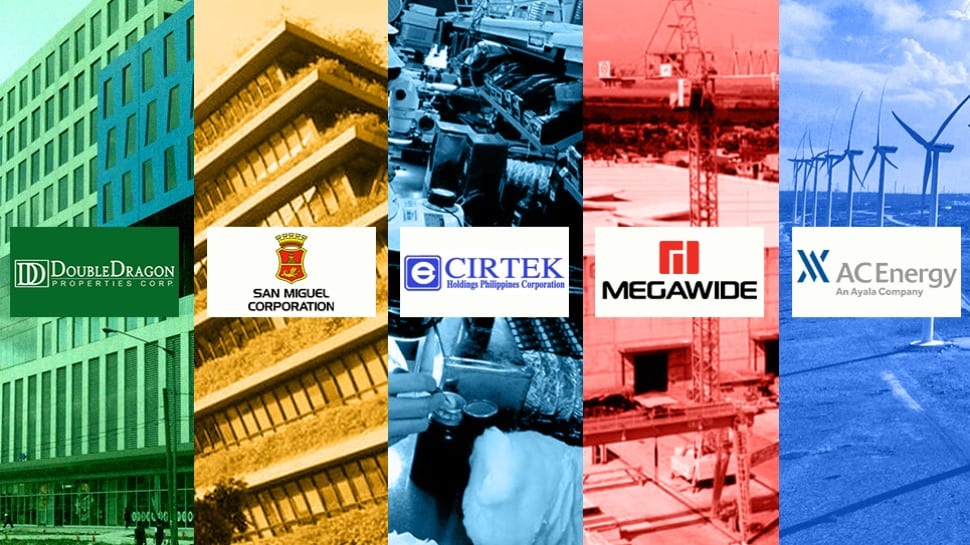
At present, there are 32 active preferred stocks listed on the Philippine Stock Exchange. Let’s take a closer look at the top five preferred stocks currently offering the highest dividend yields, and analyze how they may fit into a well-diversified income-focused investment strategy.
ALSO READ
Financial Adviser: 5 Business Lessons Everyone Can Learn from Steven Tan, President of SM Supermalls
1| DoubleDragon Corporation (DDPR)
Price: P93.05
Yield: 10.4 percent
DoubleDragon Corporation (PSE: DD) is one of the country's foremost property leasing companies, boasting a vast leasable portfolio exceeding 1.2 million square meters across retail, office, hospitality, and industrial sectors.
About 46 percent of its total revenues come from rental income, while 20 percent come from real estate sales, and the balance is derived from hotel revenues and other income.
For the first six months of this year, DD's total revenues increased by 4.98 percent to P2.38 billion from P2.23 billion in the same period last year. However, higher costs and expenses, which increased by 10.8 percent caused DD’s net income to decline slightly by 2.2 percent to P1.05 billion from P1.08 billion last year.
As of June 2024, DD's debt-to-equity ratio stands at 0.76 times, suggesting a nearly equal contribution of funding from both equity and debt. The debt-to-equity ratio is a financial measure that assesses the relationship between a company's total debt and its shareholders' equity. In this case, the ratio indicates a balanced mix of equity and debt in DD's capital structure.
DD’s preferred shares (PSE: DDPR) has an initial dividend rate of 6.4778 percent or P6.5778 per share. The shares, which were listed in 2016, were supposed to be redeemed this year after seven years, but since interest rates have also increased, management decided to keep the step-up rate.
The step-up rate shall be computed as the higher of the 6.4778 percent or the 10-year PDST-R2 rate plus 150 basis points, which is 9.685 percent.
The step-up rate of P9.685 per share represents an increase of 47.2 percent from its initial dividend of P6.4778 per share.
Due to negative sentiment on the stock caused by the government ban on POGOs, which contribute significantly to DD's rental income, the share price of DDPR has declined by 6.95 percent, from P100 per share in July last year to P93.05 per share. The decline in share price, combined with an increase in the dividend rate, has resulted in a high dividend yield of 10.4 percent.
2| San Miguel Corporation (SMC2O; SMC2N)
Price: P81.35 (SMC2O); P78.9 (SMC2N)
Yield: 7.90 percent
San Miguel Corporation (PSE: SMC) is one of the Philippines' largest and most diversified conglomerates, with revenues equivalent to about four percent of the country's Gross Domestic Product.
SMC owns market-leading businesses and has investments in various sectors, including beverages, food, packaging, energy, fuel and oil, infrastructure, cement, property development and leasing, car distributorship, and banking services.
About 53.5 percent of SMC’s total revenues come from fuel and oil, 27 percent from food and beverage, 12.4 percent from infrastructure, and the remainder from packaging, cement, real estate, and other sources.
For the first six months of the year, SMC’s total revenues increased by 15.2 percent to P789 billion from P685 billion in the same period last year. However, higher other charges of P24.4 billion due to foreign exchange losses resulted in a 41.8 percent decrease in its net income, which fell to P13.6 billion from P23.3 billion the previous year.
SMC has seven series of preferred shares listed in the market with SMC2O and SMC2N having the highest dividend yields at 7.9 percent in the group. SMC2O and SMC2N were listed in the exchange only last year. The other one was SMC2L, which has a current dividend yield of 6.7 percent.
The other SMC preferred shares were expected to be redeemed last year but were not. These are SMC2F, which has a current yield of 7.1 percent; SMC2I at 6.7 percent; SMC2J at 5.1 percent; and SMC2K at 4.9 percent.
The other alternative is to look at SMC’s 68-percent owned subsidiary, Petron Corporation, which has three listed preferred shares: PRF3B, PRF3A, PRF4B and PRF4C.
PRF4C pays an annual dividend of P70.81 per share, resulting in a dividend yield of 7.0 percent. PRF3B offers higher dividend yield of 7.4 percent, which equates to P71.38 per share. Meanwhile, PRF3A has a current dividend yield of 6.9 percent, and PRF4B offers a yield of 7.0 percent.
3| Cirtek Holdings Philippines (TCB2D)
Price: P49.40
Yield: 7.8 percent
Cirtek Holdings Philippines (PSE: TECH) is primarily engaged in the manufacturing of value-added, highly integrated technology products and semiconductor packages
TECH's revenues, which are largely driven by exports and customer engagements from Europe and the United States, has maintained a steady growth. Over the past 12 years, the company has experienced an impressive average annual growth rate of 9.7 percent, surging from $23 million in 2009 to $70 million in 2021.
The consistent growth in TECH’s revenues enabled its net income to grow by an average of 19.4 percent per year to 8.1 million in 2021 from $963,000 in 2009.
In the first six months of this year, TECH's total revenues declined by 26.7 percent, dropping to $29.4 million from $40.2 million, which led to a significant 53.8 percent decrease in net income, from $4.4 million last year to $2.0 million. This marks the second consecutive year of declining revenues and net income for the company.
Last year, TECH's total revenues decreased by 14 percent, from $84.7 million to $72.8 million, resulting in a 24.2 percent drop in net income, from $11.3 million in 2022 to $8.6 million.
TECH’s current ratio has improved slightly, increasing from 3.06 at the start of the year to 3.53. This indicates that the company has enhanced its short-term liquidity and is better positioned to cover its current liabilities with its current assets, which indicates increased financial stability in the near term.
TECH’s net debt-to-equity ratio also dropped from 0.19 to 0.16. This reduction reflects an improvement in cash holdings relative to debt, enhancing the company’s overall financial flexibility and reducing its effective debt burden.
The improved current ratio and decreased debt-to-equity ratios indicate enhanced liquidity and a lower debt burden, which suggest a solid capacity to meet short-term obligations and a more conservative approach to leveraging debt.
However, declines in profitability ratios raise concerns about cost management and overall efficiency. Furthermore, TECH’s declining return on assets and equity reflects lower efficiency in using assets and equity to generate profits, which could impact investor confidence if these trends persist
TECH has two types of preferred shares, TCB2C and TCB2D.
TCB2C, which has a mandatory redemption period of three years, pays P3.29 per share annually over four quarters. At the current share price of the stock, TCB2C has a dividend yield of 6.8 percent.
TCB2D, on the other hand, has a redemption period of five years. The stock pays P3.88 per share annually over four quarters. At the current price of the stock, TCB2D has an attractive dividend yield of 7.8 percent.
4| Megawide Construction (MWP5)
Price: P102.9
Yield: 7.7 percent
Megawide Construction (MWIDE) is one of the largest infrastructure companies with significant interests in construction, property development, airport and terminal operations, and renewable energy.
For the first six months of the year, MWIDE’s total revenues increased slightly by 2.2 percent, rising to P11.4 billion from P11.2 billion in the same period last year. However, net income grew significantly by 20.7 percent, from P362 million last year to P437 million, due to an improvement in gross margins, which rose to 18.4 percent from 12.3 percent last year.
The increase in gross profit margin and earnings per share points to improved profitability, which suggest stronger operational performance and the potential for sustained earnings growth. These metrics indicate that the company is managing its direct costs well, resulting in a healthier profit margin.
MWIDE’s current ratio, which measures the company's ability to cover short-term liabilities with its short-term assets, has decreased from 2.34 to 1.31. A current ratio above 1 indicates that the company can meet its short-term obligations, but the drop suggests a reduction in liquidity, potentially indicating tighter cash flow or increased liabilities.
On the other hand, MWIDE’s net debt-to-equity ratio, a measure of leverage, has increased from 0.78 to 1.59. This shows that the company has taken on more debt relative to its equity. This higher ratio implies a greater reliance on debt financing, which may increase financial risk but could also indicate efforts to finance growth.
MWIDE has three listed preferred shares: MWP5, MWP2B, and MWP4. Among the three, MWP5, which pays an annual dividend of P7.90 per share, has the highest yield at 7.7 percent. The other two are MWP2B, which has dividend yield of 6.1 percent and MWP4 at 5.70 percent.
5| ACEN Corporation (ACENB)
Price: P1,090
Yield: 7.3 percent
AC Energy (PSE: ACEN) is one of the largest listed renewable energy companies in Southeast Asia with a total net attributable capacity of 4,000 MW.
About 40 percent of its total capacity is contributed by its operations in the Philippines while the balance of 60 percent is shared by Vietnam, Indonesia, India, and Australia.
ACEN, which sources its renewable energy mainly from solar and wind power, currently operates about 68 percent of its total capacity, while 32 percent is still under construction.
For the first nine months of the year, ACEN’s total revenues declined by 1.97 percent to P28.1 billion from P28.6 billion in the same period last year. However, net income rose by 16.3 percent to P8.9 billion from P7.7 billion, due to higher gross margins, which increased from 12 percent to 28.5 percent, and reduced operating costs.
ACEN’s current ratio declined from 3.57 to 2.20, which suggests reduced short-term liquidity. This means that the company’s current assets are less able to cover current liabilities compared to the previous period. The drop in current ratio points to the company’s reduced capacity to cover short-term liabilities, which could signal a potential liquidity challenge if the trend continues.
ACEN’s debt-to-equity ratio also increased significantly by 66 percent from 0.64 to 1.06. This shift indicates a higher reliance on debt financing relative to equity, which raises the company’s financial leverage and may expose it to higher risk, particularly if interest rates rise or cash flows weaken.
ACEN has two preferred shares, ACENA and ACENB. ACENA carries an initial dividend rate of 7.13 percent per annum, with a dividend rate re-setting on the fifth anniversary of the listing date, while ACENB has a fixed dividend rate of 8.0 percent per annum with no dividend rate re-setting, making it the first Philippine Peso-denominated fixed-for-life equity instrument listed on the PSE.
At the current market prices, ACENB has a higher dividend yield at 7.3 percent, while ACENA has yield of 6.9 percent.
Henry Ong, RFP, is an entrepreneur, financial planning advocate and business advisor. Email Henry for business advice hong@financialadviser.ph or follow him on Twitter @henryong888
Henry Ong's “Five Business Lessons” column is now a book. Published by Summit Books, Five Business Lessons features some of the country's most familiar business leaders and entrepreneurs sharing the secrets to their success. You can pre-order the book here.
