

Financial Adviser: 5 Highest Dividend-Yielding REITs in 2024 and How to Profit from Them

The Philippine Statistics Authority (PSA) recently reported a slight increase in the national inflation rate to 2.3 percent in October 2024, up from 1.9 percent in September. This modest rise is mainly due to higher prices in food and non-alcoholic beverages, which saw inflation rise to 2.9 percent from 1.4 percent the previous month.
Despite this recent uptick, the year-to-date inflation rate stands at 3.3 percent, comfortably within the government’s target range of 2.0 to 4.0 percent. This stability contrasts sharply with last year’s peak inflation of 8.0 percent, which was driven by global supply chain disruptions and heightened oil and commodity prices.
The current inflationary environment is relatively mild, alleviating pressure on interest rates. This stable setting is favorable for the stock market, as lower interest rates make equities more attractive compared to fixed-income assets.
For income-focused investors, dividend-paying stocks like Real Estate Investment Trusts (REITs) are particularly appealing in this low-interest environment. REITs currently offer an average yield of 6.9 percent, providing steady income potential alongside the opportunity for capital appreciation.
REITs have a unique advantage in times of mild inflation. Unlike many stocks, REITs often adjust their rental rates upward by five to 10 percent annually, allowing them to maintain and potentially increase distributable income. This incremental growth helps REITs sustain high yields and provides the potential for price appreciation over time.
However, rising vacancy rates in the office property sector pose a challenge to rental rate appreciation and could impact occupancy levels. With the ongoing trend of remote and hybrid work, demand for office space remains uncertain, which could put downward pressure on rental prices in certain markets. This shift threatens the ability of REITs to implement regular rental rate increases, which could, in turn, affect their distributable income and yield potential.
Investors may need to carefully assess REITs with high exposure to office properties, as these factors may dampen their growth prospects compared to other REITs focused on sectors with more stable demand, such as industrial or logistics properties.
While REITs offer attractive yields and potential for growth, it is essential for investors to analyze each REIT individually based on its income prospects and financial position.
Key factors to consider include the stability of rental income, the quality and diversity of the tenant base, and the property sector's demand outlook. Additionally, assessing the REIT’s balance sheet strength, debt levels, and cash flow resilience can provide insights into its capacity to withstand economic fluctuations.
Investors should also look at the REIT’s historical dividend performance and management’s strategy for navigating market changes. By carefully evaluating these aspects, investors can select REITs that are better positioned to deliver sustainable income and long-term.
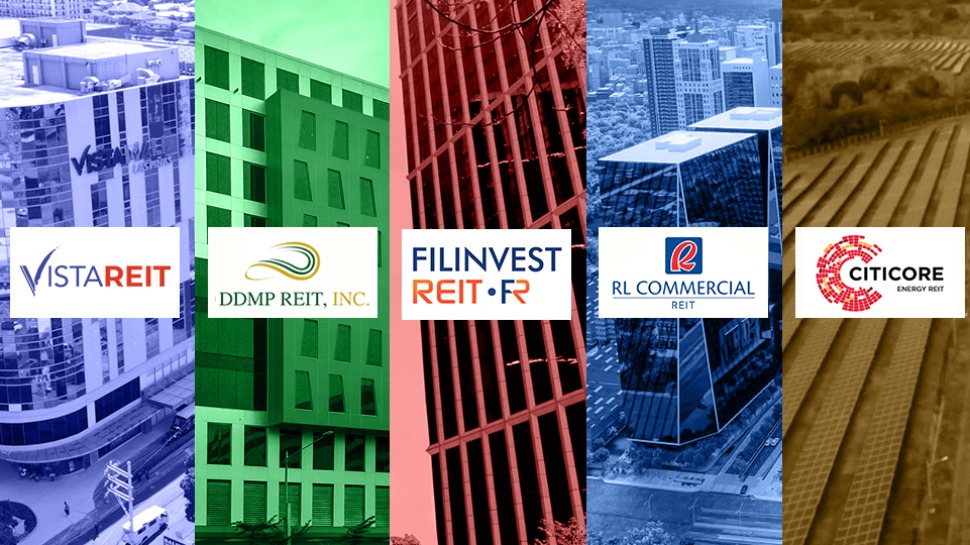
There are currently only seven REITs listed in the Philippine Stock Exchange. Here are the five highest yielding REITs you can consider to invest:
ALSO READ
Financial Adviser: 5 Dividend-Paying Preferred Stocks Every Saver Can Buy to Earn Up to 10.4% p.a.
1| VistaREIT
Price: P1.78
Yield: 10.1 percent
VistaREIT (PSE: VREIT) is a real estate investment trust supported by Vista Land, one of the Philippines' leading integrated property developers and the country’s largest homebuilder. Majority-owned and controlled by the family of former Senator Manny Villar, Vista Land operates its residential and commercial property ventures through six distinct business units: Camella Homes, Communities Philippines, Crown Asia, Brittany, Vista Residences, and Vistamalls.
Formerly known as Vista One, Inc., VREIT is a wholly owned subsidiary of Vista Land and holds a diversified portfolio of commercial and office properties strategically located within Vista Land’s integrated communities.
As of June 30, 2024, VREIT’s property portfolio comprises a diverse range of high-occupancy assets, including Vistamalls and Starmalls located in various regions of the Philippines. The properties have a combined latest appraised value of approximately Php 25.3 billion, a gross leasable area (GLA) of 247,434.52 square meters, and an average occupancy rate of 97 percent.
For the first half of 2024, VREIT reported total revenues of P1.2 billion, a decrease from P1.4 billion in the same period in 2023, which represents an 11.1 percent decline. This reduction is mainly due to lower rental income and other operating income compared to the prior year.
As a result, VREIT’s net income for the first half of 2024 amounted to P686 million, a significant drop from P13.5 billion in 2023. This sharp variance is largely due to the absence of substantial fair value gains on investment properties that had boosted earnings in 2023.
Despite the lower income, VREIT has paid total dividends of P0.18035 per share this year, 14.5 percent higher than the P0.1574 per share paid last year. Currently, VREIT's 12-month trailing dividend translates to a 10.1 percent yield, the highest among REITs on the PSE.
The growth of VREIT's dividends will depend largely on the recovery and expansion of its total rental income, which saw an 11 percent decline in the first six months of the year.
For investors to expect higher dividends in the coming year, VREIT will need to see a turnaround in rental income to maintain its competitive dividend yield in the REIT market.
2| DoubleDragon Properties REIT
Price: P1.05
Yield: 9.1 percent
DoubleDragon Properites REIT (PSE: DDMPR) has a property portfolio consisting of three income-generating commercial buildings located inside the 4.75 hectare-mixed use development DD Meridian Park in the Bay Area, Manila. The three income-generating properties have a total gross leasable area (GLA) of 172,252 square meters.
DDMPR is 70-percent owned and controlled by DoubleDragon Properties (PSE: DD) of business tycoon Edgar “Injap” Sia and 30 percent owned by the Yujuico family. It is the only REIT company in the market that also owns the land where its buildings are located. The land value of DDMPR is expected to surpass the value of its buildings in the future.
The property performance of DDMPR's key assets in DD Meridian Park reflects a strong portfolio with notable income contributions. DoubleDragon Plaza stands as the most valuable asset, with a valuation of P42.9 billion, which contributes the largest share of rental income, generating P651 million for the first half of 2024.
This property alone accounted for 74.06 percent of the total rental income, supported by a WALE (Weighted Average Lease Expiry) of 2.08 years and strong tenant demand.
Meanwhile, DoubleDragon Center East and DoubleDragon Center West also play significant roles in the portfolio’s revenue generation, with valuations of P4.8 billion and P4.9 billion respectively.
DoubleDragon Center East contributed P94 million in rental income, making up 10.74 percent of the total, and has a longer WALE of 3.04 years, which may provide more stable rental revenue over time.
DoubleDragon Center West, with a WALE of 0.81 years, contributed P128 million or 14.63 percent of total rental income, though the shorter lease terms may introduce some volatility in future income as leases are renewed or renegotiated.
For the first half of the year, DDMPR’s net income declined by 18.5 percent to P994.67 million from P1.22 billion in the same period last year. This reduction in income primarily stems from a decrease in both rent and other income due to expired leases.
The decline in income has impacted DDMPR’s stock price, which lost by 16.7 percent from a high of P1.26 per share in January to P1.05 per share today.
DDMPR paid total dividends of P0.095856 per share this year, which is 3.4 percent lower than the dividends of P0.99207 per share it paid last year. DDMPR’s overall blended occupancy rate of 75.89 percent, which has declined from 95 percent, suggests room for growth in tenancy levels.
DDMPR’ share price is currently trading at 64 percent discount to its book value. With a solid property valuation and diverse lease terms, DDMPR’s portfolio shows strength in rental income generation, though future performance will benefit from efforts to enhance occupancy and secure stable long-term leases, especially for assets with shorter WALEs.
3| Filinvest REIT Corp
Price: P3.10
Yield: 9.1 percent
Filinvest REIT Corp (PSE: FILRT) is majority-owned and controlled by Filinvest Land (PSE: FLI) of the Gotianun Family, one of the leading property developers in the country.
FILRT’s portfolio reflects its strategic focus on BPO-centric and PEZA-accredited office properties located primarily in the Northgate Cyberzone in Alabang, which has become a prime hub for IT and business process outsourcing (BPO) firms.
Northgate Cyberzone spans 18.7 hectares and is a PEZA-registered IT Park, providing infrastructure and amenities specifically designed to support IT and BPO enterprises. This strategic setup has attracted a steady tenant base within the BPO sector, supported by its competitive location and the incentives that come with its PEZA accreditation.
As of June 30, 2024, FILRT owns and operates 17 fully operational office buildings within this area, offering stable rental income streams. Key properties include Axis Tower 1, Filinvest One, and the Vector series (Vector One, Vector Two, and Vector Three), which provide both office and limited retail space.
The average occupancy rates for these properties vary, with some, like Vector One and Two, achieving 100 percent occupancy, which reflects high tenant demand, while others like Filinvest Three have occupancy rates of around 30 percent.
In addition to its Northgate properties, FILRT has diversified its portfolio by acquiring a prime beachfront property in Boracay, Aklan, which increases its gross leasable area (GLA) by 9.65 percent to a total of 330,448 square meters.
The addition of this high-profile property broadens FILRT’s income streams beyond BPO-centric leases by tapping into the hospitality sector's growth potential.
FILRT’s property valuations, as of December 31, 2023, further highlight its asset strength, with Axis Tower 1 valued at P6.3 billion and Vector One at P2.8 billion. Most properties are held under long-term land leases with 71.9 years remaining. This ensures sustained operational presence and income stability in the Alabang area.
FILRT’s strategy of providing environmentally sustainable and PEZA-accredited buildings makes it a key player in the BPO leasing market. With its recent expansion into Boracay, FILRT strengthens its income potential by providing a diversified investment offering with both stable office leases and high-value hospitality assets.
For the first half of the year, FILRT’s total revenue declined by 10.6 percent to P1.4 billion from P1.6 billion in the same period last year. As a result of lower revenues and higher financing costs, net income decreased by 21.8 percent to P600.7 million from P768.0 million last year.
FILRT’s declining revenues have mirrored the performance of its share price, which has lost by over 55 percent from its IPO price of P7.00 per share. FILRT, similar to DDMPR, is currently trading at 63 percent discount to its book value of P8.61 per share.
FILRT has paid a total dividend payments of P0.253 this year, which is 10.9 percent lower than the total dividends of P0.284 per share it paid last year. The lower dividends warranted the sharp decline in its share price this year.
While the company achieved some cost efficiencies, the drop in revenue—particularly rental income—and the rise in financing charges contributed to a weaker overall financial performance in the first half of 2024 compared to the same period in the prior year.
4| RL Commercial REIT
Price: P6.09
Yield: 6.9 percent
RL Commerial REIT, Inc (PSE: RCR) is majority-owned and controlled by Robinsons Land Corporation (PSE: RLC) of the Gokongwei family.
As of September 30, 2024, RCR boasts an extensive and strategically diversified portfolio of office and mall properties across prime locations in the Philippines, with a focus on high occupancy rates and income generation.
The portfolio includes properties in major urban centers such as Pasig, Makati, Quezon City, Cebu, and Davao, as well as key regional locations like Tarlac, Puerto Princesa, and Bacolod.
In the first nine months of 2024, RCR expanded significantly through the acquisition of 13 additional properties from its sponsor, Robinsons Land Corporation (RLC). These newly added properties contribute an impressive 347,329 square meters of gross leasable area (GLA), increasing RCR’s footprint across various regions. This acquisition, valued at P33.92 billion, was funded through a stock issuance and additional paid-in capital, enhancing the REIT's asset base and income potential.
RCR’s office properties maintain high occupancy rates, with key assets like Cyberscape Alpha, Tera Tower, and Robinsons Cybergate Cebu achieving 100% occupancy.
Properties such as Exxa-Zeta Tower and Robinsons Summit Center in Quezon City and Makati, respectively, also demonstrate robust performance with occupancy rates of 96 percent and above. This high level of occupancy underscores strong demand for office space, particularly in prime business districts.
The REIT’s mall assets add a retail dimension to its portfolio. High-performing malls like Robinsons Novaliches and Robinsons Lipa show occupancy rates of 95 percent and 98 percent respectively, with rental income contributing significantly to the overall revenue. Regional malls, such as Robinsons Luisita and Robinsons Ormoc, also show strong tenant demand, achieving occupancy rates above 90 percent and generating steady rental revenue.
The properties’ rental income for the first nine months reflects the strength of this diverse portfolio. The most prominent income-generating properties include Robinsons Summit Center and Exxa-Zeta Tower, contributing P385.3 million and P478.4 million in rental income, respectively.
In addition to office spaces, the mall properties, like Robinsons Lipa and Robinsons Novaliches, generated P188.1 million and P180.5 million in rental income, respectively, further underscoring the balanced contribution from different asset classes within RCR’s portfolio.
The average lease terms, particularly for major office buildings such as Cyberscape Alpha, Exxa-Zeta Tower, and Robinsons Cybergate Center in Mandaluyong City, span 96 years, which ensure long-term stability and security in rental revenue.
For the first nine months of the year, RCR’s total revenue rose sharply by 42.2 percent from P4.1 billion in 2023 to P5.8 billion in 2024. As a result, total net income improved significantly, which rose by 32 percent from P3.24 billion in 2023 to P4.27 billion in 2024.
This growth is primarily attributed to the substantial rise in rental and dues income, which reflects RCR’s ability to maintain a strong revenue stream while managing increased expenses.
RCR’s performance underscores the strength of its rental portfolio and its ability to capitalize on demand while effectively managing operational and administrative costs.
RCR’s total dividend payments have been growing for the past two years. Last year, it paid total dividends of P0.391 per share, which was 2.1 percent higher than the P0.38 per share it paid the previous year. This year, with larger income base, the company paid 8.2 percent higher in total dividends of P0.4231 per share.
The increasing dividend growth of RCR has aligned with the performance of its stock price, which has risen by 32 percent from its low of P4.61 per share last year to P6.09 per share today.
The stock is currently trading at 3 percent discount to its book value. Given the dividend growth prospects of RCR, the stock deserves to trade at premium over its book value. AREIT, the most valuable REIT in the sector, has price-to-book value (PBV) of 1.12 times. If we assume RCR to trade at par with AREIT’s PBV, the stock should appreciate further to P7.03 per share over time.
The stock is currently trading at a 3 percent discount to its book value. Given RCR's dividend growth prospects, the stock merits trading at a premium over its book value. AREIT, the most valuable REIT in the sector, has a price-to-book value (PBV) of 1.12 times. If we assume RCR to trade at the same PBV as AREIT, the stock could appreciate further to P7.03 per share over time.
5| Citicore Energy REIT
Price: P3.00
Yield: 6.7 percent
Citicore Energy REIT (PSE: CREIT) is the first renewable energy REIT in the market, which leases out five properties to operating solar power plants owned by its sponsor, Citicore Renewable Energy Corp (CREC).
CREC is the third largest power generator in the Philippines and majority owned and controlled by construction magnate Edgar Saavedra of Megawide Construction Corporation (PSE: MWIDE).
The Company’s current portfolio consists of seven key leased properties, valued at an aggregate of ?20.0 billion as of June 30, 2024. These properties, located across strategic areas in the Philippines, include a mix of leased and owned sites, each dedicated to solar power production, contributing to a diversified energy portfolio.
The Clark Solar Power Plant in Pampanga, with an installed capacity of 22.325 MWpDC, is one of the high-value assets with an appraised value of P2.964 billion. Another high-value site, the Toledo Property in Cebu, valued at P3.661 billion, operates with a capacity of 60 MWpDC, the largest installed capacity among the assets. It is leased until May 2041, with Citicore Cebu managing its operations.
Other assets, such as the Silay Property in Negros Occidental and the South Cotabato Property, add significant value to the portfolio, with appraised values of P2.767 billion and P1.044 billion, respectively.
CREIT’s properties display a mix of lease expiration dates, stretching from 2039 to 2047, which provides long-term operational stability. Additionally, right of first refusal exists on select sites, such as the Toledo and Dalayap properties that give the company potential priority for future land acquisition.
Last year, CREIT strategically utilized proceeds from a P4.45 billion green bond issuance to acquire 511.5 hectares of land across multiple locations in Batangas, Pampanga, and Pangasinan.
The newly acquired parcels, located in areas like Tuy (Batangas), Arayat and Magalang (Pampanga), and Pangasinan, are optimal for utility-scale solar power plants due to proximity to NGCP substations and high solar irradiance levels. These acquisitions are intended for solar power development, with installed capacities for each site ranging from 14 MWpDC to 125 MWpDC.
Each site, fully owned and set to expire between 2043 and 2048, holds varying degrees of eligibility for the Green Energy Auction 2 (GEA 2), positioning the Company for potential government support in renewable energy initiatives.
These strategic land acquisitions position CREIT for substantial future income growth as the properties are developed into utility-scale solar power plants. With planned capacities totaling hundreds of megawatts across various high-solar-irradiance regions, these sites are expected to generate significant renewable energy output.
This expansion in CREIT’s renewable energy assets not only diversifies its income sources but also aligns with growing demand for sustainable energy, ensuring enhanced income stability and growth potential for shareholders in the years ahead.
For the first half of the year, CREIT’s total revenues rose by 15.1 percent from P799 million in the same period last year to P920 million. As a result, total net income grew by 11.7 percent to P693 million from P621.04 million last year.
CREIT’s total dividend payments have been on an upward trend for the past two years. Last year, CREIT distributed dividends totaling P0.196 per share, representing a 17.4% increase over the previous year’s dividend of P0.167 per share. For this year, CREIT is projected to pay a total dividend of P0.201 per share, which is a 2.6 percent increase from last year.
The land acquisitions completed last year are expected to support further growth in dividend payments, as these new assets contribute to CREIT’s income-generating portfolio.
As these properties begin to generate stable revenue, investors may see continued increases in dividends, which aligns with the company’s strategy of enhancing shareholder returns through portfolio expansion.
