
Financial Adviser: 5 Business Lessons Everyone Can Learn from Abba Napa, Co-Founder of Manam Comfort Filipino and The Moment Group

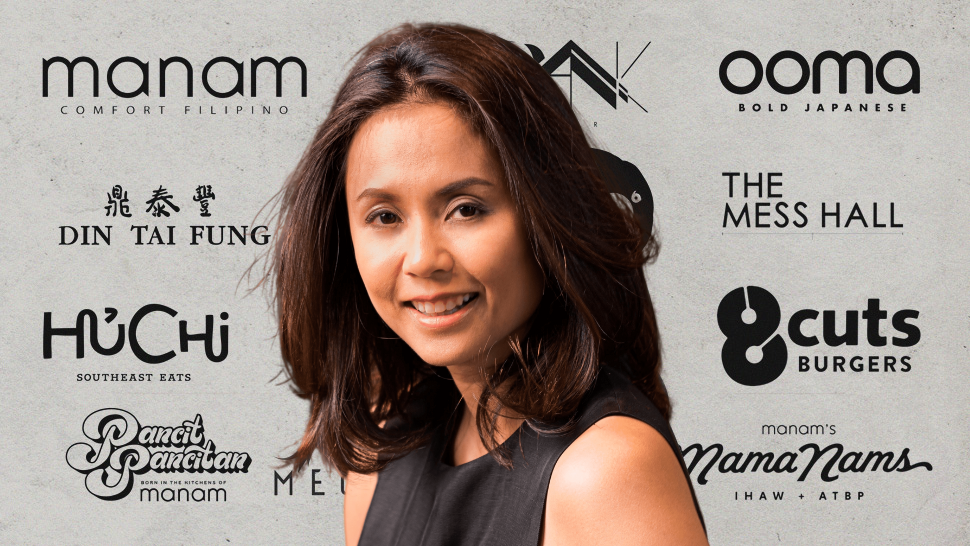
Abba Napa had already achieved success in the world of footwear retail, but her passion for great food and dining experience made her move into the restaurant business.
Napa first saw the opportunity to open a restaurant when a vacant space in Bonifacio Global City was offered to her in 2010. She and her business partner, Jon Syjuco, who also shared the same passion for dining, wanted to try the food business for fun.
Because they were so busy with their footwear business, the partners invited their mutual friend, Eliza Antonino, who had experience in restaurant operations, to join them and help open up their barbeque house called Cue.
The partners initially wanted to operate only one restaurant, but they soon realized that they could offer more innovative concepts that would redefine the way people experience dining.
The success of the first restaurant inspired the partners to push the boundaries of traditional restaurant concepts, marking the start of a much bigger journey.
In 2012, the three partners teamed up to form The Moment Group.
Today, The Moment Group is one of the fastest-growing restaurant conglomerates in the country. In its first 10 years, the group has created a portfolio of leading brands in the F&B space with over 50 outlets all over the country.
Some of the group’s well-known brands are Manam Comfort Filipino, 8Cuts Burgers, Ooma Bold Japanese, and Mo’ Cookies. The group is also the Philippine franchisee for the renowned xiao long bao brand, Din Tai Fung.
How did Napa and her partners manage to make The Moment Group one of the leading restaurant groups in the country? What lessons about business values and principles can we learn from her?
Here are the five business lessons every entrepreneur can learn from Abba Napa, co-founder of The Moment Group:
ALSO READ
Filipino Restaurateurs Share Their Secrets About Staying Creative in a Crowded Industry
Abba Napa On Bank Bar, Her Gin Obsession, and More
1| Follow your passion and success will follow
When you are passionate about something, you will have an enthusiasm for the task at hand and be motivated to keep going, no matter what challenges you may face.
Napa had an unwavering commitment to her business that kept her going through the difficult times and helped her to make the most of the good times.
She was passionate and had a well-defined vision of what she wanted to achieve, and this kept her motivated to continue working hard and reach her goals.
“I think it's really, really important that when you get into something from a business standpoint, you must be personally interested or that you personally enjoy to a certain extent at least, right?” she says. “Because a lot of people are in business, and they don't really enjoy it. Maybe it makes them lot of money, I don't know, and that's all well and good, but I think that having passion for the work that you do, it's like the extra fuel that you keep in your back pocket.
“I think it's important to have a bit of extra fuel because there will be times I find where you discover that you're running on empty already. Like wala na, pagod ka na, you’re deflated, you know, that’s a failure and there're a lot of things going on and you're tired and you want to give up.
“And when you have that extra fuel of passion, it allows you to cross the chasm. You know what I mean? To jump from here to there, right? There’s a lot of times in business where you're going to have to just close your eyes and jump and hopefully you land, and I feel like that's the extra rocket fuel that allows you to do that.
“So, it sounds silly, like, do something that you love, right? But, it's not even just to wake up every day in the morning and get out of bed. It's when you think you're about to throw in the towel, having passion will help you get through it.”
2| Turn your weaknesses into strengths
Building a successful team requires more than just assembling a group of people with the right skills. It is important to ensure that the team members have a shared understanding of the goals, objectives, and strategies of the team, as well as a vision for the team's future.
If you're not confident in your ability to do something, it's often a better option to hire someone who has the expertise you're lacking. Not only will this allow you to focus on what you're good at, but it will also give you the opportunity to learn how to select and trust your staff.
Napa overcame the weaknesses of her organization by assembling a well-rounded team capable of achieving their objectives.
“There was a lesson that I thought was important and then I realized maybe I wasn't so specific about it, like the topic of people,” she says. “Di ba the lesson is always hire good people; make sure that you share your values, be smart, skilled, and everything, and I definitely don't disagree with that. That's an important aspect in business, right people.
“But I think what's even more important about that, which is a lesson I learned, is that even before you can get to that stage of, oh, how am I going to build the right team? How am I going to get the right people? You need to be able to introspectively look at yourself in the mirror and also the organization that you have already at that point.
“Because I used to think that if we're the same, I should hire you, because then we'll get along, we look at the same direction and off we go. But like in a basketball team, if you hire Michael Jordan and Kobe and all in one team, they're all right point guards so who's going to do the defense and other things.
“So I really think that that with regards to the people's standpoint and lessons, I learned that I had to look inside myself and really say these are my weaknesses. These are the things that I don't do well. These are the skills that I don't have and these are also the weaknesses of my organization.
“And when you can’t find any, like excel at what you're not good at as a leader, as a manager, as a team player, and also the business organization, you can then turn around and say, these are the kinds of people pala and the skillsets that I need to hire to complement and augment.
“I think that a clear understanding of that process is what's helping us now build our organization better and that's really important because we really got decimated during Covid.
“I mean, everyone in F&B, we were really knocked to our knees. We lost so many good people. I feel like this understanding now of how to structure and rebuild the team is really important. You have to look at your weaknesses. I think that's really helped us now rebuild the team.”
3| Embrace risk to create value
Calculated risks are an integral part of any successful business, and must be taken in order to keep up with the competition.
Taking risks can open up new opportunities, but it is important to remember that it is not enough to just jump in and hope for the best. A well-thought-out plan and clear goals should be in place to ensure the risks taken are calculated and strategic.
Napa says the team properly assessed the risks before making any decision by identifying areas that need growth and create a strategic plan to address any potential omissions.
“We conduct feasibilities. We take a look at what it's going to cost us, depending on the size. Then we compute the ROI. So, we do that already all today. But, in the very beginning, we didn't do any of these. It was really all, and this sounds really, really crazy, but it was really all our gut. It was really all pulse, and again, that sounds like passion. But I personally think that pulse is a natural gift. Like, you just kind of understand what people want or what people might want that they don't know yet that they want.
“I also think having a pulse for a long-time, like understanding more or less what people want, apart from all the feasibilities being done and everything, it's largely a product of the fact that you've invested yourself in this particular field.
“So naturally I have a pulse for what can work and what cannot, and I think that's a function of using my left brain and the feasibilities, and my right brain to go out and eat in restaurants and see how people are moving, thinking. Are they smiling? Are they eating? What are they doing? Leaving food at their table? So, I mean, I know it may not seem like the best of answers, but it's really a mix of left-brain analysis and right-brain pulse.
“Having said that, we were also lucky. In the beginning, we were just lucky that we were able to do a lot of different things in different categories and we learned how the consumer reacted to the different things we did. And I think we're one of the only groups with such a diversified portfolio.
“If you want American, (we have it). We have Japanese, we have Chinese, we have Filipino, we have Southeast Asian, we have Vietnamese. So, because we have all of these things in our portfolio, we have a wealth of everyday information about how people could consume food. And I think it is qualitatively a big advantage that allows us to say, ‘Oh, I'm going to enter cookies, or I’m going to do that, or I’m gonna go and do this.’”
4| Gain customer loyalty with authenticity
Authenticity is an invaluable asset for any business. Consumers recognize and appreciate genuine efforts to provide them with quality products or services.
Showing your commitment to meeting their needs and solving their problems with a real-life solution will build trust and loyalty. Providing honest, straightforward information about your product or service will also make customers more confident in their decision to purchase it.
Napa promoted authenticity to stand out from the competition to earn the trust and respect from their customers.
“What I think we realized about the things that work, maybe, is that they came from a place that was a bit personal to us,” she says. “When we were creating them, that mattered to us, or they were very important in our lives at one point or another.
“So I feel like when you create something from a place that's authentic to your history, and we relate, then you have a better chance of success, cause it’s authentic. So very rarely do we create something, let's say it's another cuisine that's not Pinoy; we really won't do it if we've never been to that country. Otherwise, we would likely fail.
“I mean, how are you going to create something when you don't have a starting point? You’ve never experienced it yourself. So, I think that's what we've learned. I think that the failures are also good as long as it doesn't kill you. You learn something from it. You don't do the mistake again.
“I’d like to think every brand has done something good over the ages, but I think the reason why Manam is expanding is because it happens to have a wonderful price point and because it has different sizes, you can really have your meal depending on your wallet size. You can choose how much you want to spend; you can choose how much you want to eat. It's the kind of Filipino food that you can actually cook at home, but then it's not at all traditional. That's why I think it's expanding the most.
“When we were creating the menu, we all came together and collaborated. One of the most famous dishes in Manam is the sinigang na short rib and watermelon; it’s a watermelon sinigang with beef. It’s actually Eli’s recipe, so we asked her to put in on the menu and then it was Jon who said, what if we make it three sizes?
“So everyone, I guess, leaves an imprint on the brands that we create. And that’s why I think also the brands we have in our portfolio are unique. Because it's not just created by one person or one chef; it really evolves based on what everyone in Moment thinks, not just Eli, Jon and myself.”
5| Focus on your brand’s relevance
Brand building is not only about defining who you are and the type of company you strive to be, but it also involves communicating your message clearly and effectively to customers and potential customers.
Napa hopes that Manam, which is short for Malinamnam, will one day become its gateway brand to reach overseas Filipino communities and be something that Filipinos can be proud of.
“We really love to try food,” Napa says. “Some people like motorbikes; that's what they're going to spend money on. Or cars, shoes, bags, watches, whatever. But we really like food. So, we are those crazy people that we will get on a plane just to sit at a table in a restaurant somewhere.
“And then sometimes, I realized we would all say, and you can go to this place, this place was like a moment, right? And that's where we would use the same terminology. This place, it was a moment.
“So when we opened and we needed to file with the SEC for the name of our group, and we had to do it on that day itself, we were just like, ‘okay, let's go for the Moment.’
“We always believe we have to create a brand for ourselves, then we know if it’s going to be good because we are the consumer. And then as we grew and evolved a little bit, I guess in between five and 10 years, we said, you know, it's time to create for other people. Like not just for ourselves. Let's create for everyone or just other people.
“And so, try not to be so just focused on what you like and your friends and all of that stuff. So, we started to broaden our awareness and say, ‘Oh, you know what? What does everybody else want?
“We still try to create things that we know we're going to enjoy and patronize ourselves. You're creating for others, but don't create it if you're not going to patronize it yourself because then you can really fall into a trap there. Where's the altruistic motive there?
“Brand building is not a static process; it's not a singular process. You create the brand, and you create everything about it and then it doesn't stop there. In fact, it's the easiest part. You have to keep evolving that brand. You have to keep recreating and evolving the brand and you have to keep doing that, whether it's every day, every week, every year. Because we really feel like we treat our brands like work, like human beings.
“And I think what defines a brand's success is that it should be relevant throughout the ages. But the trick to that is to constantly be creating, evolving them. It doesn't stop the first time you do it.”
Henry Ong, RFP, is an entrepreneur, financial planning advocate and business advisor. Email Henry for business advice [email protected] or follow him on Twitter @henryong888
[ArticleReco:{"articles":["11274"]}] [ArticleReco:{"articles":["5080"]}]
