
Today I Learned: The ADB Has Approved Funding Worth P99.4 Billion for the Laguna Lakeshore Expressway Project

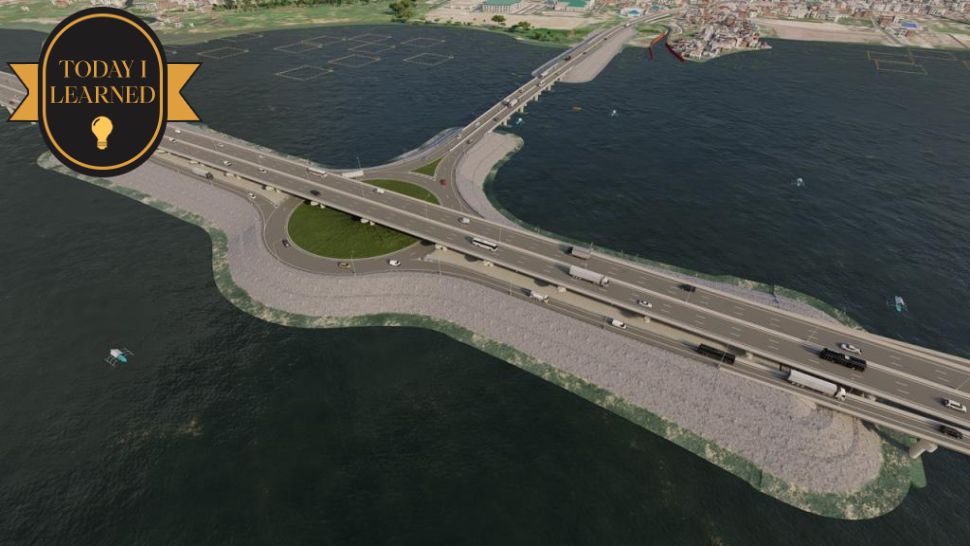
The Asian Development Bank (ADB) has approved a loan worth $1.698.21 billion for the construction of a 37.5-kilometer expressway that will be built along Laguna De Bay. According to a release from the ADB, the road project will be “climate-resilient” and is expected to cut peak travel time between Taguig City in Metro manila and Calamba City in Laguna by as much as 25 percent.
“This investment further cements ADB’s commitment to help transform our host country’s transport infrastructure by facilitating climate- and disaster-resilient and sustainable development,” said ADB Country Director for the Philippines Pavit Ramachandran. “The project will help link people to jobs and business opportunities, reduce transport costs and traffic congestion, and improve the efficiency of the overall transport network in Metro Manila and nearby regions.”
The so-called Laguna Lakeshore Road Network (LLRN) Project, whose main proponent is the Department of Public Works and Highways, will be built in phases. Phase I runs along the western coastline of the Lake while Phase II stretches in the Northern to Southern coastline via an eastern route.
ALSO READ
The Philippine Economy Is the Least Competitive in Southeast Asia, Report Says
ADB’s funding will help build a 29.56-kilometer section of the expressway, including bridges and viaducts that will pass through waterways flowing into Laguna De Bay. The 7.89-km northern section of the new expressway will be funded by a $904.35 million loan from the Export–Import Bank of Korea, Economic Development Cooperation Fund under a parallel financing scheme.
ADB added that its support for the LLRN will be via a multitranche financing facility consisting of two loans: a $1.2 billion first tranche loan, and a $509.5 million second tranche loan. The Asian Infrastructure Investment Bank is cofinancing the project with an additional $188.2 million loan.
The ADB said that the project is expected to benefit about 3.47 million people residing along the lake and nearby areas and improve access to markets and public services. “The north–south corridor around the lake is crucial for local and international transit of goods, accounting for nearly one-third of nationwide cargo in 2021,” it added.
What is the Laguna Lakeshore Road Network
The LLRN is essentially a project that will provide an alternative road corridor for motorists traversing Metro Manila to Laguna and vice versa. According to a report from the Environmental Management Bureau, a majority of the proposed road will be built along Laguna the De Bay shoreline with a combination of viaduct and shoreline embankment. The alignment will start in Barangay Lower Bicutan in Taguig City and end in Calamba City, with eight interchanges along the mainline—Lower Bicutan, Sucat, Alabang, Tunasan, San Pedro/Biñan, Santa Rosa, Cabuyao and Calamba.
Phase 1 of the LLRN project will generally be a dual 2-lane (2x2) carriageway roadway except between Sucat Interchange and Santa Rosa Interchange, where dual 3-lane (2x3) carriageway is proposed for the mainline for approximately 12 kilometers.
Projecct briefs about the LLRN suggest that it will be an open, toll-free highway, with certain sections provided enhanced amenities for pedestrians such as a roadside promenade that includes a 3.5 m wide cycle track and sidewalk on the lakeside.
There have been some concerns from different sectors about the environmental impact of this new expressway project on the ecosystem of Laguna De Bay. According to the ADB website, an environmental assessment conducted on the project found that it could trigger critical habitat, including endangered and critical species. “Dredging activities also risk the resuspension and contaminant release to the lake waters,” the ADB added. “The embankment road's construction also increases the risk of flooding along the lakeshore. Noise and vibration impacts, particularly during construction and operation stages will impact the residential and commercial structures near the slip and connecting roads.”
Still, the ADB said that the effects are mitigated in the project design and “residual impacts are expected to be minimal.”
“The project's biodiversity action plan (BAP) ensures No Net Loss (NNL) of biodiversity receptors that meet the critical habitat thresholds,” it added.
The ADB also said a Resettlement Framework has been prepared following findings that suggest that land acquisition for the project will affect 1,084 families (or about 4,757 individuals), most of whom are non-titleholders and tenants.
“Based on the detailed engineering design, a resettlement plan for the whole project under the proposed Multitranche Financing Facility' (MFF) has been prepared, in consultation with affected families, to address the project's land acquisition and resettlement impacts,” the ADB report said. “The proposed mitigation measures, including capacity building, are adequate to address the assessed risks.”
"The ADB loan includes climate financing of $35.6 million to cover mitigation and adaptation measures, including elevating viaducts and construction of armored lakeside embankments," it added.
