
Financial Adviser: 5 Business Lessons Everyone Can Learn from the Founders of Internationally Acclaimed Filipino Brand Auro Chocolate

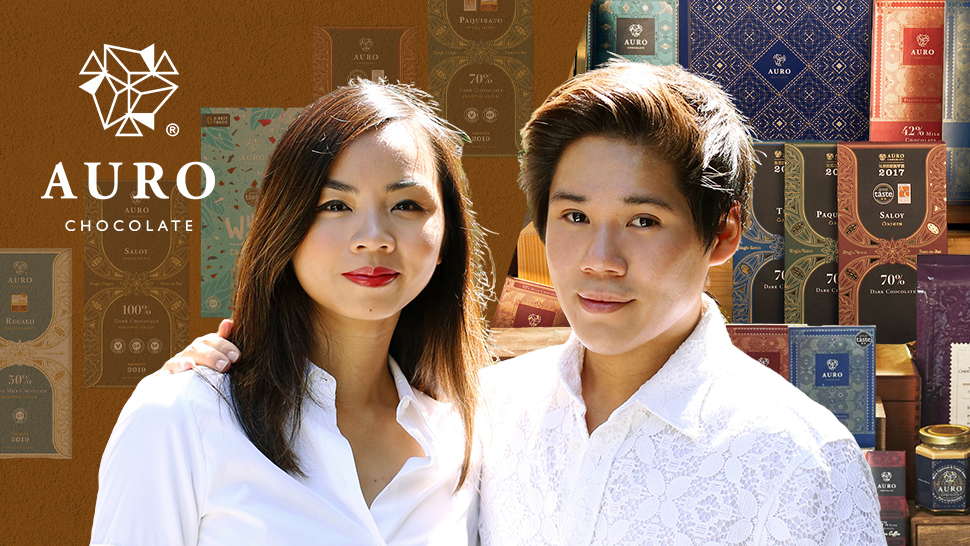
Two names resonate powerfully in the chocolate industry today: Mark Ocampo and Kelly Go. Their brainchild, Auro Chocolate, is more than just a brand; it's a testament to dedication, passion, and the unyielding spirit of entrepreneurship.
Their journey from being students to setting up a confectionary empire is an inspiring tale of dreams metamorphosing into reality.
Ocampo and Go's story began at the University of Chicago. The two became friends and shared a common passion for culinary arts and travel. During one of their trips in the U.S., the friends discovered a coffee shop that used Filipino cacao to make chocolate. Intrigued, they began exploring the idea of introducing this concept to the Philippines.
After finishing their studies, they went back to the Philippines to search for the finest cocoa beans. When they found a rare cocoa variety, the partners went to Germany to study the art of chocolate-making for two years, ensuring that they would produce only the finest chocolates.
Armed with world-class knowledge, the duo collaborated with cocoa farmers in Mindanao. Their stringent quality checks and sustainable practices ensured that the beans they sourced were of premium quality.
In 2018, the partners launched Auro Chocolate and in no time, it garnered the attention of major industry players. Their first major breakthrough came when they onboarded Philippine Airlines as their client.
Auro Chocolate quickly became the talk of the town. Leading hotels and upscale restaurants soon sought partnerships. The business’ growth trajectory was nothing short of astounding. What started as a modest production of one ton of chocolate per month soon transformed into a staggering one ton per day.
Today, six years into its operation, Auro Chocolate is the leading chocolate brand in the country, with its products available in over 50 countries. It has also garnered 60 international awards, including recognition from the Cocoa of Excellence for having some of the best cacao beans in the world.
Ocampo and Go are not just business partners; they are dreamers, innovators, and trendsetters. Their story is a testament to what passion, combined with hard work and a clear vision, can achieve. As Auro Chocolate continues its global journey, one thing is clear: the world is yet to witness the full spectrum of what the brand can offer.
How did Go and Ocampo identify and leverage a unique market niche for Auro Chocolate in a saturated confectionery industry? What lessons can we learn from the partners’ rapid business growth and strategies?
Here are the five business lessons everyone can learn from Mark Ocampo and Kelly Go, founders of Auro Chocolate:
ALSO READ
1| Know how to prepare your passion for business success
Merging one's passion with the rigors of business preparation often results in more sustainable and successful ventures. Passion provides intrinsic motivation, which can sustain entrepreneurs during the tough early phases of a startup.
Entrepreneurs who are passionate about their field often seek deep knowledge in that area. This dedication leads them to thoroughly prepare and plan. Such expertise, derived from comprehensive market research and meticulous business planning, can result in superior products or services and provide a competitive advantage
Ocampo and Go's journey from passion to business started with their mutual interest in culinary arts and food, which they discovered while studying together in Chicago.
An encounter with a chocolate shop in the States using Filipino cacao ignited their curiosity, encouraging them to explore the possibility of entering the chocolate business. However, to ensure that they produced a world-class product, they understood that they needed to prepare.
The duo studied in one of Europe’s top institutions for industrial chocolate manufacturing to learn the art and science of chocolate production, highlighting their dedication to turning their passion into a successful enterprise.
“Kelly and I met in Chicago while we were both studying at the University of Chicago,” Ocampo says. “Interestingly, we were neighbors in the Philippines but never met there. Instead, we got to know each other in Chicago. We discovered we had a lot in common and quickly became best friends.
“We both had a passion for culinary arts and food. Palagi kaming lumalabas, traveling around the world, trying different places and getting inspired. At one point, nasa States kami, we came across a chocolate shop that was using Filipino cacao in their chocolate and we were like, ‘how interesting,’ pero kasi at that time in 2010, wala pa kaming nakitang Filipino chocolate brands.
“And we said like, ‘meron palang cacao sa Pilipinas, so why isn’t there a well-known chocolate brand from there?’ We started looking more into it. Kelly eventually moved to Paris to study culinary arts, while I stayed in New York to work with an advertising company. I previously started my own businesses in the States and eventually sold them. One was a tech company and the other one was a fashion company. I also had a design consultancy company but I ended up working in an advertising agency. Kelly naman went to Le Cordon Bleu in Paris, which is an esteemed school for culinary and cooking.
“We had the passion to do more and to see what else we could do. We both wanted to come home. We wanted to be in the Philippines and contribute something valuable, something in line with our shared passions.
“Over time, Kelly and I explored various projects we could do together and eventually we settled on chocolate. The more that we learned about it, the more we were encouraged to align our interests in working with communities, design, product development, and making memorable experiences that bring pride to the Philippines.
“When we decided that we would be more serious about pursuing chocolate and cacao, we wanted to understand it more thoroughly. We believe that we couldn’t create a world-class chocolate brand without learning from the masters, so we both ended up studying in Germany. The school we attended was ZDS, which is one of the most relevant schools in Europe for industrial manufacturing of chocolate.
“We prioritized studying there because we believed it was the most important step to figure out how to achieve the best quality. After all, countries like Switzerland and Germany are famous for their chocolate.
“What was really nice about it was that this is typically where many chocolate companies would send their technicians and specialists to learn the chocolate-making process. We learned a great deal there about the entire process. From that point, Kelly and I decided to return around 2015 and we then started learning naman about the farming side.”
2| Know how to cultivate sustainable business practices and improve quality
Sustainability ensures that business operations do not deplete resources or harm the environment, making sure that these resources are available for future generations. This long-term approach ensures the viability and continuity of a business.
Sustainable business practices often lead to more efficient use of resources. This efficiency can reduce waste and improve the quality of products by ensuring that only the necessary and best resources are used in production.
The pursuit of sustainability can drive innovation. As businesses seek new ways to reduce their environmental footprint or to meet evolving societal needs, they often develop innovative products or processes that are of higher quality than previous iterations.
Ocampo and Go realized that the existing quality of cacao beans in the Philippines didn't meet the desired standard. By reevaluating the market, they studied global best practices that have effectively improved cacao quality. This research guided their subsequent actions and ensured they adopted tried-and-tested methods.
Recognizing that change is difficult, they implemented an innovative approach to link quality improvement with economic benefits for farmers. They also took on the role of educators by empowering stakeholders to uplift themselves and ensuring long-term success.
“After returning to the Philippines, we embarked on a roadshow in collaboration with the DTI, DA, and others to engage with various farmers and communities,” Ocampo says. “We realized ang dami pa palang dapat aralin and we had to learn so many things about the overall process. We needed to reevaluate the market and identify areas for improvement kasi parang the existing quality, at the time, our cacao beans in the Philippines were not up to the standard.
“What we did was to conduct a comprehensive study of sustainability models to really look at global practices that have been effective in improving the quality of cacao. We found out that in order for us to do that, we had to incentivize better practices and that the most effective approach was monetary.
“So we created a pricing structure that emphasized ‘better price for better quality’ just to incentivize farmers to adopt our methodology kasi it was hard to get anybody to do a new process when they've been so sanay na doing the previous processes for a long time.
“What was exciting about our projects was that we ended up teaching farmers how to treat their farms as a business. We are a social enterprise, so we offer farmers basic business administration classes and financial literacy courses. Especially since they are now earning more, we want them to be able to invest in themselves.
“From that point on, we were committed to doing things the right way. We brought in fermentation specialists from Belgium and geneticists from Europe to gain a better understanding of our cacao varieties here and the necessary process that we needed to produce high-quality chocolate.
“It was so difficult. The practices that were in place before our arrival were largely influenced by (confectionary company) Mars, which had their established protocols in the region. Naturally, they have their methodologies, but we wanted to establish our own approach as well.
“It was essential for us to understand what premium chocolate companies were doing in contrast to more affordable brands like Mars. Our primary focus was on evaluating the current quality and understanding what benchmarks we needed to achieve.
“We realized that so much science and technology was needed to be infused into the current process to elevate the quality to the desired standard.
“It was interesting because many of the practices considered standard, or even just common sense, weren't being followed here. Simple things, like ensuring the harvesting of perfectly ripe cacao and avoiding under or over-ripened ones, were among the lessons we had learned.
“Simultaneously, we were building our factory from scratch in Laguna. It took about two years for us to really get everything up and running. We opened officially in 2017 and launched our first chocolate bars, which were primarily milk and dark chocolate, in May of that year.”
3| Know how to challenge market biases and champion local excellence
Many local businesses and artisans take great pride in their work and are committed to producing high-quality products. They often use fresh, locally sourced ingredients and employ meticulous craftsmanship.
However, because they lack the widespread recognition of larger brands, their products may go unnoticed. By challenging the misconception that quality is exclusive to big brands, consumers are more likely to explore local offerings. This exploration can lead to the discovery of exceptional, unique, and artisanal products that might not be available from larger companies.
When consumers choose local products based on quality rather than preconceived notions, they contribute to the success of local businesses. This support can lead to the growth and sustainability of these businesses, which, in turn, benefits the local economy through job creation and increased revenue.
Ocampo and Go understood that to promote local chocolate, they needed to focus on quality. The duo recognized that the market had primarily been met by foreign brands, so they aimed to shift the focus toward local products. They wanted to overcome the mindset that quality products must be imported.
They realized that even industry professionals often lacked a full understanding of their sourcing methods and the compensation they provided to farmers. By educating those within the industry about their practices and innovative approaches, they aimed to shift perspectives.
Recognizing the need for influential partners and key personalities, Ocampo and Go worked to build trust within the industry. This trust allowed them to gradually change perceptions and gain recognition for their efforts.
“We all grew up with chocolate as children, and rediscovering it as something sophisticated can be difficult,” Go says. “This is why we often mention that coffee might be easier for people to appreciate in a refined manner.
“Most discover coffee as young adults so they have different levels of appreciation. Lalo na sa wine or other luxury products. But with chocolate, many have a hard time going past the supermarket brands they grew up with.
“But to that point, the main challenge was the perception of chocolate quality. In developed countries, children grow up with an inclination for better quality chocolates, like dark chocolate. When asked about their preference, it wouldn't be milk or white chocolate but dark. In contrast, in the Philippines, despite a 300-year history with cacao, the focus had always been on drinking chocolate.
“The Philippines was the first country in Asia with a history of consuming chocolate, but for three centuries, the emphasis was on drinking chocolate, and not on producing premium edible chocolate. By the time the market recognized a demand for chocolate in the Philippines, it was primarily met by foreign brands.
“The primary focus in terms of chocolate brands in the Philippines was on foreign and imported products. When we entered the market, we faced a significant challenge. Firstly, many people were unaware that the Philippines even produced cacao, let alone chocolate. Locally, while tablea has been part of our daily lives, it always stays as tablea na lang. It never progressed to a quality chocolate. This was a big challenge we had to overcome.”
“People would often ask us if the brand was imported,” Ocampo adds. “When we opened the cafe, they inquired if it was a franchise. I think that really goes to show the prevalent mindset and our local expectations. It's unfortunate that when something of quality is produced, people automatically assume it's foreign. It's high time we change that narrative to prioritize local focus.
"It's essential to really help them understand what sets us apart,” he adds. “Many in the industry, even those who've been working with chocolate for 20 to 30 years, often don't have a full grasp of the source of the product. They typically see only what comes out of the bag or box. However, once they gain insights into our sourcing methods, our compensation for farmers, and how we're pioneering different approaches, perspectives start to shift.”
“Admittedly, this recognition isn't universal,” Go says. “We knew we needed the right partners: taste makers, influential companies, and key personalities. Once we built that trust, things gradually improved. It's rewarding to see the fruits of our labor now. At least the questions we receive have changed.”
4| Know how to build a strong brand identity
In a crowded marketplace, a strong brand identity sets your business apart from competitors. It helps you stand out, making it easier for consumers to recognize and remember your products or services.
A powerful brand identity can evoke emotions and create a connection with your audience. When consumers feel an emotional attachment to your brand, they are more likely to become loyal customers.
Ocampo and Go understood the unique value of Philippine cacao, which was historically considered as valuable as gold. This recognition formed the foundation of their brand identity.
Their brand identity was closely aligned with their values, such as supporting local communities and sustainability. This alignment helped them resonate with consumers who shared similar values.
The duo collaborated with various brands to expand their reach and cater to different market segments. These collaborations helped introduce their brand to a wider audience and build brand equity.
Recognizing the importance of branding for retail, they diversified their product lines, offering ingredients for businesses (B2B) and retail products. This allowed them to establish a strong brand presence in both sectors.
"The history of cacao in the world shows that the Aztecs treated cacao as currency, similar to gold,” Ocampo says. “The Mayans would actually pay members of the community with cacao beans, highlighting its precious value.
“When we realized that the first variety of cacao planted in the Philippines was actually the rarest cacao variety in the world, we were like, ‘Oh my gosh, it's like the Philippines has hidden gold in most people’s backyards and they didn’t know.
“When you look at the Philippines, and consider both cacao and the farmers there, you realize they are truly invaluable. I think the important thing to understand is that when you come across gold, even when it's right in front of you, you might not be immediately appreciate its raw form kasi mukha lang syang bato.
“But it takes time, effort, love, and care to polish and refine it. Only then do people recognize what might have appeared as just a rock actually holds incredible value. That's why we named the company 'Oro' because, to us, both the farmers and the cacao we consider them as gold.
“What was fortuitous about our pre-launch was that if you look at our old logo on our website, it was originally 'ORO.' We chose 'oro' and even made packaging designs with that name, ready for launch.
“However, when we tried to trademark it, we encountered problems due to the prevalence of names like Banco de Oro and Cagayan de Oro. “For two years, we were known in the farms as 'Oro.' Right before the official launch, we realized we had to make a change.
“We pondered that if we were going to be known by a single name, what should it be? That's when we decided on 'Auro'. The chemical symbol for gold on the periodic table is 'Au'. So, by changing the 'O' to 'Au', we arrived at 'Auro'. This worked out as 'auro' is also Latin for gold.
“What we realized was that many brands wanted to use our name. This was because we had added an aspirational element to our brand, which made people genuinely eager to try.
“Our positioning is more premium, but we have done a lot of work to get the brand out there. So when people see it and want to experience it, we collaborate with different brands to offer various levels of engagement. Some of these interactions are more aspirational, others are fully immersive, and some project luxury. This way, we cater to every segment of the market.”
“We knew we wanted two main product lines,” Go adds. “The first would be fitting ingredients for B2B. This is primarily for chefs, restaurants, cafes, and various businesses. The second would be retail. While branding is important for ingredients, it primarily revolves around quality and price. However, for retail, branding is essential. To effectively tell our story, the brand becomes very important.
“Chocolate has been around for ages, and European chocolate makers have dominated the market for a long time. It's a concentrated market. However, as an Asian chocolate company aspiring to collaborate with international establishments, we knew that simply selling chocolate wouldn't be enough without first developing a strong brand presence.
“That was a big part of our strategy that we did: to get the brand out there and increase its recognition. By doing so, we can build our brand equity and, at the same time, when people see our brand, they know what we represent and what we stand for.
“Many of our partnerships are anchored in initiatives that support communities that represent our brand and what we aim to accomplish for the Philippines. It's all about aligning with other brands that share our core values,” Ocampo says. “The pandemic prompted us to reassess and streamline our operations. It showed us that we needed to be more agile and increase our market presence when it comes to home baking and ingredients sectors. We wanted to be the top of mind for households. If someone wants to buy chocolate or bake, we aspire to be the brand they immediately think of.”
5| Know how to balance effective partnership and friendship in business
Maintaining a balance ensures open and honest communication. Friends can speak candidly, but in a partnership, clear and professional communication is essential for decision-making and problem-solving.
Disagreements are inevitable in any business. Striking a balance allows you to address conflicts objectively and resolve them without harming the personal relationship.
A clear separation between partnership and friendship ensures accountability. Partners must hold each other responsible for their business obligations, which might be challenging if the lines are blurred.
Ocampo and Go's ability to balance partnership and friendship is rooted in their commitment to effective communication, mutual respect, and a shared understanding of their roles and responsibilities within the business.
They ensure their opinions are heard, fostering an environment of open and honest discussion. They also emphasize the importance of putting their friendship first. They share the philosophy that winning in a disagreement should not come at the expense of the other person. This mindset promotes compromise and respectful resolution of conflicts.
Ocampo and Go recognize and acknowledge each other's strengths, which is crucial in a partnership. They have established clear boundaries within their partnership and trust each other’s judgment. When one of them makes a decision within their respective spheres, it is considered final, reducing unnecessary conflict.
“Actually, we always come to an agreement, but the rule to that agreement isn't always straightforward,” Go says. “We're both very opinionated and passionate, so we always ensure our opinions are heard. Because of our different backgrounds and expertise, we have varying opinions. However, we always try to find a balance between the two. In retrospect, this was probably for the best.”
“Honestly, we've been through everything together,” Ocampo adds. “So, I don't think there's anything that we cannot withstand. And so we're just really thankful we would never sacrifice each other.
“I think at the end of the day, it's really about putting our friendship first. If we ever have disagreements, they aren't really fights but more like passionate discussions. But it's good because, honestly, we know that we need to resolve any issues. It doesn't help to remain unsure, so we always work to find a compromise. Honestly, the majority of the time, we're on the same page. There are just very specific instances.
“And I think we both feel the same in that I wouldn't want to win at his expense,” Go says. “And I believe that, truthfully, not a lot of people are like that. That's what we've come to realize, and we're very conscious of it.
“And I think that, while it's always challenging to bring someone into a business, even if it's family, it's essential to acknowledge everyone's strengths,” Ocampo adds. “We always strive to be considerate and conscientious. As Kelly mentioned, it's not beneficial to act at someone else's expense. We want to ensure we're always respectful to each other. We genuinely live by that principle.
“We have our spheres, and people within our spheres know that when one of us makes a decision, it's final,” Go says. “Although there are moments when our professions overlap significantly, even if we disagree, we won't create division. If I know he has a different opinion, I won't go to other people; I'll go directly to him. We'll talk it out until we agree.
“Whoever touches it first or whoever makes the decision, we respect that decision. Because, honestly, with all of us involved, we can't always be present all the time. Sometimes someone will spot a problem first.
“We trust that person to address that problem immediately, so the rest of us don't have to,” Ocampo says. “Then we report back to each other, saying, 'This is the problem we resolved today.' Whoever sees it, addresses it immediately. That's how we work. It's a great partnership.”
