

Humor and Style With a Cause: The Story of Those Bayongciaga Bags

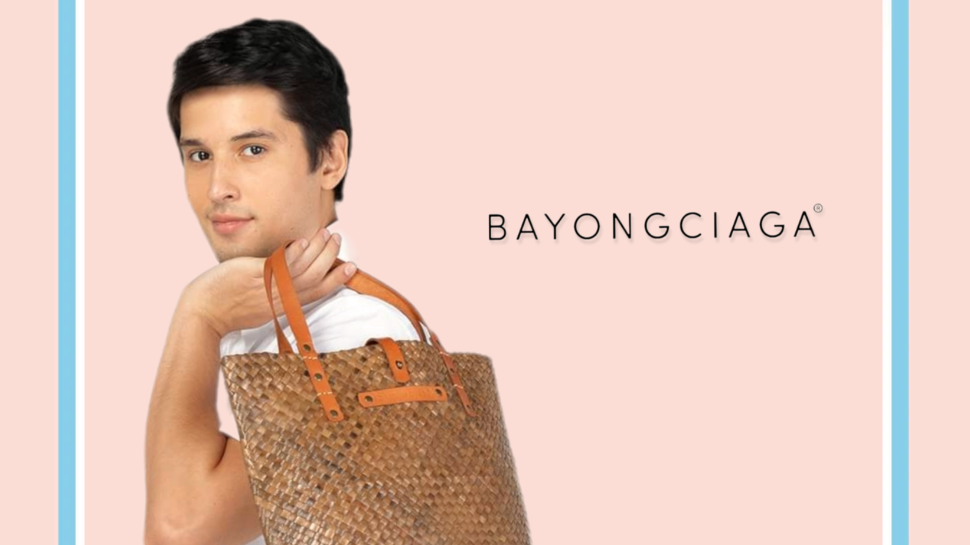
Woven bags humble and rural beginnings. Various historical sources say basket weaving originated from ancient Egypt, probably even long before the time of Moses. Fast forward a few thousand years and we’re seeing even luxury brands use natural materials like straw, raffia fiber, rattan, or wicker for their designer bags.
Earlier this year, we chanced upon a local handwoven bag brand curiously named “Bayongciaga” at the launch of the new Honda H-RV. After the event, the brand handed out their loot bags filled with foodstuff using a reusable “bayong” bag made of plastic straps instead of the usual dried buri or pandan leaves. Being a good husband, I gave the stylish bayong bag to my wife but not before emptying and consuming everything inside.
My wife was so enamored with the bag she completely ignored what was inside it and quickly looked online to check out the brand. Bayongciaga is a portmanteau of bayong, a Tagalog term for woven basket bags, and the Spanish luxury fashion brand Balenciaga.
.png)
ALSO READ
Balenciaga Just Debuted a Massive New Adidas Collab
9 Impossible "Would You Rather" Designer Bag Choices
The story of Bayongciaga
After some digging, we found out that Bayongciaga is the brainchild of entrepreneurs Javier Luis Villarruel and Jov Ravago after coming home from a trip in Paris in 2017.
.png)
“After our trip to Paris, we registered the trademark (with the Intellectual Property Office), which helped us decide to pursue this as a business,” Villaruel says. “We came across traditional bayongs during a local trip down South and ideas just started coming in for us. Our first customer was the mom of Vicky Morales of GMA-7, as Daffy her brother is our good friend. We are so grateful Mrs. Morales saw so much beauty in the bags like we did. That was an "aha!" moment for us. Then we brought bayongs with us to Europe and it was a hit to friends there and even to Europeans who saw the bags with us in Laduré Cafe Paris.”
Filipinos are, of course, good at coming up with funny and yet highly relevant brand names and explaining what the brand is all about becomes so naturally obvious. The success of Bayongciaga caught on and soon, the founders were actively selling their bags online.
.jpg)
“We are on Instagram and Facebook with the brand name Bayongciaga, while our e-commerce partner Next & Co. manages our flagship stores in Shopee (under Bayongciaga Official) and Lazada (under Bayongciaga PH) and you can find the links in our website bayongciaga.com,” Villaruel adds.
“The market for bayong bags back then was so simple compared to how it is now where we have so much competition around, even the level of quality and innovation,” he says. “So the market trend has really changed and the weavers we work with are also trying to keep up to the challenge. It's more fun now I must say. We have done a lot of relevant changes over the years in terms of our strategy for market channels. We also launched during the height of the pandemic our new line, Bayongciaga Home, as a lot of the market stayed at home, thus the need for planters, organizers and other home decors increased.”
Helping local weaving communities
Bayongciaga works with local artisans, including weavers, leather crafters, seamstresses and other artists.
View this post on Instagram>pThe founders say they work with a number of weaving communities in Palawan, Laguna, Manila, Panay, Negros, and Bataan. Even the brand’s canvas dustbags and colored twillies are made by their “mananahi” (seamstresses) from Payatas. Villaruel says they also commission hand-painted bags by local artists.>p >p
View this post on Instagram
“Aside from that, we also regularly do advocacy programs in their locales such as feeding programs, Sunday school sponsorships, and donations, especially at the height of the pandemic, but we prioritize the weavers we work with, donation of slippers and school supplies to indigenous groups, etc.,” he adds.
View this post on Instagram>pAlthough the makers mostly use plastic packing straps or more commonly known as “plehe” made from very strong polypropylene, Bayongciaga also uses natural and native materials such as banig, pandan, sabutan, bamboo, tikog, and others to offer more options to the market. >pEntrepreneur at heart>h2Villarruel has worked in the advertising and events industry for more than two decades. “It has given me a lot of connections for corporate volume orders which helps sustain our business especially that retail is so volatile these days,” he says. “Being in advertising has also given me a lot of peers to help me with branding, marketing and so on. I think that's also why we enjoyed a lot of PR exposure across various TV shows, magazines, and newspapers. A lot of personalities in the industry have also been helping us promote for free as we don’t really have a big budget for promotions.>pBayongciaga works with various weaving and artisan communities>p
.png) Photo by Bayongciaga.
>p>p“This brand is a product of so much love, hard work and passion from so many people,” he adds. “What we do for the brand, we do for a greater purpose, which is for the artisans behind the brand, to help provide livelihood as much as we possibly can.” >pBayongciaga has a showroom in Makati but can accommodate guests and clients by appointment only. It is open Mondays to Saturdays and is located at PIECO Building (In front of La Fuerza) 2242 Chino Roces Ave. Makati City. Visitors are encouraged to call first and make an appointment +639279407032.>p
>p
