
Financial Adviser: 5 Business Lessons Everyone Can Learn from Walter Brown, Founder and Chairman of A Brown Company

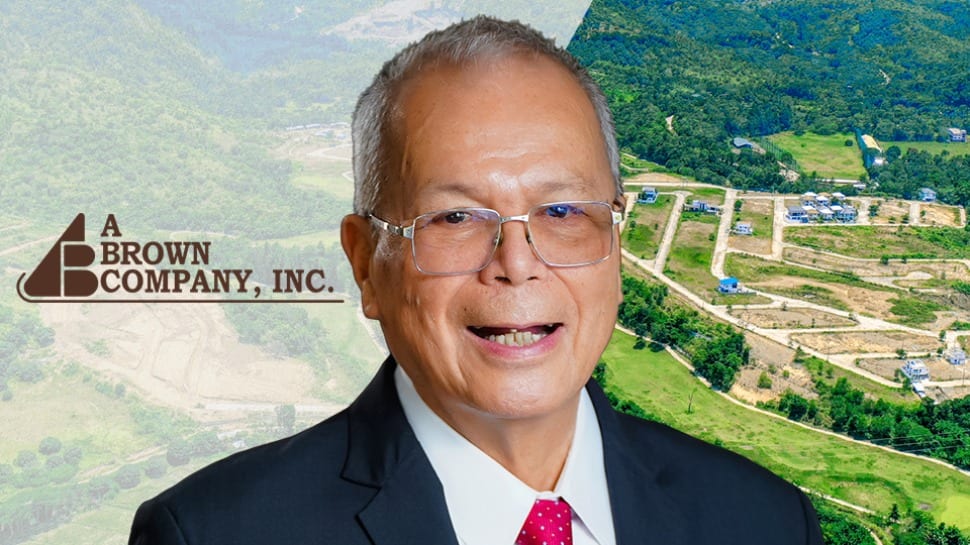
Walter Brown, a visionary entrepreneur and geologist, began his career deeply rooted in the sciences. He was influenced by his biochemist parents, both of whom graduated from the University of Michigan. Brown was initially drawn to writing and poetry during his high school years. However, his father, recognizing his aptitude for mathematics and the sciences, guided him towards a career in science.
Despite his personal interest in writing, Brown pursued a path that led him to take up geology in his third year at the University of the Philippines, which captivated his interest. Encouraged by the head of the geology department, who recognized his potential in a field that many of his peers found challenging, Brown decided to extend his studies by an additional year to earn a degree in geology in 1960. Seeing it as a continuation of the scientific legacy, Brown’s father supported this shift, albeit in a different branch of science.
Brown’s pursuit of geology didn’t stop there. He took advantage of an exchange agreement between UP and Stanford University, where he furthered his studies in economic geology. This period helped Brown not only deepen his understanding of geology but also expand into geochemistry, completing a PhD in the latter in just two years. His time at Stanford was marked by academic excellence, graduating with honors and solidifying his reputation as a serious scholar in the field.
After completing his studies, Brown returned to the Philippines and began his career as a university professor. His academic credentials quickly earned him a position as an assistant professor at UP, where he contributed to the academic community through teaching and research.
But the limited research opportunities and low salary prompted him to explore consulting work, particularly in mining and petroleum. At that time, Brown was one of only two geochemists in the country. It was during this time that Brown’s consulting involvement in the mining and petroleum marked the beginning of his entry into the stock market when he met Alfredo Ramos.
In the mid-1960s, Brown founded A Brown Company, Inc., initially focusing on property development and owning listed companies. In early 2000, under his leadership, A Brown Company grew from a modest enterprise into a significant player in real estate. One of the most notable achievements in his career was the development of Xavier Estates in Cagayan de Oro, which set new standards for residential communities in Northern Mindanao.
As Brown’s ambitions grew, he expanded into the energy sector, recognizing the critical role of renewable energy in the Philippines' future. By investing in palm oil plantations and power generation, he ensured that A Brown Company not only contributed to economic growth but also to environmental preservation.
Brown’s journey from a geologist to a leading entrepreneur is a testament to the power of vision, hard work, and a deep commitment to community development.
How did Brown achieve growth throughout his career, and what were the key factors that contributed to his success? What lessons can entrepreneurs learn from his approach to growth, diversification, and creating lasting value?
Here are the five business lessons every entrepreneur can learn from Walter Brown, founder and chairman of A Brown Company:
ALSO READ
1| Know how to leverage market insights for wealth creation
Market insights offer valuable information about trends, economic indicators, and company performance. By understanding these factors, investors can make more accurate predictions about future market movements and select investments that align with their financial goals.
These insights also help investors identify opportunities early. Whether it’s uncovering undervalued stocks, anticipating market shifts, or recognizing emerging industries, having the right insights can lead to investments that yield significant returns.
Brown used his market insights and strategic thinking to make significant money in the stock market. His analytical mindset and deep understanding of the mining and oil industries allowed him to identify opportunities before the broader market caught on.
His connection with Alfred Ramos, who introduced him to the stock market and collaborated with him on various ventures, was instrumental in his journey. Ramos was the son of Socorro Ramos, founder of National Bookstore. He was the chairman of Atlas Consolidated Mining and Development, the second-largest mining company in the Philippines.
Brown’s ability to think ahead and plan his moves was important. He didn’t just react to market conditions; he anticipated them. This foresight allowed him to capitalize on price movements, demonstrating his knack for outmaneuvering the competition.
Brown was willing to take significant risks. He wasn’t afraid to use his father’s money to start trading. His ability to take calculated risks enabled him to seize opportunities that others might have overlooked. His success wasn’t just about taking risks—it was about taking smart risks.
He relied on fundamental analysis to guide his decisions, carefully assessing the value of companies based on earnings, potential, and resources. His disciplined approach to analyzing price-earnings ratios before making trades ensured that his decisions were grounded in solid financial principles.
Brown’s disciplined focus on the fundamentals of the companies he invested in set him apart from more speculative traders. By concentrating on core financial metrics and the intrinsic value of companies, he ensured that his investments were based on sound principles rather than fleeting trends.
“I came back to the Philippines in in '65,” he says. “At that time, I was working as a consultant for Oriental Petroleum. I signed up as the geologist of record when they made the discovery well for oil. Alfredo Ramos got me involved in the stock market. We started monitoring the dealings of Oriental Petroleum. It was coded, but Fred broke the code, so we knew about the discovery before the market knew it. When the stock price took off, we already had the results, and we knew it wouldn’t last long.
“It was more of trading for me. I traded and made a lot of money there. I used my father’s money for trading. He gave me the shares he had, which were about P100,000 at the time, and that was the start. I built that into a big portfolio.
“I was also trading Benguet over the counter. That time, they were doing a takeover deal. I started buying at P5, and it went all the way up to P100. Back then, I was very involved in trading in the stock market. I followed the market and I started trading on fundamentals. When the price-earnings ratio reached a certain level, I sold. Fred Ramos believed in me eventually, and we tried to take over Lepanto. We didn’t succeed, though.
“We were market movers before, but I also lost a lot of money. When we returned to the market, we decided to buy together and took over Philodrill, which is where we made a lot of money. At that time, I was more focused on trading than on mining geology.
“I built my wealth in the stock market. I understood mining, which helped me know which companies to buy. The stock market then was mostly mining and oil companies. When buying a company, I always assessed its value based on fundamentals, looking at earnings, potential, and resources. I was giving lectures to people, telling them if you made less than P100 million in the market, you weren’t doing it right.
“Back then, my wife was Invited to be become the treasurer of Vulcan Industrial. It was owned by an American G.I. My parents were working in the chemistry department before and this American would go and sell shares to individuals. My parents bought shares as well. Then what happened was that the company got burned, and eventually, it collapsed. The American was in the hospital for a while. So, my parents asked me to take over.
“When I took over Vulcan, we didn’t own the company; we just took over the management. Later, we also took over part of the ownership, but we didn't become the majority owner. I then invited Fred Ramos to invest with me, and we ended up with 50 percent of the company. Later on, we took it public.
“Afterward, the company became very profitable because of Vulca Seal. I was the one who brought it into Vulcan. I created the product and came up with the name, Vulca Seal. I managed Vulca Seal and developed the product. We were selling high-ticket items worth about a million pesos a year, and then we decided to push it, which created tremendous demand for it. We got it going and developed the market successfully. Vulca Seal was under Vulcan, and it became very famous. I owned around 50 percen of the shares along with Fred Ramos. After some time, I also sold my shares to him, though it took a while. This was around the year 2000 or so.”
2| Know how to identify the right time to launch a business
Launching your product or service when the market is ready significantly increases your chances of success. If you enter too early, the market might not be prepared; if you enter too late, you could face intense competition.
It's also important to ensure you have sufficient financial resources and backing at the time of launch. This includes having enough capital to cover initial costs and sustain the business during its early stages when revenue might be low.
As an entrepreneur, your personal readiness—both mentally and logistically—also plays a critical role in your business's success. Launching when you’re fully prepared enhances your ability to navigate the challenges of a new venture.
Brown demonstrated a keen ability to see opportunities where others might not. His decision to move from trading in mining and oil stocks to real estate development was a strategic pivot that capitalized on market conditions. He recognized the potential in undervalued land, purchased it at a low cost, and developed it into a thriving business venture.
Brown’s ability to wait for the right moment to sell or develop properties, rather than seeking quick profits, underscores his long-term vision and patience—essential traits for any entrepreneur. He understood that developing properties takes time and that the returns would not be immediate.
Brown’s strategic vision, risk-taking, perseverance, and innovation allowed him to transition from a successful stock trader to a prominent real estate developer, building a business that thrived over the long term.
“At that time, I decided I would work only for myself because I realized I was strong enough to do so,” he says. “Before that, I was just like an employee, like an assistant to Alfredo Ramos, or even an assistant to all the other people. But by then, I had accumulated enough money, so I decided to put up my own company.
“I named it A Brown, which stands for my mother’s initial, Adelaida, and my wife’s initial, Annabelle. My wife helped me in the early days—we were in the business together for the first 20 years or so. She handled the finances and was the one talking to the creditors. She has a business background, not accounting or finance, but she was a big help in managing everything.
“My father was just a passive figure; my mother was the one who was really interested in business. My father was a technocrat, but my mother was the entrepreneur. When she was a professor at U.P. and I was still a high school student, she would make sandwiches that I would take to the Coop in the morning.
“In the afternoon, I would gather the unsold sandwiches and make them into tostado. Even though my mother was not directly advising me on where to put my money, I wanted to honor her, which is why I named the company after her.
“When I started A Brown, I initially focused on real estate. The mining companies weren’t making money at the time, so I got approval to invest in real estate. I went to Cagayan de Oro, invited by some people, because we were running educational courses on practical parenting skills.
“One of our students was the president of the Chamber of Commerce of Cagayan de Oro at that time. He invited me to take a look at developing real estate in Cagayan de Oro. I got Phil Realty interested, but one of the directors didn’t like the project. I ended up buying the Cagayan property myself.
“When I saw the property, it was covered by squatters, and I didn’t know how to get rid of them. I negotiated with the Jesuits and managed to buy it at a very cheap price because it was occupied by squatters. We paid a down payment of P20 million, which was quite a bargain. We set up the arrangement on a 70/30 basis, where we would get 70 percent of the proceeds, and the owners would retain 30 percent.
“We started with 50 hectares and developed it. Now, we’ve grown to over 300 hectares in Cagayan de Oro. We’re the major developers there, even bigger than Ayala in that city. This property in Cagayan de Oro now comprises a significant part of A Brown’s business.
“We also control nearly 1,000 hectares in Cagayan de Oro alone. Including our holdings in Tanay, where I inherited 70 hectares from my parents and bought another 100 hectares from my relatives, we now control about 300 hectares that we’re starting to develop. Additionally, I acquired another 150 hectares overall.
“Property and mining are two different business. You have to be perceptive. I think I just have a feel for it. I saw the potential, and I got experience by dealing with my partner, who knew the real estate business. I learned from it and applied it to my work.
“One thing I learned was not to always go for the high-priced properties; sometimes, it's better to look for cheaper properties. For example, the properties I bought in Cagayan de Oro were initially P40,000 per hectare, and now they are trading for maybe two or three million per hectare. But it took many years to get it done.
“From my experience in property, I learned that in real estate, you need to have a feel for the market and where the growth is going to be. It's crucial to be prepared for the long haul and not to rely too much on borrowed money, especially when starting out. Development takes a lot of money, and if you're starting, you can't afford to do it on borrowed money because you’ll have to wait for the proper time.
“As for the type of projects we look for at A Brown, we started with land. But now, it's difficult to make money because land prices are very high. We're going into condos, but I don't like them because they take too long to develop, so we're slowing down on that.”
3| Know how to make objective business decisions
Objective decision-making reduces the influence of personal biases, emotions, and external pressures, leading to more rational and fair outcomes. These decisions are grounded in facts and data, rather than being swayed by subjective feelings or preferences.
When decisions are made objectively, they are supported by a clear and thorough analysis of the situation. This approach ensures that all potential solutions are considered and evaluated on their own merits, allowing for a comprehensive assessment of each option.
Moreover, by eliminating emotional influences, businesses can allocate resources more strategically. This ensures that investments are directed toward areas with the highest potential for return and impact.
Brown made objective business decisions by relying on data, analysis, and a scientific approach rather than emotions or speculation. When trading stocks, he consistently used technical analysis and charting to guide his decisions. By meticulously updating his charts and studying price movements, Brown ensured that his decisions were based on factual information and market trends rather than impulsive reactions.
Brown learned the importance of buying at a low price but also recognized the need for a balanced approach by knowing when to sell. His decision to sell stocks, even at a loss, shows his ability to detach emotions from financial decisions and focus on long-term sustainability.
Brown demonstrated his integrity when he felt a sense of guilt about profiting from the ignorance of others. This led him to conclude that setting up a stock brokerage was not in line with his values. Instead, he focused on using his wealth to help others and aligned his business activities with a broader vision of contributing positively to society.
“When I buy shares, I look at the charts,” Brown says. “I do technical analysis and charting. I make my own charts, especially during the 1960s when I was trading. Every day, I would look at the price and update the chart. I learned this by asking people who were already in the business. I would use a ruler to draw the lines, and the paper was quite large. I was like an analyst—I knew the business fundamentals, and I also knew where to buy based on the price.
“During the 1980s and 1990s, I was still using charts, but I wasn’t using a computer yet. Even in the 1990s, I didn’t switch to using a computer for charting; I continued doing it manually. I only monitored the stocks I was trading, which were usually the ones I believed had potential. By 2000, I wasn’t doing it anymore. I had moved on from that method.
“I learned a lot from Fred Ramos, but the main thing was how to buy at a low price. However, his problem was that he didn’t know how to sell. He wouldn’t sell unless he was forced to. I tried to tell him to sell, but he didn't listen. He believed in speculators and always thought that digging deeper would find oil, but I applied scientific principles and knew the chances were low. That’s what I contributed to the combination—I was into buying and selling.
“I consider myself a very objective person and less emotional when dealing with business. I was brought up to do things on a scientific basis, which I got from my father. In business, I'm more about looking at things objectively and not getting emotional.
“If I face a loss, I sell and move on. I would sell, even at a loss, to pay off debts. When it comes to managing risk, I always ask myself if I can afford to lose it. If I can afford to lose it all and the reward seems worth it, I may take the risk. However, at this age, I can’t afford to take those risks anymore.
“I felt guilty sometimes, making money from the ignorance of other people. I traded because it was a way to make money, but my money was meant to help other people make money too. That’s why I didn’t think putting up a stock brokerage was worth it. My vision was always to put up my own company in the future.”
4| Know how to take control of your business toward growth
By actively guiding your business toward growth, you take control of its direction and ensure that every move is aligned with your vision. This deliberate approach means that you’re not just reacting to circumstances as they arise, but rather setting a clear path for your business to follow.
With a well-defined strategy, you can make informed decisions that are consistent with your long-term objectives. Whether it's choosing the right markets to enter, deciding when to expand, or determining how to allocate resources, each decision is made with your growth goals in mind.
In contrast, if you don’t actively guide your business, you leave its future to chance. Without a clear strategy, your business may drift aimlessly, missing out on opportunities or, worse, heading in a direction that could lead to failure. By taking control, you ensure that your business grows in a way that is sustainable and profitable.
Brown took control of his destiny in business by recognizing that he needed to move beyond trading in the stock market and focus on creating something more substantial and lasting. He realized that while trading was profitable, it didn't provide him with the level of control or fulfillment he sought. This insight led him to save his earnings from trading and invest in his own business ventures.
Brown’s long-term perspective allowed him to transition from being a trader to becoming a business owner, where he could direct the course of his enterprise and have a more significant impact. He understood that to achieve his goals, he needed to be in control of the business decisions.
In addition, Brown showed a commitment to empowerment and ethics in his leadership style. He believed in empowering his subordinates by encouraging them to learn the business. Rather than holding them back, he supported their growth.
“When I was earning money from the stock market, I wasn't just thinking about making more money,” he explains. “I was looking at opportunities, regardless of the business. My attitude was to look at opportunities and take them as they came. I didn't care what business it was in.
“I saw people who became very successful in trading and put up their own brokerage firms like. I did think of putting up my own brokerage because it wasn’t worth it. I didn’t want to be a trader forever. I wanted to buy some business and manage it to make it grow.
“Eventually, I wanted to start my own business because I realized that I couldn't do what I wanted without having control over the business. So, I saved money from my earnings in trading and invested in my own business. At the same time, I made enough money where I could afford not to do anything anymore, but I decided to give back to the country. That's why I went back into the mining business.
“In business, I learned that when you have subordinates, you shouldn't try to keep them from knowing the business or keep them under your control. If a subordinate wants to go into business for themselves, I encourage them to do so. If I try to keep them, they won't do a good job for me because they'll be hoping to leave. If they succeed later, I compliment them, and they become a friend. When I fire someone, I give them a golden parachute, even if they haven’t done a good job.”
5| Know how to grow from failures to succeed in the future
Failures offer valuable lessons that can drive both personal and professional growth. By carefully analyzing what went wrong, you gain insights that help you avoid similar mistakes in the future, refining your decision-making process along the way.
Successfully transforming failures into success also boosts your confidence. It reinforces the belief that setbacks are temporary and that you have the resilience to overcome them, empowering you to tackle even greater challenges in the future.
The way you respond to failure significantly shapes your character. By confronting failures directly and using them as stepping stones toward success, you cultivate qualities like determination, humility, and a positive mindset, all of which contribute to long-term growth and achievement.
During the financial crisis, Brown's experience with near-collapse taught him the importance of financial prudence and the need to take decisive action when necessary. Instead of allowing failure to define his business, he used it as a learning opportunity to avoid similar mistakes in the future.
Brown also learned the value of taking responsibility for his investments and the well-being of those who had trusted him. When his initial public offering (IPO) struggled, and the share prices fell, he absorbed the losses himself rather than letting his friends and investors bear the brunt.
When faced with setbacks in real estate, such as the failure of a contractor, Brown took matters into his own hands. He and his team stepped in to manage the contracting work themselves, demonstrating his adaptability and determination to succeed. These early struggles taught him valuable lessons and allowed him to refine his business strategies and avoid repeating the same mistakes.
“When the business is losing, I will sell when I can afford to,” he says. “When I can't afford to lose my name, I make sure to pay my debts. That’s something I've always established. I pay my debts, and that’s why we almost went to the ground during the financial crisis because we had to sell everything.
“But when it comes to failure, of course, I get depressed for a while, but I know there’s nothing I can do about it. I have a farther reason—I pray about it and offer it up. I take the lessons I learned and apply them to other things. Even now, I give away a lot of money because the more I give, the more comes in.
“When I put up A. Brown, the first time we issued a lot of shares, we got some people to help us raise money, but they fell short. So, I ended up buying the shares. When the IPO came, the price was down, and I bought out the people who had bought the IPO. I ended up absorbing all the losses because I bought out my friends who had bought the shares because I didn’t want them to lose money.
“The first few years after the IPO, we had a lot of struggles. When we started selling real estate in Cagayan de Oro, we had a hard time convincing people that we could do it. We got a contractor to do the work for us, but when the contractor failed, we took over and did the contracting ourselves. The first 20 years were very difficult for us, but we eventually became successful. Now, we know what things we shouldn’t do. We learned our lessons from those 20 years.”
Henry Ong, RFP, is an entrepreneur, financial planning advocate and business advisor. Email Henry for business advice hong@financialadviser.ph or follow him on Twitter @henryong888
