
Financial Adviser: 5 Business Lessons Everyone Can Learn from the ‘Queen of Eyewear’ Vivian Sarabia, CEO of Sarabia Optical

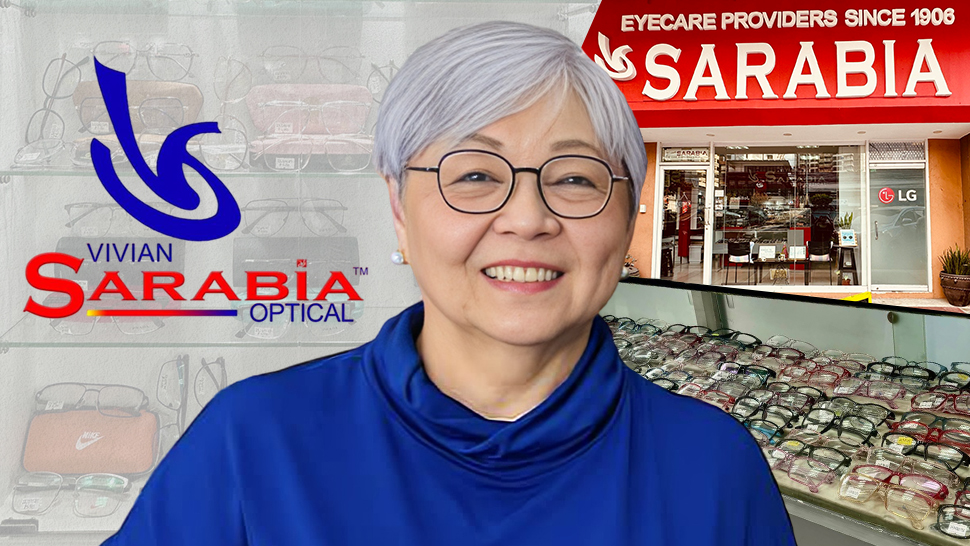
Vivian Sarabia is a prominent figure in the field of optometry in the Philippines. Her influence in the industry extends beyond her expertise as an optometrist; she has become a fashion icon in the realm of eyewear, bringing together medical precision and stylish design. Her success and dedication to the field are deeply rooted in her family’s legacy, particularly the pioneering work of her grandfather, Dr. Federico Sarabia Sr.
Dr. Federico Sarabia Sr. holds the distinction of being the first licensed optometrist in the Philippines. In a time when the field of optometry was still in its infancy in the country, Dr. Sarabia recognized the importance of vision care and dedicated his life to advancing the profession. He founded Sarabia Optical in 1906, a chain of optical clinics that would become a household name in the Philippines. His commitment to excellence and innovation set the standard for optometric practice in the country, and he was instrumental in shaping the future of eye care in the Philippines.
Under his leadership, Sarabia Optical grew to become the leading optical chain in the Philippines, known for its high-quality services and products. Dr. Sarabia’s pioneering spirit and dedication to his craft earned him the respect and admiration of both his peers and the community. His legacy in optometry has left a lasting mark on the industry, paving the way for future generations of optometrists.
Growing up in a household where optometry was not just a profession but a passion, Sarabia was naturally drawn to follow in her grandfather’s footsteps. However, she did not merely continue his legacy; she expanded it in new and innovative ways.
Sarabia brought a fresh perspective to the family business by blending her expertise in optometry with a keen sense of fashion. Recognizing that eyewear is not just a tool for vision correction but also a significant aspect of personal style, she transformed the optical business into a fashion-forward industry. Her approach to eyewear design emphasized both functionality and aesthetics, making glasses a statement accessory.
Over the years, Sarabia has become the go-to optometrist for celebrities, politicians, and other high-profile clients in the Philippines. Her reputation for providing personalized and stylish eyewear has solidified her status as a leader in the industry. She has worked with numerous designers and brands, curating collections that reflect the latest trends while maintaining the highest standards of eye care.
Sarabia’s contributions to optometry and fashion have not only continued her father’s legacy but have also set new benchmarks in the industry. Through her innovative approach, she has helped to elevate the perception of eyewear, transforming it into an essential part of one’s personal identity.
Today, Sarabia Optical remains a symbol of excellence in eye care, a legacy that continues to grow under Sarabia’s leadership. Her story is not just one of personal success but also one of dedication to the craft, innovation in the industry, and a deep commitment to carrying forward the values and vision that her father instilled in her.
How did Sarabia manage the transition from a traditional medical practice to incorporating fashion into the business? How did Sarabia maintain the core values of her family business while expanding and innovating?
Here are the five business lessons every entrepreneur can learn from Dr. Vivian Sarabia, CEO of Sarabia Optical:
ALSO READ
1| Know how to sustain a business across generations
A multigenerational business carries the values, culture, and mission set by its founders, creating a strong identity that can distinguish it from its competitors. With insights and experiences from each generation, the family business is better equipped to anticipate and respond to market shifts, which is important for long-term survival and growth.
This continuity of knowledge not only drives innovation and resilience but also allows the business to adapt while avoiding past mistakes. Unlike short-term-focused businesses, multigenerational businesses often adopt a long-term vision, focusing on sustainable growth and the gradual expansion of their influence and market share.
Federico Sarabia, as the first Filipino optometrist, set a high standard for quality and professionalism. This commitment has been a cornerstone of the family’s business philosophy, ensuring that each generation maintains these rigorous standards.
Sarabia Sr. didn’t just establish a business; he encouraged growth and adaptability. By urging his children to expand Sarabia Optical into new regions, he instilled a forward-thinking mindset that has helped the business evolve over time.
The Sarabia family takes great pride in keeping the business within the family. They believe that ownership comes with a responsibility to uphold the legacy of their name. This sense of duty ensures that every Sarabia-owned optical shop adheres to the high ethical and professional standards established by the founder.
“Sarabia Optical was founded by my grandfather, Federico Sarabia,” Vivian Sarabia says. “He was one of the scholars in 1906 who went to New York. I am not sure what to call them, but they were known as ‘Pensionados.’ He studied optometry in Chicago, Illinois, and after graduating, he returned to the Philippines and opened his first shop in Iloilo, kasi taga-Iloilo kami. He later decided to open a branch in Escolta. Actually, I have pictures pa of the old advertisements from that time, which are in Spanish.
“I believe he was the first Filipino optometrist, which is why even prominent figures like Doña Trinidad, the sister of Jose Rizal, pasyente din nya. My grandfather's business became very well-known. Lahat ng president came to him for their optical needs. He became very rich at that time and prospered. And then after that, he thought of going into the optical business.
“My grandfather was very entrepreneurial because he encouraged his children, including my father, to expand their business. Sasabihin nya punta ka ng Bacolod, punta ka ng Iloilo and then you go to Cebu to open up Sarabia Optical.
“The Sarabia family is now in its third generation, and many of us have pursued careers in optometry or related medical fields. Today, siguro mga 70 kami lahat na optometrist from three generations. Parang lahat everybody knows na pagka-panganak, optometry dapat ang pag-aaralan, so siguro parang pagka-panganak pa lang sa akin sinabi siguro ng father ko ‘yan ikaw dapat maging optometrist, wala kang choice.’
“Our family business, Sarabia Optical, has always been family-owned. We don't franchise because the name ‘Sarabia’ carries a legacy and a responsibility. Each optical shop is owned and operated by a Sarabia. Behind the business, it's always important na pag may reklamo ka, alam mo kung sinong hahanapin mo, and that's how we started. This is why we’ve been able to sustain our business for so long. We uphold high ethical standards, and we’re very particular about professionalism.
“It's often said that the way Sarabia built its name is what has allowed us to endure all these years. We have an unwritten rule in our family: if one of our cousins opens an optical shop that doesn’t align with our standards, we address it immediately. We're a close-knit family, and we were raised with the understanding that when you open an optical shop, professionalism and high standards are a must.”
2| Know how to innovate a traditional business with customer-centric approach
Consumer preferences and behaviors are constantly evolving. By innovating with customer experience at the forefront, businesses can stay relevant and adapt to changes in the market, ensuring they meet the needs and expectations of their target audience.
When a business consistently delivers positive customer experiences, it builds trust and loyalty. Satisfied customers are more likely to return and recommend the business to others, which is vital for long-term success.
By blending fashion with optometry, Sarabia created a new niche where eyewear was not only about vision correction but also about personal style. This innovative mindset allowed her to differentiate the business and attract a broader customer base.
Sarabia understood that in order to succeed, the business needed to be centered around the customer. She personalized the experience by styling customers based on their individual features and preferences. This focus on customer satisfaction ensured that clients felt valued and understood, which in turn fostered loyalty and word-of-mouth referrals.
The ability to adapt is important for any entrepreneur. Sarabia took the skills and knowledge she gained in New York and effectively applied them to the Philippine market. This adaptability allowed her to modernize the family business and keep it relevant in a changing marketplace.
“So I went to New York to take up master’s degree in contact lenses,” she says. “While I was there, I realized that optometry wasn’t really my passion. What I truly loved was advertising—coming up with concepts and creative ideas.
“My father used to say the shortest route to becoming a doctor was to become an optometrist. Walang blood, walang anything, and even when you're old, you can still practice your profession without an assistant. While studying in New York, I also worked in Bloomingdale's.
“At that time, Bloomingdale's was the top department store, and I worked as an assistant doctor in their optical department. Sa New York kasi, meron silang optical setup for glasses and eye examinations. I took the job because I was studying and needed to work.
“And then I ended up staying there for three years because I loved advertising, and the clientele at Bloomingdale's were big time na mga artista. I took care of them. Bloomingdale's focus was always fashion so I enjoyed, you know, like how I could see you now and immediately think about how to style you.
“When I returned here in 1973-74, the optical business was still very medical. At that time, optical shops didn’t advertise; they just displayed frames. Walang marketing. Basta examine lang, so it wasn’t what you call a good business to be in. It was like how dentistry was at the time—until things started changing. So, pagdating ko, sabi ko, ‘Ano bang gagawin ko sa optical?’
“Unconsciously, I started applying the styling skills I had developed in New York. In New York, pag nasa subway ako, I would observe people and mentally style them out of boredom. Isang oras nakatingin ako sa lahat, titignan ko ‘Ay, yan bagay, yan di bagay.’ Tapos, pag may dumadating na frames, tinitignan ko yung mga new styles na bago; ‘Ah eto, sinusukat ko, ah eto bagay eto sa ganito, sa shape nito, eto bagay.’ Tapos alam ko na pag may pumunta, alam ko na kung saan bagay. I would watch every person. I would style you so in my mind, nakikita ko na. Pagbalik ko sa Manila, dinala ko yan dito.
“I began transforming the optical business into more of a retail-focused business. The medical aspect happens in the examination room, but once you step out, that’s where the retail business begins—where the frames are displayed and sold. And it’s the retail side that pays the rent. That’s how I started to change the optical industry here.
“I started small kasi I’m very independent. When I arrived, we had an optical shop in Maranao, which is now Landmark, the first mall in Manila during the mid-70s. We lived in BF Homes, and I felt the need to work, as my mother always said, ‘You need to have your own money. Baka pati pang polbo mo hihingin mo pa sa asawa mo?’
“After that, naglagay din ako ng optical shop sa garahe ng bahay ko sa BF Homes. I figured that most people worked in Makati and wouldn’t have time to get their glasses examined once they got home, so I offered evening appointments. I was very entrepreneurial eh. Later, I opened a shop in Shoemart. The daughter of Henry Sy, si Betty Sy was a good friend of mine. Ang sabi niya, ‘Vivian, mago-open ang SM Cubao, gusto mo bang mag-open?’ I agreed.”
3| Know how to turn market challenges into new business opportunities
When businesses face setbacks, they are often compelled to reassess their strategies, which can lead to innovation. These challenges push companies to think outside the box and explore new approaches that may not have been considered under normal circumstances. This process of turning challenges into opportunities can reveal alternative products or services that better meet market demands.
Additionally, companies that can quickly adapt to setbacks often gain a competitive edge. In dynamic markets, the ability to pivot rapidly is important. While competitors may struggle to adjust, businesses that innovate in response to challenges can capture new market share, enhance customer loyalty, and strengthen their overall market position.
Sarabia recognized that the traditional retail environment was becoming saturated and less profitable due to increased competition and rising costs. Rather than sticking with the status quo, she pivoted her business strategy to focus on corporate clients.
She identified a niche market within the corporate sector where optical services were lacking, particularly in the provision of eye care through HMOs. This innovative shift allowed her to tap into an underserved market, offering a new and valuable service that met the specific needs of corporate employees.
Sarabia understood that for corporate clients, convenience was key. By offering on-site eye examinations and optical services directly within corporate offices, she tailored her services to the specific needs of her clients’ employees. This not only enhanced customer satisfaction but also made her business an essential partner for these companies.
“We started small, beginning with SM, and each time they opened a new mall, sasabihin ni Tatang (Henry Sy Sr.), "O, bukas ka dito.’ At that time, I was fully involved in the retail business. When you open a business in a mall, the first question you ask is, ‘Ilan ba kami dito?’ so kung apat kami, then you do your logistics to get a bigger slice of the market.
“But what happened in the late '90s to 2000s was dumami na yung mga optical shops sa malls, but the size of the market remained the same, so the slice of the ‘cake’ for each shop became smaller, while my rent continued to rise.
“I talked to a good friend and patient of mine, and sabi ko, ‘You know, ang dami kong ideas in mind.’ Ganon ako eh. I said, why don’t I go to corporate business?’ Di ba may annual examination sa mga companies through their HMOs, pero walang optical na HMO, so I decided to penetrate the corporate market. Ako ang naging optical provider ng mga companies. Nag-usap kami ng brother ko. Sabi ko, ‘Ikaw na lang mag-handle ng retail, ako sa corporate. He now has 35 outlets.
“If you're running a big company, I would approach you and offer free eye examinations for all your employees, which you're supposed to provide anyway. This was needed especially with the call centers. Maraming nasisirang mata sa call centers. It just so happened that I knew many of the heads of these call centers, so I offered them free examinations to ensure compliance. But what’s in it for me? I get to set up a one-stop shop inside your building, rent-free, with ready-made patients. I don't have to look for customers.
“It's a risk, of course, but it's better than waiting in the mall for customers to come to you. By bringing the service to them, you avoid the downtime. When I realized I had so many corporate accounts, we started scheduling visits annually.
“We would plan out the entire year, so every year meron kang ready na market, pagdating ng February yang company na yan ang hawak ko. Pag dating ng March, ito naman hawak ko, so meron kang naka-schedule. It’s rent-free and stress-free. Everything was already set up and ready to go. So kumbaga, relax ka kasi alam mo kung saan ka eh. You already know the profile of the employees, so even the selection of frames is tailored to them. This way, wala kang dead stocks.”
4| Know how to create lifelong customers by building strong relationships
When customers feel valued and understood, they tend to spend more over their lifetime with the brand. This increased customer lifetime value (CLV) contributes directly to long-term business growth.
Loyal customers are more likely to continue purchasing from your business, providing a stable revenue stream over time. The cost of retaining an existing customer is significantly lower than acquiring new ones, making loyalty a more efficient path to profitability.
Strong relationships create a sense of attachment and trust, making customers less likely to switch to competitors, even when faced with better prices or offers elsewhere. This connection turns customers into brand advocates who are willing to support and promote your brand out of genuine loyalty, not just satisfaction.
Sarabia’s approach to business was centered on the customer experience. She ensured that customers were not just sold any product, but the right product that met their individual need, making them feel valued and understood. This personalized approach helped in creating a loyal customer base that felt connected to her brand.
Understanding the value of strong relationships, Sarabia focused on developing trust with her clients. She knew that satisfied customers would return and refer others, making word-of-mouth a powerful marketing tool for her business. This focus on relationship building was integral to her long-term success.
“To maintain quality in our service, I'm always there. I go around and train them,” Sarabia says. “I was very passionate about providing a good, comprehensive eye exam. For me, the material side wasn't as important. What mattered most was word of mouth—making sure that pagbigay sayo ng salamin, happy ka. When you go to a lauriat or sit around a round table, you should be able to talk positively about me. Hindi yung pag nakita yung salamin mo sasabihin nila hindi bagay sa yo tapos hindi ka kikibo, or sasabihin sino bang optical shop gumawa ng salamin mo para lang makabenta.
“Kasi for me, in business, if you consider 100 percent of your efforts, 25 percent is marketing. People come to you based on what they know about you, and another 25 percent is ensuring that what they know about you is actually true. Your prices should be competitive because what they sell, I sell too. The difference is, they don’t have me. The remaining percentage of marketing, advertising, and everything else happens after the customer leaves the store.
“Your business doesn't end when they pay you; your responsibility continues while the patient is wearing their glasses. Karamihan kasi pag naka-benta na, ‘okay na, goodbye.’ I focus on developing a relationship built on trust. I have patients who will just call me and say, ‘Vivian, padalhan mo ako,’ because they trust me to choose the right glasses for them, especially when they have an important function to attend.”
“That's very important because tuloy-tuloy yan. I don't like patients na every time they need glasses, paiba-iba, because the record will not be the same. What often happens is that some optometrists hire staff who aren't trained in professional ethics. Most of them are trained only how to sell. For example, if your prescription is -3, they might make it -3.25 just to sell you new glasses. That's exactly what we want to avoid.
“So when you talk about the third generation, like my son, who has inherited these values, I always emphasize that if we want to reach the fifth and sixth generations and aim for 200 years of Sarabia Optical, we must not change the passion and the reasons we're here. In many families, the first generation builds the business, the second generation spends the money, and by the third, the wealth is gone—so the third generation learns from that, di ba?
“That's why, every time I mentor, I tell them, ‘What do you want? To start your own business? What kind of business?’ If they're still unsure, I say, ‘Don’t come to me if you’re still thinking because you need to know your business inside and out. If you’re going to rely on someone else, like running a parlor without knowing how to cut hair, you’ll always be worried. Natatakot ka baka walang pumasok na customers.’”
5| Know how to pass on core values to the next generation
Core values are the principles that define a company's culture and identity. They serve as the glue that holds the business together, ensuring that its mission and purpose remain consistent even as leadership changes over time. By passing these values on to the next generation, the business can maintain a clear direction and purpose, regardless of who is in charge.
A company’s reputation is often built over decades. By maintaining the same core values, the next generation can continue to uphold and enhance this reputation, ensuring the business's long-term success. A strong reputation built on core values can be a significant competitive advantage in the marketplace.
Sarabia believes that contentment is important in maintaining humility and balance. By being content with what one has, individuals are less likely to be driven solely by material gain, allowing them to focus on what truly matters in life and business. This approach helps prevent overextension and encourages sustainable growth, both personally and professionally.
She teaches that life's challenges are inevitable, but they are also opportunities for growth. By embracing challenges and learning from them, individuals build strength and character. This resilience is key to handling the ups and downs of life and business, ensuring that setbacks are seen as temporary and surmountable.
For Sarabia, happiness and fulfillment are more important than material wealth. She prioritizes a balanced life where happiness is derived from meaningful experiences and relationships rather than just financial success. This focus on well-being ensures that her children grow up with a healthy perspective on life, where success is measured by more than just economic achievements.
“I won't retire because it feels like I'm going to die if I do,” she says. “When you retire, you should move on to something you enjoy, di ba? But if you retire at wala kang ginagawa, tatanda ka, so, don't retire.
“I always tell my sons to be happy. Know your values and just be happy. My kids, they are not maluho; they can wear just three pairs of jeans, and they’re content with sneakers and a car that gets them where they need to go. They don’t waste anything. Pag may tirang pagkain, babalutin nila yan, iuuwi nila yan kasi uulamin ko din yun mamayang gabi. It's important to know your values. Nowadays, I see a lot of families where teenagers are more concerned about their appearance than their values. I see them pormahan ng pormahan.
“I always tell my kids na humanap kayo ng babae na marunong sumakay ng bus, yung marunong mamalengke, di ba? Pag nakita mo na maluho yung babae, may problema yun kasi hindi ka naman puedeng mayaman all the time. Eh kung malumpo ka? Or magkasakit ka? Paano kung yung babae hindi marunong magpalaki ng anak mo kasi walang alam sa buhay?
“Yung inner strength mo wag mong iwanan. You need to know your values—something that you won't exchange or compromise. What I've learned is that everything that happens in your life is part of your journey—mistakes, successes, all of it. What you learn from these experiences shapes who you are now. I didn’t become who I am overnight; I became this way because of the challenges I faced. I never give up because I know who I am. It's important to know yourself.
“In a relationship, communication is key; it's very important in both life and business. I always say, kung saan ka magaling, nurture it. Do not believe your own publicity. Sabihin nila na magaling ka. Ikaw ganito, ganito. I just listen, but I know who I am. That's why I can face anyone, whether it's the president or anyone else. I have friends who are very wealthy, but it's no big deal to me because we just have different jobs. We all sleep, we all eat, and we all have our own lives. The difference lies in our levels of contentment—iba yung contentment niya sa contentment ko.
“It's important that your kids share the same sense of contentment as you. If not, stressful yan. When I meet someone and shake their hand, I bless them. I acknowledge the God within them because I believe that every meeting happens for a reason. There are no mistakes, only steps along your journey. When my kids face challenges, I tell them to learn from the experience. Every person you meet has a role in your life, and when that role is fulfilled, that means tapos na yung role nya sa buhay mo.
“Yes, when a chapter in your life ends, it's over, and then you start a new one. Don’t look back. You need to build up your confidence and immune system, and avoid negative people. I don't hold any anger or stress; stress happens when you're surrounded by stressful people. It’s all about how you manage it, just like with your work.”
