
Financial Adviser: 5 Business Lessons Everyone Can Learn from George Royeca, Co-founder and CEO of Angkas

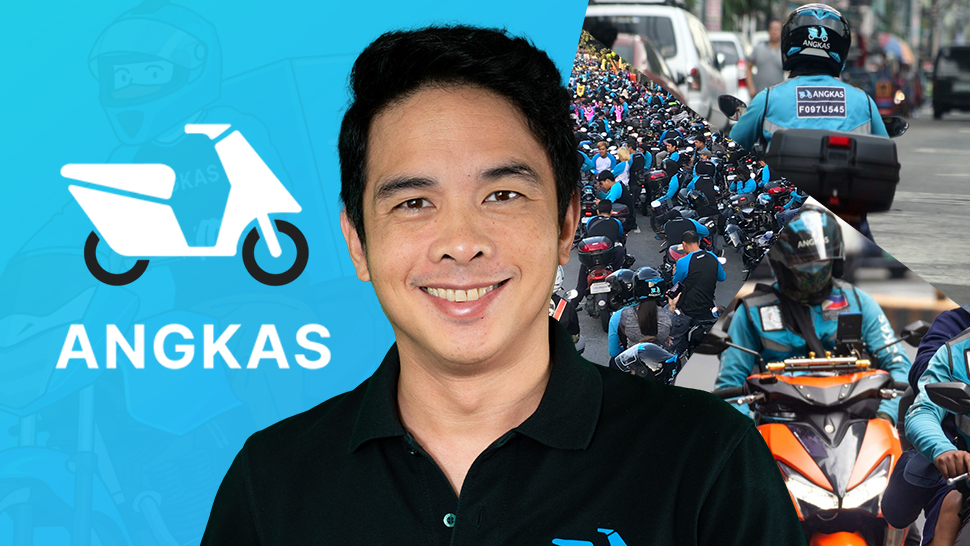
George Royeca's journey to becoming a key figure in the Philippines' transportation industry began with a background far removed from the world of motorcycles and ride-hailing apps.
He initially ventured into the entertainment industry, running a thriving production house. This experience in a creative and demanding field helped shape his skills in leadership and innovation, which would later prove invaluable.
Royeca's life took a significant turn when he met Angeline Tham, an entrepreneur from Singapore. Tham initially started a motorcycle ride-hailing service called Angkas in late 2016. However, the business faced immediate regulatory challenges and was shut down by the government in 2017. Despite these setbacks, Royeca saw potential in Angkas and decided to join Angeline in pushing the business forward.
The early days of Angkas were marked by intense regulatory scrutiny. The company was shut down multiple times, and the office had to be moved to their home. Royeca took on the role of advocating for the company, engaging with government agencies and pushing for regulatory changes that would allow motorcycle taxis to operate legally. His efforts paid off as Angkas gradually gained recognition and support, leading to significant regulatory reforms.
Royeca's advocacy for Angkas went beyond mere survival; he aimed to professionalize the motorcycle taxi industry in the Philippines. This involved setting high standards for safety and service, which were achieved through rigorous training programs for riders. Angkas established a training facility in collaboration with TESDA to ensure that their riders met the highest standards.
Angkas has not only transformed transportation in Metro Manila, Metro Cebu, and Cagayan de Oro, but has also provided significant economic opportunities for its riders. The company now boasts over 50,000 biker partners and has more than four million app downloads. Under his leadership, Angkas has maintained a 99.997 percent safety record, highlighting the company's commitment to safety and excellence.
What leadership qualities did Royeca demonstrate that helped Angkas become the number one motorcycle taxi service in the Philippines? How did Royeca’s vision and persistence shape the long-term strategy for Angkas amidst the regulatory and market challenges?
Here are the five business lessons every entrepreneur can learn from George Royeca, co-founder and CEO of Angkas:
ALSO READ
1| Know how to turn setbacks into opportunities
Setbacks often force businesses to think creatively and innovate. When traditional approaches fail, companies are pushed to explore new ideas and strategies, leading to growth and improvement. Innovation driven by setbacks can give businesses a competitive edge.
Dealing with setbacks hones problem-solving skills. Businesses that consistently turn challenges into opportunities develop a culture of effective problem-solving. This skill is invaluable for long-term success and sustainability.
Transforming setbacks into opportunities demonstrates resilience and adaptability. Businesses that can pivot in the face of adversity show they are flexible and can survive and thrive despite challenges. This adaptability is essential in an ever-changing market landscape.
When Royeca's wife Angeline's bike business with Grab closed down after facing significant regulatory issues, he identified the lack of local partnership and political navigation as the core problem. He suggested to his wife that they should continue the business on their own and better manage these issues, demonstrating his problem-solving skills and strategic thinking.
Despite the continuous shutdowns by the government, including the padlocking of their office, the couple adapted by moving their operations to their living room. This adaptability and refusal to give up, even when faced with severe setbacks, highlight Royeca’s resilience and determination. He also understood the value of combining their strengths to overcome challenges and move forward.
“So basically, my wife launched this business,” Royeca says. “She was in Singapore and used to be a banker at JP Morgan. At that time, there were only five people in private wealth, which shows how early she was in investment banking, or private banking. She is a Singaporean and you know, eventually she decided that banking wasn’t for her, so she became an entrepreneur. And that's where we met in one of the entrepreneurial conferences and we connected.
“After that, she sold her business in Singapore. She saw the allure of adventure outside of Singapore, so she joined the Softbank-affiliated Fund and decided to move to the Philippines. That time, Softbank invested in a small company called Grab, and their main office was in Jakarta, Indonesia. Of course she didn't want to move to Indonesia. She wanted to move to the Philippines.
“So they said na that they didn’t have any presence in the Philippines, but Grab expanded to the Philippines, so they brought her in Grab to launch Grab Bike and Grab Express. She loved working on the bike business with Grab, but they faced a lot of issues and were threatened with shutdown by the government. You have to understand that during that time, puro taxi pa lang nun, konti pa lang yung Grab car nun, so Grab decided to shut down the entire bike business kasi it was too risky. Ang focus nila nun was the car business.
“So I told her that, you know, you're having a lot of political and regulatory issues. You need a Philippine partner, and maybe we can do better. In fact, it was a funny story because at first, when they were running the business, si Angkas na ito, they got shut down again. Na-padlock yung opisona namin dito sa may Chino Roces, so they moved their office into our living room in our house and doon sila nag mi-meeting lagi.
“I would go to the kitchen to get food or water, and naririnig ko yung pinag- uusapan nila. I will call my wife and say like, ‘mali yan or hindi tama yan or palitan mo yan.’ And then after a few months of this, she got fed up. Sabi niya, ‘Ang dami mong kinikwento and sinasabi, ikaw na lang kaya gumawa?’ So that's how we started the business.”
2| Know how to develop market entry strategies and drive early adoption
Before entering a new market, it's essential to understand the competitive landscape, consumer behavior, and regulatory environment. A well-developed market entry strategy includes comprehensive market research, which helps businesses identify opportunities and threats, enabling them to tailor their offerings to meet the specific needs and preferences of the target market.
Entering a new market requires building credibility and trust with potential customers. A strategic approach to market entry involves establishing a strong brand presence and demonstrating reliability. This can be achieved through testimonials, case studies, partnerships with local entities, and consistent customer support.
Royeca’s ability to see the potential in formalizing the habal-habal or informal motorcycle taxi sector allowed him to leverage an already established market. By unifying the disparate associations under one cohesive business model, he turned a fragmented market into a structured and regulated service.
He introduced a mobile app for booking rides, eliminating the need for price negotiation and adding convenience and transparency. This move not only addressed the inefficiencies of the informal sector but also established a professional image for Angkas.
Royeca innovatively developed an insurance scheme for small bike riders, a first in the market. This innovation not only enhanced the service quality but also built trust with customers. This adaptability in improving service standards further differentiated Angkas from the unregulated habal-habal services.
Facing budget constraints, Royeca utilized social media to promote Angkas. He identified millennials as early adopters who valued efficiency over traditional transportation. By focusing on this demographic, he created humorous ads and viral videos, resonating with a wider audience. This clever use of social media allowed them to cut through the noise and gain traction without significant financial resources.
“So when we started 2017, we went to the habal-habal to recruit bikers. habal-habal exist everywhere. We went to the different associations and we united them. We explained to them the business model. May mga, iba-ibang association, dati watak-watak lahat yan eh. We unified them under one voice.
“Yung habal-habal, wala syang app. Parang lumang taxi sya, kailangan mong mag-negotiate ng presyo. Hindi siya regulated. Walang training, so we formalized the informal sector. Before Angkas came in, walang insurance kasi wala namang insurance for small bikes, lahat ng insurance puro big bikes, so we actually created the insurance scheme.
“There was already a subculture of people riding motorcycles, but it was not mainstream. In fact, one of our first adopters were millennials. Kasi yung mga millennials walang pakialam eh. Walang pakialam yan sa brand. Walang pakialam yan sa ‘Ay kotse ka o motor.’ Ang gusto nila efficient.
“And when we were asking them, ‘Guys baka pwede nyo naman kami i-promote sa social media.’ And sabi nila, ‘Hindi pwede eh.’ Apparently because of the negative stigma we found out that they were actually getting dropped off three houses away from their destination dahil yung lola nila papagalitan sila, or yung nanay nila. Even from a public standpoint, there is still negative stigma.
“So, in the beginning, when we were promoting Angkas, we used a lot of social media. Social media was very big for us. Angkas became known for humorous ads and viral videos. We took the comedic crowd, talagang nakakatawa lahat ng mga ads naming, so patok na patok sa masa. Marami kaming mga viral videos eh. At that time, syempre wala naman kaming malaking budget. So we had to cut through the noise. I think it took us mga eight months before we began to have good traction.
“Our marketing efforts made us one of the most recognizable brands today. In fact, there was a nationwide survey late last year about the pain points of Filipinos. The report showed that 48 percent of Filipinos know about Angkas. Nagulat ako kasi this is nationwide. That's like one out of two Filipinos know about the brand. It's really incredible. Until now, I still pinch myself.”
3| Know how to overcome negative stigmas and strengthen your business
Addressing and overcoming negative perceptions can help build trust with your customers, stakeholders, and the general public. Demonstrating transparency and a commitment to improvement promotes credibility, making your business more reliable and trustworthy in the eyes of consumers.
When businesses effectively address negative feedback and perceptions, they demonstrate that they value customer input. This responsiveness can lead to increased customer loyalty, as clients feel heard and appreciated.
Turning negative perceptions around can create opportunities for advocacy. Customers who see significant improvements may become brand advocates, sharing their positive experiences with others and helping to spread a positive image of the business.
When the government repeatedly shut down their operations, Royeca and his team did not give up. They filed cases, lobbied to Congress, the House and the Senate, and engaged with local government units (LGUs). This resilience in the face of adversity demonstrated their determination to keep Angkas operational and highlighted their commitment to the business.
Understanding that safety was a major concern for regulators and the public, Royeca tackled the issue head-on. They developed a comprehensive training system for bikers, consulted with international experts, and created a rigorous curriculum. This strategic approach to addressing safety concerns not only improved their service but also helped change the negative perception of motorcycle taxis.
Royeca realized the importance of creating awareness and advocating for their business. They made it an advocacy, engaging with the public and regulators to explain their professional standards and safety measures. This proactive approach helped build trust and support for Angkas.
By setting high standards for their training program and achieving a 99.997 percent safety record, Angkas demonstrated a commitment to excellence. This focus on safety and quality helped shift the public's perception and established Angkas as a reliable and professional service.
“During the time when we were starting to gain traction, we were shut down by the government, then we filed a case, and we won the injunction. Tapos shinut down nila yung injunction namin, tapos the court said na, ‘Sige balik natin sa RTC yan for decision.’ Pero while dini-decide ng RTC, pinick-up naman ng House at ng Senate, and sinabi nila, ‘Teka lang, mukhang okay ‘to ah? There's something here. It provides livelihoods and jobs.’ Tapos sinuportahan kami ng ibang LGUs, so tuloy ulit. You know, every time we were shut down, we revived and rebuilt. We became stronger than ever.
“At that time, when we had a lot of regulatory issues on safety, my wife was the CEO and I handled regulatory PR and marketing. We decided to really create awareness. For us, it became an advocacy. There were a lot of issues, and we realized early on that it wasn't just good versus evil. But you know, at the end of the day, I realized na yung habal-habal, kung brand siya, that is considered a 20-year-old brand, so from the perspective of regulators, ang concept nila ng motorcycle taxi, yung habal-habal hindi safe, hindi trained, maraming aksidente. Every time I would tell them, ‘We are a motorcycle taxi service, we are professional.’ Hindi sila naniniwala kasi syempre ang kinalakihan nila was completely different.
“We had to change and break that mindset, and that became one of our biggest strengths. Because of all of these accidents, we knew that we had to create a training system for the bikers. We went to Thailand, Vietnam, the U.S., Malaysia and everywhere. We even consulted with Honda. We realized that in Thailand, Vietnam and Indonesia, bikes were so prevalent that there wasn't a negative stigma. But in the Philippines, it's different. There's a huge negative stigma on motorcycles here. Tawag nga dito buwis buhay eh, di ba? Pag sumasakay ka ng motor kalahati ng katawan mo nasa ilalim na ng hukay, right?
“So, we ended up going to the US and engaging a company there to provide us the testing curriculum for the California DMV for motorcycles, which is one of the most progressive motorcycle systems in the world. They also happen to be the safety trainers for the United States Marines for motorcycles. We created the curriculum because we realized na lahat ng curriculum all over the world did not cover how to ride with a passenger. They only teach how to ride the motorcycle.
“We developed this course and require applicants to attend it. We would fail 70 percent of applicants. To date, we have probably trained more than half a million applicants. If we were a school, we would be the largest motorcycle school in the country. We are very strict. We have a practical course, a safety theory course and a seminar.
“Our training program has yielded 99.997 percent safety record. This is after more than 100 million rides. Our accident rate is .003 percent and this has become our cornerstone and is now the industry standard, including our training modules.
“In fact, we've come full circle. Imagine being shut down by the government three times to now creating the curriculum for TESDA for motorcycle passenger riding. We even certify their trainers, so talagang full circle. Right now, we're working hand in hand with the government.
“We created an industry and one of the highest safety rating in the entire region. Our motorcycle taxi drivers are among the safest globally. The problem and the challenges we faced turned into a silver lining that created that strength. That strength is what kept us going and really saved the company. Yung education, talagang very, very important yun.”
4| Know how to build a strong and resilient business mindset
A resilient mindset equips entrepreneurs to handle the unpredictable nature of the business environment. It helps them remain adaptable and flexible, allowing for quick adjustments to changing market conditions or unexpected challenges.
Maintaining a resilient mindset helps entrepreneurs stay focused on their long-term goals, despite short-term setbacks. This persistence is critical for achieving sustained business success and growth.
A resilient leader can inspire and motivate their team, fostering a culture of perseverance and optimism. This positive environment can lead to increased morale, productivity, and overall job satisfaction among employees.
Instead of competing on price, which can make a business vulnerable, Royeca focused on differentiating Angkas through unique selling points such as safety. This strategic thinking highlights the importance of creating a value proposition that sets the business apart from competitors.
Royeca viewed problems as opportunities for growth and innovation. He emphasized the importance of showing up consistently, regardless of the circumstances. This trait is important for long-term success, as it promotes a culture of perseverance and dedication within the company.
By converting self-pity into self-mastery, Royeca cultivated a mindset of continuous learning and self-improvement. Instead of succumbing to feelings of defeat and helplessness during challenging times, he chose to view these moments as opportunities for growth.
This proactive approach involves recognizing areas of personal weakness, seeking out new knowledge and skills, and implementing these learnings to enhance both personal and professional capabilities.
“I don't believe in competing on price,” Royeca says. “When your value proposition is based on price, you're always vulnerable because there will always be someone who will eventually be cheaper. So, we compete on other things. We are affordable, but we emphasize other unique selling points, such as safety. Nobody can compare to our safety record. If you talk to passengers or conduct research, pag sinabi mong Angkas, alam nila safe yan.
“There will always be threat of competition. Kami nasanay na kami sa threat, at pag natapos yan, may bago na naman. You know, you really have to embrace problems. Problems are a way for you to create opportunities. For example, kung hindi istrikto yung gobyerno, e di wala sana kaming training program, which creates dignity for the biker.
“All of these challenges create new things, and one thing that I realize is that’s it’s all about mindset. Most startups fail not because of competition, money, or external factors, but because founders quit. I wanted to quit so many times, almost every day yata gusto kong mag quit.
“But you have to press on eh. You may think you always have to be inspired, kailangan motivated ka, you love what you do. But for me, it's consistency, kasi sometimes you give 10 percent, sometimes it's 100 percent. Sometimes only five percent. Minsan pagdating ko sa opisina, gusto ko na umuwi, but decisions are made by people who show up.
“You just really need to be consistent. Every time there's a problem, I've converted self-pity into self-mastery. I find something new about myself like, ‘Uy kaya ko pala to?’ or I learn a new skill. It's a way for you to learn. I also tell my employees to take advantage of the fact that they are presented with problems.
“There was this conference we attended and I told them, ‘Guys, take this opportunity as employees to tackle problems, figure out solutions, and gain experience. When somebody else is diving in, nag-aaral ka tapos may nagbabayad sayo. Ang ambag mo lang dito is time and effort. Launching your own business is much harder because when you start your own business, ‘May problema ka na nga, labas pa pera mo.’ You know, this is something that we've really instituted across the board. We love problems because problems make you stronger.
“Alam mo, ang Filipino, very talented yan, but what they lack is experience. Anybody can make an app, madali lang naman gumawa ng app. Yung may button dyan, when you press it, may mangyayari. Ang problema is kung may button dyan at isang milyon yung nag press at same time. Will it still work? The congestion is different eh.
“So it's really about scale, right? And there are only a few in the Philippines that have really experienced this. I'll give you an example with EDSA. Any engineer, smart or not, can build a road. Madali lang naman gumawa ng road, konkreto lang yan eh, pero to build a road that manages capacity that has the right number of exits to cities and is designed efficiently, takes a lot of experience. Ganon din yung sa apps.”
5| Know how to reframe problems for better outcomes
Looking at problems from different angles can uncover opportunities that weren't apparent before. For instance, what seems like a limitation or challenge might present a chance to innovate or tap into a new market. By re-evaluating the situation, you might find new avenues for growth or competitive advantage.
Traditional approaches might address symptoms of a problem rather than its root causes. By adopting a fresh perspective, you can more accurately diagnose the core issues and develop more effective solutions. This can lead to more sustainable improvements and better long-term outcomes.
Royeca acknowledges that problems are an unavoidable part of business and life. Instead of being surprised or overwhelmed by them, he embraces their inevitability. This mindset helps him and his team to stay prepared and resilient, focusing on solutions rather than stressing about each new issue.
Royeca’s approach incorporates a strong focus on human connection and personal touch. By addressing the specific needs of individuals, he ensures that solutions are tailored and impactful. This approach helps build stronger relationships and more effective solutions. He also believes that solving problems at the smallest unit can lead to broader, more effective solutions. By addressing issues at a granular level, you can tackle the root causes and achieve more substantial, scalable improvements.
“Having experienced multiple shutdowns and crises, Royeca values the development of grit and resilience. His company has learned to adapt and persevere through hardships, which has contributed to its growth and success.
Royeca points out the need for systems that support basic needs, such as providing for one’s family. He believes that addressing these fundamental needs can create a foundation for individuals to aspire to higher ambitions. This perspective underscores the importance of creating systems that support both immediate and long-term goals.
“Problems are inevitable,” he says. “They will always happen. Alam mo, we were taught at a very young age to solve the problem so that everything is okay and then dismiss it. The issue is we spend so much time stressing out about new problems instead of focusing on the solution. Kailangan mo rin mag-victory dance, mag-celebrate ka kasi you need that fuel for your next crisis, but expect mo na may problema palagi.
“Ako nga, three times na-shutdown. After the third time, ‘Yay okay na!’ Tapos pandemic naman. Right after the pandemic, okay na lahat. Then we faced a full year of competition naman. It never ends. There will always be problems, so expect mo na yan and when you expect something to happen, you have to approach it differently. That’s my perspective.
“We did not become the number one ride-hailing company because we had a good app. Ang sama nga ng app namin eh. We did it because on the macro level, we wanted to solve congestion issues. But on the micro level, we looked at the needs of every biker’s family unit. Ano ba yung kailangan nya? Kailangan may human connection palagi. Kailangan may personal touch and solutions to their specific problem.
“Kasi the problem is not solved statistically. When discussing inflation, for example, you might say our inflation is 3.6 percent. So what? That statistic won’t solve your problem. What will solve your problem is understanding the components of inflation. For example, if the majority of inflation is due to rice prices, then addressing the shortage and pricing of rice is the solution. Yan ang kailangan ng tao.
“So, macro to micro means that while everyone is focused on scale and large numbers because it creates the most profit, solving problems at the smallest unit is important. If you solve issues at the smallest unit, you’re very likely to solve the broader problem effectively.
“If you solve a problem, then that equates to product-market fit. People will pay you for it. Take time to prepare and find out what problem you are solving. If you want to go into a business, fine. But what problem are you solving? That's what you should focus on. Either focus on a small set of high-value problems or a large set of problems with high volume naman.
“Imagine our first three years, we were shut down three times. Kaya ako, parang nasanay na ko sa problema. This entire company has developed a certain level of grit and resilience. We had lots of pain and suffering, but we just made do. You know, pros and cons exist in everything. For either good or bad reasons, we solved the problem in front of us, ganon lang, and jumped from one problem to the next. Eventually, this created something substantial.
“Dati kasi we had 10,000 bikers, and then naging 20,000 bikers and it keeps growing. It doesn't shrink, so the responsibility becomes bigger and bigger. You just can't quit. Ngayon, responsibilidad mo na sila.
“One of the things that really struck me and touched my heart was when I talked to these bikers. I asked them. ‘Anong ambisyon nyo sa buhay?’ Alam mo sagot sakin, ‘Maglagay ng pagkain para sa pamilya ko.’ That really broke my heart because that is not an ambition. That is a basic human right.
“In this country, we put so much stock on diskarte. Oo, madiskarte ang Filipino, maabilidad yung Filipino, pero hindi mo kailangan maging maabilidad at madiskarte para alagaan yung pamilya mo. There has to be a system that allows you, if you have one skill like a mechanic, truck driver or masahista, combined with hard work, to put food on the table and take care of your family. This way, you can start thinking about having higher ambitions.
“So if you want to be brilliant, then you can be a little richer. If you want to be super brilliant, you can become a millionaire or billionaire. But the system should account for just the basics. The problem is we live in such impoverished conditions, in abject poverty, that even our ambitions are mababa. That's where you start, that's where you break it.”
Henry Ong, RFP, is an entrepreneur, financial planning advocate and business advisor. Email Henry for business advice hong@financialadviser.ph or follow him on Twitter @henryong888
