
Financial Adviser: 5 Business Lessons Everyone Can Learn from Manny Zamora, Founder and Chairman Emeritus of Nickel Asia Corporation

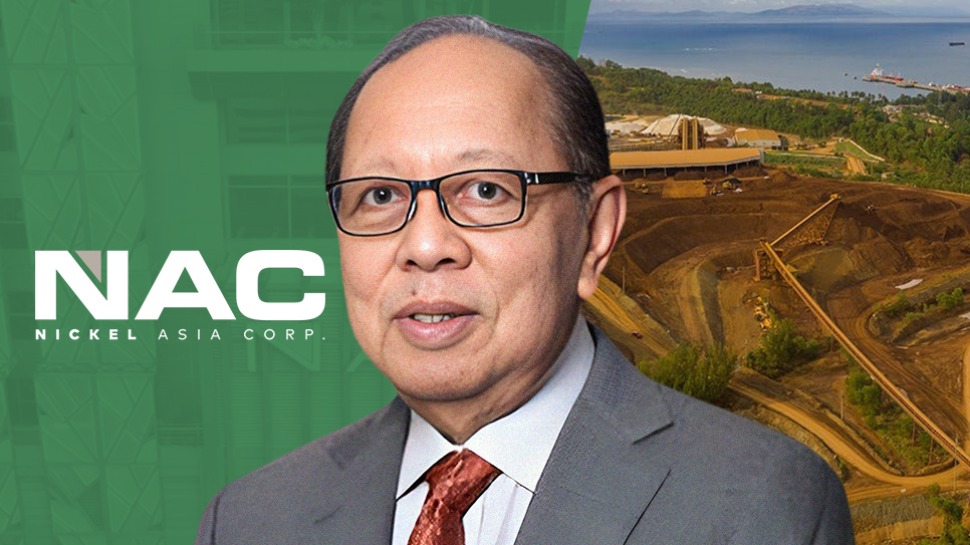
Manuel "Manny" Zamora, a visionary leader and a pioneering force in the Philippine mining industry, is the founder of Nickel Asia Corporation (NAC), the largest nickel mining company in the country. His journey from a law-trained professional to a prominent figure in the mining industry highlights his adaptability, resilience, and strategic acumen.
Born into a family with a strong academic and professional background, Zamora pursued a degree in law and placed third in the bar exam. However, he never intended to practice law. Instead, he built his career in the mining sector, gradually developing his expertise and knowledge.
In 1969, recognizing the rich nickel ore deposits in Palawan, Zamora founded Rio Tuba Nickel Mining Corporation. The company's formation was driven by Zamora's vision to tap into the country's vast nickel reserves and contribute to the global supply of this essential metal.
The success of Rio Tuba mine led to more nickel mine discoveries such as Taganito and Tagana-an Mines in Surigao del Norte; Cagdianao Mine in Dinagat Islands, and Dinapigue mine in Isabela.
In 2008, Nickel Asia Corporation was formed to incorporate all its mining interests and subsequently listed in the Philippine Stock Exchange in 2010. Today, Nickel Asia Corporation is the most profitable mining company in the country and one of the largest nickel firms in the world.
Zamora's contributions to the mining industry extend beyond the establishment of Nickel Asia. He has been instrumental in introducing innovative mining techniques and promoting partnerships that have bolstered the Philippines' position in the global mining landscape.
What lessons can be learned from Zamora's leadership in building strong relationships with employees and stakeholders? How did his dedication to hard work shape the company's success?
Here are the five business lessons everyone can learn from mining tycoon, Manny Zamora, founder and chairman emeritus of Nickel Asia Corporation:
ALSO READ:
1| Know how to adapt and thrive in new environment
Being flexible allows you to pivot when necessary and seize new opportunities as they arise. This mindset is crucial in today's business environment where change is constant.
Flexibility means being open to new ideas, willing to take risks, and able to adjust strategies quickly in response to market shifts. This adaptability is often the difference between success and failure in new ventures.
Success in an unfamiliar industry showcases your capability to learn and adapt quickly. This adaptability builds resilience, which is essential for long-term success. Resilience is often what keeps a business afloat during tough times. Entrepreneurs who are resilient can maintain their vision and continue to push forward, even when faced with significant obstacles.
Zamora's success can be attributed to his ability to learn from his experiences and leverage them to his advantage. Despite starting with no knowledge of business or mining, he managed to build a career in these fields. His flexible mindset allowed him to view each challenge as an opportunity to grow and adapt.
Zamora's foray into mining began serendipitously through his association with Leonides Virata, a notable corporate executive and influential figure in Philippine business. Virata, who held significant positions such as secretary of Commerce and Industry and chairman of the Development Bank of the Philippines, provided important support and mentorship. This relationship allowed Zamora to gain valuable insights into the mining industry.
Although Zamora had no background or experience in business, he adapted and learned the intricacies of the mining industry. This adaptability was crucial to his later success. His career illustrates the importance of embracing opportunities, even when they come in unexpected forms.
“When I was studying, my dream was to stay away from math,” he says. “My grades were lousy in school, so I looked at the school curriculum in UP to find subjects without math. ‘Ano bang walang math dito?’ I saw that law had no math at all, so I decided to take up law. I just wanted to pass the course. When I took the bar exam, I placed third, but I never dreamed of being a practicing lawyer. My parents allowed me to make my own decisions regarding my career. Fortunately, they had no fixed ideas about what my career should be.
“It was 1967 and I was around 30 years old,” Zamora says. “I was not doing anything. I was just a lawyer. I didn't know anything about buying or business. In fact, I was never in business. It all happened that Virata was appointed to be secretary of Commerce and Industry by President Marcos, and he told me, ‘Ikaw na ang bahala dito,’ because he wanted to explore opportunities for logging in Palawan.”
“I was not working in the government. I was working for him like a personal assistant. In fact, he was looking for a job for me, that's why he just left the business side or the mining side to me, even though I had no exposure to business.
“Well, not knowing anything about buying or business in particular, I had to make do with what little I knew. So I call my career up to now purely tsamba. I didn't see that coming. From knowing nothing about business and absolutely nothing about the mining industry, that's where all of this started.”
2| Know how to recognize and capitalize on emerging business opportunities
Identifying and exploiting new opportunities can give businesses a competitive edge. Staying ahead of market trends and responding proactively to changes allows companies to outperform competitors who may be slower to adapt.
New market opportunities provide pathways for businesses to grow and expand. By entering new markets or offering innovative products and services, companies can increase their revenue streams and market share.
Early adopters of new market opportunities often become market leaders, setting industry standards and shaping market trends. This leadership position can enhance brand reputation and influence.
The initial exploration in Palawan was intended for logging. However, upon discovering that the rocks contained nickel, a commodity unknown in the Philippines at that time, Zamora and his team quickly adapted to this new information. They shifted their focus from the failed logging operation to the potential in mining nickel, demonstrating their ability to pivot and embrace new opportunities as they arise.
Zamora's recognition of the trend that nickel was becoming fashionable in South America led him to capitalize on it by inviting foreign investors. His strategic thinking and negotiation skills resulted in a deal that minimized the financial risk for his company while securing a significant stake in the potential success of the venture.
Entering into an exploration venture with no guarantee of success required significant risk appetite and vision. Zamora's willingness to pursue this opportunity, despite the uncertainties, underscores his business approach of taking calculated risks to achieve substantial rewards.
“My career and enterprise were purely by accident and good fortune, particularly with the help of my benefactor, Mr. Virata,” Zamora says. “He sent some geologists to explore a joint venture in logging in Palawan, but the logging operation in the forest turned out to be hazardous with nothing substantial to examine.
“Out of curiosity and their professional expertise, the geologists discovered some interesting rocks which they initially thought contained copper as it was the prevailing commodity at that time. Upon closer examination, it was revealed that the rocks contained not copper, but nickel—a commodity that was completely unknown in the Philippines at the time. Coincidentally, nickel was becoming fashionable in some places in South America.
“This nickel discovery led us to write to all the mining companies in the world. Despite the Philippines not being very attractive to mining investors at that time, our letter generated some interest. We received a positive response from a geologist who had participated in a major find in South America. She flew in immediately, and upon examining the nickel deposit, she became excited and recognized it as a world-class nickel deposit, yet completely unknown in the Philippines.
“So we continued writing to nickel companies, and this time, an American company expressed interest. They sent geologists to the Philippines and proposed a deal where they would finance all the exploration expenses.
“At that time, the law limited foreign participation to 40 percent. So, we negotiated a deal where, if we found a deposit of commercial proportions, we would split it 60-40. This arrangement was unprecedented because they agreed to spend all the money and get 40 percent stake, with no guarantee of success.” Zamora adds
3| Know how to create strong business partnerships
Lasting relationships are built on shared vision and goals. When partners are aligned in their objectives, they can work more cohesively towards achieving common targets, ensuring that both parties benefit from the collaboration.
Long-term partnerships promote trust and reliability. When partners trust each other, they are more likely to collaborate effectively, share information freely, and support each other during challenging times.
Reliable partnerships can offer a competitive advantage. Exclusive agreements, joint ventures, and strategic alliances can provide unique opportunities and access to markets, technologies, or resources that competitors may not have.
Zamora leveraged his existing expertise by initially teaming up with miners and geologists who were already working with them on oil exploration ventures. This collaborative approach led to the discovery of the nickel deposit that laid the foundation for the Nickel Mining Corporation.
Zamora’s ability to respond to emerging market trends allowed him to pivot and attract foreign interest and investment. His ability to form and maintain strategic partnerships highlights his long-term vision and strategic thinking.
By establishing a credible business reputation, Zamora was able to attract more partnerships and investments. His focus on long-term goals and partnerships, rather than short-term gains, underscores his visionary approach and commitment to sustainable business growth.
“When I got together with a group of miners and geologists already working with Virata on oil exploration ventures, they weren't doing much at the time,” he says. “They joined us on this so-called deposit, and that's where the discovery led to the formation of the Nickel Mining Corporation.
“I was the president of the company, but there was nothing in it. The company was trying to exploit an unknown mineral and, back then, the only commodity that was known was copper. Nobody knew anything about nickel.
“In Japan, there was already significant interest in nickel. Subsequently, due to this growing interest in nickel mining, our American partners were bought out by a company called Pacific Metal, also known as Pamco. Up to now, Pamco remains with us in Rio Tuba.
“They started exporting to Japan in 1977. Yan yung first shipment. Initially, the Japanese themselves worked it out. Although this was a relatively small company in the metal business, it turned out that they were an affiliate of Nippon Mining, which at that time was the number one company in Japan.
“After that, many companies got involved. The Japanese trading companies, which were essentially running Japanese businesses back then, sought out investments abroad. They would invest, possibly make major investments, and then get other Japanese companies to invest.
“Once it became known that we were serious about mining, we gained a reputation. Most of the so-called local mining businesses were dominated by stock market people, but we had no connections with any stock market companies.
“We decided that the best way to enter the mining business was through the Japanese, who were long-term businessmen. They were not interested in daily luxuries and the stock market's fluctuations. We committed to a long-term strategy in developing the mines.”
4| Know how to thrive in difficult times by supporting your workforce
Supporting your workforce during financial hardships boosts employee morale and loyalty. When employees feel valued and secure, they are more likely to stay with the company, reducing turnover costs and retaining valuable skills and knowledge.
Businesses that prioritize their employees, even during tough times, build a positive reputation. This reputation can attract top talent, customers, and investors who value ethical and responsible business practices.
During a time when the mining company faced financial burdens due to overwhelming debt, Zamora chose not to close the company despite operating at a loss. He saw the dependence of his workers on their jobs and decided to keep the company open to ensure their continued employment. This focus on supporting his workforce during tough times created a loyal and motivated team, which contributed to the company’s long-term success.
Despite numerous challenges, Zamora recognized the importance of building relationships. His ability to secure investment from Japanese companies demonstrated his strategic relationship-building skills. Through this partnership, he found an innovative way to utilize waste nickel as feedstock for the processing plant. This creative solution not only reduced costs but also turned a potential liability into an asset.
“The main challenge was working with the government,” Zamora says. “There was a time when most of the bill initiatives seemed to me like they were obstacles to developing the mining industry. Up to today, we had to talk (with officials) and deal with numerous problems. Building relationships was part of doing business. You have to build up relationships because it matters a lot.
“In the beginning, the company was at risk of being swamped by debt. Our project at that time with Rio Tuba was heavily dependent on power and we had to look at the price of fuel at that time. Pinaka-malaking gastos was fuel.
“Ang daming problema noon. Looking back at what we did, parang miracle ang nangyari. Initially, the financial burdens threatened to overwhelm our finances in the early stage, but we chose not to close the company. Instead, we decided to keep operating at a loss rather than shut down the business.”
“I could afford to take a hit, but the people, if I close it, wala na silang trabaho. That’s part of it. You look back at the people who depended on you for their livelihood.
“What happened was I got Japanese companies to invest in the venture, which involved processing nickel. This resulted in the first processing plant in the Philippines. Initially, we sold only within the Philippines, but it became the first profitable one in the world. I think it's too modest to say, but you know, that's where the payoff for keeping people working came in. What they could not export as waste became the fuel for the processing plant.
“So they were mining high-grade nickel, exporting high-grade nickel, but they were putting aside the low-grade nickel as waste. When they got the Japanese to invest in the processing plant, the waste became the feedstock. They didn't have to spend money na-mined na yung feedstock. Doon kami na-reward for keeping the company open. When you think back, grabe yung reward nun.”
5| Know how to lead with honesty and inspire hard work
Leaders who prioritize honesty and integrity create a positive workplace culture where employees feel respected and valued, resulting in higher morale and job satisfaction. Promoting hard work encourages employees to perform at their best. When leaders set high standards and lead by example, they motivate employees to strive for excellence and achieve their goals.
Businesses built on honesty, integrity, and hard work are more likely to achieve sustainable success. These values create a strong foundation that can withstand challenges and adapt to changing market conditions.
Zamora recognized that any successful company relies on the strength of its people. He made it a priority to understand what the ordinary worker seeks in a company and aimed to create a workplace that offered stability and encouraged long-term employment. By addressing the needs and satisfaction of his employees, Zamora promoted a positive and supportive work environment.
Zamora emphasized the importance of having honest people in the company. He believed that a business could not succeed and pay dividends without integrity. By prioritizing honesty, he ensured that his company operated ethically and earned the trust of its employees and stakeholders.
Zamora led by example, demonstrating a strong work ethic. His daughter, Patricia, noted that he always worked hard, even during challenging times like the pandemic. This relentless dedication inspired his employees to adopt the same work ethic and commitment to the company.
“You know, I realized that any company you found or establish will rely on the strength of its people,” he says. “Any business is a people business, and you must address their needs and what will keep them working in the company. You must also consider what will make them happy and satisfied with the company's actions.
“Without knowing much about the technical aspects, I concluded that the best way for me to run the company as president was to understand what the ordinary worker seeks in a company. I wanted to create a company that offers stability and encourages long-term employment. I wanted to build a company where employees could grow and have their children depend on it that will have generations of loyal workers.
“In Rio Tuba, we have three generations working there: the grandfather, father, and their children. We practically have no resignations to speak of. We have awarded workers who have been with us for 35 years and 25 years.
“My first priority was to have honest people in the company. You couldn't develop a company like ours into a regular business paying dividends without integrity.
“During our time, Henry Brimo was considered Mr. Mining in the Philippines. He was known for his frugality and integrity in the mining business. When his son, Gerry, eventually took over Philex, he developed the same reputation for those attributes.
“So, when I was looking for someone to lead the company, it was Gerry who I saw as the right person. He would run the company with integrity and a long-term viewpoint.
“My dad would always tell us to spend beyond our means because he believed that if you spend beyond your means, you need to work harder,” Zamora’s daughter, Patricia says. “We always saw him working hard, so he was the best example for us. He was our role model, always going to work, even during the pandemic. He was here every day, even during the lockdown.
“When we saw that, despite all the hindrances, he still insisted on going to work. That’s the example he always set for us. Even if there was money, he always had to work hard and work more.”
Henry Ong, RFP, is an entrepreneur, financial planning advocate and business advisor. Email Henry for business advice hong@financialadviser.ph or follow him on Twitter @henryong888
