
Financial Adviser: 5 Business Lessons Everyone Can Learn From Corazon Dayro Ong, Founder of CDO Foodsphere

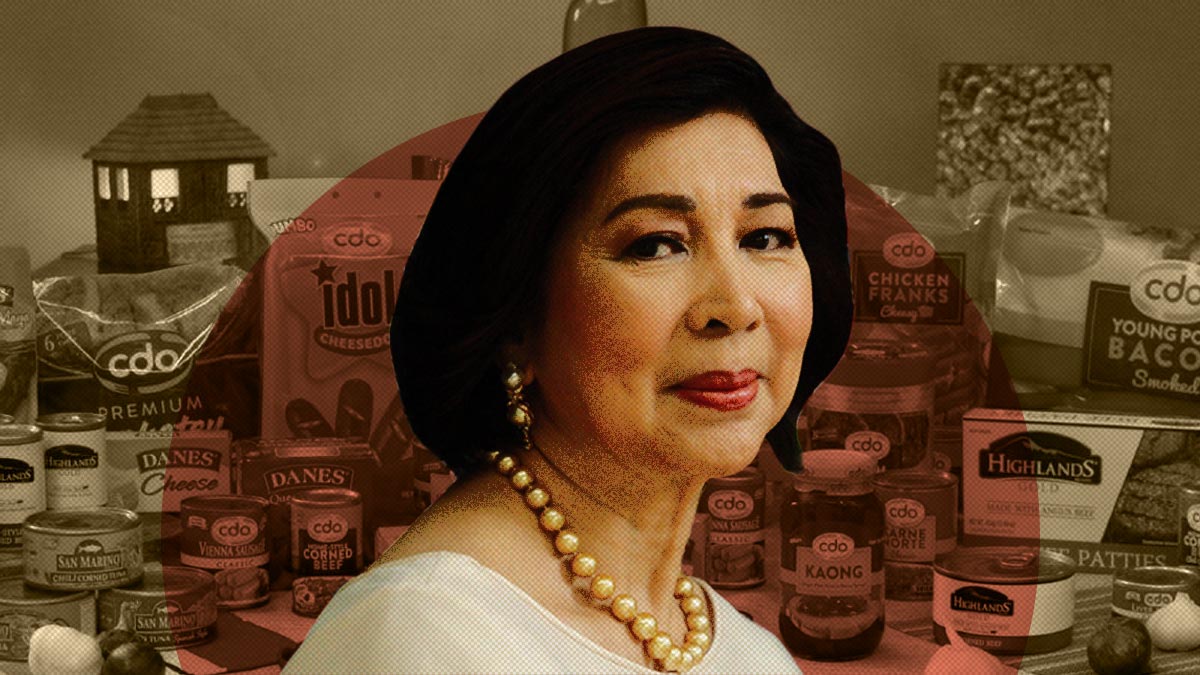
ILLUSTRATION: Igi Talao
Corazon Dayro Ong was not trained as an entrepreneur. A licensed dietitian, she began her professional life working in a company cafeteria and later in a hospital's dietary department. But it wasn’t ambition that led her to business—it was boredom.
After earning her degree in Food and Nutrition from Far Eastern University, Corazon married Jose Ong, a science professor at Ateneo de Manila University. When their first child, Jerome, was born, she chose to leave her career and become a full-time homemaker.
In 1975, with her children already in school, Corazon found herself longing for a renewed sense of purpose. She returned to cooking and began experimenting in her kitchen with unique food combinations. One of her creations—siopao filled with skinless longganisa—quickly gained popularity. Friends, neighbors, and even hospital cafeterias began placing orders, turning what started as a hobby into a small but thriving food venture.
By 1981, they formalized the business and incorporated it as CDO Foodsphere. CDO quickly expanded its product line to include tocino, hotdogs, and ham. Each item reflected Corazon’s commitment to quality and affordability.
In 2015, the company expanded its product portfolio with San Marino corned tuna, a healthy and affordable alternative to traditional canned goods. This was followed by the launch of Highlands Corned Beef, which added to the company’s growing line of premium food items.
Today, CDO Foodsphere is one of the largest food manufacturers in the Philippines, known for its wide range of high-quality and affordable products. From tocino and longganisa to cheese-filled hotdogs and canned goods, CDO has become a staple in Filipino households. With its strong market presence and continued innovation, the company remains a leader in the processed meats industry, serving millions of families both locally and abroad.
All three Ong children now work within the company. Jerome, the eldest, joined in 1989 and helped lead the professionalization of operations. Their daughter, a licensed dermatologist, and their youngest son, a business graduate, also hold key roles, handling R&D, product development, and new category expansion. Even the grandchildren are now actively involved—signaling a multi-generational legacy in motion.
How did Corazon Dayro Ong’s background as a housewife and part-time dietitian influence the way she built and led CDO into a national food empire? How did her values—particularly grit and humility—shape her leadership journey and contribute to CDO’s long-term success?
Here are the five business lessons everyone can learn from Corazon Dayro Ong, founder of CDO Foodsphere, Inc:
ALSO READ
Financial Adviser: 5 Business Lessons Everyone Can Learn from the Founders of Miguelito’s Ice Cream
1| Know how to validate a product idea before building a business around it
Validating a product or business idea before going to market is a crucial step that increases the chances of success. It reduces the risk of failure by confirming whether there is real demand for the product. This process protects entrepreneurs from wasting time, money, and effort on something people do not need or want.
It also allows them to refine the idea based on actual feedback, which results in a stronger and more relevant offering. Through validation, they gain a clearer understanding of your target market—who they are, what they value, and how your product fits into their lives.
For those who seek funding or support, a validated idea provides credibility and reassures investors or partners. It may also generate early traction, as small-scale testing often reveals useful insights about pricing, messaging, and customer interest.
Corazon Dayro Ong validated her product idea not through formal market research or business planning, but through a deeply organic and practical process rooted in her day-to-day life. Before launching what would eventually grow into CDO Foodsphere, she relied on family approval, community feedback, and personal experimentation as her first validation steps.
Her background as a Food and Nutrition graduate and dietitian gave her the technical foundation, but it was her natural curiosity and love for cooking that inspired her to create siopao filled with skinless longganisa. This wasn’t a calculated business move—it began as a personal hobby to keep herself busy after years of full-time motherhood.
She first tested her product at home. That early feedback from her inner circle served as the first layer of validation. She then expanded testing to her immediate community. It was only after gaining consistent positive feedback from neighbors and eventually hospital cafeterias that she recognized the idea's market potential.
This step-by-step validation—moving from personal to public testing—showed her intuitive understanding of how to de-risk a product idea before turning it into a business.
“I was a graduate of Food and Nutrition,” Ong says. “I studied in Far Eastern University. I took up Nutrition and Dietetics. Yan ang naging background ko. I started working in a company cafeteria as a dietitian, and later on, I became a dietitian also in a Dietary Department sa hospital.
“I met my husband in school. He had already graduated from college, but he wanted to take up medicine. So he took some courses in physics, eh ako naman kumuha rin ng physics noon, so that’s where we met in the class.
“When I got married, I was still working in the hospital. So when I had my first baby, I resigned from the hospital. My husband was a professor sa Botany and Sociology sa Ateneo de Manila. When I had Jerome, our firstborn, I decided to quit so I could take care of him. Later on, I also took care of our second child, Charmaine.
“When they were already going to school, I got bored. I started to look for something to keep me busy. I went back to my first love—cooking. I experimented on different products to keep me occupied. Then I decided to make siopao, sa bahay lang. Later on, I experimented with different kinds of fillings, and then I thought of creating another variant and introduced skinless longganisa to make it as a filling. Yan yung siopao that’s filled with skinless longganisa.
“Pina-try ko muna sa family ko. They liked the taste—they approved it. And then I introduced it to our neighbors, nagustuhan naman. Later on, pati sa ibang hospitals and cafeterias. They liked my products. So when all this came in, that’s when my husband decided to help me. He assisted with production and delivery, while I focused on the research and development of new products. I would get up early in the morning to make siopao, then my husband would help me. Siya yung gumagawa yung pagma-mash nun, kagaya nung dough. Manually lang kasi ginagawa noon parang time-consuming and medyo mahirap.”
2| Know how to build a business with grit, discipline and quiet strength—even when everything is against you
Building a business with quiet strength and grit offers a foundation that enables long-term success and stability. Quiet strength, rooted in patience and composure, allows entrepreneurs to stay focused on what truly matters.
Rather than chasing trends or reacting impulsively during crises, they move forward steadily, committed to long-term goals and growing their business step by step. This approach also builds trust and credibility.
When paired with grit—the ability to persevere through hardship—quiet strength becomes even more powerful. Entrepreneurs often face limited resources or unexpected setbacks. Grit keeps them moving forward, while quiet strength ensures they stay aligned with their values and vision.
In times of crisis, quiet strength provides a stabilizing force. Businesses built on this kind of leadership are more likely to recover because they are not driven by panic or ego, but by inner resolve and steady effort.
As the business grew, Ong faced the common challenge of insufficient capital. Yet, she did not rush expansion. She grew the business slowly and steadily. She also actively sought out customers herself and leveraged her credibility as a dietitian to build trust. Her emphasis on product cleanliness and quality highlights allowed her to build credibility across trade channels, including supermarkets and sari-sari stores.
The most defining test of her grit and quiet strength came in 1987, when their factory—and their home above it—burned down. They lost almost everything. And yet, they restarted the business just two days later. There was no dramatic reinvention or public plea—just steady leadership and a deep commitment to keep moving forward, no matter how difficult.
“Yung time na yun, hindi ko naman na-feel na jackpot,” Ong says. “Mahirap nga eh. I felt like it was doing something really worth doing. Maganda yung feeling when you found something that you had accomplished—something inside you that made you feel fulfilled. That’s when we registered na the business in 1975.
“Kasi naging acceptable yung product namin kaya nag-diversify naman kami sa ibang product. Aside from longganisa, meron na kaming tocino nun. Then I introduced them to the supermarket, and then we also experimented with different products—meron ng ham, hotdogs.
At that time, it was all manual. We didn’t have big equipment to make those. Our problem was that we were challenged by our limited resources. So we ended up borrowing from the rural bank. We started with a P60,000-peso loan. And slowly, nag-acquire kami ng equipment, but not that big yet para sa grinder, saka sa slicer, packaging materials, and yung vacuum packaging machine.
“Syempre, like any other business, merong mga challenges. The number one challenge namin noon was capitalization. We did not have enough capital to expand right away. So dahan-dahan lang until we increased our customers, aside from the supermarkets.
“Yung naghahanap ako ng mga customers, I told them that the products were acceptable sa ibat-ibang trade, kaya I was able to convince them. I told them I was a dietitian, so malinis yong pagkain. Quality was the foremost consideration in producing the products. Nakapagbenta kami sa iba-ibang channels, like yung mga sari-sari stores.
“By 1980, we incorporated our business, tapos slowly we were able to expand the business and lumaki na yung production area namin, but unfortunately, nagkaron ng fire. That was in 1987. Yung factory namin, it was burned down, and that was where we were also staying, sa taas and then yung factory nasa ibaba.
“We were not able to save anything, but fortunately, yung personal things namin na-save. Because it was 7 o’clock in the in the morning when the fire happened, our employees were just coming in. They were able to bring out the machineries, yung mga grinder, slicer, and freezer.
“And after just two days, yung walls namin maitim pa and the electrical wires were still hanging like clotheslines, nandon pa. But we were able to start again. My husband was strong enough to convince us that we would be able to surpass all those challenges—and to restart the business. We were able to clear up the place and nag-start kami kaagad.”
3| Know how to create a brand that consumers trust for quality
Consumers naturally gravitate toward brands they trust. When a brand consistently delivers clean, high-quality products, it sends a clear message that it prioritizes the health, safety, and satisfaction of its customers. This trust translates into repeat purchases and long-term loyalty—both of which are far more cost-effective than constantly acquiring new customers.
In saturated markets, quality becomes a key differentiator. A brand known for cleanliness and product integrity stands out from competitors that focus solely on price or packaging. By maintaining high standards, a brand rises above the noise and secures a distinct position in the customer’s mind.
Moreover, satisfied customers who consistently experience quality are more likely to share their positive experiences. When a brand earns a reputation for clean and reliable products, word of mouth spreads organically—becoming one of the most powerful and cost-efficient drivers of brand recognition.
Ong demonstrated a deep commitment to product integrity. Despite facing external pressures such as the Asian Financial Crisis, she refused to compromise on quality or workforce. Instead of laying off employees, she diversified her product line.
Recognizing the market’s love for sweet, tender pork, she positioned tocino and longganisa as flagship products. But the brand’s strength wasn’t just about taste—it was about trust in the process. CDO made sure that their ingredients were fresh and tender, using young pork instead of tougher, older meat. This focus on cleanliness and texture wasn’t just technical—it became a brand promise.
Ong and her team did not develop products in isolation. They engaged directly with consumers, listened to their needs, conducted taste tests, and used word-of-mouth feedback as a barometer for what to produce more of. This practice reflects customer empathy and a willingness to iterate to make sure the brand stayed relevant and responsive.
“Yung brand na CDO, accidental lang yan,” she says. “We had a guy, yung taga-register ng business name. We wanted to register J&C as a business name, which were our initials, Jose and Corazon, but it was already registered by another company, so this guy, he decided to register na lang by himself without even consulting us. Nilagay nya CDO, kasi yan ang initials ko. Sabi ko maganda naman, okay na rin.
“Single proprietor pa lang yon nung time na yun, pero when we incorporated in 1981, we retained CDO as a brand name and used the name Foodsphere as company name, but during that time, many people were confused or had difficulty spelling Foodsphere. They had difficulty spelling and pronouncing it kahit sa phone.
“People would remember us lang by our brand CDO, so we thought, why don't we just call ourselves CDO Foodsphere? Although the official corporate name remains Foodsphere, most people know us, as parang informal corporate name namin yung CDO Foodsphere na.
“We expanded during that time—we bought new and bigger machines, and new equipment. We got a loan from another bank, a dollar-denominated loan. But unfortunately, we experienced the Asian Financial Crisis. Syempre affected ang sales namin, but we did not lay off our employees. Instead, we thought of diversifying into new products, like the kaong, yung preserved, and nata de coco, which also became acceptable.
“Yung longganisa and tocino, yan ang naging flagship namin. In fact, tocino is now one of our bestselling products. Filipinos are probably fond of the sweet taste ng pork. It's like pickled pork, medyo sweet, and they like it because it can be served for breakfast, for their baon. Anytime, they can serve tocino and longganisa—not only for breakfast.
“Because we make sure that we produce good quality products. So from the raw material, which is pork, we make sure that the material comes in fresh and clean. And it's very tender. It's not yung matanda na, yung inahin. Kasi if the pig is a bit old, syempre matigas na yong meat so we make use of young pork para tender ang meat. Sa tocino meron kaming spicy, may less fat. Sa skinless naman, instead of skinless longganisa, meron kaming smoked pork longganisa, beef longganisa, yun.
“We are able to come up with different products kasi we talked to the consumers. We listened to their needs and wants. We experimented on them and then let them taste the product. Saka yong word of mouth ng consumers. It helped us decide which product to produce more in big quantities.”
4| Know how to take calculated risks that drive business growth
Investing in marketing—especially through high-impact channels like television or digital media—can feel risky due to its cost. But when carefully timed and well-executed, it helps establish brand recognition, capture consumer trust, and build long-term visibility.
Transitioning from an informal or family-run setup to a professionalized structure allows the business to grow beyond its founders. Hiring people with diverse skills and expertise and creating systems for accountability help the company operate more efficiently. This kind of risk may involve letting go of control, but it brings structure and long-term sustainability.
Brands that invest in promotion and professionalization are better positioned to compete in larger markets and attract strategic partners. These risks create a solid foundation that can support future expansion—whether it’s launching new products, entering new regions, or tapping into new consumer segments.
Ong and her husband’s decision to invest in television advertising was transformative. They didn’t take the plunge blindly—they knew the power of mass media and believed in the quality of their product.
The risk was measured and purposeful, which helped them push their product, the CDO Cheesedog, to the number one spot in its category. As brand awareness rose, sales volume also went up. This marked the shift for the brand to become a recognized household name.
Equally important was their effort to professionalize the company. Initially a husband-and-wife team with one salesman, Ong recognized the need to scale responsibly. When their son Jerome joined the company in 1989, they began bringing in professionals across marketing, sales, production, and accounting. This shift from a family-run setup to a more formal organization demonstrates Ong’s commitment for building the right foundation by continuous improvement and delegation.
“Siguro CDO became a household name when we started advertising. Yung commercial namin was in 1995, our first television advertisement. Putting up a commercial was a big amount. It was really a calculated risk. Medyo hesitant pa ako at first, but my husband, malakas ang loob. Sabi nya, ‘we try, we try.’
“Fortunately, the TV ads were effective. 1995 was our first television ads, yung CDO Cheesedog. Ang ganda nga yan eh. That cheesedog became number one. The market started to know about CDO, naging maganda naman ang acceptance. It helped us increased our volume and improve our sales. CDO little by little became gradually known in the market.
“Noong araw, kami lang ng husband ko muna. Kami lang noon then we had one salesman, tapos nadagdagan na lang, and then when Jerome joined us in 1989, right after graduating, nag-professionalize na kami. Actually, I wanted him to work in another company after his graduation. But my husband's decision was to let him join us immediately after college.
“We started to get in some guys for marketing, sales, production and accounting. We assigned each person to different areas, so they bring in their expertise. Their different backgrounds helped us expand the business.
“Hinahanap namin yung mga taong kapareho namin ng values— hard work, integrity, at yung may malasakit sa pamilyang Pilipino. We don’t just hire based on skills and experience; mahalaga rin sa amin ang attitude at kung bagay ba sila sa culture namin.
“Many of our employees have grown with us. Meron sa kanila, nagsimula lang sa entry-level roles pero dahil sa sipag at tiyaga, nakarating na sa mas mataas na posisyon. We also involve family members in the business—kahit mga anak at apo—to instill in them the values of perseverance and responsibility habang bata pa sila.”
5| Know how to build a purpose-driven business that endures
When a business consistently acts in the interest of its employees, customers, and communities—not just its shareholders—it earns lasting respect. People are drawn to brands that stand for something greater than profit. This emotional connection fosters long-term loyalty—something money alone cannot secure.
A legacy built on values such as integrity, hard work, and service becomes a powerful source of inspiration, especially for future leaders within family-run businesses. It sends a clear message to the next generation: success is not only about getting ahead, but also about making a meaningful impact and helping others rise with you.
In today’s world, employees seek more than just a paycheck—they look for purpose. A company driven by a mission rooted in service and positive impact naturally attracts individuals who share those values. This alignment cultivates a stronger workplace culture and drives performance from the inside out.
From the very beginning, Ong’s mission was clear: to provide high-quality, nutritious, and affordable food to Filipino households. This clarity of purpose laid the foundation for a company that would endure through decades of change, crisis, and expansion.
Ong emphasized the entrepreneurial values of hard work, perseverance, and integrity—not only as guiding principles for the business but as lessons actively passed on to the next generation. She consistently reminded her children and even grandchildren, now involved in the company, that discipline and ethical conduct are non-negotiable. This has helped preserve the company’s DNA even as it grows.
Financial responsibility also played a major role in CDO’s longevity. Ong maintained a commitment to honoring financial obligations, especially to banks and suppliers. This practice of setting aside budgets to meet dues on time strengthened their credibility and enabled CDO to earn the trust of financial partners—an important component for sustainable growth.
“Yung mission namin—and we will never forget that—is to provide high-quality foods, nutritious food that is also affordable,” Ong says. “And our vision is for our products to be present in every household.
“Our people have always been very dedicated. We saw it during the Asian crisis—instead of laying off some employees, we diversified into new products. So they realized that we don’t just lay them off. They remained supportive and loyal to us, and until now, some of them are still with us.
“Lagi kong pinapaalala sa kanila until now, kailangan yong hard work wag nilang kalimutan. They shouldn’t forget it, even the younger ones, because our two grandchildren are working with us also. Hard work, perseverance, and integrity wag nilang kalilimutan. And, of course, the passion for serving Filipino consumers.
“Even way back lagi kong sinasabi that pag naka-loan, we should set aside budget for paying our loans. We always paid our obligations on time, especially with the creditors of the banks and suppliers.
“In 10 years, I envision CDO continuing to be a trusted brand in Filipino households—hindi lang dito sa Pilipinas, kundi pati na rin abroad. We hope to expand our global footprint while staying true to our roots and maintaining our deep connection with pamilyang Pilipino.
“Sustainability is also part of our future. Unti-unti, we are investing in eco-friendly initiatives—like solar power in our manufacturing plants—para kahit papano, we do our part in caring for the environment.
“Beyond our purpose as a food company, we are also committed to giving back to the community through the Odyssey Foundation. Ang hangarin namin, through programs in health, education, livelihood, and environmental stewardship, is to uplift lives and support those in need.
“More than just a business, gusto rin namin makapag-iwan ng tunay na ambag sa lipunan.
“Most importantly, I see CDO as a company that continues to provide livelihood and hope to thousands of Filipinos. Nagsimula kami bilang maliit na family business, and while we’ve grown so much through the years, our mission remains the same: to bring delicious, high-quality food to every Filipino home.”
