
Financial Adviser: 5 Business Lessons Everyone Can Learn from Luigi Vera, Co-Founder and CEO of Chili’s PH and Super Bowl of China

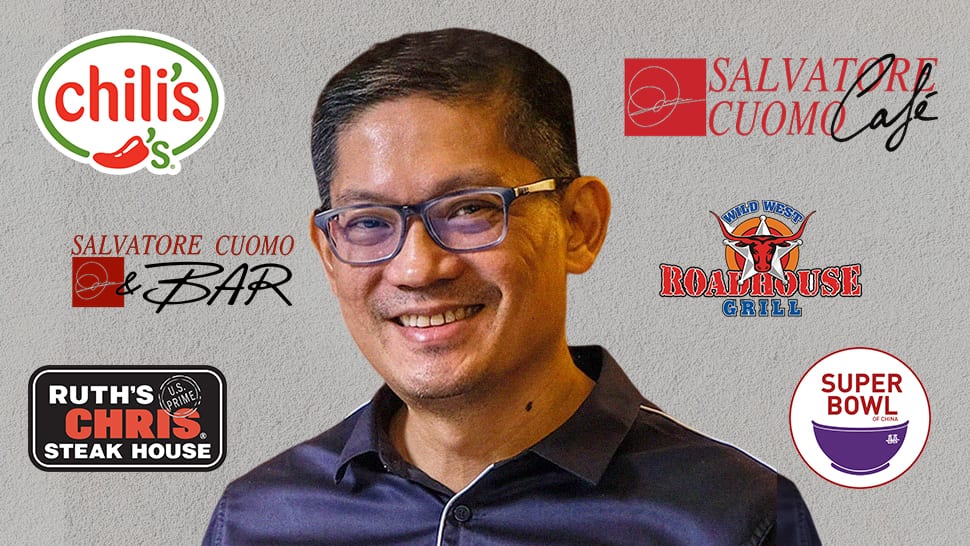
Luigi Vera was instrumental in introducing and expanding the Chili's franchise in the Philippines. He transformed his passion into a successful business venture. Under his leadership, the first Chili’s outlet opened in 1996, and he subsequently spearheaded the brand's expansion across the country.
While studying at Santa Clara University in California, Vera first discovered Chili's Restaurant during regular hangouts with his school mates, Richie Yang and Robert Epes, after classes. Their appreciation for the ambiance and delicious food inspired them to bring Chili's to the Philippines.
When Vera and his partners returned to the Philippines after their studies in the US, they chose not to join their family businesses or take corporate jobs. Instead, they decided to start their own business together. In 1996, they opened the first Chili's restaurant in Greenbelt, Makati, marking the start of their exciting entrepreneurial journey.
Building on the initial success of Chili's, the trio launched their own brand, Superbowl of China, in 2001, offering distinct Chinese cuisine. The restaurant quickly became a hit, leading to an expansion to 19 outlets at its peak.
Under Vera's leadership, his group, known as Am-Phil, continued to expand and diversify. Today, Chili's boasts 20 outlets across the Philippines and remains the flagship of their operations. The lessons learned from operating Superbowl of China have been instrumental in refining their approach to other ventures, including the expansion into Japanese and Italian cuisines with brands like Nanbantei and Salvatore Cuomo Cafe.
Vera not only focuses on business growth but also plans for his eventual retirement. His leadership style, characterized by personal touches and a sense of humor appreciated by his staff, reflects his educational background and early career. He values personal integrity and professional rigor in his approach to business.
As Vera and his partners continue to influence and define the culinary scene in the Philippines, their journey from a beloved American restaurant to a portfolio of diverse dining brands tells a story of passion, resilience, and continuous innovation.
How did Vera's leadership style contribute to the success and expansion of his business ventures, particularly Chili’s and other brands like Superbowl of China? How did he balance innovation with tradition in his approach to expanding his portfolio of dining brands, and what can entrepreneurs learn from his experience?
Here are the five business lessons every entrepreneur can learn from Luigi Vera, Co-founder and CEO of Am-Phil Group, the operator of Chili’s Philippines:
ALSO READ
1| Know how to grow a business from the ground up
The path of entrepreneurship is rarely smooth or predictable, as facing setbacks is a common part of the journey. Building a business involves overcoming challenges and solving problems, which enhance an entrepreneur's resilience. This ability to bounce back is developed through experiencing difficulties and learning to persevere despite them.
After obtaining the franchise for Chili's, Vera and his partners faced significant operational challenges such as hiring staff, managing accounting, and handling supply chain issues, all without prior training.
The trio started without an office, slowly building their administrative and support structures like HR and IT departments over time. This gradual build-up required patience and the ability to work under less-than-ideal conditions, reflecting resilience in developing their business infrastructure step-by-step.
Despite discouragement about their chosen location at Greenbelt 1, they pushed ahead. Their success at this location, which had been unfavorable for previous businesses, underscores their determination against prevailing market skepticism.
During the Asian financial crisis, the partners not only expanded their initial business amidst stiff competition but also diversified by starting a new venture, Super Bowl of China, when their existing restaurants were underperforming. This move to innovate and diversify during economic downturns further demonstrates adaptability.
“Richie Yang was my roommate in college,” Vera says. “We went to the same school, Santa Clara University near San Jose, California. Tapos nung time na yun, yung isang girl na barkada namin, girlfriend siya ni Robert Epes na naging partner namin. Si Robert Epes is an American, but he was born and raised in the Philippines, so parang Pinoy na din, kaya namin sya nakilala dahil matanda sya samin eh.
“So tatlo kami, we became good friends. Noong nag graduate kami, si Richie umuwi, ako nag-work sa States ng sandali. Si Robert nasa Guam. Hiwa-hiwalay kami, pero nung 1994, nag-usap kaming tatlo. Gusto namin mag-business, so sabi namin anong magandang business pumasok? Yung kami lang small business. Sabi ni Rob gusto nyo franchise? Di ba that’s the easiest? Sabi nya, one of his ideas was Chili's and another one was a change oil service, which was popular in the States.
“Sa dalawang ideas nya, yung Chili’s lang sumagot. He actually was the one who wrote to Chili's. During college, we used to go to this Chili's in Cupertino, where the headquarters of Apple is located today. It's the same place. So sinulatan nya dun, tapos na route somehow to the Asian master franchise, tapos nakausap namin and na-impress naman sila, kaya binigay sa ‘min yun franchise. We signed our first franchise agreement in 1995.
“So we opened our first branch in December 3, 1996, at Greenbelt 1 and then we opened our second branch in 1998 in Greenhills and then the third one in Tomas Morato.
“When we opened Chili's, they were very helpful. Kompleto yung materials nya. Maganda yung training system nya. Ite-train ka nya and yung staff mo, lahat ng cooks mo. Lahat ng bartender mo, kasi sa franchise, de-kahon lahat. Binigyan kami ng architect for design. Pinadala pa sa America para comment so walang problema.
“Alam mo san mahirap? Lahat nung outside the restaurant. Hindi kami tinuruan paano mag-hire ng tao. Hindi kami tinuruan paano maggawa ng mga accounting and all that. Purchasing, supply chain, lahat yun we learned on the job, so ang hirap nung umpisa.
“Wala pa kaming office. Dati naalala ko nag-hire kami ng managers. Uso pa yung mga ads di ba sa Bulletin? Kami nagbabasa, tapos tinitignan namin, eto subukan natin eto. Tapos kami nagi-interview ng mga manager. Wala kaming HR nun kasi.
“We did not use any of our family businesses for the restaurant. We built on its own. Pero slowly, after one year, nakakuha na kami ng accountant. Kumuha kami ng purchasing, tapos nakakuha kami ng HR after one year. Tapos after that I.T na, slowly, pa konti-konti.
“At that time, it was very good. Malakas. There was so little competition in Manila, so any new restaurant, pipilahan, so they were lining up for practically six months. Yung location namin sa Greenbelt 1, maraming nag discourage samin nyan. Sabi nila malas yang location na ‘yan. We were probably the 4th restaurant who will set up there. We started to grow from there. After the pandemic, nakabukas pa kami ng tatlo, so we now have 20 outlets.
“After that, kaming partners, during that time sabi namin, why don't we put up a Chinese restaurant? Why? Mahilig kami sa Chinese and wala kaming mahanap na Chinese restaurant na yung pang regular eating kasi karamihan ng Chinese restaurant pang lauriat, big tables, big menus. So we came up with Super Bowl of China in 2001.
“We created it on our own. We hired the Chinese chef from Hong Kong, tapos sya yung nag-build ng menu. Siya nagturo sa mga tao. Meron pa kaming maliit na commissary before parang ganyan. Yung first branch namin, we opened in SM Megamall.
“And for a while, kasi nag-financial crisis nung time na yun diba? So medyo hindi maganda yung performance ng Chili’s namin na tatlo, so yung Super Bowl ang nag-grow. Yung Super Bowl na yun siguro mga, we grew to around 19 branches.”
2| Know how to choose the right franchise for brand expansion
A successful franchise should meet existing market demands. Identifying the right franchise involves researching and understanding what products or services are in demand in a specific area, ensuring the business attracts and retains customers.
“A well-recognized brand can provide immediate customer trust and loyalty, which are critical for new business success. A franchise with a strong, positive reputation also means less effort and expense in building customer trust from scratch.
Vera emphasizes the importance of choosing franchises that have a good name and are well-known, as seen with the example of Chili's. The brand's existing reputation helped facilitate easier market entry and less marketing efforts.
The businessman says he looks for franchises where the franchisor is supportive. This includes helping with sourcing products, training on kitchen systems and operations, and providing alternatives to manage costs effectively. The level of support received can significantly affect the operation and success of the franchise.
He also values franchises that provide effective operational systems and training. This ensures consistency in product quality, which is critical for customer retention and the overall success of the franchise.
“I think if it's a good franchise and it has a good name,” he says about choosing which restaurant to franchise. “Big plus yan. People will know and people will want to try. People will come. Bigyan kita ng example. When Chili's opened, we did not have a difficult time marketing. Parang franchise from the States, maraming may alam. Pumunta na sila automatic.
“If it's a brand new name na hindi kilala, like ginawa namin for Salvatore, kasi hindi naman sila malakas yung name nila dito, kailangan kang mag-promote ng mas malaki. Parang more effort.
“Yun ang difference; mas meron kang leeway to do other things, so if you're a matured restaurateur and you have your own ideas, mas maganda sarili. Pero kung willing ka naman you know follow the system, and your more after making sure na everything is good, sa franchise ka.
“Yun ang malaking difference nun eh. That's what you pay for. I'm lucky na we have Chili’s and Ruth’s Chris. They are good brands to work with. Good money. Parang kumita kami and we were able to sell it, and they’re very supportive.
“Pag nakahanap ka ng franchisor na hindi supportive, tapos daming demands, hindi naman maayos. Walang kwenta. A good franchisor, normally, tutulungan kang mag source ng products mo. Tuturuan ka kung paano ang sistema sa kitchen, tuturuan ka paano i-design yung kitchen mo. Meron kang training material. Hindi lahat ng franchisor ganon. Merong mga ganyan. They are more after na magbukas lang ng store. Maraming ganyan.
“When we look for new food franchises, hindi na ako nagtatanong so much, kasi I don’t need their help. Ang basis namin is, masarap ba? We have to eat di ba? Is it interesting? Tingin mo ba pupuntahan ng mga tao? Pag nagustuhan namin and then we start talking to the person. Tapos tsaka lang lumalabas yung mga systems and you know, operations, secondary na lang yun.
“At this point kasi, alam namin kaya namin na gawin with or without the franchisor itself. As long as I have the name, the recipe, they teach me how to do the food, everything else we can execute. Kaya na namin yun. May experience na kami.
“To get a good franchise, we normally look for the taste. Kailangan masarap. That's why you cannot open a franchise without trying it. Kung hindi mo gusto hindi ka kakain eh.
“If you like the concept, you think it will work, you have to talk to your franchisor? Kailangan mag-agree kayo na paano mo na-create yan? Kung anong ingredients ang kailangan mo. Imported ba yan o hindi. Maso-source mo ba yan sa Pilipinas o hindi?
“Kasi kailangan ipu-prove mo din sa kanila, o san natin ipo-position? Tignan mo yung price points mo. Ito yung competitor mo. Ano yung magiging cost mo dyan. So kung supportive franchisor ka , sasabihin nya ‘I’ll do something para I can lower this cost so we sell at this much.’ So yung mga supportive ganon sila, they talk to you, they give you some alternatives? Para ito yung price points na nakikita namin.
“We started with the food, nagustuhan mo yung food. When Super Bowl opened, it was well-received. Pinipilahan din yan nung umpisa so we got the right food, we got the right price points. Kasi hindi sya mahal eh, mura lang sya eh. Ang problema namin noon, we weren't getting the right consistency.
“Yun ang magaling ang Chili’s. Consistency, and in-apply namin yung systems na yun para mag-create ng consistency sa loob ng Super Bowl. Yun yung lessons na na apply ko. Whether it’s how you prep everything, how you cook together, whether it's commissary or not meron kang standard sauces. May standard marinades. May standards and that's typical in any restaurant. Tapos kung sinong gagawa, kung ikaw personally gagawa o papagawa mo sa iba as long as it gets to the restaurant’s standard. Tapos ang labanan na lang dun kung pano mo ipu-put together. Sa cooking na lang yan? It’s more of training lang nung nagluluto. Dapat regular na tao kaya na nyang lutuin.”
3| Know how to select the best location to attract ideal customers
Selecting a location with high foot traffic that aligns with your target demographic is crucial, as it directly contributes to higher customer turnout and potentially boosts sales volumes.
Being situated close to where your target customers live, work, or shop enhances market penetration and increases the likelihood that they will opt for your services or products over others.
Additionally, a strategic location can provide a significant competitive advantage. If your business is more accessible and conveniently located for the target market compared to competitors, it can distinctly set you apart and attract more customers.
Vera chooses restaurant locations by carefully examining foot traffic and the existing tenant mix in the area. Specifically, he evaluates whether the people frequenting a particular center or location align with his target market.
When it comes to managing a losing store in a less favorable location, Vera uses few strategies. Initially, he attempts to increase sales through promotions or reduce costs to improve profitability. However, he acknowledges that if a location inherently lacks potential—due to poor positioning or other factors—it is challenging to turn the situation around successfully.
In such cases, he considers relocating or closing the underperforming outlet. This pragmatic approach is reflective of the inherent risks associated with the restaurant business, where not every location can guarantee success despite efforts to enhance its performance.
“Picky naman kami kung paano kami mag-choose ng locations,” Vera says. “Meron kaming mga locations na so-so lang but still profitable, and merong stores naman na malalakas. To find a location, tinitingnan ko yung traffic. Tinitingnan ko kung sino yung nandun na? Mga mall operators, they have certain zoning. They put you in a place na magkakapareho kayo, so if you like the people who are coming into the center or the location, okay sa amin, so wala naman kaming fixed rule. Wala kaming survey. Wala kaming third party study.
“It's just foot traffic you look at. If it's new, it's risky. Kunwari may mga new malls. Papasok kami titingnan mo how it's set up, ano yung itsura nya, and then you just roll the dice. MOA (Mall of Asia) was like that. Brand new. Sabi nila, ‘Ano, kukunin mo ba o hindi?’
“Kinuha ko, sabi ko bahala na, and that became our number one store now. You never know. Ang problema kasi, if you don’t go in, tapos marami nang ibang kumuha, pag nakita mo malakas na, you want to go in. Ayaw, wala na. Hindi ka na makakapasok. Alabang, in the beginning they were giving me space, hindi ko kinuha. It took me 10 years before I can open in Alabang kasi may expansion, pero kung wala, hindi ako makapasok, puno. If mahina talaga yung lugar, lipat-lipat, or close. That's the risk eh. This is the restaurant business.
“If a restaurant is struggling, you can try to do promos. You can cut costs or you can try to increase the sales. Meron kang promo specific to that restaurant, pero, in my experience, pag pangit yung lugar, you'll never make it. They'll even give you a good rent for you to stay, pero marginal lang yung kikitain mo. It's either good or bad talaga.
“For me, I believe na if you talk to any of the chain operators, kahit the bigger ones like McDonald's, there will always be poor locations na wala talaga. Hindi naman nila gustong mangyari pero ganon yung nangyari.
“In the beginning, it's just one store per year, para hindi masyado malaki. Pero ngayon na mas marami na kaming stores we can risk with two or three restaurants a year na. May cash flow ka na. Hindi na malaki iri-risk mo. I mean, malaki na ri-risk mo pero hindi na risky to the company.
“Pag maliit yung company, isang mali, bagsak ka eh. Oo, damay lahat pero ngayon pwede nang mas malaking risk. Every restaurant is a risk.”
4| Know how to innovate and reinvent to stay competitive
Markets evolve with shifts in consumer preferences and trends. Regular innovation ensures that a business stays relevant and appealing to its customer base.
Businesses that consistently innovate are more likely to achieve sustained long-term growth. This approach keeps the business dynamic, responsive to market changes, and prevents stagnation, thus supporting continuous development and profitability.
Vera emphasizes the importance of maintaining high standards in service and food quality beyond the initial years. Recognizing that neglecting these areas often leads to business decline, he prioritizes consistent management and quality control to preserve the customer experience.
Instead of merely cutting costs to sustain profitability, Vera advocates continued investment in key areas that promote growth and sustainability. He cautions against excessive cost-cutting that could undermine quality or operational effectiveness.
Aware of the dynamic nature of the food industry, Vera keeps his brand relevant by embracing innovation and regularly updating his offerings based on current trends and customer feedback. This strategy helps attract a broader customer base and maintain interest in the brand.
Vera acknowledges the risks inherent in the competitive restaurant industry and opts to manage these by balancing cost control with investments in quality and innovation.
“Sa experience ko, if naka two years ka na, parang ikaw na ang may mali para mamatay ka pa,” he says. “You need to do good for two years and you need to sustain, so whatever you did in the two years, alam mo na yun na yung formula mo. The reason why after two years bumabagsak ang restaurant kasi yung hindi na sya inaasikaso, so the service goes down, the food changes. Yan ang reason.
“Pag nag-start ka ng company, it may not be profitable, but the branch should be. Kasi merong mga companies na kaya sila nagiging hindi profitable kasi kunwari meron silang interest na binabayaran. Yung head office nila malaki pero its built for several restaurants parang ganon. Sa akin, if its less than 10 percent profit margin, medyo magdududa ka. If its more than 10 laban ako, I mean, I'll keep it open and I'll work on it. Pag 20 percent, success.
“Ang lagi kong sinasabi sa partners ko, why lower the investment when the store can make it back in a few months if it succeeds. If it doesn't succeed, even if you make all those cuts, it'll fail anyway. Yun ang point ko.
“Sabihin mo mas mababa capex para mabawi? Pag nag-succeed mabilis lang yan. Walang difference. I’m talking about months. Pag hindi nag succeed, e di pareho lang eh. Patay ka rin. Nakatipid ka nga ng 10 percent, 15 percent so parang yun na yung risk mo. Tanggapin mo na lang. Kasi baka mamaya sobrang tipid-tipid ka, lalong mag-fail.
“Konti lang yan eh. Saka meron na kaming minimums ngayon. Hindi mo titipirin lets say yung POS mo. Yung equipment mo hindi mo titipirin kasi baka mamaya sira-sira din di ba? If ever furniture, construction konti lang yan.
“Meron kaming training department. Tapos meron laging updates para merong bagong tinatry. Tapos meron kaming training department na yung centralized nya lahat yan. Inside the restaurants meron din silang trainors inside the restaurant. Yan ang ginawa naming stepping stone pag naging trainor ka. Next mo manager ka na.
“Meron din kaming culinary team kami na nag tse-check ng stores. Meron kaming yung management na taga-quality control. Supply chain meron, yung taga-validate ng suppliers kung sino lang pwede. Ito in-inspect natin, i-reject mo pag hindi pasok sa specs, mga ganyan.
“Competition is more difficult now. I think if you have a good brand na you're going to start may chance ka pa din because in Manila they're very open to new things. Kami naman as a mature bran, matagal na kami more than 20 years na. Ang danger samin nga is malalaos ka na. Hindi ka na papansinin. So you have to reinvent yourself somehow, whether it's renovating the restaurant, changing some food, etc.”
5| Know how to develop mutual respect with stakeholders for lasting business relationships.
Building good relationships promotes an environment of trust and mutual respect, which in turn enhances communication and collaboration.
Stakeholders who maintain positive relationships with a business are more inclined to support the company through both prosperous and challenging times. Furthermore, nurturing these relationships can create a more stable and predictable business environment, encouraging long-term commitments from investors and partners within a framework of mutual respect.
Vera emphasizes the importance of treating people well, including employees, partners, and suppliers. By ensuring that stakeholders are treated with respect and fairness, they are more likely to reciprocate with loyalty and high-quality work.
He also believes in a personal touch, involving himself directly in maintaining the quality of relationships. He stresses the importance of setting a good example, demonstrating that leaders should embody the values they wish to see in their organization.
The approach to dealing with disagreements with partners is transparent and straightforward. Vera acknowledges that disagreements are natural but emphasizes the importance of resolving these conflicts in a way that doesn’t lead to lasting issues, stating that in the end, someone must give in to move forward. This strategy prevents stalemates and fosters a spirit of give-and-take.
Vera also highlights the importance of a no-blame culture in maintaining healthy relationships. By accepting shared responsibility for decisions, the relationship allows for mutual growth and understanding, even when mistakes are made. This approach helps in building trust and resilience in business partnerships.
“With people, I learned that if I treat them well, they work well for me,” Vera says. “If you don't treat them well, they'll just give you yung hanggang dun lang. Ang gusto natin is to wow the guest. Kailangan exceed ka din sa kanila. Wag mo i-expect na bibigay nila exceed kung hindi mo kaya bigay exceed sa kanila.
“Some restaurants, they don't provide employees meal. Sa amin we provide employees meal. Kailangan maganda din yung employees meal na ibibigay mo. Hindi mahal pero maganda. Bagong luto, yung maayos yung luto.
“Also, sa partners, kailangan ma-alaga ka sa mga suppliers, not because you pay for their work means na you can just treat them like that. You have to treat them well so they can do better. It's about relationships.
“Good relationships, like your relationship with the bank, relationship with the landlord. Ang daming relationships that you always have to take care of because your business can have a better chance to succeed if you have better relationships, kasi pag ikaw nagka-problema sila yung tutulong sa ‘yo eh.
“And to tie it all together, personal touch it has to be me. I have to set a good example. I have to be the same person, so kung treat them well, I have to treat them well personally.
“Sa partners ko, dalawa lang ang secret namin dyan. Yung unang-una, we disagree, we fight but in the end somebody wins. Somebody will win the argument. So hindi pwedeng impasse forever, parang somebody will give in.
“I have good partners. They'll say either, ‘Oh sige, I'll follow you or they'll say you follow me.’ Nagbibigayan kami kasi nga friends diba? Pangalawa, which is the more important thing, walang sisihan. That's why we've been partners and friends until now. Walang sisihan. Kasi nag-give in ako sayo, hindi kita pwedeng sisisihin. Pag ako nagkamali, wag mo rin akong sisihin. Pera yan eh so we win some, we lose some.
“If I feel strongly about somethings tapos nakikita nila, strong ako. Pinagbibigyan nila ako, pero merong times naman na feeling ko na, hindi rin ako sobrang strong dito sumusunod ako sa ‘yo. Parang ganon. Bigayan kami lagi. Siguro sa tagal na, nasanay na kami.
“Ideally, I like to retire between 65 to 70 years old. If I can sell the company I want to open a hobby business. Let's say parang maliit na coffee shop or maliit na hotel. Kung may tao o wala. Wala kang pake. Kasi yung pera mo nakuha mo na sa retirement. That’s my idea of retirement.
“Okay lang kahit lugi kaya nga mallit eh. Para meron ka lang ginagawa. Pag sawa ka na close mo. Mag-travel ka. Pinaka important yan sakin.
“Ang true meaning ng retirement is yung hindi kana nag wo-worry about something. That's the meaning for me. Kung wala akong hobby business, kukuha na lang ako hobby job. Kunyari board member ka or mag-volunteer kana lang. Yun lang, para lang meron kang ginagawang worthwhile.
Meron kang ginagawa pero ayoko na yung worry. Ayoko yung iniisip mo pa yung negosyo mo. Iniisip mo yung ganyan. Pano kung nangyari to? Anong gagawin mo dyan? Ayaw ko na yan. Retired ka na eh.”
Henry Ong, RFP, is an entrepreneur, financial planning advocate and business advisor. Email Henry for business advice hong@financialadviser.ph or follow him on Twitter @henryong888
