Financial Adviser: 5 Business Lessons Everyone Can Learn from Ramon Del Rosario, Chairman and CEO of PHINMA

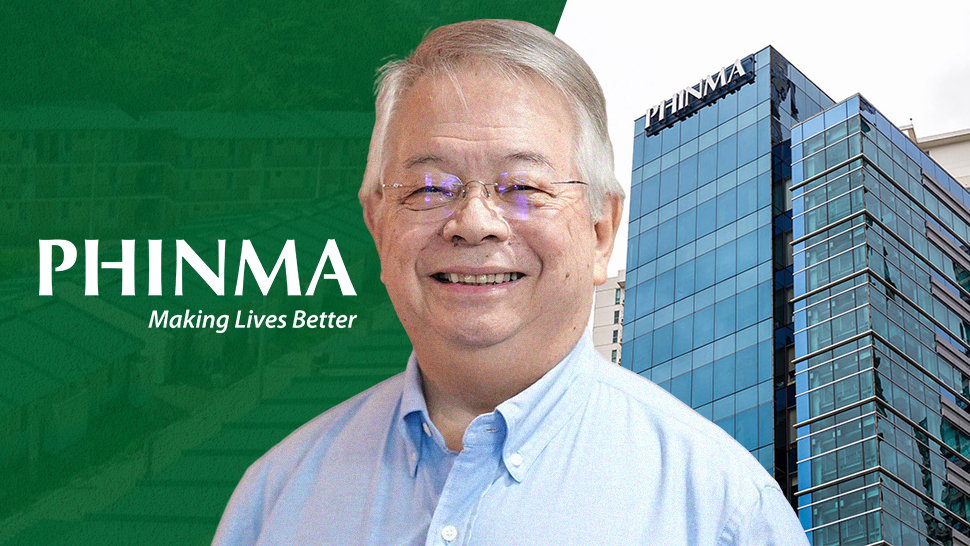
Ramon R. del Rosario Jr. is a figure who has made a significant impact in both the business and political arenas of the Philippines. He played important roles during the administrations of two Philippine presidents—Cory Aquino and Fidel Ramos—and his influence goes beyond traditional business expertise.
Before entering politics, Del Rosario gained experience in the corporate world. He studied accounting at De La Salle University and completed his MBA at the Harvard Business School, where he was one of the youngest to graduate from his class.
Despite being the eldest son of Ramon V. Del Rosario, Sr., the founder of PHINMA, a prominent conglomerate established in the 1960s, Del Rosario chose not to join the family business. Instead, he pursued a career in the corporate world, where he forged his professional path.
Following the completion of his MBA, Del Rosario spent two years in the investment department of Bankers Trust in New York before moving to Bancom in the Philippines. Over his nine-year tenure with Bancom, Del Rosario played a pivotal role in reshaping the country's financial landscape by pioneering the development of the money market and commercial paper market.
In the late 1980s, Del Rosario's finance career reached new heights when he was offered the opportunity by Anscor to spearhead their entry into the financial sector with the establishment of a small finance company.
Over the subsequent 11 years, Del Rosario oversaw the expansion of the company's operations and facilitated the acquisition of a savings bank. With a vision to establish a universal bank, he sought guidance from the Central Bank and effectively raised capital from key investors. This culminated in the formation of Asian Bank, which quickly carved out a niche for itself in the banking industry.
During the Asian financial crisis in the late 1990s, Asian Bank ran into problems and was eventually acquired by Metrobank. Around the same time, Del Rosario's family holding company, PHINMA, encountered financial difficulties and made the decision to divest from their cement business.
It was not until the aftermath of the financial crisis that Del Rosario became involved with PHINMA. With the proceeds from the sale of their cement business, Del Rosario embarked on an ambitious journey to revolutionize the education sector.
Under Del Rosario’s leadership, PHINMA Education has grown rapidly to become the largest network of schools in the private sector, boasting over 150,000 students within just 20 years.
PHINMA's presence in the education sector has expanded significantly, with a diverse portfolio of institutions across the country, namely: PHINMA Araullo University in Nueva Ecija, PHINMA Cagayan de Oro College, PHINMA University of Pangasinan, PHINMA University of Iloilo, Southwestern University PHINMA in Cebu City, PHINMA Saint Jude College in Manila, PHINMA Republican College in Quezon City, PHINMA Rizal College of Laguna, and PHINMA Union College of Laguna.
Today, PHINMA represents Del Rosario's unwavering vision and determination. From his beginnings in the corporate world to his influence in education, Del Rosario's story inspires people to pursue success and make a positive impact on society.
What values and principles did Ramon Del Rosario adhere to throughout his corporate journey, and how did they contribute to his success? How did Del Rosario's commitment to innovation and forward-thinking drive his efforts in transforming PHINMA's focus from cement to education?
Here are the five business lessons every entrepreneur can learn from Ramon R. Del Rosario Jr., Chairman and CEO of PHINMA:
ALSO READ
1| Know how to lead with vision and purpose in business
A clear vision provides guidance and shows the way to achieve strategic goals. It acts like a roadmap, pointing out the necessary strategies to reach those goals.
Similarly, a well-defined purpose ignites inspiration and motivation among employees. It brings everyone together, working towards common objectives. When individuals understand the importance of their contributions and how they contribute to the overall vision, they become more engaged and committed to their work.
Del Rosario’s father, Ramon V Del Rosario Sr., founder of PHINMA, perceived the aftermath of the war as an opportunity for Filipino business leaders to play a role in rebuilding the nation. This recognition underscored his vision to contribute to the country's recovery and development.
Realizing the significance of a robust manufacturing sector, Del Rosario Sr. prioritized efforts to revive and strengthen this industry. By directing attention towards manufacturing enterprises, he aimed to contribute to the overall economic growth and resilience of the Philippines.
PHINMA's entry into manufacturing, particularly through the acquisition of a cement plant during a privatization program, demonstrated Del Rosario Sr.'s strategic vision and proactive approach to business opportunities.
By steering PHINMA to success, Del Rosario Sr. effectively demonstrated that local businesses, led by Filipino executives, could thrive and contribute meaningfully to the country's economic development and nation-building efforts.
“PHINMA was founded a long time ago, 1957 and that was about a dozen years after the end of the World War,” Del Rosario Jr. says. “My father was one of those young entrepreneurs who felt that Filipino business executives should do something to help the country get back on its feet and his main objective was to help build a stronger nation.
“But he focused on the rebuilding of the manufacturing enterprises of the company of the country because they were totally wiped out in the war. There was almost nothing left and he did not have money. He worked for multinationals at the time.
“He worked first for IBM and became the first Filipino general manager of IBM, then subsequently, and I don't know very clearly the timing, but I think, yeah, all of this preceded the founding of PHINMA.
“He was also the executive vice president of what was then called Philam Life, and again, he was the highest-ranking Filipino there. When he decided to launch PHINMA, I think there were two principal objectives.
“One was to participate in nation-building, as I said, and the second was to prove that Filipino managers are at least as good as or better than foreign managers. Now, where he was coming from was he worked for these multinationals where there was a ceiling. So how high could the Filipinos go? The bosses were always the foreigners.
“He said that shouldn't be the case here in this country. So, he got together with some friends. But he didn't have capital. So, what he did was convince a few people with capital and in those days, the ones that I guess came closest to his mind are those with large enterprises, but also the sugar-based people. And one of them was Mr. Ernesto Escaler of Pasudeco, a very large sugar plant based in Pampanga.
“Mr. Escaler became one of the co-founders of PHINMA. The other person that my father got together with was Filemon Rodriguez, who was an engineer and had, I guess, in my father's mind, the ability to balance his background. My dad's background was in finance and he wanted somebody on the technical side because he was interested in building up the manufacturing capacity of the country.
“They formed PHINMA, and they decided that they were going to venture into manufacturing. The way they did it was they looked around for opportunities, and the first opportunity that came up was one of the earliest privatization programs in the country.
“There was a small cement plant in Bacnotan, La Union. Actually, it was part of Cepoc, the Cebu Portland Cement Corporation or something like that. But I don't know why it was in Bacnotan, La Union, but anyway, it was up for privatization and it was bided out, and they participated in the bidding relatively small, but at the time it was pretty major already.
“And he organized his funders, basically his friends, et cetera, that the capitalists I talked about, and they put in a bid and they won and that became the start of their involvement in the cement industry. They did not plan it to start with, but that was the first, and they made a success of it, and I guess it improved their self-confidence and their desire to expand their facilities more.
“After many years, PHINMA became really dominant in the cement industry. At the time, we decided to divest, we had about 50 percent of the whole production capacity of cement, either directly owned or managed by us, because we were also managing some cement plants for others, the Madrigal Family, for example, Rizal Cement, and companies like that.
“So, in general, I think it was a successful undertaking. He demonstrated that Filipinos can have a stake in the economy. He succeeded in rebuilding the manufacturing base of the country to a certain extent, and, I think, he pretty much succeeded in proving that Filipino managers are as good as anyone else.”
2| Know how to seize opportunities and transition strategically
Strategic transitions enable businesses to capitalize on emerging opportunities in new industries. By identifying growth sectors or niche markets, companies can position themselves for long-term success and expansion.
Del Rosario seized opportunities and transitioned from the cement industry to the education sector by recognizing the changing economic landscape during the Asian financial crisis in the late 1990s.
With the currency devaluation significantly impacting their cement business, Del Rosario decided to explore new avenues. Identifying the importance of education in nation-building and the need for well-educated citizens, he strategically shifted their focus towards acquiring educational institutions. This transition was facilitated by their vision to contribute to the country's development while ensuring profitability.
Collaborating with Chito Salazar, they opted to acquire existing schools rather than starting from scratch, allowing for quicker establishment and resource conservation. Through this strategic move, they tapped into a market geared towards poorer segments of society, aligning with their goal of providing quality education to all.
“In the late 1990s, there was the Asian financial crisis,” Del Rosario Jr. says. “This was the tail end of the Ramos years. The Ramos years were very heady years, which were preceded by President Cory. Those were optimistic years for the Philippine economy.
“After having gone through the tumultuous years of Cory, I think the Ramos years were pretty solid years for the economy. As a result of the bullishness of the business community because of the success of Ramos, a lot of private enterprises were expanding their facilities very aggressively, and banks were offering very attractive financing, including foreign currency financing, and we reached the point where we thought that the peso was very steady already.
“We were expanding our facilities very aggressively. We had two very significant expansions in cement. We were also expanding our other businesses, but the Asian financial crisis hit us very hard as you can imagine.
“What happened was the currency devalued very significantly to protect the economy, and that meant whatever dollar debts we had virtually doubled without any increase in capacity or anything, so servicing that debt became very difficult because our sales were all in pesos.
“Fortunately, in those times, the international cement companies had noticed the Philippine market. They were sniffing around already. So when it became evident to us that we had to do something significant, our decision was to exit the cement business and that's when we had to decide what to do next because all of a sudden, we had a significant amount of capital already, which we either could redeploy or just distribute to the shareholders and quietly enjoy the rest of our lives.
“One of the things we said we would do, because we said we're still interested in nation-building, and we said if we're going to continue nation-building, was ask ourselves, what is the resource of our country now that we want to focus on to make sure that we can compete in the region and the rest of the world? We said it's our people; that's our main resource.
“But our people have to be well-educated and well-trained if they're going to compete. They're going to be productive employees, etcetera. So yeah, but we said the education standards and the education institutions in our country are inadequate.
“So I said, ‘Looks like it's a business that can allow us to do what we want to do, which is do some good for the country, but also make reasonable profits.’ So that's how we started in it.
“But the key thing was for me to find somebody who could drive the business for us, and in the course of my life, I encountered this fellow, Chito Salazar.
“When Chito came in, he also had a vision. He was willing to go along, of course, with this idea. But we agreed that the best way to do it was to acquire educational institutions rather than start from scratch, because starting from scratch takes a while before you have something.
“First of all, you're not generating profits right away, and you're not generating cash and we wanted to conserve what we had. So the strategy was to acquire, and when Chito started looking, the first school he encountered was Araullo University in Cabanatuan.
“It was geared towards the poorer segments of society, and so that's what we had to start with. Eventually, I think Chito and the rest of us got to learn a little bit more about the intricacies of dealing with poor students, how our ability to charge tuition was limited, etcetera and you couldn’t ask them to pay upfront, and you've got to figure out a strategy to do it.
“All of these elements became more prominent as we went on. And we also were not so sure what elements we needed to put in place to make the school more successful.
“We found out later, schools went through periods of development. They would be founded by Generation One, who was really interested in an educational institution and really wanted to educate people. Generation Two was still supportive of that basic philosophy and would expand the school and make it grow. Generation Three was interested only in what they could get out of the school.
“A large percentage of the schools we encountered were schools of that type. They started with noble objectives. They got off well. In fact, they developed good reputations, and they still had the reputation except they went into decline, and that's how we acquired them.”
3| Know how to create value by providing affordable quality service
In today's competitive market, where customers have numerous options to choose from, providing affordable quality services sets a business apart from its competitors. Businesses that can maintain high standards while offering competitive prices gain a significant advantage.
They become the preferred choice for customers who prioritize value for money, ultimately leading to increased market share and profitability. Moreover, a reputation for offering affordable quality services can act as a barrier to entry for new competitors trying to enter the market.
Recognizing the importance of offering good quality education, Del Rosario prioritized programs that lead to tangible outcomes, such as jobs. He identified board exams as a measurable benchmark for success and worked diligently to ensure their students performed well in these exams.
By achieving high passing rates in board exams, he demonstrated the effectiveness of their educational programs in preparing students for their future careers.
Despite maintaining high standards, Del Rosario kept tuition fees affordable and ensured that education remained accessible to a wider segment of the population. This affordability factor was crucial in attracting students from diverse socio-economic backgrounds, including those who may have otherwise been unable to afford higher education.
Del Rosario remained committed to continuous improvement, constantly refining their educational programs and strategies based on feedback and evolving industry trends. His team invested time and resources in developing faculty members and enhancing teaching methodologies to ensure that students received the best possible education.
This dedication to excellence contributed to the PHINMA schools' growth and success over time, as evidenced by increasing enrollment numbers and improving academic performance metrics.
“Our mission was to build it, so we had to figure out what to do with it. We had to learn the ropes. At first, we thought, you know, we'll clean up the building, put computers to show that we're progressive, et cetera. And tell everybody PHINMA’s behind it. We thought the students would come na.
“They didn't. The enrollment, I think, declined after the first year when we had it with us. So I said, ‘Oh gosh, did we make a mistake here?’ Actually, a second school became available, so we had two to start with. That one was even smaller than the first and that one dwindled even in enrollment at the start. So we said to ourselves, ‘Maybe we made the wrong move. Maybe we should sell this school. It's just going to drain us.’
“But Chito and I, on the other hand, said to the rest of the group, ‘Now let's be patient and let's figure this one out. We can make a go of this. Just be patient and have faith.’ So, through the years, Chito and his team figured things out little by little. And of course, we tried all sorts of things.
“What motivates the parents of these kids to come to our schools? I guess, you come to the conclusion, what is it that they're after, hindi ba? Every Filipino family, no matter how rich or poor, particularly the poor who have not had the breaks in life, they will sacrifice almost anything to have at least one of their children have a college degree. Sometimes even some of the meals of the family get sacrificed so that they can afford the tuition. And that was a phenomenon that was borne out by surveys, etcetera; that all Filipino families had this aspiration.
“The trouble was, many of the schools that the kids ended up enrolling in were a total waste of money, waste of time, because they were diploma mills. They were not even interested in really educating the kids. So, the kids would go through this, and the parents would spend huge amounts and sacrifice a lot.
“And at the end of that, they were not well-qualified to do anything. It was really lousy. So we came to a realization of these things. We said to ourselves, if we want to do our mission, which is to make lives better, eventually we defined it as making lives better through education, we need to offer good quality education. And we define good quality education as education that leads to jobs.
“Now, how do you measure that and how do you demonstrate that? Well, we said a lot of the courses end up with board exams at the end before they can practice. For example, nursing, engineering, medicine, law, education, accounting, etcetera, all have board exams. So that's one thing that's measurable.
“And if at the end of the four years with us they have a good passing rate in these board exams, they will come to us because they will see that going to us gives them a better assurance of a bright future. So we started focusing on those things, making sure that they would do well in the board exams little by little, and it took a while because, of course, in the beginning, the first school that we brought in was Araullo.
“You know, their passing rate in the accountancy board exams the year before we bought them that was zero. Every single kid from Araullo who took the board exams failed. Now we're so proud with our board exams. There are years when we have 100 percent passing rates. There are years when we have multiple 100 percent passing rates in multiple board exams. Now, our overall passing rate in our schools is about 80 percent across the board and in education, it's 23 percent nationally.
“We are number one in optometry and dentistry. We've really focused on that, and in our minds, that is the reason why we have become the school of choice of the market you want deal with. But of course, we've also kept tuition affordable.
“The tuition we charge is only at most P15,000 a semester. It's not free, and it's not charity because it cannot be. We cannot sustain it if it is done that way. So, it's very competitive in that niche, and we don't insist that they pay it upfront. They can pay tingi, tingi. It's like sachet, di ba?
“It took us about five years, little by little. In fact, the runway was five to seven years for the first schools, and it really took faith among our stockholders to notice, but at least, the enrollment, it stopped dropping, and it started growing when they saw that we were doing quite well with the passing rates, which were difficult to demonstrate early on because the people there were not our products. I mean, if you start with the freshmen, then it takes four years before they become ready for the board exams, hindi ba?
“And if we started with those who were already there, they weren't of good quality because they hadn't been trained by us. So we had to do other things. We engaged the community, we were very active in talking to the students and their parents. And sometimes our faculty members and staff were trained to even visit the parents in their own schools.”
4| Know how to nurture a caring and learning culture
A caring culture prioritizes the well-being of customers, cultivating a supportive service environment where individuals feel valued, respected, and supported. This leads to higher customer satisfaction, lower stress levels, and improved overall experience.
When customers feel cared for and supported, they are more likely to be engaged and loyal to the brand. A culture of learning within the service organization encourages continuous improvement in service quality, empowering employees to adapt and provide personalized solutions to meet customer needs and preferences.
Del Rosario saw the unique psychological challenges faced by students transitioning from rural to urban environments and from underprivileged backgrounds. These challenges, including low self-esteem and lack of role models, were barriers to academic success. To address this, Del Rosario created a supportive environment where students felt more capable and empowered to succeed.
Del Rosario also provided support beyond traditional academic assistance, which include proactive measures such as communicating with absent students and conducting home visits. By reaching out to students in need and providing personalized support, he ensured that no student felt left behind or unsupported.
Faculty members and staff played a crucial role in fostering a culture of learning and caring within the institution. Through training and development programs, they were equipped with the skills and knowledge needed to support students effectively.
PHINMA’s commitment to student welfare and success earned it a positive reputation as a caring institution within the community. This reputation became a powerful asset. Even during challenging times such as the pandemic, PHINMA’s caring reputation helped it maintain enrollment rates while other schools experienced declines.
“We also studied what the psychology of poor kids who go to big schools and there's this school in the U.S that is used to training and developing strategies programs for dealing with the underprivileged and it has to do with the fact that it's not all financial assistance,” he says. “It's assistance in helping them cope with the realities of a big city.
“Imagine a kid, a poor kid that comes from a rural community and all of a sudden he's in a big city like Cabanatuan and he's in these schools where there's 5,000 people, and he's lost and doesn't know what to do.
Several things come to work. Number one, they're very poor, and they have poor self-esteem. I mean, they've never been exposed to this kind of thing. They know they're poor, and most of the kids who come to us are first in their family to aspire to get a college degree. So there's no sibling who can tell them, ‘kaya mo yan.’ No, so poor self-esteem.
“Number two, no role models and, and number three, nobody’s telling them, assisting them, or holding their hand, so we put in place programs to precisely address these things. We have programs which basically could convince them you can do it. You will do it and we will help you do it, mga ganon, so the first year we said maybe this is the way we're going to deal with our kids and I think we're the only university that does these things in as intensive away as we do it.
“And when we see signs that some kids are wavering or they start becoming absent, then we try to communicate with them by text or something, and if they don't respond, we pay a visit to their homes.
“Our faculty members are required to be willing to do it, and even some of the non-faculty staff are trained to do it. But even some of our deans and even some of our officers are told you have to participate in this because that's the culture of building up here. Because nga we wanted to cultivate this nurturing attitude. We really showed that we care, and it worked very well for us. While most of the other schools suffered a decline in enrollment, during 2019, 2020 and 2021, our enrollment grew by 20 percent per annum in each of those years. Because most of the students during the pandemic, they went to State University eh. Many schools lost enrollment, but we grew.
“We were surprised. We were bracing ourselves for a significant reduction and I said ‘Oh, my gosh, what's happening?’ and the only explanation we could come up with was that this reputation of ours for being a caring institution that produced good graduates who would do well in board exams.
“This is another story. When the pandemic hit, we implemented a unique teaching approach. Instead of having students passively listen to hour-long lectures and take notes, we made it more participatory, and the method is basically a participative learning system where they learn to do things as they listen.
“It involves 20 minutes of lecture from the teacher and then they do a work. They have a worksheet prepared by the teacher. Every day they have a separate worksheet and they go through it. Basically, the elements of what they heard the teacher talk about. They're asked questions about it to see to what extent they understood it, etcetera. Then at the end there's a discussion with the teacher’s aide to see whether they did it correctly or not and they are told where they went wrong, etcetera.
“Day after day, that's the system. It allows them to be participative. It's easier for them to learn when it's participative like that, and then not just sitting there listening to a teacher and then their minds go all over the place. But it has the advantage for us also of that teacher has to be there only for 20 minutes.
“What it does is it allows the teacher to move to another class for the next 20 minutes and then a third class for the next 20 minutes, so a teacher in one hour teaches three classes. So instead of 40 or 50 kids, they reach 150 kids and there is no sacrifice in quality of the teaching or learning. Those are some of the things we developed on our own and these are some of the secrets why we are not only successful in the learning outcomes, but also successful in the financial outcomes.
“Of course, this whole idea of culture of learning and teaching the poor, we have to train the teachers all over again and many of the older ones resisted at the start and we have to insist if you don't, if you don't adjust, we have to look for someone else.
“In some cases, we send some of our teachers abroad and we pay for it. For teachers in every community, if pay is the main factor in the minds of teachers, we have the advantage of being at least as good as our best paying schools because we try to be the best paying school.
“But then that’s not only the factor that the teachers look for. Now that we've developed our own reputation already for being fast-growing and successful and very good results in board exams, now they want to be associated with PHINMA schools, so we do not have any problem anymore in getting the best teachers or deans.”
5| Know how to lead by example
Leaders set the tone for the organizational culture. By embodying the values and behaviors they wish to see in their employees, leaders establish a positive and productive work environment.
When leaders lead by example, they build trust with their employees. Employees are more likely to trust and respect leaders who demonstrate integrity, competence, and dedication to their work.
Leaders who lead by example hold themselves accountable for their actions and decisions. This creates a culture of accountability throughout the organization, where employees take ownership of their work and strive for excellence.
Del Rosario’s father prioritized nation-building and contributing meaningfully to society over solely pursuing profit. This mindset instilled in him the importance of considering the broader impact of business decisions and striving to make positive contributions to society.
The son learned from his father’s example the importance of doing things the right way and not resorting to bribery or unethical practices to achieve success.
Observing his father's professionalism and dedication as a professional manager and later as an entrepreneur inspired Del Rosario to adopt a strong work ethic and a commitment to excellence in all aspects of business.
He learned valuable lessons from his father's behavior and actions in business. His father's example of principled leadership and dedication to serving others served as a guiding light for his own entrepreneurial journey.
“You know, maybe I'm a little strange, but I guess I can say I was not really driven by a strong desire to amass a lot of money,” Del Rosario says. “Parang okay na. I mean I was very comfortable. I was not obsessed with creating huge wealth for myself, and therefore I was not driven with the idea na I better own this so that more of the profits are mine.
“When I was forming Asian Bank, I had no money. That's why I invited PHINMA eventually, kailangan naman kasama na yung pamilya ko and it didn't have to be mine. Basta family nandon, pwede na yun. Okay na yun. It doesn't have to be mine. Even the schools don't have to be mine. It's PHINMA’s so that's fine. I'm not driven that way.
“You know, I do not recall specific sessions where my father gave me advice. Maybe it was more by way of his example of what drove him and what motivated him and how he conducted himself in business. I always had this idea that there were certain principles behind how you behave.
“But first of all, the idea of nation-building; doing something meaningful and it's not just for profit. It's always doing something because you want to do something meaningful for society. And that was his main motivation and he was always a very straight person.
“You don't bribe to get what you want, you do things the right way. You pay your taxes because you're supposed to pay your taxes. That's just the way it was and so if there were any lessons, I think from my father, it was more from behavior rather than words spoken to me.
“I guess I copied my father as a professional manager. I stress on the professional part of it. The professional way of doing things, but he aspired to set up his own company, PHINMA.
“I took pleasure in doing things professionally. I took pleasure in serving others and anyway, I guess in the back of my mind I had the idea that during those times, maybe eventually I would have to help out my father in PHINMA.”