

Financial Adviser: 5 Business Lessons Everyone Can Learn from Maria Teresa Laurel, Founder and CEO of Goto King

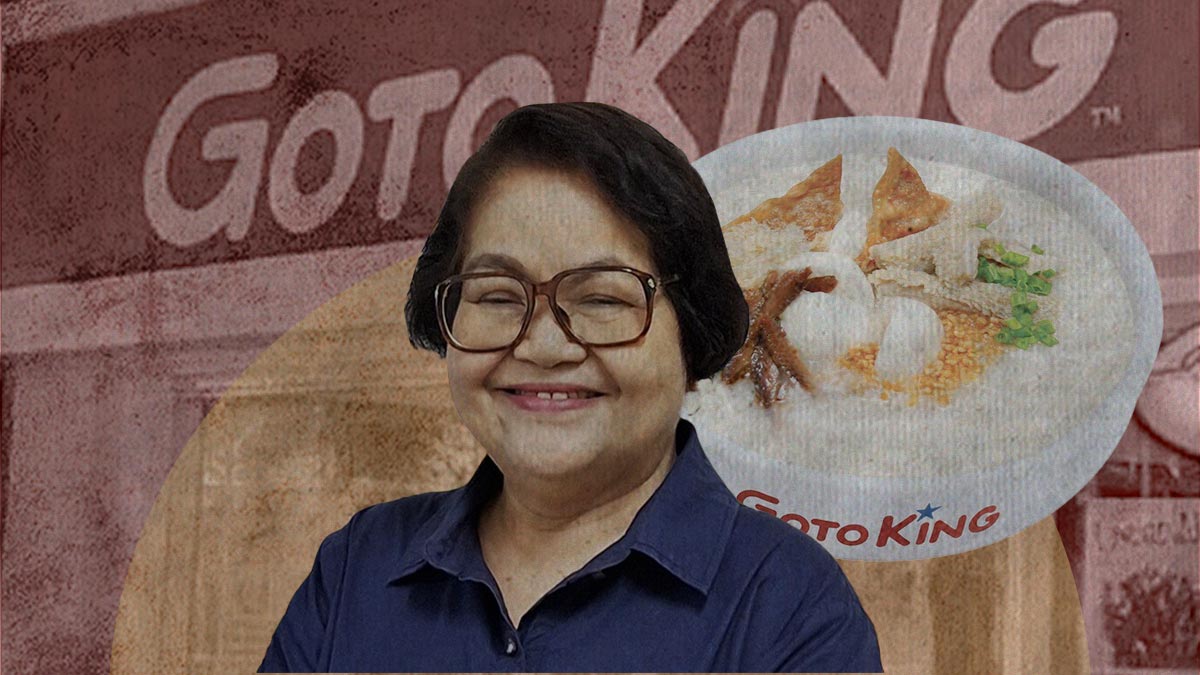
As the founder of Goto King, Maria Teresa “Tix” Laurel has successfully carved a niche for herself in a competitive industry by creating a unique brand. Her journey from a student activist to business owner illustrates her practical approach to entrepreneurship and her ability to connect with the needs of her market.
During the politically charged era of the 1970s, Laurel actively engaged in student activism and took a leading role in advocating for social justice and reform. At a political convention, she met her future husband, who also served as an activist.
After their marriage, Laurel joined her husband in his family's business, where she took on the responsibility of managing inventory. While this role provided stability, she found herself yearning for something more fulfilling. Her boredom in the family business led her to suggest starting their own food business to her husband.
In 1979, Laurel opened a private catering business along with a palabok eatery kiosk in the University Belt. During this time, she discovered that goto, a rice porridge made with beef tripe, was popular among students. When SM Cubao invited her to propose a food product that was both delicious and affordable for the ordinary Filipino in their food court, she immediately suggested selling goto. This proposal led to the opening of her first Goto King outlet in 1984.
Laurel’s first Goto King became so successful that it captured the attention of SM founder Henry Sy, who invited her to open additional Goto King outlets in SM malls. This partnership proved to be mutually beneficial, as Goto King became one of the standout food options within SM's food courts. The brand's reputation grew rapidly, and by the late 1990s, Goto King had expanded to 40 outlets across the Philippines, making it the most recognized brand for goto.
Today, Goto King stands proud at 40 years old and still thriving and serving loyal customers. With a commitment to quality and a deep understanding of local tastes, Goto King has established itself as a cornerstone in the food industry.
The brand's enduring legacy stems from its dedication to innovation and customer satisfaction. Goto King's ability to adapt to changing trends while maintaining the authenticity of its offerings solidifies its reputation as a trusted brand in Filipino cuisine.
How did Laurel address the challenges of the food industry to achieve long-term success for Goto King over the past 40 years? What insights can be drawn from her ability to adapt to changing consumer preferences while staying true to Goto King's roots?
Here are the five business lessons every entrepreneur can learn from Tix Laurel, founder and CEO of Goto King:
ALSO READ
Financial Adviser: 5 Business Lessons Everyone Can Learn from Steven Tan, President of SM Supermalls
1| Know how to identify market opportunities in a challenging economy
An economic downturn can alter consumer needs and preferences as people become more cautious with their spending. Such conditions often lead consumers to prioritize essential goods and services over luxury items. As disposable incomes decline, customers increasingly look for products that offer better value for their money and practicality.
When businesses change their products or services to meet customer needs, they not only satisfy those needs but also improve customer satisfaction. Happy customers are more likely to return and become loyal supporters. This loyalty is especially important during difficult economic times because it helps ensure a steady income for the business.
Laurel showed adaptability by shifting her focus from a role in her husband’s family business to exploring opportunities in catering and the food industry. Instead of waiting for opportunities to come to her, she actively sought them out. She leveraged her cooking skills and connections, initially catering for a friend's wedding, which then expanded to cater for others.
Laurel recognized the economic situation at that time, which allowed her to identify a gap in the market for budget-friendly food options. She noted that goto was gaining popularity and that there was no existing goto restaurant in malls; thus, she capitalized on this timely opportunity.
Despite not having a restaurant to showcase, Laurel persisted in promoting her goto by personally bringing it to Shoemart (now SM) and allowing the lessors to taste it. Her determination to succeed, even when faced with challenges, is evident in her approach to securing a spot in the fast food area at SM Cubao.
Laurel prioritized customer satisfaction by focusing on providing a product that met the needs of her target market—affordable and hearty meals. Her decision to offer a popular street food like goto that resonated with consumers at the time reflects her understanding of customer preferences.
“I was involved in the family business,” Laurel says. “I was working with my husband’s company, and I was in charge of inventory for spare parts. They were into trucking copra and fishing, and I was detailed in tracking the inventory of the spare parts for the trucks that were ferrying the copra from Quezon to Manila. My job was to keep track of the movement of the spare parts inventory. If no trucks were breaking down or anything, I was just there waiting for the movement of the spare part. Parang it became a natural thing for me, so I was kind of bored.
“What’s funny is that my mother never wanted me to go into business. She was a housewife, and although she was a good cook, wala naman siyang business experience. So, she didn’t want me to pursue it, saying things like, ‘You have your children; tama na yan.’ We were always in conflict about this. My point was, ‘Mama, pag malaki na yung mga bata, baka wala na yung Negosyo.’
“Pretty soon, I decided to venture out on my own. I wanted to cater to big companies and serve meals through deliveries, but it was a big venture. I thought, well, masyadong malaki yung capital. At that time, I already had my cooks, and I had a friend who was getting married and they asked, "Oh, kayo na lang mag-cater." I didn't know anything about catering, but I said, ‘Oh sige.’ After that, all our friends who had budgets wanted a caterer.
“And then after that, I set up a restaurant in the University Belt in Lepanto. Actually, parang I was already familiar with all the aspects of the food service businesses kasi I was a caterer. I handled big canteens like Meralco and Purefoods, and then came the fast food. My sister was then connected with Shoemart, and they were looking for a food offering that was filling to the stomach and yet budget-friendly. This was around the time when Ninoy Aquino was assassinated, so medyo down yung economy. Medyo uso yung goto nun eh and because nga of the times and wala pa talaga inside the mall so we saw that opportunity.
“I didn't have any restaurant na gotohan to show them but I just kept going. I brought all kinds of goto to Shoemart. Siguro naawa o nakulitan sila kasi I was carrying the bowls and they would taste it, ganyan. Eventually, they chose me and offered me a spot in the fast food area at SM Cubao. SM department store pa lang tawag nila nun in 1984. Meron silang food courts. It turned out to be really a big success. Talagang ang haba ng pila nun, parang ahas yan. Even the late Henry Sy was really amazed at how popular it was and how it was welcomed. Kasi it was the right product at the right time, with the right price, so that basically started it.”
2| Know how to capitalize on market gaps and develop a unique brand identity
Finding market gaps is important for businesses that want to stand out from the competition. By spotting and meeting needs that others aren't addressing, companies can create products or services that grab consumer attention and build loyalty.
Addressing market gaps also helps attract new customers who are looking for alternatives. When a brand clearly communicates what makes it special, it can draw in those who feel that existing products don’t meet their needs. A strong brand story that highlights these differences can catch the interest of potential customers and help the business grow.
Laurel recognized the potential of goto, a dish often viewed as street food. During a time when goto was perceived as something unclean, she saw an opportunity to elevate its status. Instead of using the traditional large cauldron or kaldero, she utilized a visually appealing rice cooker, which signified cleanliness and quality.
This change not only transformed the presentation of goto but also allowed her to emphasize the dish's authenticity.
Moreover, Laurel expanded her menu with innovative offerings like Goto Supreme, which incorporated gourmet ingredients that appealed to consumers seeking both affordability and taste. Her attention to detail in preparing goto—ensuring it was clean and flavorful—showcased her dedication to delivering quality products.
By continuously refining her offerings and remaining attuned to customer preferences, Laurel not only filled a market gap but also built a loyal customer base that appreciated her brand's unique identity and commitment to quality.
“At that time, goto was often seen as street food—parang madumi, you know, something you would find in the bangketa,” she says. “But we sort of glamorized it instead of using a kalderong malaki. It was a really nice rice cooker. I always thought that my goto was clean. It really is clean.
“When we clean one kilo of goto, we're left with about 3/4 kilo. I don't like kasi yung lasa na malansa; I’m very particular. Plus, I know how to cook it because my husband is Chinese, and I could see my mother-in-law, or as we call her, amà, cooking lugaw for my father-in-law every day, so I know it's different. Hindi ba, pag nagkukulo ka, yung iba, they think they will just add maraming malagkit, and then it's okay. But it's different when it's kay amà. We just sauté it well.
“Before, the goto was cooked by boiling it and then cutting it, just putting it on top when somebody orders. That’s how the goto is still prepared by others up to now. Our goto, when you go to our store, is talagang isang buong kaldero; the goto is there and the flavor of the goto is in it, which makes it very different.
“Actually, kasi uso na nun goto. Ang kukuning pangalan was Goto Me, Goto Ka Rin, yung mga ganon. So I asked my brother’s friend, tapos sabi niya, ‘Alam mo, Tix, Goto King na lang, para ikaw na yung king.’ So sabi ko, ‘Sige.’ Napagod na kami ng kakaisip kung ano yung mag-click na pangalan. And then Goto King.
“But iba yung logo nun. Actually, that logo, yung husband ko lang ang nag-drawing nun eh, si Herman, and then when I was already involved in yung mga marketing meetings, etcetera, mga positioning, it was a Singaporean company that did that. Yung Goto King, yung ngayon na may blue side, sabi nila, ‘let's make it more mobile.’ Sabi ko, ‘Sige,’ and we liked it; it's just that simple. It's classic. Wala masyadong arte.
“We added varieties like Goto Supreme, which includes yung gourmet tuyo and people liked it. Actually, that’s the highest-selling menu ngayon and then in that Supreme, there are crispy dumplings with it, fish balls, and then tuyo, that flake tuyo. Gusto ng tao eh, and now there's also goto with beef tendon, goto with pares, mga ganon.
“At first, ako lang talaga. Actually, mahirap. Kasi when, let's say may natikman ka, and then we will try to adjust kasi ang gusto namin mura na masarap, ganon. So I would go to Divisoria market, kahit saang palengke yan, and taste the food. Bakit? Masarap pero mura lang. So it's a very hard job kasi kung pangit yung tinitikman mo, you just keep on eating it kahit pangit, kasi, ‘Bakit pangit ito?’ Pag masarap, ganon din, you just keep on eating it to find out why masarap and yet mura. Tikim-tikim, ganun lang, then eventually I had mga food techs na.’ Laurel adds
3| Know how to create a niche market by focusing on competitive advantages
By carving out a niche, businesses can effectively differentiate themselves from larger competitors. A niche market allows companies to focus on specific customer needs or preferences that are often overlooked by industry giants. This strategy enables smaller businesses to tailor their products or services to a particular audience.
Niche markets typically present fewer barriers to entry compared to broader markets dominated by major players. As a result, smaller or newer companies may find it easier to establish themselves in these segments, facing less competition from established firms.
Additionally, niche markets often promote greater innovation and creativity. Without the pressure to compete with industry leaders on every front, smaller businesses can experiment with new ideas, products, or business models specifically designed for their niche audience. This flexibility can lead to the development of unique offerings that further enhance their market position.
Laurel recognized the changing landscape of the food industry, particularly with the rise of mall culture in the Philippines. When she was offered a stall at what was then called Shoemart, she understood that simply selling goto wouldn’t be sufficient to cover the high rental costs. By expanding her menu to include other popular Filipino snacks like palabok, dinuguan, and puto, she catered to a broader audience, thereby increasing her customer base and making her stall more appealing.
Even before franchising became mainstream in the Philippines, Laurel was already studying its potential. Through franchising, she created a network of franchisees who could share in the successes and challenges of the business. This sense of community not only helped her expand rapidly but also allowed her to learn from the experiences of her franchisees.
Laurel positioned her business as an alternative to foreign fast-food chains like McDonald’s and Jollibee, which were dominating the market at the time. She understood that while these giants had substantial resources, her unique offerings—traditional Filipino dishes—could attract customers looking for authentic, local cuisine. This approach not only filled a gap in the market but also appealed to a sense of national pride among Filipino consumers.
“We were offered a regular food court stall by Shoemart after mga six to eight months,” Laurel sa. Sabi ko, if I'm only going to sell goto, I will not make it; ang taas ng upa eh. I said we had to include other meryenda items like palabok, dinuguan, and puto. They allowed us to sell palabok, lumpia, and fresh lumpia. Yung mga ganyan na. We expanded at that time because, I think we were able to capture the two phenomena kasi nun.
“First was the start of the malling and nag-piggyback kami sa Shoemart nun eh. Kung saan yung Shoemart nun, doon kami. They wanted their tenants to be really loyal. Kasi very keen na rin yung competition nila, so gusto nila sa Shoemart lang kami. The other phenomenon was franchising. I started studying franchising even before it became popular. That was around 1986 when I began attending conferences abroad. I became the founding chairman of the Association of Filipino Franchisers in the Philippines and then tuloy-tuloy na yun.
“I was actually so scared to award the first franchise kasi pinag-aralan ko talaga. Sabi ko, ‘Hay, ang hirap nito.’ But somebody was willing to take the chance. I told her, ‘I don't know. You'll be the first, so maybe you will encounter all the mistakes, or we will both encounter all the mistakes. But if you're willing to be a guinea pig, then okay, let's go.’ I was honest naman to tell her that I really don't know what I'm getting into also, so ganon lang. So, we did the first franchise in 1994. I think at one point, I had about 40 stores with 20 franchises. Mga ganon yung ratio.
“And then from the franchising, you have the franchise fee, which you can use for your business and when you grow big, you have to hire the right people na. Kasi when you're big, it's not anymore tyaga, sipag. You really have to use your brains na. So you just have to go out of your business, meet other people, attend all the trainings that you can.
“When we started, our vision was to be the Filipino alternative to fast food, kasi pumasok yung McDonald's nun eh and then pretty soon, andyan na yung mga foreign. Foreign lahat yun, ang concept nila fast food foreign. But I said, you know, difference lang natin dyan marami kayong pera. Konti lang yung pera ko, but you see at the time, McDonald's offered arroz caldo, Jollibee offered arroz caldo, so I knew we somehow made a dent. Being a startup, we were truly up against the giants. What was always on my mind was that it's not necessarily the size of the dog in the fight, but the fight inside the dog that matters.”
4| Know how to leverage discipline and experience in business decision-making
Discipline encourages a structured approach to decision-making. Business leaders can analyze what worked and what didn’t by reflecting on past experiences. This analysis allows for more informed and strategic choices. A historical perspective helps avoid repeating mistakes and reinforces successful strategies.
Additionally, past experiences provide valuable insights for tackling challenges. When leaders apply lessons learned, they improve their problem-solving abilities. This method allows them to address issues with a clearer understanding and more effective strategies. Such adaptability remains vital in today’s fast-paced business environment.
Laurel's activism during the dictatorship in the 1970s required meticulous planning. Whether organizing a jeepney strike or coordinating food for rally participants, she learned the importance of having a structured approach.
In her business, this translated into strategic planning for operations, where she emphasized the necessity of having contingency plans. This skill in organizational development ensured that her business could adapt to challenges and seize opportunities effectively.
Through her activism, Laurel understood the weight of responsibility. If an initiative failed, she faced the group and explained what went wrong. This accountability instilled a strong sense of ownership in her business practices. She held herself accountable for her decisions, developing a culture of responsibility within her team. This trait is important for building trust and maintaining a positive work environment.
Laurel's commitment to her activism, even in the face of adversity, greatly influenced her entrepreneurial journey. Despite the pressures of studying and engaging in activism, she fulfilled her responsibilities and graduated. This perseverance is a core entrepreneurial trait that helps her manage the ups and downs of business.
In both her activism and business, Laurel recognized the importance of honesty and integrity. Her early training emphasized the need to be reliable and trustworthy. In her catering business, this trait helped her build strong relationships with customers and partners.
“I met my husband when he was the representative of La Salle during the Constitutional Convention while I was the representative of Maryknoll,” she says. “We met once in a conference, and we really believed in the cause against the dictatorship in the 70s. That was our time; nobody does that anymore.
“But you see, it was a very good training. During those times and in our generation, hindi pwede yung halimbawa, jeepney strike. Let’s say you're planning a jeepney strike. OK, so what do you have to do? You have to mimeograph pa nga noon. Mimeograph your manifestos. You have to take care of the food for those who will join the rally. You know, all of that.
Planning talaga. Parang organizational development lagi yung (iniisip) mo kasi things cannot go wrong. So if there's a plan, plan A. Let’s say something nearer to what I'm doing—food halimbawa. You have to know ang mga pinapakain, sandwich na liver spread eh. During that time, okay na yun, yung Reno liver spread sandwich na yun. Yun ang binibigay sa mga nagra-rally, yun lang. So what if ganito? So you have a plan B.
“Ngayon, young people, when they say ganito, ganito, they really think it's going to happen. Sabi ko, ‘Ha?’ And then not only that, if it doesn't happen, you think they're affected? No. Sa amin noon, if it's not successful, and you're at fault, you really face the whole call group and explain why and what happened. You take the responsibility. So ganon yung mga training.
“At saka yung training as a caterer kasi noon—if you're on site, you cannot leave things behind. Hindi pwedeng maiwan mo yung posporo, things like that. Noon, you really must have honesty and commitment. Like, in my case, I wanted to drop out, but my father didn’t allow me. So one night, we talked, sabi niya, ‘Okay, let's make a deal. You can do whatever you want in your activism, but you will promise me you will not drop out.’ Okay, deal. Every night, I would go home at 12 o’clock and study. I would wake up at 5 a.m. to study and then go to school, ganon yun eh. Every day until I had pneumonitis, but I graduated because that's your commitment.”
5| Know how to measure success beyond planning
Measurable objectives provide clear goals for the organization, helping to define what success looks like. This clarity enables teams to focus their efforts on specific outcomes rather than vague aspirations, ensuring that everyone understands what needs to be achieved.
When objectives are measurable, it becomes easier to assign responsibility to individuals or teams. This accountability promotes a sense of ownership over tasks and projects, as employees can track their progress and understand how their contributions impact the overall success of the organization.
Measurable objectives facilitate performance evaluation by providing concrete criteria against which progress can be assessed. Organizations can use these metrics to determine whether they are meeting their goals that makes it possible to identify areas for improvement or adjustment.
Laurel emphasized the importance of not only planning but also measuring outcomes. She believed that without measurement, plans would remain ineffective. By setting specific metrics to assess the success of her strategies, she could determine whether her initiatives were yielding the desired results.
Laurel’s focus on caring for her employees and the community exemplified the value of empathy. She encouraged her team to step outside themselves and understand the struggles faced by others. This perspective helped her evaluate the broader impact of her business initiatives. For example, her desire to assist during calamities demonstrated her commitment to social responsibility, which leads her to find effective ways to provide support even amidst logistical challenges.
Laurel's advice to her children about finances—highlighting the need for strategic thinking rather than just saving—reflects her understanding of financial intelligence. She recognized that success in business comes not only from careful financial management but also from leveraging opportunities. This strategic mindset allows her to measure success by assessing not only the financial bottom line but also the potential for growth through innovation.
“When I was starting, I had three posters in the office,” she says. “One was, ‘Think Biggest.’ The second one was, ‘The Task of Management is to Get Things Done.’ And the third was, ‘Just Do It.’ Eventually, this evolved into a sort of philosophy.
“We adhere to five things: the first is to plan, which we do every year through strategic planning. The second is to measure, because if you just keep on planning without measuring, nothing will happen. We really emphasize measuring; I’m medyo strict pag dating dyan. The third is to create and innovate. Then, of course, we have to market our products. Ngayon, iba na ang marketing eh.
Lastly, we care for our employees and for other people. You must get out of yourself to really look outside and reflect. I always tell my employees, lahat ng negosyo may problema. Lahat ng tao may problema. If we have a problem, you can't just keep thinking about it. The problem won't go away; you need to go out and find out how you’re doing compared to others.
“Your problem is small compared to other people’s struggles. You can only see this if you go outside; otherwise, your perspective on your business will be myopic. If you’ll just be there asking yourself, ‘Anong mga problema ko?’ you won't grow.
“Sometimes it helps you to grow if you’re able to explore. For instance, we’ve always wanted to be active in times of calamities, but logistically, it was challenging. Many people came to donate, but we struggled with how to cook the goto and transport it to areas affected by typhoons. I still had to assign people to be there and ladle the soup, and then figure out how to transport it. That was always my frustration: how are we going to do this? So I kept thinking about how we could help; it needs to be convenient and efficient.
“I don't really advise my children about money. They're very conscientious when it comes to finances, but what I always say is you cannot get rich if you just save, save, save. You have to use your head. If you want to save, you will save for a long time, like 10 years, but if you hit one big idea, in one year, you will be okay.”
Henry Ong, RFP, is an entrepreneur, financial planning advocate and business advisor. Email Henry for business advice hong@financialadviser.ph or follow him on Twitter @henryong888
