

Financial Adviser: 5 Business Lessons Everyone Can Learn from David and Crystal Sison, Founders of Mama Lou's Italian Kitchen

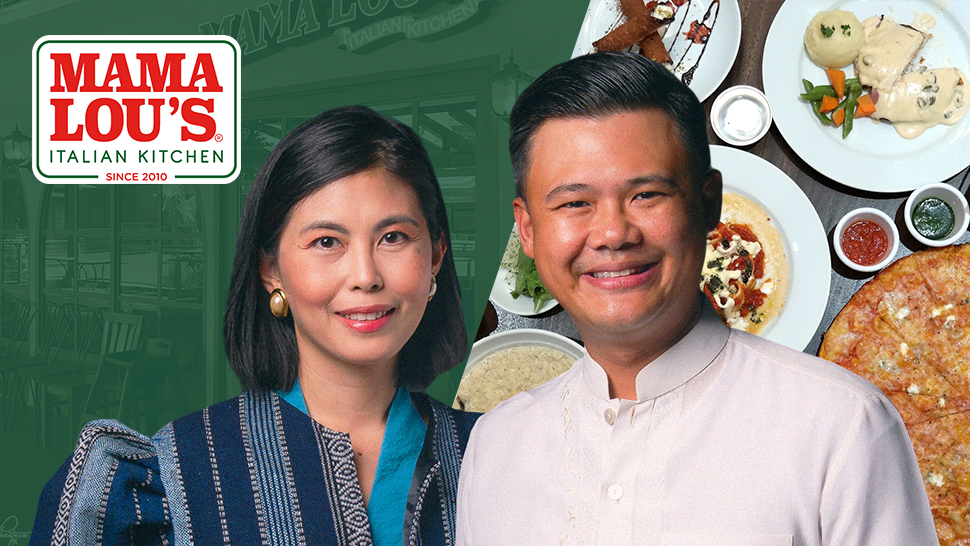
David Sison's path as an entrepreneur is a great example of having a clear vision, determination, and unwavering commitment. He started as an ambitious MBA student and went on to establish Mama Lou's, a popular Filipino-owned Italian restaurant chain.
While pursuing his MBA, David proposed to his then girlfriend, Crystal, that he wanted to study her family's Italian restaurant business as part of his thesis. Upon her agreement, David conducted extensive research on improving the business and its marketing strategies. It was during this period that he identified an opportunity to expand and grow the restaurant.
What began as a thesis project soon transformed into a concrete business plan for David. He rebranded the restaurant and named it after Crystal’s mother, Mama Lou. At only 27 years old, David opened his first Mama Lou’s restaurant in Solenad, Nuvali in 2012 before he even completed his MBA.
The restaurant quickly gained popularity, enabling David to recoup his investment within just one year. This success motivated him to dedicate more attention to the business and pursue the expansion of Mama Lou’s, which grew to 12 stores before the pandemic.
Today, Mama Lou’s stands as the premier Filipino brand offering Italian cuisine, boasting 25 outlets across the country. Its rapid expansion makes it one of the fastest-growing restaurant chains in the region.
Over the years, in addition to Mama Lou's, David also ventured into creating other culinary concepts such as Nonna's, Famu Filipino Restaurant, and Brau Bass German Craft Beer. Each venture exemplified his commitment to innovation and culinary excellence.
David and Crystal Sison's entrepreneurial journey showcases the transformative power of pursuing one's passion, and persevering. From a simple MBA thesis to building a culinary empire, Mama Lou's stands as a testament to David's unwavering spirit and dedication to excellence.
How did David manage to turn Mama Lou's into a successful business at a young age? What were some of the key challenges David and Crystal faced while expanding Mama Lou's? What lessons can aspiring entrepreneurs learn from David and Crystal Sison's entrepreneurial journey with Mama Lou's?
Here are the five business lessons every entrepreneur can learn from David and Crystal Sison, founders of Mama Lou’s Italian Restaurant:
ALSO READ
1| Know how to transition from family business to entrepreneurship
Enhancing an existing family business through entrepreneurship involves introducing innovative ideas and processes. This transition encourages adaptability to changing market dynamics, and consumer preferences, ensuring the business remains competitive and relevant.
Entrepreneurship within a family business context facilitates expansion and growth opportunities. By exploring new markets and diversifying product offerings, entrepreneurs can unlock untapped potential and drive sustainable growth for the business.
David identified the need for dedicated management within Crystal's family restaurant. He recognized the growth potential of the business and understood that someone had to take charge to ensure its success.
While David was pursuing his master's degree, he gradually became more involved in the operations of the restaurant. He worked alongside his girlfriend Crystal in setting up systems and processes to streamline operations and improve efficiency.
With Crystal's dedication and David's strategic planning skills, they crafted a comprehensive business plan and expansion projection. Recognizing the restaurant's growth potential, they seized the opportunity to open a second branch outside their comfort zone.
“My family was into the restaurant business,” Crystal says. “Way back 2001, my mom and my dad operated a single location, a European restaurant. It was a French café kasi my dad is French Canadian from Quebec Montreal. So, we served different cuisines. We had Italian, European, Italian, French, Spanish, Filipino. My dad's day job was an IT executive and mahilig lang talaga syang kumain. My parents were fond of eating.
“They decided one day that they wanted to open up a restaurant, so during that time, I was still working in a IT company, which was my first job out of college and during those years while the restaurant was operating, I met David.
“One day, David and I were having dinner in our restaurant and si David, sabi nya, ‘Kailangan lang may tutok. Somebody really has to manage it. Sabi nya, ‘Why don't you quit your job? Nagde-dating palang kami nito ha, but I trusted him so sabi ko, ‘Okay, sige I'll do that. I became the restaurant manager.
“Ako naman, yung father ko negosyante,” David says. “May business kami na signages so after I graduated, I wanted to work for my father sa company nya, pero ayaw nya, sabi nya, ‘Mag-trabaho ka muna. Experience mo muna.’ So after six or eight months, sabi ko, ‘Kung hindi ako magwo-work sa father ko, mag-aaral na lang ako ng Masters.
“During that time, I was helping Crystal kasi she was really running the show, sya yung manager and ako naman nasa likod lang ako while finishing my masters. Since libre yung consultation sa masters, parang ginawan ko sya ng thesis.
“Every after office and school, tinutulungan ko syang mag-setup kasi yung restaurant, wala pang mga system yun eh. Wala pang HR manual. Yung recipe, kung sino lang yung papasok, yung lasa ng pagkain nakadepende sa cook. Pag may sakit yung cook, hindi na masarap yung food, parang ganon. Yan yung parang na-build naming dalawa and nakatulong din nung nagma-master ako to set up systems.
“So come 2012, parang mag-thesis na ako, buo na yung plano, may business plan na ako, may projection na, tapos sabi ko game. I mean let’s expand already. The following year, we were invited by Ayala to put up a restaurant in Solenad with Crystal. We were still boyfriend and girlfriend. At that time, Nuvali was booming eh, parang ang lakas ng mga restaurants doon, tapos papasok kami na new player. Nobody knows us, pero natalo namin yung mga foreign brands. In six months, nag-ROI kami.”
2| Know how to rebrand and transform
In a competitive market, rebranding helps a business stand out from its competitors by offering a unique identity and value proposition. It enables the business to carve a distinctive niche and attract the attention of customers who resonate with its new brand identity.
Through rebranding, a business can refine its messaging and communication strategies to better connect with its audience. Clearer, more compelling branding can improve customer engagement, foster stronger emotional connections, and drive loyalty over the long-term.
Initially operating as a European restaurant, the establishment faced challenges with its name and brand recognition after a decade of operations. David recognized the need for a memorable and meaningful identity, which led to the idea of naming it after Crystal's mother, Malou.
David saw the opportunity to highlight Malou's influence and expertise by naming the restaurant Mama Lou's, a name that resonated with Crystal's family and customers alike.
Moreover, David strategically incorporated Italian cuisine into the menu to enhance the restaurant's appeal and align it with market preferences. By infusing Italian elements into the restaurant's offerings, David ensured that Mama Lou's would attract both local and foreign diners.
Through David's vision and strategic direction, Mama Lou's transformed into a beloved Italian restaurant, cherished by its loyal customers for its delicious food and culinary excellence.
“During that time, my mom and dad had this old house inside BF homes,” Crystal says. “We were trying to sell this house for over six years na, pero walang gustong bumili so my mom had this idea, ‘Why don't we transfer our European restaurant there in our old house?’
“Noong nilipat na dun yung restaurant, David had the brilliant idea of changing the name so the European name kasi it didn't have any recall even after 11 years, so he thought of my mom kasi si mama talaga yung nagluluto together with my dad. She was really gifted, whether it was Italian cooking or Filipino cooking or Chinese, she's really gifted.
“She has no culinary background pero kahit anong nasa ref kaya nyang gumawa ng masarap na pagkain, so David had the idea of calling it under my mom's name, which is Malou, so Mama Lou’s, that's how it started and I was the first restaurant manager.
“Kasi ang challenge doon, well, ang sinabi ko was French cuisine hindi sya ganun ka popular, I mean the market is essentially Filipino,” David adds. “Yung foreign market naman is only 10 percent of the business. Yung Mama Lou’s may recall. Kailangan kasi sa brand madaling tandaan. Tapos, it may not be as Italian sounding, pero adding the Italian kitchen sa dulo madali na and at the same time may affinity kasi pangalan ng mother ni Crystal eh, so there's a story behind it.”
“When we created Mama Lou’s, my mom was thrilled,” Crystal says. “Syempre pangalan ni mama yun. She was excited. Kilig na kilig sya everytime na sasabihin Mama Lou’s.
“Love na love ng Dad ko yung mama ko eh. During that phase when my dad had to let go and David came in, I really give my hats off to him. When we were just boyfriend and girlfriend, my dad was going through a lot because my mom was sick. I became the restaurant manager. I was slowly learning how to operate a restaurant, and then David came and involved himself so the business could continue without my mom.”
3| Know how to establish consistency and scale up
Consistency builds trust and loyalty among customers, who know they can expect the same level of excellence wherever they interact with the business. Uniform standards ensure that services and operations maintain a consistent quality across all locations or branches.
Standardized systems and procedures facilitate expansion by providing a replicable model that can be easily implemented in new locations or markets. This scalability minimizes risks associated with growth and ensures a seamless transition into new territories.
Recognizing the challenge of maintaining consistency in the quality of dishes, David standardized recipes to ensure that every dish tasted the same regardless of who prepared it. He also prioritized building strong relationships with suppliers to ensure the consistent availability of high-quality ingredients.
In a competitive market saturated with Italian cuisine, David aimed to differentiate Mama Lou's by offering consistent quality Italian food at affordable prices. He set a value-for-money price point that aligned with the restaurant's commitment to providing high-quality dishes without breaking the bank for customers.
David believed in cultivating win-win relationships with suppliers, where both parties benefited from the partnership. By ensuring fair margins for suppliers and maintaining consistent quality and affordability for customers, Mama Lou's created a positive ecosystem that supported its expansion efforts.
“Yung nag-start na kami mag expand in 2012, it was the time na namatay si Mama Lou,” David says. “She passed away two years pa lang yung Mama Lou’s in the business from lung cancer at the age of 45 so wala nang magluluto, kaya nung pumasok ako, ang ginawa ko noon dapat hindi nakasalalay sa tao.
“Dapat ultimo dishwasher should know how to cook the dish, I mean, parang syempre yung restaurants before only the chef knows what the recipe is, pero ang mentality ko was, masarap na pagkain eh, di ba? The challenge was consistency. Hindi sya consistent.
“Pwedeng masarap sya ngayon pagpunta mo, pero pabalik mo, hindi na masarap. Yan yung usual na mga issues ng restaurant. So what we did was to standardize the recipe, make it available to everyone. Hindi yung isang tao lang may alam. Lahat kayo okay lang kasi, I mean, yung recipe naman kahit lumabas yan, at that time may Internet na, ang dali dali lang magaya, so there's no secret. The secret kasi ng restaurant was really consistency.
“I believe every Chef starts with the ingredients, so ang ginawa namin was to establish first the relationship with the suppliers since the restaurant has been around for 11 years. Natutunan ko dun, unang-una bago ang pangalan eh, ang rule lang dyan is to pay the suppliers on time.
“It’s very basic, and no biases, ayoko yung supplier na magbibigay ng regalo para mag bi-build ng relationship, the relationship is you just have to deliver a consistent quality product at the time that we both agree parang ganun lang, that's how our business relationship is kasi as long as consistent yung pagkain mo, yung supply na ni-deliver mo, I can provide consistently to the customers as well.
“Then it has to be timely. Yan yung pinaka-importante, when we started, talagang tutok yung tseke or deposits sa mga suppliers, dapat priority sila as we build para at least maaasahan namin sila. The relationship has to be win-win. If the supplier wins because we pay them on time, we also win because they supply us on time with the quality food, and the prices are not bad. Everyone makes their own margin and the customer wins because hindi kami na-out of stock, tapos yung pagkain hindi ganun kamahal.
“When we started Mama Lou’s, syempre ang daming players nun eh na puro Italian din, so paano kami papasok diba? We had to provide the same consistent quality Italian food pero mas mura. So kami, nung pumasok kami, yung price point namin was value for money with the quality that you're getting.”
4| Know how to preserve authenticity and embrace quality
Authentic taste and quality food are the cornerstones of customer satisfaction in the food business. Customers patronize restaurants not only for nourishment but also for the experience and enjoyment of well-prepared dishes that reflect authenticity and quality.
Consistently serving authentic and high-quality food helps build a positive reputation for the restaurant. Positive reviews and word-of-mouth recommendations from satisfied customers can significantly enhance the restaurant's reputation and attract new clientele.
David maintained authenticity in their food by ensuring that the ingredients used in the dishes, especially for Italian cuisine, were authentic and of high quality.
David focused on creating a unique selling proposition for each dish, such as using rib-eye steak in their salpicao, to differentiate Mama Lou's offerings from competitors and emphasize quality.
He also emphasized consistency in food preparation, ensuring that pasta was cooked al dente, while continuously experimenting and improving recipes, such as the pizza dough and sauce, to enhance the dining experience.
Despite cost considerations, David prioritized quality over price, conducting extensive taste tests and evaluations before finalizing suppliers and ingredients, ensuring that only the best were used in Mama Lou's dishes.
“About 70 percent of our menu are Italian, while the others are parang mixture,” David says. “We have French dishes like poutine tapos we have the salpicao. Well, the pizza and the pasta naman, that’s all Italian because the ingredients that we are using are already Italian. I mean these are all imported such as the tomatoes, olive oil.
“It's also Italian in a sense that our food is very simple. Yung simplicity is the best sophistication when it comes to Italian food. Kasi dapat mga tatlong ingredients lang yan eh. Very simple. Pag lumampas ka na ng lima, halo-halo na, iba na yan. French na yan. Lahat ng ito self-study ko lang. Passion ko kasi magluto eh.
“Yung menu namin na-upgrade na pero we retained yung mga original like yung Seafood Olio, my mom’s spaghetti,” Crystal adds. “It’s a mixed seafood with crab, mussels, shrimp, and garlic olive oil. That's her signature dish. We also have the salpicao. If you look, it's an Italian restaurant and then bigla, you'll see on the menu, there's salpicao. It goes back to how, you know, everything started na we had a European restaurant before and one of the dishes na talagang binabalikan is the salpicao, so parang kami we're always like, ‘Do want to be like all Italian? Or are we gonna give in na kasi ito yung hinahanap eh.
“Yung salpicao namin, kaya siya binabalik-balikan kasi we use rib-eye steak. It’s again going back, anong ingredients ba yung gagamitin mo? Bakit yan ung gagamitin? I mean ano yung unique selling proposition nya? Everyone has salpicao, but what's the difference with our salpicao?
“Everyone has spaghetti but what’s the difference with our spaghetti diba? So para sa amin, let's say for the pasta, we make it a point na although we use imported pasta, ang kailangan mo lang i-sigurado na al dente yung pasta mo. Yung spaghetti is al dente. Yung pagkaluto nya, yung to the bite, hindi naman sobrang tigas pero hindi malambot. Yung consistency andun dapat. Yung salpicao naman, dapat simple lang, olive oil lang tsaka olive oil seasoning. Yung execution talaga importante paano yung pagkagawa.
“The pizza dough has been improved through the years, so we're always experimenting with it. The pizza sauce too. Yung dessert is still the same, hindi na namin binago like the tiramisu, the cheesecake and the chocolate cake. Saka lahat ng mga sauces namin is still the original recipe of Mama Lou.
“We never compromise on the quality,” David says. “Minsan kailangan maghanap ng mas mura but we go through the same process. Let’s say yung olive oil namin. Before we work with the olive oil supplier that we have now, we went through eight variations, eight pastas, eight different olive oils. Tinikman namin hanggang ma-perfect. It's not always cost kasi kung sa presyo ka lang titingin, mawawala na yung quality, nag-compromise ka na.
“We get most of our inspiration from travel. Ang common na na-realize ko is whatever ingredients you get, as long as it's fresh, masarap siya. I think yan yung nagiging problema when we started kasi wala kaming commissary eh. Pero now, kahit may commissary na kami, we make sure na yung pagkain, fresh pine-prepare sa restaurant, hindi yung iinitin mo na lang. That’s where the quality goes down eh.
“Yung sauces namin, ginagawa yan fresh every day in the restaurant, like yung mga tomatoes, hindi sya yung frozen. Na-realize namin, as we grow, what will make us authentic? At the end of the day, the food will speak for itself.
“Hindi ko puede lagyan ng icon na chef yung restaurant. I believe that the brand should outlive us. That’s been our vision. The brand is not me. The brand is not even Mama Lou kasi the brand outlived her eh, di ba? We have to make long-lasting decisions that will actually outlive us. We are instruments in building this business. We are not the business.”
5| Know how to accept guidance and apply insights for strategic decisions
Mentors often possess valuable wisdom and experience gained from their own successes and failures in the business world. Their guidance can help entrepreneurs navigate challenges more effectively.
By listening to mentors, business owners can avoid common pitfalls and mistakes that could otherwise hinder their progress. Mentors provide insights into what works and what doesn't based on their experiences. They also offer fresh perspectives and alternative approaches to problem-solving.
David heeded advice from his father-in-law by internalizing the principle that decisions should prioritize the best interests of the company above personal preferences. This approach instilled a culture of collective decision-making focused on the company's welfare rather than individual interests.
On the other hand, David's father guided him in financial management, emphasizing the importance of analyzing key metrics and making informed decisions based on financial data. By adopting a macro-level perspective on financial reporting and leveraging various performance indicators, David learned to navigate the complexities of managing a business effectively.
Moreover, his father imparted valuable insights on communication and relationship-building, emphasizing empathy, respect, and the importance of genuine connections with employees and customers alike.
David's willingness to heed his father's advice and apply these lessons in business operations contributed significantly to the success and resilience of their venture, fostering a culture of excellence and integrity.
“We always emphasize that it's about what is best for the company,” Crystals says. “It's not about what I want, what David wants, or what my dad wants. It's about what is in the best interest of the company. That's how we always try to move forward when we initiate projects or make decisions.
“My dad's principle is that we never serve something na siya mismo hindi niya kakainin. So that is something that we will continue to apply along with the same hospitality that they extend to our guests. What kept us alive during the pandemic are our regular guests, you know, who continue to support our business. So yan yung talagang inaalagaan namin day-to-day.”
“Ang trabaho lang namin dito is to provide a memorable dining experience, so kailangan yung mga tao na kinukuha mo optimistic, yung talagang masayahin talaga, and swerte kami sa team na nakuha namin,” David says. “Noong nagbukas kami dun sa Solenad, yung team na nakuha namin, pinapirmahan ko sila sa likod ng painting namin dun, nagpirmahan lahat nung opening and after two years, sila pa rin. Andun pa rin sila.
“When we put up Mama Lou’s, parang mas naging close kami ng father ko kasi may business sya, may business ako, he was the one guiding me on what to do, I mean, especially finances, araw-araw yan, yung usapan namin about benta.
“My father was my biggest influence pagdating sa financial reporting parang siya yung medyo macro kasi kami medyo micro, we tend to focus sa mga issues sa restaurant, let’s say mga customer complaints sa mga pagkain, hindi mawawala yun eh, ang daming issues eh na hindi mawawala, yun ang trabaho ng manager.
“Pero ang trabaho ng may-ari is to really look at the numbers and analyze it. Para sa ‘kin parang madali mag-plano pero yung regularity of basing your decisions on the numbers such as the profit and loss is important. And not only the P&L, the balance sheet is also very important. So that’s what I learned from him.
“I mean, nakuha ko naman sa Masters eto, pero actually yung na natutunan ko sa father ko, iba yung wisdom na nabibigay nya eh. Para kang piloto eh, dapat as a pilot meron kang mga metrics. Ganon din kami sa restaurant, it's like having different kinds of metrics that you look at in a dashboard so that when something goes wrong, you can micromanage and see what what's wrong.
“Natutunan ko rin yung how you communicate with people. Yung father-in-law ko foreigner, diba? As a foreigner, medyo mahirap makipag-communicate with Filipinos. There's a language barrier.
“Sa tingin ko, what we brought to the table is pano namin kausapin yung bawat tao, paano kami nagbi-build ng relationships with everyone. We practice empathy. I believe we have the ability to understand kung anong nararamdaman nung tao. Lahat naman sila they work because of their family, and pag bata pa sila and they have a family, they really strive to provide and work eh.
“So knowing, yung mga occasional na kumustahan sa mga tao, very important yun eh, and I think that's how we started. The relationship we have is based on respect, but it’s also like treating them as family, but in a professional context. So you listen, but not too closely. Yan yung natutunan ko sa father ko. I believe pag Pinoy, very loyal yan. As long as you are there to support them, to support their family, they will remain loyal to you forever.”
Henry Ong, RFP, is an entrepreneur, financial planning advocate and business advisor. Email Henry for business advice hong@financialadviser.ph or follow him on Twitter @henryong888
