

Financial Adviser: 5 Business Lessons Everyone Can Learn from 'Serial Entrepreneur' Wilson Ledesma, Co-Founder of Mann Hann

In the realm of entrepreneurship, success stories often emerge from individuals who face numerous challenges and setbacks before achieving their goals.
Wilson Ledesma's journey exemplifies the resilience and determination required to overcome obstacles and create a thriving business. From encountering failed ventures to discovering a newfound passion, Ledesma's story inspires and motivates aspiring entrepreneurs.
Ledesma had always been driven by a strong entrepreneurial spirit. Throughout his life, he embarked on several business ventures, each with its unique set of challenges.
Unfortunately, many of these ventures experienced eventual closures after a few years. At one point, Ledesma even had to sell his house to raise funds for his prawn business, which ultimately folded. However, it was his trucking business that eventually led him to discover his newfound passion for the food industry.
During the challenging period of the 1997 financial crisis, Ledesma's trucking business was facing substantial losses, pushing him to contemplate its closure. Recognizing his predicament, Ledesma's father-in-law extended a helping hand by offering his house as collateral, which allowed him to secure a credit line to sustain his business operations.
But because his trucking business continued to encounter difficulties, Ledesma thought that he would just use the available capital from the bank to diversify into other ventures.
During this period, while residing in a rented condominium, Ledesma observed his upstairs neighbor frequently organizing lively mahjong sessions with different guests. Recognizing the potential for a business opportunity, he came up with the idea of selling homemade Chinese cuisine to his neighbors.
Motivated by his family's passion for preparing delectable Chinese Fujian dishes, Ledesma enlisted the help of his wife, sister-in-law, and mother-in-law to showcase their culinary expertise to their neighbors. The response was overwhelmingly positive, with the Chinese dishes quickly becoming a favorite among the guests, who suggested that Ledesma should open a restaurant.
Encouraged by the reception and demand for their Chinese cuisine, Ledesma proposed the idea of opening a restaurant to his family. Together, they embarked on a new venture that would change their lives forever.
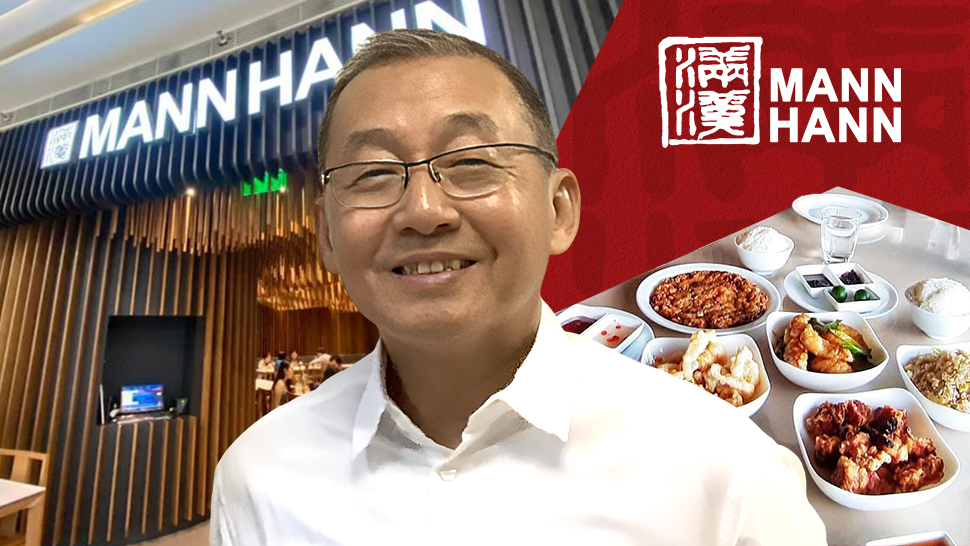
Utilizing the credit line, Ledesma opened a 12-table restaurant in San Juan, which he named Mann Hann. To their delight, Mann Hann experienced remarkable success right from its first week of opening. This early success motivated Ledesma to expand the business the following year by opening branches in Libis and SM Megamall.
Today, 26 years later, Mann Hann remains a symbol of Ledesma's entrepreneurial spirit and perseverance. With 24 outlets spread across Metro Manila, the restaurant chain has become a beloved destination for those seeking authentic and flavorful Chinese cuisine.
As the years passed, Ledesma also expanded his business interests, including venturing into the inter-island shipping industry, which specializes in transporting molasses and sugar in the Visayas region.
Ledesma's journey from struggling entrepreneur to thriving success serves as an inspiration to aspiring business owners. Through determination, perseverance, and a passion for quality, Ledesma transformed setbacks into opportunities.
How did Ledesma overcome the setbacks and failures he experienced in his previous business ventures and become a successful entrepreneur? What can we learn from Ledesma's journey about persistence and long-term vision in achieving business success?
Here are the five business lessons everyone can learn from Wilson Ledesma, co-founder of Mann Hann:
ALSO READ
Financial Adviser: 5 Business Lessons Everyone Can Learn from the 'Master of Comedy' Michael V
Mann Hann is Back in Business: Here’s the Story of a Businessman Who Doesn't Know How to Quit
1| Know how to seize opportunities and take on challenges
Opportunities can arise from unexpected situations, including challenges or setbacks. They often present themselves in the form of collaborations or strategic partnerships by reframing setbacks as opportunities for growth and learning, helping entrepreneurs find alternative paths to success.
Ledesma's journey exemplifies the power of recognizing and capitalizing on favorable circumstances in the business world. His ability to adapt, diversify, and collaborate played significant roles in the success and expansion of his restaurant business.
When Ledesma noticed the frequent mahjong sessions on the second floor of their establishment, he recognized the potential for a business opportunity. The positive feedback from his neighbors led to the suggestion of opening a restaurant on Wilson Street, where a vacant space was available.
When Ledesma took the vacant space, he quickly made the decision to shift their business from the convenience store to a full-blown restaurant. By seizing the opportunity to establish a restaurant, he saw the opportunity to showcase his family's culinary expertise and offer beloved traditional Fookien Chinese delicacies.
“I was in the trucking business,” Ledesma says. “I was supposed to buy two trucks to expand, but instead of buying two trucks, I gave the money to my wife and my sister-in-law. Sabi ko, ‘Here, you open a convenience store para we can diversify kasi maraming trabaho sa trucking and the collection was very difficult.’
“At that time, we were just renting a place and in that building, I noticed my neighbor meron siya iba-ibang clientele na nagma-mahjong every now and then. Masaya na lugar. It was one of those clandestine na place for regular mahjong, like after lunch. They start playing na until the wee hours of the night.
Because my wife’s family was a family of cooks, they would always ask us to cook for them. We would always cook for the people upstairs playing mahjong and they always loved our food. One day, sabi nila ‘Why don't you open your restaurant there in Wilson Street? there is a place there, a small one lang beside the laser disk store.’
“So when we checked it out, we found the place was still vacant, and true enough, we shifted our business from the convenience outlet store to a full-blown restaurant. The convenience outlet was good, but if you mark it up by 10 percent to 20 percent, you would be out of the market already kasi mahal ka na.
“My wife and my sister-in-law collaborated with the whole family and my mother-in-the-law in preparing the menu. We used our grandma’s recipes of all-time favorite dishes like Fish Noodle, Pork Rib Soup, Cha Mi, Oyster Cake, and other typical Fookien delicacies, while I took care of the kitchen and fixed up the whole place.
“When day one came, we forgot to prepare the menu, so our menu, would you believe, was just like one-fourth sheet of paper and then handwritten lang, siguro mga 10 items that we prepared. But it clicked. Everybody loved it so during that time in 1997, the restaurant competition was easier pa, because there was plenty of elbow room. We had few competitors and puro local lang.
“After a year, we opened another branch in Libis and also in Jupiter. And then after that, I said ‘We should go to the mall.’ My father-in-law happened to be a good friend of Henry Sy Sr. They used to play mahjong together when they were young.
“So me and my wife went to see Tatang and then si Tatang was the one who picked out the place, he said, ‘This is where I want you to be there in the basement of SM Megamall.’
“Kasi si Henry Sy, he used to eat in our branch in Jupiter. And he also loved our food, so sabi nya, ‘When I go to eat in your restaurant that’s already advertisement by itself. Why don’t you put your restaurant in my mall?”
2| Know how to embrace risks and value the trust of your supporters
Taking risks is an inherent part of business, and embracing risk can lead to significant opportunities and rewards. It requires courage, vision, and a willingness to step outside of your comfort zone. However, it's equally important to appreciate and value the trust of the people who support you on your entrepreneurial journey.
Despite facing challenges in the trucking business during the 1997 economic crisis, Ledesma made a courageous decision to diversify his investments and venture into the restaurant industry.
He took a calculated risk to step outside his comfort zone. It involved learning the ropes of the food industry, menu planning, and creating a dining experience that would resonate with customers.
Ledesma's father-in-law played a significant role in supporting his entrepreneurial endeavors. With unwavering trust, he offered his house as collateral, enabling Ledesma to secure a loan to sustain his trucking business and later providing financial support for the restaurant venture.
Ledesma deeply appreciated his father-in-law's trust and faith in his abilities. He openly expressed his appreciation for the support he received from his father-in-law and family, creating a strong bond built on mutual trust and respect.
“In 1997, my trucking business folded up because of the economic crisis,” he says. “Three of my four customers in the trucking business also folded up. At that time, I was already having doubts with the trucking business kasi I couldn’t cope with the amortization plus the principal payment and then the collections were very difficult from 30 days, naging 60, naging 120.
“In fact, I had to borrow money for the business operation and for the amortization. I was paying the bank. I couldn't pay off the principal. My father-in-law wanted to help. He really trusted me so much that he told me, ‘Here Wilson, take this TCT if you need money for your trucking business. You can use this as collateral and borrow from the bank.’
“When I decided to open a restaurant, it was a gamble that I took. I had a gut feeling that you should do this - to diversify and invest in other business and not anymore in trucking. Of course, we didn’t know if it was going to click or not, but luckily, very thankful to God, it turned out the other way.
“My father-in-law supported me with blind faith, so that’s why I appreciate him very much kasi muntik na mawala yung bahay nya. For a time, I was really stressed out. Buti na lang the best move that I have done was to diversify, and my wife and my sister-in-law saved the day.
“Alam mo, bilib ako sa father-in-law ko because he was there and he believed in me and then my mother-in-law was also very encouraging. Mabait sila.”
3| Know how to build a strong brand
In a crowded marketplace, a strong brand helps businesses stand out from the competition. It allows them to differentiate their products or services by creating a unique identity, value proposition, and positioning. A strong brand enables businesses to communicate their distinct qualities and connect with their target audience effectively.
Ledesma's father-in-law played a pivotal role in suggesting the name Mann Hann, which means "the menu of the emperor" in Chinese. This carefully chosen name evoked a sense of grandeur and sophistication, associating the restaurant with the prestigious dining experience of an emperor. Ledesma added a unique touch by doubling the letter 'N' to make it catchier and more memorable.
Ledesma's decision to offer traditional Fujian dishes and incorporate family recipes further strengthened the brand's identity. His emphasis on quality and taste contributed to the brand's reputation for delivering exceptional food experiences.
His belief in providing good food and good prices became a guiding principle for Mann Hann. This emphasis on offering quality food at affordable prices allowed the brand to cater to a wide range of customers, attracting both the A and B class market segments with the quality of the food while also appealing to the C and D class market segments with its affordability.
“It was my father-in-law who thought of the name, Mann Hann,” he says. “Mann Hann means the menu of the emperor. Man and Han represent the two dynasties in China.
“When the emperor wants to eat, he will say Man Han; the menu and the cook will make a parade of dishes in front of the Emperor, but he couldn't taste it because he has to have somebody to taste it first kasi baka malason, so you have to wait for an hour or so, and malamig na and hindi na masarap. That’s the only time he can eat it.
“I was the one who put the double N para maging catchy kaya naging Mann Hann. It was supposed to be the name for the convenience store business but it became the name of the restaurant.
“The favorite food at that time was lomi when we started selling to our neighbors and up to now we still have the lomi. We also had the owatyan or oyster cake, and the yo chi misua and kyam peng. All these are still in Mann Hann. When we opened the restaurant, we offered the kikiam, spicy spareribs, and the squid.
“When we opened, it was already a blockbuster. The next day we had to close the door to prevent people from coming kasi the kitchen could not handle it anymore and tsaka puno na. It was a very high tension thing every day.
“At that time, we were not so very much dependent on the cook kasi my wife knows how to cook and I know how to cook. I also know how to fine tune the exact taste that I want, and the crispiness so ma-pirate man yung cook ko, sabi ko, ‘No problem.’ We can always hire another one and train to be a better one. The cook was not so much a problem for us.
“The thing is the maintenance. You have to keep it clean and make the customers always happy. This is my thought. It should be good food and good price. Those are the two ingredients that that will make a good restaurant.
And we need to hit the ABCD market. The quality of the food will get the A and B class, while the good price will get the C and D class. Yung Mann Hann food should be well served, it should be pleasing, good smell, good taste, and clean.
“Before you get a location, you try to see the traffic flow, and you also see the tenant mix, and you must also have the gut feeling when you visit the place during the regular days to see how it looks like during high traffic time and the lull time.
“Meron din mga branches na nag-close, especially the one in the provinces. Although the malls are good, they don’t have corporate clientele on Monday, Tuesday, Wednesday, Thursday market.
“Business in the malls in the provinces are very good during Friday, Saturday, Sunday for the family crowd, pero during weekdays walang corporate clientele so you're just more or less coasting along so in the final analysis, it is just an exercise in futility. You will just end up breaking even so better close it.”
4| Know how to be resilient and overcome setbacks
Business ventures are often accompanied by obstacles, failures, and unexpected downturns. Resilience enables entrepreneurs and business leaders to navigate through setbacks and learn from them.
It empowers individuals to maintain a positive mindset, identify alternative solutions, and bounce back stronger from failures or unexpected circumstances.
Ledesma's entrepreneurial journey is a testament to the power of persistence and determination. Despite encountering multiple failures and setbacks in his business ventures, he displayed an unwavering commitment to pursuing his dreams until he achieved success.
Ledesma's ability to bounce back from failures showcases his resilience. From the closure of his prawn farming business to the struggles in the trucking industry, he refused to let setbacks define his entrepreneurial spirit. Instead, he learned from each failure, adjusting his approach, and embracing new opportunities.
“I was into prawn farming in 1984,” Ledesma says. “That was the heyday of prawn farming, so we rented a three-hectare lot in Santa Elena, Bulacan and it made good in the beginning. But when we expanded from three hectares to 20 hectares, we lost money because the harvest was very far from our projections. Nalugi kami.
“At that time, I sold my house to put up the prawn farm and then it closed down eventually so I lost my house that’s why I was renting na lang.
“After that, I retracted and made my calculation. I went to Bacolod to buy molasses kasi the sugar industry was in Bacolod. I went there thinking that buying molasses was just like buying it over the counter and then sell it to the fermentation plant, but it was different.
“It was totally a different industry, so I needed to learn the ropes and the tricks to trade molasses and that was when I learned about trucking kasi I needed to deliver the molasses.
“I started with two to three trucks and went up to 20. At that time, there was no GPS, no cellphone so you don’t know the whereabouts of your trucks. Sakit ng ulo. It was the most difficult business.
“My trucking business eventually folded up. No more customers. I did not want to go to that business anymore. When the opportunity came to open up a restaurant, I saw the cash flow was good. Everything is cash upfront. Walang utang, unlike in trucking, where the cash collection was so bad.
“It was a very healthy business kasi the raw materials, you can even pay it over 45 days or 60 days, so you don’t have problems with the collection compared to trucking.
“After few years in the restaurant business, I ventured into shipping. I went back to the molasses business and instead of trucking to move the molasses, I went into shipping. I got open cargo ships that I converted into tankers to carry molasses from Bacolod to Batangas and Pasig.”
5| Know how to pass on lessons learned to the next generation
Each generation faces unique challenges and opportunities in the business world. By passing on lessons learned, we ensure that valuable knowledge and experiences are preserved and shared with future entrepreneurs. This transfer of wisdom helps the next generation navigate the complexities of business more effectively.
Ledesma set a strong example for his children by demonstrating his work ethic, dedication, and resilience in his own entrepreneurial journey. He openly shared his experiences, both the triumphs and challenges, with his children.
Through honest and transparent conversations, Ledesma provided them with valuable insights into the realities of business and the lessons he learned along the way. He encouraged them to take on responsibilities, make decisions, and develop their entrepreneurial skills.
“I would say the success of Mann Hann was a result of a concerted effort,” he says. “Everybody helped out and pitched in. E kung ako lang, I could not do it, kaya si Henry Sy is my idol eh.
“How can you expand your business? I mean, you should know how to delegate people and then you have to assign responsibilities and you also have to let go also. How can you motivate people and incentivize them to get financial rewards so they will perform?
“I always advise my children if they want to open a restaurant, they should not overlook the details, they need to bind the little things because they are really very important. For example, cleanliness, punctuality, and also I tell them to strive to work harder and push. As much as I do, I give them pointers every now and then.
“When it comes to money, I tell them that they don't overspend kasi you know, people really tend to overspend. Always look into the little things and work on the budget. When you go into business, you must have the entrepreneurial spirit, because that is really the driving force.”
Henry Ong, RFP, is an entrepreneur, financial planning advocate and business advisor. Email Henry for business advice hong@financialadviser.ph or follow him on Twitter @henryong888
[ArticleReco:{"articles":["7099"]}] [ArticleReco:{"articles":["27345"]}]
