

Financial Adviser: 5 Business Lessons Everyone Can Learn from 'Ramen King' Erickson Farillas, Co-Founder and CEO of Ramen Nagi

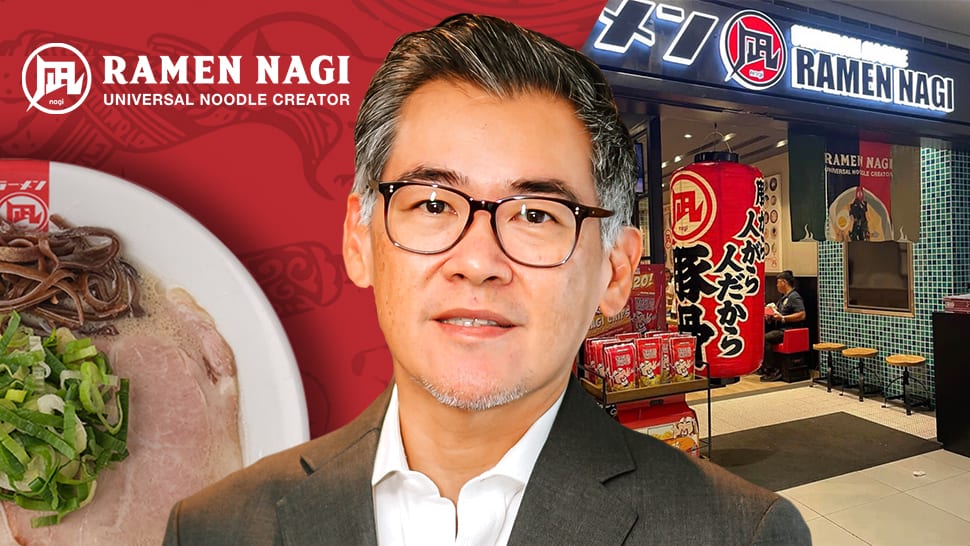
In the world of entrepreneurship, individuals often embark on diverse journeys that lead them to unexpected places. Such is the case with Erickson Farillas, a seasoned fashion entrepreneur who co-founded Plains and Prints with his wife Roxanne.
With over 100 branches, their fashion brand has become a household name. However, it was during a business trip to Hong Kong that Farillas discovered his true passion: the food business.
While exploring the bustling streets of Hong Kong, Farillas had the opportunity to visit a small Japanese restaurant in Central. It was during this visit that he savored his first bowl of the renowned Butao Ramen, an experience that etched a lasting impression on his palate. Fascinated by the quality and flavor of the ramen, Farillas was inspired to bring this concept to the Philippines.
Enthusiastic about introducing Ramen Nagi to his home country, Farillas wasted no time in pursuing this exciting venture. He reached out to the Japanese owner of the restaurant and expressed his interest in collaborating to establish Ramen Nagi outlets in the Philippines. To his surprise, the owner flew from Tokyo to Manila within a week to finalize the deal.
In 2013, the first Ramen Nagi outlet opened its doors at SM Aura, signaling the beginning of a phenomenal success story. Within its first month, the restaurant immediately achieved remarkable sales. The positive response from customers exceeded Farillas’ expectations, prompting him to revise his initial plan of opening only five outlets and franchising the rest.
The resounding success of Ramen Nagi led Farillas to expand the business further. Determined to maintain full control and uphold the brand's high standards, he decided to grow the restaurant chain independently.
Today, Ramen Nagi boasts an impressive network of 36 outlets across the Philippines, solidifying its position as the country's number one ramen restaurant chain.
With a taste of success on the home front, Farillas’ ambitions extend beyond the Philippines. In a bold move, he opened the first international Ramen Nagi outlet in Singapore, strategically located in the food court of Orchard MRT station. This expansion demonstrates Farillas’ vision to bring Ramen Nagi's exceptional flavors to a global audience.
Farillas’ entrepreneurial spirit extends beyond the food industry. Over the last decade, he has ventured into other culinary concepts, including the Chinese restaurant Fatfook, the Vietnamese restaurant Propaganda, and Nagi Izakaya. These endeavors have showcased his versatility as a business owner and his ability to cater to diverse culinary preferences.
Additionally, Farillas has expanded his influence beyond the food sector. He has become a part-owner of renowned brands such as blk cosmetics, Happy Skin, and Recess sportswear, further establishing his presence in the business world.
Farillas’ journey is far from over. With his sights set on the future, he aspires to expand Ramen Nagi's reach to 100 outlets in the coming years. His dedication to delivering exceptional dining experiences and his commitment to quality have positioned him for continued success and growth.
How did Farillas make the transition from a successful fashion entrepreneur to a prominent figure in the ramen industry? What valuable insights can we gain from Farillas' remarkable journey as an entrepreneur?
Here are the five business lessons everyone can learn from the ‘Ramen King’ Erickson Farillas, co-founder and CEO of Ramen Nagi:
ALSO READ
Financial Adviser: 5 Business Lessons Everyone Can Learn from the 'Master of Comedy' Michael V
1| Know how to seize untapped opportunity
Identifying and capitalizing on undiscovered opportunities allows businesses to gain a competitive edge. By being the first to enter a new market or offer a unique product or service, a business can establish itself as a pioneer and set itself apart from competitors. This early-mover advantage can lead to increased market share, customer loyalty, and long-term success.
Farillas constantly sought out unexplored niches and gaps in the market, enabling him to identify areas with untapped potential. Leveraging his entrepreneurial instincts and market research, he developed innovative strategies to capitalize on these opportunities.
Farillas was quick to secure the rights to offer Ramen Nagi in the Philippines through a series of strategic steps. After experiencing the exceptional quality of Ramen Nagi in Hong Kong, Farillas promptly made arrangements to introduce the brand in Manila.
By demonstrating the existing demand and the potential market forj ramen in the Philippines, Farillas successfully convinced his partners to grant him the rights to introduce Ramen Nagi. This decision later established a significant presence and achieved remarkable success in the local market.
“In one of my trips to Hong Kong, my supplier brought me to a ramen place in Central,” Farillas says. “Butao ramen. It was three in the afternoon but we waited 30 mins to get a table. It was the best ramen I have ever tried. Sobrang sarap.
“Right there and then I asked the manager what if we bring Ramen Nagi to the Philippines? Ramen Nagi is the brand, and butao is what they are known for. It’s like Jollibee Chickenjoy. Jollibee is the brand, Chickenjoy is the product.”
2| Know how to build a scalable business
Building capacity allows you to be prepared when growth opportunities arise. By anticipating an increase in demand, you can position your business to capitalize on emerging trends, new markets, or changing customer preferences. This proactive approach enables you to seize opportunities and gain a competitive edge over rivals.
Farillas anticipated the growth in Ramen Nagi by strategically building capacity through the establishment of a commissary before opening the first ramen shop. Recognizing the need for scalability and expansion, it took him two years to build his commissary to ensure that the business was prepared for future growth from the outset.
Drawing from his experience in retail with Plains and Prints, where he successfully expanded to approximately 80 branches, Farillas understood the importance of scalability. He applied the same concept to Ramen Nagi, aiming to create a scalable model that could be replicated and expanded upon.
“After I signed the contract with Japan owners, it took me two years to open our first shop in the Philippines,” he says. “My plan from the beginning was to expand and not open just one shop. I wanted to build a commissary first in preparation for this.
“Just like in my retail business, I wanted something scalable. My concept of a business is yung kaya ko i-expand.
“When I started my commissary, I did a lot of training, product development, and testing. Ang dami kong naging expenses during that time. By the time I opened, tuloy-tuloy na ako.”
3| Know how to focus on quality and maintain control
Producing high-quality products enhances the reputation of a business. Quality products create loyal customers. When customers experience reliable and quality products, they develop trust in the brand.
Satisfied customers are more likely to become repeat buyers and advocates for the business. Building a base of loyal customers contributes to stable revenue streams and sustainable growth.
Farillas placed a strong focus on quality by recognizing its paramount importance in his business ventures. He understood that quality was not to be compromised and that it should be at the forefront of his business. This dedication to quality drove his decision-making process and shaped his approach to product development.
Similar to his philosophy with Plains and Prints, Farillas knew the value of focusing on quality design and dictating the price accordingly. He recognized that customers would be willing to pay a premium for something of exceptional quality, rather than settling for cheap, disposable alternatives.
“At first, the plan was after opening several shops, I will eventually open for franchising. But I realized the difficulty in having to deal with others while building a business and maintaining its quality to make it last. That’s why I decided to be in control of everything.
“For the Japanese, quality is always their focus. Since I had a commissary, I could control everything from there. One main source distributed to all 30 shops. That way the quality of authentic Japanese ramen in the Philippines is protected.
Just like Plains and Prints, we focus on the quality: quality design, long and lasting wear, premium materials and labor. With all these, we dictate the price. You get your money’s worth, that’s why the customers are happy. Yan naman ang promise ng brand. Classic elegance.”
4| Know how to nail the right timing in launching a new product
Timing plays a crucial role in determining the success or failure of a product launch. Launching a new product at the right time ensures that the market is receptive and ready for it. Understanding market trends, consumer demands, and competitive landscape allows businesses to identify opportune moments to introduce their products.
When Farillas initially discussed the concept of Ramen Nagi, ramen was not yet widely known in the Philippines. However, he identified the potential and understood that introducing ramen at the right time could create significant opportunities. He patiently waited for two years to allow the market to evolve and embrace the ramen culture.
After two years, Farillas took advantage of the popularity of Butao, a renowned ramen brand in Hong Kong, that had already gained a strong following. By associating Ramen Nagi with the Butao fame, he leveraged the existing reputation and captured the attention of ramen enthusiasts who were eager to try something new and delicious.
“Because I opened two years later, ramen was already present in the Philippine market. Timing played a big role since Filipinos were already introduced to eating ramen. The best part was that butao was different from all and proved to be exceptionally good sa panlasa ng Pinoy.”
5| Know how to do competitive pricing that offers value for money
Consumers are constantly seeking the best deals and products that provide the most benefits at a reasonable cost. Strategic pricing allows businesses to position themselves competitively in the market, enticing customers to choose their offerings over those of competitors.
When consumers perceive that they are receiving value for the price they pay, they are more likely to develop loyalty towards a brand or product. Strategic pricing that offers a balance between quality and affordability fosters trust and satisfaction among customers. Repeat purchases and positive word-of-mouth referrals can result from a customer's perception of consistently receiving good value.
Farillas recognized the importance of strategic pricing to attract customers. He priced his products in a way that provided a balance between quality and affordability. By following the Japanese pricing model and adapting to market changes, he ensured that his offerings remained competitive and offered value for money compared to other ramen shops.
While offering value for money, Farillas never compromised on quality. He maintained a commitment to delivering high-quality ramen that met customer expectations. By ensuring a consistently excellent product, he justified the price paid by customers, further enhancing the perceived value for money. This approach allowed customers to enjoy delicious and satisfying ramen experiences without compromising their budgets, resulting in customer satisfaction, loyalty, and the continued growth of Ramen Nagi.
“Hindi ako mahal compared with other ramen brands,” he says. “My prices are very reasonable, in fact, even cheaper than others. So with the combination of good food and reasonable price, people keep coming back.
“We also work hard in offering something new and something for people to look forward to. Promos, discounts and every month we offer limited kings. These are new and exciting ramen flavors available for the month.”
Henry Ong, RFP, is an entrepreneur, financial planning advocate and business advisor. Email Henry for business advice hong@financialadviser.ph or follow him on Twitter @henryong888
