
Financial Adviser: 5 Business Lessons Everyone Can Learn from Martin Zamora, President and CEO of Nickel Asia Corporation

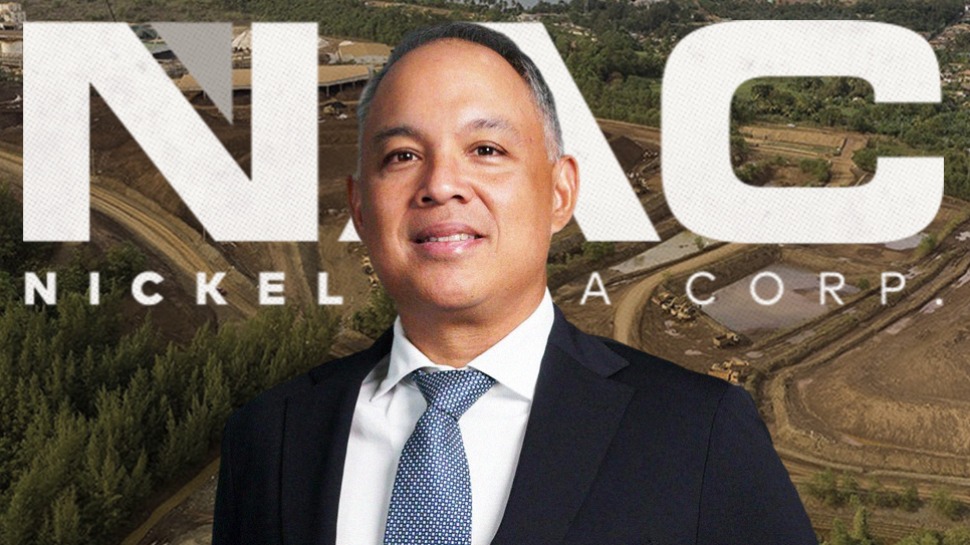
Martin Antonio G. Zamora’s story diverges from the traditional paths often taken by mining executives. Rather than rising through the ranks of geology or engineering, Zamora’s foundation was laid in the halls of corporate finance and global investment banking.
His path to becoming president and CEO of Nickel Asia Corp—the Philippines’ most profitable nickel mining company—was shaped by his understanding of finance and strategic risk-taking.
Zamora began his career in 1994 at SGV & Co.’s corporate finance department after earning a Business degree from Ateneo de Manila. He later earned his MBA from London Business School and worked for an investment house affiliated with CLSA. A brief stint at a renewable energy firm sparked his interest in clean energy—an area he would later champion at Nickel Asia.
In 2007, Zamora joined Nickel Asia Corporation (NAC) at the encouragement of his father—founder and chairman Manny Zamora—and board member Philip Ang. Though he had no formal background in mining or operations, he saw it as an opportunity to work closely with his father, who was then in his 60s. He took on various roles across the company and led NAC’s initial public offering, which he completed in 2010.
In 2020, Zamora became president and CEO and took over from longtime executive Gerard Brimo. His appointment marked the start of a new era that emphasized diversification, digitalization, and sustainable growth.
Under his watch, he outlined revenue diversification as a core part of his long-term strategy. Under his leadership, NAC added to its renewable energy portfolio with solar farms already in operation in Subic, joint ventures with Shell in Leyte, and further projects underway also in Subic. These initiatives aim to exceed one gigawatt of capacity by 2027 and establish NAC as a key player in the energy sector.
In parallel, NAC continues to pursue gold and copper assets through a subsidiary joint venture with Sumitomo Metal Mining, due to the strong market outlook for both commodities and their natural geographic overlap.
With nickel prices having declined over the past two years—driven by oversupply and shifting demand in the battery sector—the move reflects NAC’s strategic effort to diversify beyond its core metal.
How did Zamora’s corporate careers prepare him for his future role in Nickel Asia? How did his leadership evolve from overseeing different departments to becoming CEO in 2020?
Here are five business lessons everyone can learn from Martin Zamora, president and CEO of Nickel Asia Corporation:
ALSO READ
1| Know how to build real-world skills before joining the family business
When you work outside the family business first, you prove yourself on merit—not just by association. This helps you earn the respect of colleagues, employees, and even family members once you join.
It shows that you’ve faced the same pressures, expectations, and deliverables as any other professional. Beyond that, outside experience exposes you to different industries, cultures, and ways of thinking, which allows you to bring fresh ideas, benchmark practices, and global insights into the family enterprise that help drive both innovation and modernization.
By building your own track record, you also develop the confidence and professional identity needed to lead independently. It signals to stakeholders that you are not simply a successor by birthright, but a leader by competence.
Zamora’s path to becoming president and CEO of Nickel Asia Corporation (NAC) was not driven by entitlement—it was shaped by intentional preparation and personal discipline. His approach offers a clear model of how second-generation leaders can enter family-linked enterprises not through privilege, but through competence and credibility.
Zamora began by recognizing a gap in his knowledge. While still in college, he realized that he lacked the depth in finance and accounting needed to effectively run a business. This early self-awareness prompted him to seek out rigorous professional training instead of relying on family connections.
He deliberately chose to build a foundation in corporate finance, starting at SGV & Co., where he learned valuation, risk management, and capital market fundamentals—skills that would later prove essential in the capital-intensive and highly cyclical, mining industry.
He didn’t stop there. His entry into investment banking exposed him to complex financial transactions, investor relations, and strategic deal-making. Pursuing an MBA at the London Business School helped sharpen his analytical and global business acumen. This combination of work and education wasn’t accidental—it was a deliberate investment in becoming an independent, well-rounded executive.
By the time he was invited to join Nickel Asia in 2007, he had already spent 15 years developing a strong career outside the family business. His decision to join was based not on inheritance, but on timing and readiness.
“When I was in college, I felt I didn’t learn enough about finance and accounting,” he says. “So I decided to learn more by working. Kasi I always thought that it would be difficult to run a business or be in a top role in any company if you don’t have the tools—the finance and accounting tools, no. So that’s the reason why I decided to go into that field.
“So right after college, I joined SGV and Company in the corporate finance department. I can’t remember what my particular goals were at that time, but my goal was not to join my father’s company. I spent about three years there, and then I joined an investment bank.
“At that time, it was called Jardine Fleming. Then I went to business school. I took my MBA in London—London Business School. And after that, I returned to the firm, which was owned by Buboy Virata—who was also one of our directors in the company. That investment bank eventually became CLSA.
“After spending a few years there, I transferred to a renewable energy company. After a year, I was invited by my dad and one of our directors, si Philip Ang. They asked me to join Nickel Asia, and I decided it was a good time for me to join because my dad at that time, he was already in his 60s.
“And I thought it was a good time to learn from him. So, without knowing much about the industry or about mining or about the company in particular, I decided to take that chance, even though all my background was in finance.
“I joined the company in 2007. I spent about 15 years, inclusive of my MBA, before joining the company. One of my first tasks was to list the company in PSE, and that was done successfully in 2010. I started out in the purchasing and marketing department, and then later on, I became an SVP for all the operations.
“For a time, I became president, but not the CEO. The CEO was still Jerry Brimo, who was also the chairman and CEO. Then in 2020, I became the president and CEO of the company.”
2| Know how to thrive beyond the comfort zone
When you step into a new industry, you operate without a playbook. This challenges you to sharpen your problem-solving skills, make sound decisions amid uncertainty, and build the kind of resilience that seasoned leaders rely on during periods of disruption.
Over time, succeeding in a field you didn’t grow up in earns you credibility—not because of your background, but because of the results you’ve delivered.
Leaders who thrive in unfamiliar industries often evolve into change agents. Free from legacy assumptions and rigid frameworks, they bring fresh perspective and push organizations to modernize. In doing so, they help companies stay competitive, and relevant in a constantly evolving business environment.
Trained in finance and investment banking, Zamora had no background in mining when he joined the company in 2007. Yet instead of being paralyzed by the unfamiliar, he used the discomfort as a platform for growth.
He admitted to never having been to a mine site before joining the company, nor had he worked in a regulated industry or led large teams. Coming from a flat organizational structure in banking, he suddenly found himself in an environment where hundreds of people reported to him. Rather than resisting the challenge, he immersed himself in the operations, traveling frequently to mine sites and engaging closely with teams on the ground.
He complemented this hands-on approach with his technical strength in finance—pushing for the computerization of systems and championing data-driven decision-making.
Zamora also stepped outside his comfort zone commercially. With no mentor to guide him, he didn’t wait to be coached; instead, he learned by doing. He applied his existing skills to unfamiliar contexts and challenges.
Assigned to marketing and purchasing—functions unrelated to his prior experience—he took the initiative to develop new international client relationships, particularly in China, which was then an emerging market for their products.
“I had never been to a mine site before I joined the company, so I wasn’t familiar with the business at all,” Zamora says. “And then, coming from a bank where you work in a very flat organization, I was not used to having hundreds of people reporting to you, no. Also, it was my first time working in a regulated industry, so that was something new to me.
“My first job was in marketing and purchasing. I think it was very important, because those two positions dealt with money and were positions of trust. I didn’t have a mentor. I had to learn everything by myself.
“To familiarize myself, I had to go to China often to develop the China business, because before I joined, most of our sales went to Japanese clients. I joined at the time when the Chinese market was starting to open up. I made it a point to immerse myself in China. I think I went there maybe 10 times a year during my first few years. It was very difficult. There was no connection to what I did before so it was very unfamiliar. And before I joined the company, I had only been to China once, so it was very challenging for me to learn those skills.
“On the purchasing side, I focused on professionalizing the supply chain. So as much as possible, I dealt with established companies, you know, those that allow us to sleep well at night, knowing we’re getting authentic products and that they have good governance practices.
“I also travelled often to the mine sites. That’s what I did. I also communicated very closely with our operations people here in the head office. I also used my finance skills to understand operations better. One of the things I did was push for the computerization of our accounting system. My focus was to ensure we had more data so we could make better decisions. That’s how I applied my background in numbers and finance to operations.
“I was able to meet and do business with many different customers. I ended up with a handful who are still our customers today. So I think that was very crucial, because now, thanks to those relationships, everything runs smoothly and we have no doubt they act in our interest—and vice versa, no.
“It’s like a win-win partnership that still exists up to today. I think it’s one of our strengths that our customers make us their priority—but we also do the same for them.”
3| Know how to lead with clarity during times of uncertainty
In times of uncertainty, people naturally look for direction. When leaders articulate a clear purpose, they give teams something solid to anchor to. This reduces anxiety and ensures that individuals understand how their work contributes to the bigger picture.
Clear leadership also helps minimize confusion and miscommunication. Without it, teams can become reactive or paralyzed by indecision. But when a leader steps forward with a steady voice and consistent values, it fosters trust—and trust is essential when outcomes aren’t guaranteed.
When Zamora assumed the CEO role at Nickel Asia Corporation in January 2020, the world was on the brink of a global crisis. Just two months later, COVID-19 triggered lockdowns that disrupted business continuity and tested leadership across industries.
Rather than freeze or resort to reactive measures, Zamora anchored his response in inclusive communication and calm execution. He acknowledged that traditional skills alone weren’t enough—what mattered more was clarity of purpose and a mindset rooted in responsibility. He focused on what the company stood for and what the people needed.
Zamora understood that clarity wasn't just top-down messaging—it was about giving people at all levels a sense of role and relevance. He emphasized building organizational structure and making sure that each team member knew how their work aligned with the company’s broader mission.
By initiating a clear multi-year plan toward 2025, Zamora provided not only direction but also predictability. His focus on long-term planning demonstrated his visionary leadership by balancing short-term problem-solving with future-proofing the business.
“At the time, I think the most important thing I did was to develop more on my leadership skills,” he says. “I think for me, it was being true to myself and understanding what I wanted for the company and for the people. And then being able to have the confidence to make decisions, even though you may be wrong, no.
“So I think how I prepared myself was to have the confidence and the willingness to take risks and, you know, just believe that if my goal was for the good of the company and the good of the people, then things will take care of themselves. So I think it’s more a mindset that I had to develop rather than a skill set.
“When I became CEO in January 2020, the lockdown happened in March. So that was the challenge—how to transition quickly so we could continue operating. The second challenge was to convince the local government, communities, and regulators that we could operate safely despite the pandemic happening. And then, I think, besides the COVID stuff, the challenge has been bringing everybody together and building a structure so that people are empowered from top to bottom, and they know what their jobs are.
“It’s about putting structure into the organization and setting goals and objectives that everyone can understand—how they can contribute to the goal, no. Another thing we did was to create a five-year plan—well, more like a four-year plan to 2025. I think that was one of the critical moves we made that brought people together, because the goals are so simple, no.
“During the transition, you have to gain their trust, and you have to be humble, right? These people have been around longer than you, and they probably know a lot more than you. So I think the way I dealt with that was to just not rush it, right? And I think that transition went very smoothly for me.
“I think I want to hire people who will fit with the company culture. So not only should they be competent and have a willingness to work hard, they also need to have a goal that is long-term and bigger than just themselves. One of the important ties that bind people together in this company is the belief that the company stands for something more than just making profit. So I think that’s the kind of people we also want to hire in the company.
4| Know how to build a sustainable business advantage
Exploring new opportunities is essential for creating a sustainable business advantage because it ensures that a company doesn’t rely on a single market, product, or trend. In fast-changing industries, what works today may not work tomorrow. By actively seeking growth areas—whether through innovation, new markets, or diversification—a business stays relevant and resilient.
This approach also allows companies to spread risk. If one line of business underperforms due to external shocks, others can compensate. Over time, firms that invest in exploration tend to build broader capabilities and maintain their competitive edge.
Zamora strengthened and diversified the business by combining operational excellence with forward-looking strategies that create long-term sustainability.
First, he reinforced the company’s core strength—reliability. By emphasizing on-time delivery and maintaining grade quality, Zamora ensured that NAC remains a trusted supplier, especially in a commodity-driven market where customer confidence matters. Migrating to more advantage accounting system and pushing for a more data-driven culture mark a deliberate step toward digital transformation.
Second, Zamora drove diversification not by abandoning NAC’s mining DNA, but by leveraging it. He identified adjacent opportunities—gold and copper exploration—and activated them through a joint venture with Sumitomo Metal Mining. This not only expands NAC’s revenue sources but also hedges the company’s future against nickel market fluctuations.
Third, Zamora made a bold pivot into renewable energy nearly a decade ago—well before the local energy transition became mainstream. His rationale was twofold: financial and strategic.
Renewables provide predictable revenue through long-term contracts, and shield the company from the volatility of nickel prices. But more importantly, Zamora anticipated the country’s shift toward clean energy and positioned NAC to benefit from that transformation.
Today, NAC operates and is developing solar and geothermal projects, which proves that mining companies can lead—not just follow—sustainability trends.
“We differentiate ourselves by being reliable,” Zamora says. “We try to deliver on time and provide the correct grade. As much as possible, in terms of quality—you have to work with what’s there on the ground, no. The grade is determined by the quality of the mine, which is something we don’t control. But because we’ve been around a long time, many of our mines have good quality, strong reserves, and consistent grades. If the grade is higher, then the price is higher.
“We’ve been doing this for the longest time. We carefully monitor our operating and production costs. We recently migrated to SAP, so we’re now more data-driven. I think, going forward, we can go even more granular in identifying areas for cost reduction. Right now, the level of detail isn’t there yet—we can make it more fine, no.
“For example, in the future, we’ll know the productivity of specific equipment, so we can decide whether to use this type of equipment or that one. We’ll also be able to identify which operators are more productive, right? That way, we can tailor our rewards so that high performers are properly rewarded.
“Gold and copper are a bit different, but the skills are largely transferable, no. We already have exploration areas. We have a subsidiary that operates as a joint venture with Sumitomo Metal Mining, and all they do is gold and copper exploration projects. We have a few that will undergo drilling this year, and we’re very excited about that because, you know, gold prices are very high right now, and copper prices are also strong compared to before, no. So we’re quite excited about that.
“We’ve been doing it for a long time—even when prices were not this high. It’s profitable. And the Philippines has a lot of growth potential in the gold and copper mining sector. They always go together. So it can be a gold mine with copper credits or a copper mine with gold credits, no—depending on which is more dominant.
“We are also now in renewable energy. We started doing this almost 10 years ago. The reason is that it serves as a good hedge against nickel prices, which are very volatile. In renewable energy, you can lock in contracts for the long term because your costs don’t change—your operating and variable costs remain stable.
“We also went into it because we already saw that the future of energy in the Philippines would shift to clean energy—it’s inevitable. You could see the signs even back then. And we also knew—the Philippines is a growing economy, and the demand for electricity will keep rising.”
5| Know how to align with the right partners for long-term success
Choosing partners who grow with you and share your values is important for building a resilient business. When values align, trust forms more naturally, making it easier to resolve conflicts and stay focused on shared goals. These partnerships tend to last longer because they're not just based on profits, but on a mutual belief in how the business should operate.
Such partners are also more likely to support you through periods of change or uncertainty. Instead of short-term thinking, they prioritize the relationship. As you evolve, they evolve with you—helping you expand into new markets and adapt to industry shifts. This alignment reduces friction and strengthens your reputation in the eyes of customers, regulators, and other stakeholders.
Influenced by the principles his father passed on, Zamora puts priority on relationships rather than short-term transactions. He views partnerships as long-term alliances built on aligned values and mutual respect.
Instead of chasing opportunistic deals, Zamora focuses on working with counterparts who demonstrate a commitment to ethical conduct, fairness, and long-term thinking. This belief explains why Nickel Asia has maintained a durable relationship with Sumitomo, a company that shares similar principles and continues to stand as one of its key partners. Zamora credits their sustained partnership to mutual respect and a joint focus on responsible growth.
Internally, Zamora applies the same value-driven approach. He upholds a culture of fairness and respect for all employees—from rank-and-file to top executives. By ensuring that people receive fair treatment and compensation, he strengthens the foundation of the company and builds trust across the organization.
At his core, Zamora believes in growth that benefits everyone. He focuses on growing the pie, not just protecting his slice. By choosing partners who share that vision, he builds lasting alliances that help secure Nickel Asia’s long-term success.
“Well, my father always told me that the most important part of the company is the people,” Zamora says. “He always insisted that we treat people well, that we pay them enough for them to have a good life. And then to be humble, right? You know, everybody’s important, from the rank and file up to the top executives. They should all be treated fairly and with respect, right? I think that’s the key to his philosophy.
He just tells me—one of the things he said was, when you do a deal, make sure the counterparty is somebody you want to deal with. It shouldn’t be just about what you’re going to gain from the transaction. But, you know, make sure that the person who will be your partner is someone who shares your values also, right?
That’s why we end up with partners, our customers. And then Sumitomo, they tend to stick around for the long haul. So it’s not all about what you can gain financially on paper, but more about the relationship and the values you share.
“For the company, we want to improve our ESG score. We aim to become a moderate-risk company, which will place us among the top mining companies in the world in terms of sustainability. If we achieve that, it will show the world that you’re a world-class operation, no—that you take care of the environment and the people, and that you have good governance.
“I think that also helps with our other goal, which is to be in the index. So it improves our stock price, and it also helps us grow, no, because more people will want to deal with you—locally and internationally—if they know you’re a reliable partner with a good reputation. So I think those goals are actually the same. They’re two, but they go hand-in-hand. They cannot be separated. My focus is growth. Growing the pie is my focus, not the pieces of the pie.”
Henry Ong, RFP, is an entrepreneur, financial planning advocate and business advisor. Email Henry for business advice hong@financialadviser.ph or follow him on Twitter @henryong888
