
Financial Adviser: 5 Business Lessons Everyone Can Learn from Atty. Dominador Buhain, Chairman of Rex Book Store

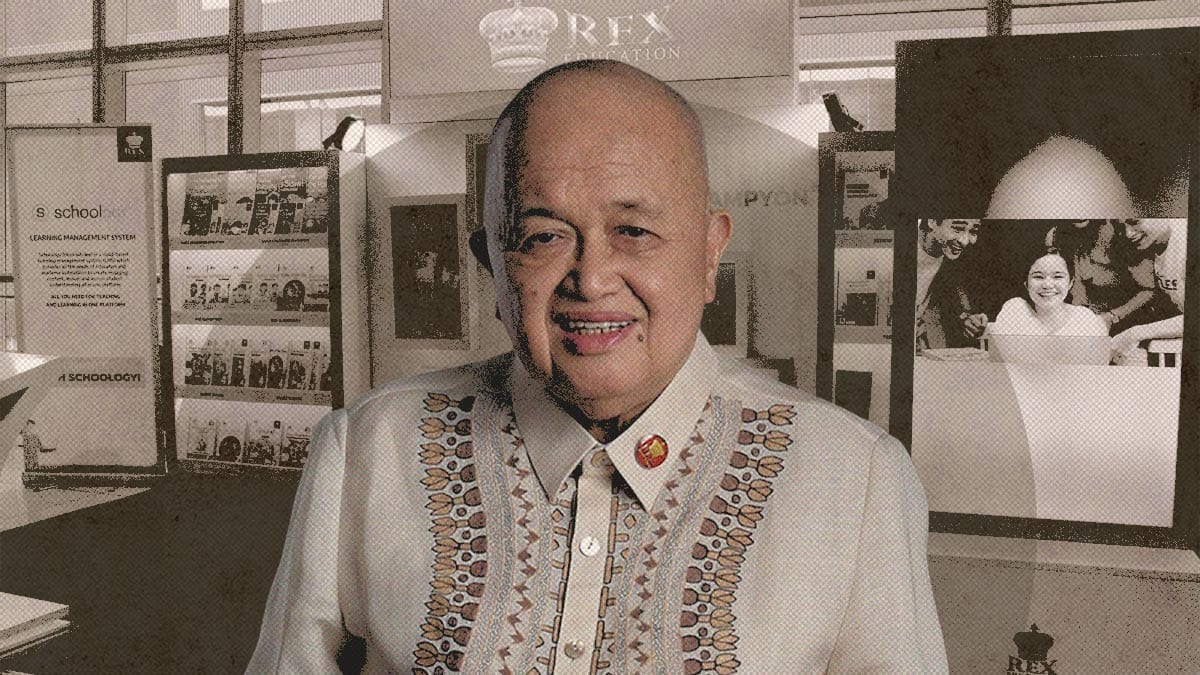
ILLUSTRATION: Igi Talao
Atty. Dominador Buhain stands as a towering figure in the Philippine publishing industry. As chairman of Rex Book Store Inc., his name has become synonymous with educational development, national literacy, and cultural preservation. From modest beginnings to leading one of the country’s most respected publishing houses, Buhain’s story is one of grit, perseverance, and innovation.
Born into a humble family, Buhain was only 11 years old when his biological father, founder of the original Rex Book Store, passed away. After the founder’s death, Buhain’s mother remarried, and together with his stepfather, they rebuilt the fledgling bookstore located along Claro M. Recto Avenue in Manila.
The early Rex Book Store specialized in secondhand books, catering to budget-conscious students. But a major fire in the 1970s razed the shop, leaving behind only one item: a prayer book titled Jesus Save Me. This lone surviving artifact became Buhain’s first sales tool as he crisscrossed the country to pitch their books to schools and church institutions.
Under his leadership, Rex Book Store grew from a single retail outlet into a multi-format education powerhouse. It now serves every level of education—from elementary and high school to tertiary and law schools.
Rex Book Store is also one of the few vertically integrated publishers in the country. The company has its own printing press, which allows it to control costs, quality, and production timelines. This strategic move gave Rex a competitive edge during periods of rising demand and publisher-printer conflicts.
Buhain didn’t stop at books. Driven by a passion for learning, he expanded Rex’s business into related fields. The company now supplies educational robotics kits, participates in the edtech sector, and has invested in museum development to complement its publishing mission.
To call Buhain well-traveled would be an understatement. He has visited over 258 countries and territories and is a member of the elite Travelers' Century Club. His adventures have taken him to Brazil, Israel, Afghanistan, Sudan, and every province in the Philippines.
Travel for Buhain isn’t just leisure. It’s a form of education. He believes every trip is a new page in a life-long book, and his collection of global artifacts, which he considers trophies, are displayed in personal and educational museums linked to Rex.
Today, his children lead Rex Book Store’s daily operations and have introduced management sophistication and digital transformation. One of his sons, Don Timothy Buhain, who trained at the Asian Institute of Management (AIM) and graduated from De La Salle University, now serves as CEO.
How did Buhain transform Rex from a small bookstore into a national publishing powerhouse? What major challenges did he face in keeping the business operational over several decades, and how did he manage them?
Here are the five business lessons every entrerpeneur can learn from Atty. Dominador Buhain, chairman of Rex Bookstores:
1 | Know how to keep a family business strong when everything falls apart
Crisis often brings deep personal and financial setbacks. Rebuilding a family business after a loss becomes a powerful story of perseverance. It’s proof that even when everything seems lost, grit and purpose can restore what was broken. It can even set a new foundation that’s stronger and more sustainable than before.
When a fire razed the original Rex Book Store to the ground in the 1970s, the loss was almost total. The family’s small wooden bookstore in C.M. Recto—founded by Buhain’s biological father and managed by his mother and stepfather after his father's early death—was underinsured. Everything they had built was gone overnight, except for a single surviving item: a prayer book titled Jesus Save Me.
But instead of treating this as the end, Buhain saw it as the beginning of a new chapter. He embodied personal responsibility and initiative. Still young at the time and with no formal training in sales, Buhain stepped forward and volunteered to become the company's traveling salesman.
With the prayer book in hand, he hit the road. He didn’t wait to be told what to do. He made a decision, took the lead, and took full ownership of the task of rebuilding the business.
What followed was not easy. For the first two years, he barely made any sales. But he pressed on. Resilience and grit became his greatest assets. He traveled to far-flung provinces, slept little, and worked hard. Even when faced with rejection, he didn’t give up. Instead, he used storytelling. He shared the story of the fire, the prayer book, and the family’s fight to start again.
“We started Rex Book Store, which was founded by my biological father. He used to work for another company called Central Book Supply, if I recall correctly. But then he decided to start a separate business, and he put up what became known as Rex Book Store. My father came up with the name Rex. Parang Latin word 'yan, kasi the meaning of Rex is "king." He just meant "king” to say, you're the king of a bookstore, parang ganon.
"Then, my father got ill. He had a liver problem, and his life was cut short because of that liver ailment. So my mother took over Rex Book Store, which was situated in Claro M... There used to be a Cinerama theater along the main C.M. Recto and our small bookstore was right in front of the Cinerama.
"There were two adjoining bookstores who tried to win the affection of my mother. The first one was owned by a Chinese—Popular Bookstore. The second one was New Republic Bookstore, owned by an Ilocano. The one who eventually got my mother’s affection was the Ilocano from New Republic.
"Because of the sipag and diskarte of my stepfather, our store somehow grew. Through industry, access to credit, and other efforts, the business expanded. Predominantly, our business at that time was buying and selling secondhand books. And then, we also did minimal book imports. Later on, because of the marriage—'yong subsequent marital arrangement—the two bookstores, Rex Book Store and New Republic Bookstore, were merged into one. That’s when Rex started to grow, lumaki itong Rex Books nang kaunti,” Buhain says.
“But in later years, we encountered another challenge sometime during the 1970s. A big fire razed the bookstore to the ground; the whole bookstore was made of wood. It was really a hard time for us because the store was underinsured. So everything was affected by the fire—everything, as in lahat except for a prayer book entitled Jesus Save Me.
"So I volunteered to become the salesman. I became the salesman, and using that prayer book, I went around. Luckily, the clients became sympathetic to my story. I shared it everywhere; I went all over the Philippines. I worked hard to sell and tried my best to survive because of the difficult situation we were in,” Buhain recalls.
2 | Know how to spot market gaps and turn them into growth opportunities
Entrepreneurs who succeed in identifying market gaps are able to see opportunities where others see limitations. They understand that real growth often comes not from following trends but from recognizing what’s missing and acting on it.
But spotting the gap is just the beginning. Creativity is essential in shaping a solution that doesn't merely copy existing products but creates new value. Entrepreneurs must think differently, reimagining what a product or service can be, how it's delivered, and whom it can serve.
In the early days of Philippine publishing, the market was saturated with foreign textbooks—mostly American—whose content didn’t align with local realities. These books were filled with irrelevant examples like snow, holidays abroad, and legal systems unfamiliar to Filipino students and professionals. Buhain’s stepfather, Juanito Fontelera, however, saw through this mismatch. He recognized a market gap: the absence of practical, culturally relevant educational and legal books authored by Filipinos.
Instead of following what was popular, Fontelera understood that lawyers needed localized reference materials, and students needed textbooks that reflected their environment. He didn’t just sell what was available—he listened to what teachers, lawyers, and schools truly needed. This marked the beginning of Rex’s transition from retail to publishing.
Fontelera saw the opportunity before it became obvious. He sensed a rising demand for Filipino-authored books even before government policies mandated their use. This forward-thinking mindset gave Rex Book Store a first-mover advantage when local content became a national priority during the Quirino administration.
“During that time kasi wala masyadong napa-publish [locally]. Most of the time, we relied on foreign materials. Gradually, Filipino author publications began to be introduced. Kaya lucky kami na somebody published something like that. Nagkaroon kami ng author, ang pangalan niya, Sulpicio Guevara. 'Yon ang pinaka-first publication namin.
"Nabibili naman 'yong libro niya. Kasi first legal form 'yan eh. Ginagamit ng mga lawyer. Kinokopya ng mga lawyer, very practical 'yong libro na 'yon.
"During that time kasi, prior to the Filipino-authored books, may mga American books pero hindi nag-click dito sa Philippine setting kasi hindi responsive doon sa mga requirements. Eh wala namang snow rito, bakit may snow sa libro? Eh kasi mino-monopolize dati ng mga foreigners ang market. Kaya nung may Filipino-authored na, sumikat kami. Tapos noong panahon ni Quirino, ang gagamitin lang daw dapat ay mga Filipino-authored books. Dahil doon, nag-continue na ang trend.
"Gradually, we improved. We were not only confined to book selling. Later on, we ventured into book publishing. Luckily, we were able to get good writers, especially for legal content, mga law books. And then we also ventured into educational publishing,” Buhain says.
“Kasi ang nature nitong stepfather ko—si Juanito Fontelera—talagang maawain eh. Kahit sino mang may dalang manuscript, pinagbibigyan niya, maski hindi maganda 'yong manuscript. Kasi he grew up from a very humble beginning. Nung nag-aaral nga, wala siyang sapatos, talagang hirap na hirap ang buhay kaya nung umangat siya, binibigyan niya ng oportunidad ang mga tao.
"Pag nakikita niyang nag-i-struggle naman at may dalang manuscript, pinagbibigyan niya. Kaya kung minsan, 'yong mga libro, hindi talaga magaganda ang laman, basta mapagbigyan lang niya pero at the same time, nagkakaroon din ng mga manuscript na akala mo walang potential, pero magki-click pala kasi magugustuhan ng mga eskwelahan.
"During that time, there were big—really big—orders coming from the government para sa mga public schools and through persistence and sipag sa industriya, somehow our efforts paid off. We survived, and we grew. We were able to put up a printing press, buy additional buildings. Nakaabot na kami ng 20,000 titles—from 1970 hanggang ngayon,” Buhain offers.
ALSO READ
3 | Know how to turn a crisis into a competitive advantage
Businesses that recover from setbacks often emerge stronger. Each failure becomes a lesson. Leaders learn how to adapt under pressure, think with creativity, and build emotional endurance—traits essential in fast-changing markets.
Customers and partners respect brands that admit their struggles but show grit in moving forward. A clear and determined comeback story not only restores trust; it also gives the business a more human face and strengthens its connection with the community.
After leaving a stable but unfulfilling corporate career, Buhain chose to take the risk of becoming a full-time salesman for Rex Book Store. At first, the decision seemed bleak—he spent two years with no sales and had to introduce a then-unknown brand to skeptical clients who would dismiss him outright. Yet he persisted. What others might have seen as rejection, he treated as part of the process.
Buhain refused to let the lack of sales define his outcome. His ability to reframe failure as a learning experience speaks to a growth mindset. Then came the fire—a devastating blow that destroyed their bookstore and left them with almost nothing except a single surviving book titled Jesus Save Me.
For many, this would have been the end of the business. But Buhain used the tragedy as a narrative that not only connected emotionally with potential clients, particularly in religious schools, but also restored a sense of purpose in his work. Emotional intelligence and authentic storytelling became the unlikely tools that revived sales. He didn’t manipulate; he simply told the truth with sincerity. And clients responded.
As his network of clients grew, recommendations started to flow. Eventually, one order led to another, and the business began to expand again. Buhain transformed multiple setbacks into catalysts for expansion. He embraced risk and stayed aligned with the mission of his family’s legacy.
“Before, I worked with Philam Life, and then I worked with Equitable Bank. But then I realized, kasi ang ginagawa ko lang, nagpa-punch, tapos graduate ka ng La Salle, naka-kurbata ka pa pero tagabigay ka lang ng kape. So sabi ko, hindi ko yata magugustuhan itong trabaho at saka mukhang wala masyadong pag-asa ma-promote. Pero narealize ko na mas maganda pala 'yong selling kasi nakakapag-byahe ka sa iba't ibang probinsya.
"So I went to Rex Book Store. Sabi ko, gusto kong mag-ahente—pero ako lang ang ahente, kako. I’ll cover the entire Pilipinas tapos may komisyon ako. I asked permission from both my stepfather saka ‘yong mother ko and pinayagan nila ako. Malaki ang role ko kasi I was the one selling. Sila ang nagma-manage ng business at ako naman ang lumalabas para magbenta.
"In my first two years, wala akong benta pero luckily, through hard work, nagkaroon ako ng break. Kasi napakahirap eh. Tatanungin ka nila, ‘San ka ba galing?’ Sabi ko, ‘Rex.’ Sasabihin ba naman sa akin, ‘Never heard.’ Pero para sa akin, maski walang benta, nakakapag-travel ako, kasi mahilig ako sa travel eh,” Buhain says.
“Tapos 'yon na nga, nasunog yung tindahan namin. 'Yung nag-survive na libro, yung Jesus Save Me, 'yon ang ginamit ko sa para lumakas ang benta ko. Kasi parang, when you were visiting a religious school, it showed that you were a very religious person and that you believed in the Creator, 'di ba?
"You just told them emotionally na sasabihin mo, ‘Nasunog ‘tong negosyo namin,’ and this one—this book—Jesus Save Me—gave us the hope to go on. So, nakatulong yun, pero hindi naman siguro masama 'yong ginawa ko, sincere naman ako doon sa nangyari na 'yon.
"I was recommended from one congregation to another, until I got a big order. Nagkaroon kami ng break doon sa panahong ‘yon. It was because of the fire. Kumbaga, sinasabi nga namin noon: nagkaroon ng setback, natalbusan, pero medyo lumago rin nang kaunti during that period. Continuous selling ako hanggang nagkaroon din kami ng printing press.
"Kasi ang problema noong unang panahon, 'yong mga printer, pag nakitang umaasenso ka, tinataasan ang presyo, so my father was compelled to own a printing press. Kasi parang deep inside the heart of my father, he thought, 'Baka kailangan makakuha ako ng sarili kong printing press,' kasi naiinggit ‘yong mga printer kapag umaasenso ka,” says Buhain.
4 | Know how to combine passion and professionalism to create purpose
When your profession aligns with what you deeply care about, work stops feeling like a chore and becomes a personal mission. This connection strengthens your resolve during hard times. Passion provides the emotional drive to keep going, while your professional skills offer the structure and tools to succeed. Together, they lead to purpose.
Purpose-driven businesses often attract loyal customers and lasting partnerships. They stand out because people can feel the authenticity behind the brand. Whether it's improving education, like Buhain did through publishing, or addressing gaps in underserved markets, entrepreneurs who operate from purpose create value that lasts.
From the beginning, Buhain made it clear that his passion lay in sales and travel. Despite his law degree and license as a lawyer, he found greater fulfillment when he went out in the field, met with clients, and visited new places. For him, sales was never just a job—it opened doors to connect with people, explore the country, and help expand the family business.
Instead of choosing between law and sales, Buhain integrated the two. He used his legal knowledge not in the courtroom but in a way that strategically served the publishing industry. His decision to study law stemmed from a practical observation: he needed the credentials to respond confidently to government agencies and navigate regulatory concerns. While others saw his sales career as unfit for a lawyer, Buhain saw an opportunity—to enhance his effectiveness as a business leader and advocate for change in the publishing sector.
That decision paid off. In 1995, as both the head of an industry association and a lawyer, he led efforts to pass the Book Publishing Development Act—a milestone that helped uplift Philippine publishing. This move showed how his legal training enabled him to go beyond business success and influence public policy. He wasn’t just growing a company; he was championing a cause that supported Filipino authors, publishers, and readers.
“After graduating from college, I knew my real interest was in selling. When I studied law and became a lawyer, minsan sinasabi nila, ‘Dapat nasa korte ka, hindi nagbebenta.’ Nakakahiya daw. Sabi ko naman, eh kahit papano may kwarta rito sa selling eh.
"Para sa akin, selling was fulfilling; kahit walang benta, nakakapag-travel ako. Kasi mahilig ako sa travel. Modesty aside, I was once considered the most traveled Filipino, using only a Philippine passport. Because of my desire to travel, nauuna ‘yong travel, para bang I just needed a justification for my travel so I could participate in associations to generate business.
"I took up law kasi I realized, 'pag ako ang naiiwan—kasi ‘yong parents ko nagta-travel din—may mga taong from government, kung saan-saan, na tanong nang tanong: ‘Oh, may violation ka dito, may violation ka diyan.’ Eh sabi ko, dapat ata mag-aral ako ng law para makasagot ako sa mga taong ‘to,” recalls Buhain.
“Inabot ako ng mga 10 years bago natapos. I couldn’t finish kasi I had to transfer from one school to another dahil sa mga subjects, pero I luckily passed the bar. Although the questions asked when I took the bar were already different from the law I studied during my school years, iba na kasi nung time na nag-aaral ako, kaya milagro na nakapasa ako. Otherwise, nakakahiya. Biro mo, publisher ka ng law books tapos babagsak ka.
"Palagay ko, the most wonderful thing that happened to me when I became a lawyer was nagkaroon ako ng opportunity. I was able to become the head of a certain association. Kasi ganito ‘yan: kung wala kang law degree, wala kang opportunity to do that.
"Noong 1995, being the head of an association and also being a lawyer, I was the one who fought for the passage of the law na mag-i-improve sa book publishing. Napasa ang The Book Publishing Development Act, kaya it gave me the inspiration to continue with the mission. You won’t believe it, they call me the Godfather of Book Publishing.
"Kasi nga, malaki ang role ko. Malaki ang weight ko kasi I passed the bar and because I have legal know-how. I can effectively represent the group compared to a non-lawyer individual. Until now, I'm the President Emeritus of the Philippine Educational Publishing Association. Kumbaga, maski limited ang knowledge ko, I was somehow able to win their support,” says Buhain.
5 | Know how to walk the talk in business leadership
Inspiring action through example rather than authority is important for building genuine trust, long-term loyalty, and a high-performing culture, especially in family businesses. When leaders model the values they preach like integrity, discipline, hard work, or frugality, their actions carry more weight than titles or instructions ever could.
Employees and successors are more likely to adopt these values when they see them consistently practiced. This kind of leadership promotes respect, not fear, and ownership, not compliance. It creates a culture where people act not because they’re told, but because they believe in the mission and see its importance firsthand.
Buhain led not through force or title, but through quiet example—modeling the values he hoped his children and team would live by. His leadership philosophy centered on trust, discipline, and consistency, all of which he demonstrated rather than demanded.
He did not just talk about integrity; he protected it even during struggle. He believed that trust from clients and the public had to be earned slowly, by staying honest and keeping one's word. This is why he became someone whom others trusted deeply, eventually being invited to chair educational institutions. Trust, for Buhain, was not built by status, but by a track record of character.
In his household, he taught thrift not by lectures, but by making his children account for their expenses and allowing them to struggle financially early on. He didn’t hand them money freely; instead, he gave them a chance to experience the discipline of budgeting and delayed gratification. He believed that self-reliance and financial prudence should be learned by doing.
He also drew inspiration from his own parents who led structured lives without extravagance. His stepfather showed that one could earn respect in business through good credit, fairness, and quiet generosity. His mother enforced structure and order. Together, they taught that leadership starts with how you live, not what you demand.
“One lesson I learned is that you must develop relationships. In other words, you need to win the trust and confidence of your client. Para bang, every year, it becomes easier because meron nang trust. Like now, thanks to God, I’m even being invited to be the chairman of a school. That’s because of the trust that was developed over the years.
"And more importantly, during your struggles, talagang you should never do anything that would affect your integrity kaya ko na-develop 'yung goodwill na ‘yon. Hopefully, my children would be better than me and follow that as well.
"From the very start, we inculcated the habit of saving. The habit of being thrifty, and in fact, during their earlier years, they were required to make an accounting of their expenses, etcetera. Unless you instill that habit, it’s very hard to succeed. Kailangan, you must be careful with your resources,” Buhain stresses.
“Kasi during their younger years, hindi ko sila masyadong binibigyan ng pera. Bahala sila maghanap ng paraan. Unlike other parents, who give so much. Kaya [the children] had to struggle just to survive. Hopefully, nakatulong sa kanila ‘yong habit of not spending too much.
"Basically, it’s more about the resources, and also the need to be aware of the present, about the situation, etcetera. And if you’ve developed the habit of being frugal about money, parang it goes with everything else, ‘di ba? Hindi ka nagtatapon ng pera. Sometimes, because of that mindset, they gain the courage to invest.
"We came from a very humble family. Every time we talked, it was always about how to survive. Palaging ‘yon ang pinag-uusapan namin. Sometimes it might sound materialistic, pero it was always about survival. Because of the humble beginning we started with.
"Growing up, nakita ko na mas malakas ang loob nitong stepfather ko kasi magaling siyang mangutang eh, pero magaling din siyang magbayad kaya nagkaroon siya ng good credit standing so he was privileged to borrow. He was a good payer naman.
"Yung mother ko istrikta siya, pero itong stepfather ko, very gentleman. Binibigay niya lahat ng pera, hindi siya nagtatanong kung anong ginagawa doon sa pera. In other words, nagkaroon ng trust. Maganda naman ang resulta—hindi na tinatanong kung anong nangyari doon sa binigay niya.
"My parents were very disciplined, and they lived by example. They woke up at 4 o’clock in the morning to exercise. They have no vices. They're not the type who would attend ‘society’ type of parties. Ako, uma-attend ako ng social gatherings just to be with the crowd for networking.
"There are three things that must come together. Time, money, and health. 'Pag wala ka ng isa niyan, you cannot travel. Kaya para sa akin, if you’re able to complete a travel, parang that’s already success.
"Para sa akin, traveling is like reading a book. If you stay in one place, you're just stuck on one page of the book, but if you continue to travel, you're opening up more pages, kasi I realized that there is no country that is exactly the same as another. Ibang-iba lagi,” says Buhain.
